
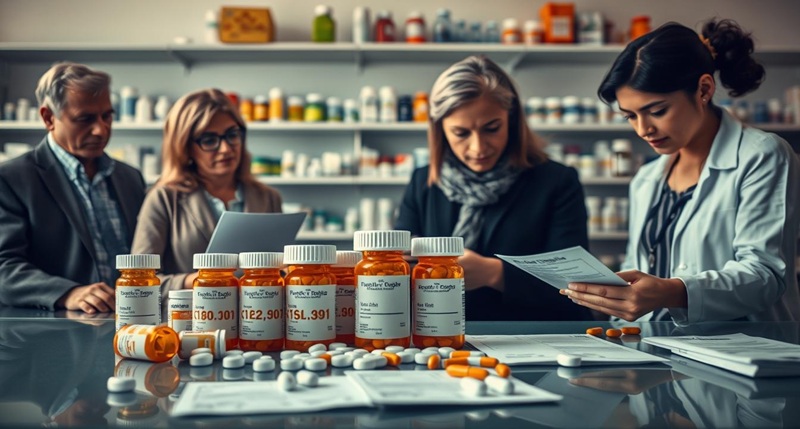
5 Cheapest Prescription Drugs in America & How Patients Still Overpay

This article shows you why a drug labeled "cheap" can still cost more at the counter. You will get a clear, patient-focused look at five common generics and the pricing gaps that affect your wallet.
Expect simple steps to compare options and find lower prices without changing care. The piece explains how pharmacies set cash tags, how copays can mislead, and where hidden markups appear.
You will leave with a data-backed plan to shop smarter. Use these ideas next refill day to keep money in your pocket while keeping doses steady. This guide centers on real-world choices in the united states and clear actions you can take now.
Key Takeaways
- Learn why posted prices often differ from competitive cash rates.
- Recognize when a copay adds more than it saves.
- Simple checks can cut your out‑of‑pocket costs.
- You won’t need to skip doses to save money.
- Small habits at refill time deliver steady savings.
Why “cheap” prescription drugs can still cost you too much in the United States
Sticker rates rarely tell the whole story about what you pay for a refill. A cash price is the out‑of‑pocket amount you pay when you don’t use insurance. That figure can be lower or higher than your plan’s copay or coinsurance depending on plan design.
What a cash price means versus using your plan
The cash price is a straight checkout total. When you run a claim through insurance, your plan may apply a copay or coinsurance set by the benefit. That set amount does not automatically match any pharmacy discount.
How pharmacy type changes what you pay
Different pharmacy formats—mass merchandisers, supermarkets, national chains, and boutique models—set their own list prices. The same generic prescription can carry very different tag prices at each location.
Why this matters for adherence
Higher out‑of‑pocket costs push some people to delay fills, split pills, or skip doses. Those coping moves can worsen health and raise long‑term costs for you and the system.
- System problem: pricing complexity, plan rules, and limited information make overpaying common.
- Your action: compare cash price and insurance totals before you pay.
What the data says about prescription drug prices at US pharmacies
A July 2020 cross-sectional study compared undiscounted cash tags with GoodRx-discounted checkout totals for 30-unit fills of common cardiovascular medications. The headline: generics often cost far less with a coupon than the sticker price suggests.
GoodRx-discounted generics versus undiscounted cash prices
The study found an average undiscounted generic cash price near $42.41 (SD 44.10). With GoodRx, mass merchandisers averaged $11.01 and supermarkets $9.88.
National chains varied: one chain averaged $17.85, another $21.73. Analytical pharmacy averages for generics were about $20.84, closer to chain levels.
Typical patterns across pharmacy types
For brand-name medications, undiscounted cash prices sat much higher (mean $368.33, SD 127.00). GoodRx trimmed brand prices slightly, but they remained clustered around $259–$275 at traditional outlets.
Acquisition cost estimates used NADAC data collected by the Centers for Medicare & Medicaid Services from a nationally representative sample. That helps explain why gross margins and final prices differ by pharmacy type.
| Pharmacy type | Generic GoodRx avg | Brand GoodRx avg |
| Mass merchandiser | $11.01 | $258–$274 |
| Supermarket | $9.88 | $258–$274 |
| National chains | $17.85–$21.73 | $258–$274 |
| Analytical pharmacy | $20.84 | $365.12 |
Practical takeaway: the same prescription and quantity can cost very different amounts depending on where you buy and whether you use a coupon. If you want to lower your refill costs, compare cash, coupon, and insurance prices before you pay.
How patients still overpay even when the drug is a low-cost generic
Many people pay more at the register because pharmacies often charge the undiscounted cash tag by default. That single action can raise your out‑of‑pocket bills even for a simple refill.
Paying the undiscounted cash price by default
At checkout, staff may ring the full cash total unless you ask to apply a discount or show a coupon. If you don’t prompt them, you could pay several times more depending on the pharmacy type.
Copays that exceed a discounted cash rate
Using insurance is not always cheaper. A fixed copay can exceed a discounted cash price from a coupon program, leaving you worse off in your pocket.
Not price-shopping across locations
Pharmacies set different tag prices for the same prescription. Not comparing means you miss routine, real savings on common drugs.
Information gaps that block savings
Limited internet access, paper‑only coupons, or simply not knowing discount programs exist makes savings uneven. That gap leads to higher costs, delayed refills, and inconsistent medication use.
- Action: check cash, coupon, and insurance totals before you pay.
- Result: lower out‑of‑pocket spending and steadier adherence.
How this list is built: what makes a prescription drug “cheap” today
Here we set a clear benchmark so you can compare pharmacy checkout totals fairly.
Cheap in this guide means common, high-volume generic drugs filled in a typical 30-day quantity. That 30-unit proxy uses the most commonly prescribed strength so you see practical differences across outlets.
We use a consistent standard so you can compare apples to apples. Using the same 30-unit measure removes variation from dose size and lets you spot true pricing gaps between pharmacy types.
Why prices vary so much
Acquisition costs may be similar, yet sticker prices can differ several-fold by pharmacy type. Mass merchandisers, supermarkets, national chains, and analytical pharmacies each set their own tag prices.
"A single 30-unit fill can cost dramatically less with a coupon than the undiscounted cash tag at some locations."
What this list shows you
The five examples are widely prescribed cardiovascular-related generics where pricing differences are well documented. They act as recognizable case studies so you can avoid common overpayment traps.
- Benchmark: 30 units, common strengths, high-volume generics.
- Reality check: cheap does not mean uniform — pharmacy type matters.
- Expectation: these examples are illustrative, not exhaustive.
The role of discounts and coupon programs in lowering drug costs
Coupon services often deliver their biggest wins for common generics with wide competition. These programs let you present a coupon or app at checkout so the pharmacy runs a cash transaction at a negotiated rate.
When GoodRx tends to help most: generic medications
For generics the spread is large. An average undiscounted cash price was $42.41 versus GoodRx-discounted averages near $9.88–$21.73 depending on pharmacy type.
When savings may be small: brand-name drugs
Brand-name coupons trimmed prices from about $368.33 to roughly $259–$275. That still leaves high prescription drug costs because brands face less competition.
Mass merchandiser $4-style pricing that may not require a coupon
Some companies list fixed low-price generics that match many coupon rates. When that happens, you don’t need an app to secure lower prices.
| Pharmacy type | Undiscounted avg | GoodRx avg |
| Mass merchandiser | $42.41 | $11.01 |
| Supermarket | $42.41 | $9.88 |
| National chains | $42.41 | $17.85–$21.73 |
| Analytical pharmacy | $42.41 | $20.84 |
Practical tip: check your insurance price, a cash tag, and a coupon rate before you pay. That quick compare helps you pick the lowest option and cut your out‑of‑pocket costs.
The cheapest drug example you’ll recognize: lisinopril (generic)
A routine lisinopril refill shows how a widely used medicine can still come with varied checkout prices.
Why it’s common: lisinopril is a long‑standing blood‑pressure medication. It is high volume and widely prescribed, which helps keep list prices low across many outlets.
How a 30-day fill can differ at checkout
Study data for a 20 mg #30 fill found an undiscounted cash price near $12.77. With a GoodRx coupon a mass merchandiser rang $4.00. Supermarkets checked at about $6.31. Two national chains showed roughly $10.58 and $14.98. An analytical pharmacy averaged $7.26.
Phone checks (Dec 2019) showed similar spread: $4.00 at a mass merchandiser, $6.99 at a supermarket, and $13.59 and $20.99 at two chains. These gaps matter if you don’t ask for a discount.
- Pay attention: ask for a coupon or run a cash price comparison before you accept the first total.
- Decision rule: compare your insurance copay, the pharmacy cash price, and a discount price; pick the lowest out‑of‑pocket option.
Bottom line: even a $5–$10 monthly swing can add up in your pocket across years of chronic therapy. A quick check at checkout saves money and keeps your refills on time.
| Outlet | Typical price |
| Mass merchandiser (GoodRx) | $4.00 |
| Supermarket (GoodRx) | $6.31 |
| National chain range | $10.58–$14.98 |
| Undiscounted cash | $12.77 |
A budget blood-pressure staple: hydrochlorothiazide (generic)
Hydrochlorothiazide has been around for decades, yet checkout totals still surprise many patients.
What the data shows: acquisition cost (NADAC) for a 25 mg #30 fill sits near $0.43. Retail tags vary widely: undiscounted cash was $9.27, while outlets ranged from $4.00 up to $10.80.
Why older meds get markup
Markup strategy, local competition, and list pricing explain most gaps. An older drug can still carry higher retail prices at some locations because pharmacies set tags differently.
- Quick examples: mass merchandiser $4.00; supermarket $4.48; chain A $4.83; chain B $6.26; analytical pharmacy $10.80.
- Lesson: NADAC under $1 does not force retail to match acquisition.
| Source | Price |
| NADAC (25 mg #30) | $0.43 |
| Undiscounted cash | $9.27 |
| Typical outlets (range shown) | $4.00–$10.80 |
Bottom line: you don’t have to accept a high checkout total for this basic prescription. Compare coupon, cash, and insurance prices and pick the lowest option at your chosen pharmacy to cut out unnecessary costs.
A low-cost heart medication many people take: metoprolol tartrate (generic)
Metoprolol is a common heart drug used for blood pressure and some heart conditions. It is long standing and often appears in low-cost generic programs. That makes it a useful example when you shop smart at checkout.
Why formulation matters
Tartrate is an immediate‑release form. It often shows much lower prices for a 25 mg #30 fill than extended‑release alternatives. Data here: tartrate undiscounted cash $8.26; mass merchandiser $3.14; supermarket $4.97; chains $6.88–$7.01; analytical pharmacy $6.00.
Succinate is extended‑release. For the same 25 mg #30 it ran higher: undiscounted cash $26.36; mass merchandiser $9.00; supermarket $9.11; chains $13.49–$17.96; analytical pharmacy $25.92.
How to avoid paying more
- Verify exact formulation on your prescription: IR (tartrate) vs ER (succinate).
- Confirm strength and quantity before you accept the first total at the counter.
- Compare a coupon price, a cash tag, and your insurance copay across nearby outlets.
"A similar name can hide very different prices — check formulation, not just the label."
| Formulation | Undiscounted cash | Mass merchandiser |
| Metoprolol tartrate 25 mg #30 | $8.26 | $3.14 |
| Metoprolol succinate 25 mg #30 | $26.36 | $9.00 |
| Typical supermarket range (tartrate / succinate) | $4.97 / $9.11 | Compare locations |
Bottom line: formulation and pharmacy type drive price swings. You can save by confirming exact drug details and checking multiple outlets before you pay.
A common cholesterol medication with big price swings: atorvastatin (generic)
Even a common cholesterol generic can show huge checkout swings across nearby outlets. Atorvastatin is a top-prescribed drug, yet retail tags vary widely from acquisition cost to final register totals.
Why this matters: NADAC for a 40 mg #30 sits near $2.30, while an undiscounted cash price in the study reached $84.43. With coupons or low-price programs you can see mass merchandiser rates near $15.00, supermarket checks at $8.25, and analytical pharmacy offers around $8.40.
How patients overpay: defaulting to the first register price or assuming insurance gives the lowest result often costs you money. National chains showed higher averages ($19.80 and $25.00) versus supermarket options for the same prescription.
Practical takeaway
- Compare a coupon price, a cash tag, and your insurance copay before you pay.
- Remember: where you fill matters — supermarkets and some alternative models can be cheaper than chains.
- Spend a few minutes checking prices and you can cut ongoing medication costs.
"A single comparison at checkout can turn an $84 register total into under $10."
| Source | Price |
| NADAC (40 mg #30) | $2.30 |
| Undiscounted cash | $84.43 |
| Supermarket / Analytical pharmacy | $8.25 / $8.40 |
| Mass merchandiser / Chain range | $15.00 / $19.80–$25.00 |
A widely used calcium-channel blocker: amlodipine (generic)
Amlodipine's retail tags can swing widely, even when its acquisition cost is very low. That gap creates routine chances to save at checkout if you know where to look.
Why this drug is often inexpensive at supermarkets and mass merchandisers
NADAC for amlodipine 10 mg #30 sits near $0.65. With that low acquisition cost, many discount programs and supermarkets list much lower prices.
Typical study rates: mass merchandiser $9.00; supermarket $6.86; analytical pharmacy $9.30. Phone checks showed even lower occasional specials: mass merchandiser $4.00 in Dec 2019.
How chain-pharmacy pricing can inflate out-of-pocket spending
Chains often post higher tag prices: national chain #1 $19.74, chain #2 $19.23, undiscounted cash $30.97. In one phone check, two chains rang $51.99 and $57.99.
That difference matters. If you refill monthly and accept a chain price without comparing, your pocket loses over time. Even with insurance, your copay may be higher than a coupon or cash rate.
"Ask for a cash quote and a coupon price before you run insurance at the register."
- Confirm a cash price, a coupon price, and your insurance copay before payment.
- Consider supermarkets or mass merchandisers for lower ongoing costs.
- Compare nearby outlets when you refill to avoid repeated overpayment.
| Source | Price (amlodipine 10 mg #30) | Comment |
| NADAC | $0.65 | Acquisition cost |
| Undiscounted cash | $30.97 | Sticker price at some outlets |
| Mass merchandiser | $9.00 (phone $4.00) | Often low in discount programs |
| Supermarket | $6.86 (phone $12.99) | Typically competitive |
| National chains | $19.74 / $19.23 (phone $51.99 / $57.99) | Can be multiples higher |
5 of the Cheapest Prescription Drugs in America — and How Patients Are Still Overpay
These five familiar generics reveal a consistent pricing pattern that you can use to save at refill time.
What these examples share
All are high-volume generics with many makers. That competition drives widely available discounts and low advertised rates.
Where savings most often get lost
You can lose lower prices through pharmacy choice, benefit design that sets copays above coupon rates, or by not using discount programs at checkout.
"Undiscounted cash prices can be far higher than a coupon price for the same drug."
Connect the dots: your receipt today reflects local tag pricing, an insurer's rules, and whether a discount was applied. Those forces make drug prices opaque across the system.
- Compare a coupon, a cash quote, and your insurance total before you pay.
- Choose outlets with proven low lists when you refill regularly.
Next, we explain why this cheap generic logic often breaks down for brand-name drugs and why those prices stay high.
Why brand-name drugs stay expensive even with coupons
Coupons can cut a bill, but they rarely erase a brand's steep starting point. Study data show brand cardiovascular medication averages near $368.33 undiscounted. With a GoodRx-style coupon, checkout totals still clustered around $258.84–$274.60 across pharmacy types.
That gap matters. When a manufacturer sets a high list price, a discount removes only part of the markup. You may save dollars today, yet the baseline set by drug makers and distributors keeps prices high over years.
What the pricing data shows for brand cardiovascular meds
Even after discounts, many branded fills remain in the hundreds for a standard 30-unit quantity. This pattern held across mass, supermarket, chain, and analytical outlets.
How limited competition and market structure keep prices high
When few rivals or no generics exist, companies face little pressure to lower prices. Patent protections, market exclusivity, and complex rebates mean high list prices persist despite coupon programs.
"U.S. prescription drug spending topped about $722 billion, and brand-name prices run far above peer countries."
Harvard Law Today (paraphrased)
Takeaway: coupons help at the margin, but long-term relief usually needs stronger competition, benefit redesign, or policy change to reshape manufacturer pricing and overall drug prices.
| Measure | Undiscounted avg | Discounted avg (GoodRx) |
| Brand CV medications | $368.33 | $258.84–$274.60 |
| National spending context | $722 billion (US) | Brand prices 4x peer countries |
| Primary drivers | Patent/market structure | Limited competition, manufacturer list pricing |
Health insurance, Medicare, and Medicaid: why your out-of-pocket price can be unpredictable
Insurance rules and plan design often make your checkout total change from month to month. A deductible can reset, coinsurance rates can follow a list price, and some high cost-sharing plans push much larger bills onto your pocket.
Deductibles, coinsurance, and high cost-sharing plans
Deductibles mean you pay full retail until they are met. That can make a familiar drug jump from a small copay one refill to a large tab the next.
Coinsurance ties your share to the drug's list price, so higher sticker prices raise your cost even if acquisition cost stayed low.
Medicare negotiation limits and what’s changing
Medicare and Medicaid rules differ from commercial insurance. Historically, Medicare had limited ability to bargain, which kept some prices high.
Recent policy moves under the Inflation Reduction Act begin to change negotiation power over years. That may trim some prices but it will take time to reach many programs.
How rising national spending affects premiums and public programs
When national drug spending rises, premiums and taxes can follow. Payers may tighten formularies or raise benefit limits to control spending, which shifts more cost to you at the counter.
"About one quarter of adults report trouble filling prescriptions because costs are too high."
Action you can take: even with insurance, compare your plan price to a discounted cash total for common generics before you pay. That quick check often saves pocket dollars and keeps your therapy steady.
Pharmacy economics in plain English: NADAC, markups, and gross margins
Understanding what pharmacies pay helps you spot when a low sticker price hides a big markup.
What NADAC measures and why it matters
NADAC is a monthly acquisition benchmark collected by medicare medicaid services from a nationally representative sample of community outlets. It shows an average amount a pharmacy paid to buy a drug product.
Why that matters: when NADAC sits far below a register total, you can tell a large markup exists. That gap explains much of the variation in drug costs you see at checkout.
Why gross margins differ by pharmacy type
Gross margin is simple: it is the spread between acquisition cost and the price you pay or a discounted price. It is not an accounting deep dive—just the markup that covers operations and profit.
- Generics study-era averages: mass merchandiser $5.84; supermarket $4.71; national chains $12.68 and $16.56; analytical pharmacy $15.67.
- Brand-name averages: mass merchandiser $22.43; supermarket $12.10; national chains $23.55 and $27.86; analytical pharmacy $118.39.
How these dynamics show up in your costs
Different outlet types set different prices for the same drug. Higher gross margins at some chains or analytical models mean you can pay many dollars more for identical fills.
Practical takeaway: check a NADAC-based benchmark, a cash quote, and a coupon price before you pay. That quick compare saves money and reveals when a markup is unusually large.
| Outlet type | Generic avg gross margin | Brand avg gross margin |
| Mass merchandiser | $5.84 | $22.43 |
| Supermarket | $4.71 | $12.10 |
| National chain (A / B) | $12.68 / $16.56 | $23.55 / $27.86 |
| Analytical pharmacy | $15.67 | $118.39 |
Quality concerns and the rise of “analytical pharmacy”
Some pharmacies now test every lot before they sell a bottle to patients. That extra step responds to quality issues and recalls that have affected generics in past years.
What an analytical pharmacy claims to do differently
Analytical models run lab tests on each lot. They check active ingredient levels, excipients, and impurities. A certificate of analysis accompanies many fills so you can see the testing information.
Why that may matter for certain medications
For most routine drugs you may not need extra checks. Still, for narrow therapeutic index medicines—warfarin, many antiepileptics, and some immunosuppressants—small changes can affect health outcomes.
Pricing in context
The study found analytical generic cash price averaged $20.84 versus an undiscounted cash average near $42.41 at traditional outlets. Analytical models usually do not accept GoodRx coupons.
| Model | Avg generic cash | Notes |
| Analytical pharmacy | $20.84 | Lot testing, certificate provided |
| Traditional undiscounted | $42.41 | Visual inspection only |
| Coupon/discount | Varies | Not accepted by analytical |
What you can do: weigh price, test confidence, and your clinical risk. If you take a sensitive medication, ask your prescriber whether extra verification is worth a modest premium.
How to pay lower prices on prescription drugs the next time you refill
A simple three-way price compare can turn a high register total into a low cash outlay. Before you pay, ask for three numbers: a cash quote, a discount/coupon rate (GoodRx style), and your insurance total. Then pick the lowest out‑of‑pocket option.
Compare cash, coupon, and insurance
Ask at checkout: request a cash price, show a coupon, then run insurance if needed. That quick check finds the best deal for your refill and keeps prescription drug costs down.
Choose pharmacy type wisely
Supermarkets and mass merchandisers often list lower prices for common generics. National chains may be more convenient but not always the least expensive.
Talk with your prescriber
Confirm generic options and therapeutically equivalent alternatives. Also verify formulation and quantity so you avoid accidental cost hikes from ER versus IR versions.
Help if you lack good coverage
Use available programs and printed coupons from clinics when internet access is limited. Consider 90‑day fills when they reduce total monthly costs.
| Action | What to ask | Likely benefit |
| Price compare | Cash, coupon, insurance | Find lowest out‑of‑pocket |
| Switch outlet | Check supermarket or mass merchandiser | Lower drug costs on generics |
| Prescriber check | Generic, formulation, quantity | Avoid surprise price hikes |
| Use programs | Coupons, clinic help, 90‑day fills | Save money when underinsured |
Quick rule: always compare before you pay — small steps now save money later.
Conclusion
You can reclaim control over out‑of‑pocket spending with one short habit at refill time.
Compare a cash quote, a coupon rate, then your insurance total before you pay. That simple three‑way check often cuts prices for common drug fills while brand items may stay costly even after discounts.
National data show rising prescription drug prices and high spending across the united states, driven by manufacturer power, limited competition, benefit design, plus gaps in patient information. Do this at your next refill: ask for a cash price, show a coupon, and run insurance only if it helps. Small monthly savings add up over years and protect your health without sacrifice.
0 Comments
Be the first to share your thoughts on this article.