
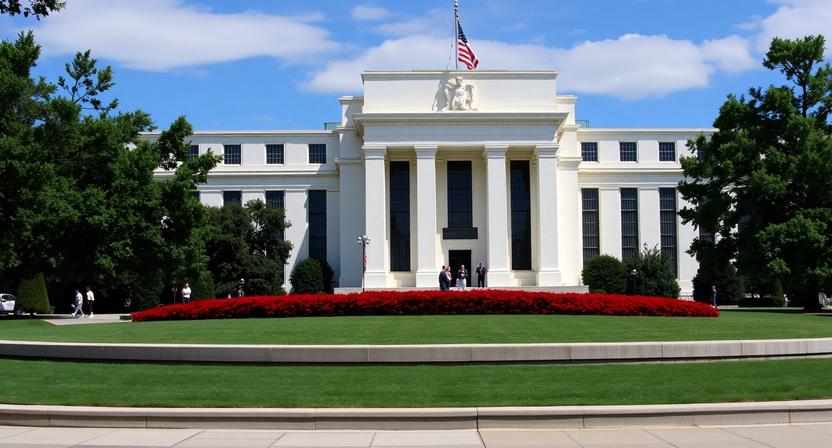
Fed Expected to Hold Rates Steady Despite Political Pressure — Impact on Mortgages & Savings

The Federal Reserve found itself at a critical crossroads in 2025, navigating unprecedented political pressure while attempting to fulfill its dual mandate of price stability and maximum employment. As the central bank prepares for its upcoming policy meeting, market analysts and economists widely expect the Fed to maintain interest rates at current levels despite vocal criticism from the White House and growing concerns about economic growth. For millions of Americans, this decision carries profound implications for mortgage rates, savings account returns, credit card interest, and overall financial planning strategies.
In this comprehensive analysis, we'll explore why the Federal Reserve is expected to hold rates steady, examine the political pressures influencing monetary policy debates, and most importantly, explain exactly what this means for your personal finances—from homebuying decisions to retirement savings strategies.
Understanding the Federal Reserve's Current Position
The Federal Reserve has maintained the federal funds rate in a range of 5.25% to 5.50% since July 2023, representing one of the most aggressive tightening cycles in modern monetary policy history. After raising rates 11 times between March 2022 and July 2023 to combat inflation that peaked at over 9%, the Fed has adopted a "higher for longer" stance as it monitors economic data and inflation trends.
Current economic indicators influencing Fed policy:
- Inflation remains above target: Core PCE inflation, the Fed's preferred measure, stands at approximately 2.8%, still above the Fed's 2% target
- Labor market resilience: Unemployment remains near historic lows at around 4.2%, indicating continued economic strength
- GDP growth: The economy continues expanding at a moderate pace, with GDP growth around 2.5% annualized
- Consumer spending: Retail sales and consumer spending remain robust despite higher interest rates
- Financial conditions: Credit markets remain relatively stable, though some stress is emerging in commercial real estate and regional banking
Federal Reserve Chair Jerome Powell has consistently emphasized the central bank's commitment to bringing inflation back to the 2% target, even if doing so requires maintaining restrictive monetary policy for an extended period. This data-dependent approach means the Fed evaluates incoming economic information at each meeting before making policy decisions.
Political Pressure on the Federal Reserve: An Unprecedented Dynamic
The Federal Reserve's political independence has long been considered sacrosanct in American economic policy, but recent months have witnessed extraordinary pressure from political leaders calling for immediate rate cuts.
Sources of political pressure:
Presidential criticism: President Trump has publicly criticized the Federal Reserve multiple times, arguing that high interest rates are unnecessarily constraining economic growth and making America less competitive globally. The President has suggested that rates should be cut immediately to stimulate the economy and reduce borrowing costs for businesses and consumers.
Congressional scrutiny: Members of Congress from both parties have questioned Fed officials during hearings, with some Democrats concerned about employment impacts and Republicans worried about business investment constraints.
Election year dynamics: With elections approaching, political leaders face increasing pressure to deliver economic results for constituents struggling with high mortgage rates and borrowing costs.
International comparisons: Critics point to other central banks that have begun cutting rates, arguing the Fed is out of step with global monetary policy trends.
However, Federal Reserve officials have consistently defended their independence and emphasized that monetary policy decisions must be based on economic data rather than political considerations. Chair Powell has stated repeatedly that the Fed will not cut rates prematurely, risking a resurgence of inflation that would ultimately harm American families more than temporarily high rates.
Why the Fed Is Expected to Hold Rates Steady
Despite political pressure and market calls for rate cuts, compelling economic reasons support the Fed's expected decision to maintain rates at current levels.
1. Inflation Remains Above Target
The most significant factor justifying continued restrictive policy is persistent inflation above the Fed's 2% target.
Key inflation metrics:
- Core PCE inflation: 2.8% year-over-year (above 2% target)
- Core CPI inflation: 3.3% year-over-year
- Shelter inflation: Remains elevated at over 5%, contributing significantly to overall inflation
- Services inflation: Sticky and persistent, reflecting tight labor markets and wage growth
The Federal Reserve has learned from the 1970s experience, when premature rate cuts allowed inflation to become entrenched, requiring even more aggressive tightening later with severe economic consequences. Fed officials are determined to avoid repeating this mistake, even if it means enduring short-term political criticism.
2. Strong Labor Market Provides Room for Patience
With unemployment near historic lows and job creation remaining robust, the Fed has no immediate pressure to cut rates to support employment.
Labor market indicators:
- Unemployment rate: Approximately 4.2% (near full employment)
- Job creation: Averaging 200,000+ new jobs per month
- Wage growth: Running at 4-5% annually, above inflation
- Labor force participation: Gradually recovering toward pre-pandemic levels
- Job openings: Still elevated, indicating continued labor demand
This labor market strength gives the Fed flexibility to maintain restrictive policy without triggering significant employment losses that would necessitate rate cuts.
3. Economic Growth Remains Resilient
Despite high interest rates, the U.S. economy continues expanding at a healthy pace, suggesting monetary policy has not become overly restrictive.
Growth indicators:
- Consumer spending: Remains the primary driver of economic growth
- Business investment: Continuing in technology and infrastructure
- Manufacturing activity: Stabilizing after contraction
- Service sector: Robust expansion continues
This economic resilience indicates that current interest rates, while restrictive, are not causing the economic damage that would justify immediate rate cuts.
4. Financial Stability Considerations
The Fed must balance inflation control with financial stability concerns, but current conditions don't indicate systemic risks requiring emergency rate cuts.
Financial stability assessment:
- Banking sector: Generally stable after regional bank stresses in 2023
- Credit markets: Functioning normally with appropriate risk pricing
- Asset prices: Stock market near all-time highs, indicating risk appetite
- Corporate debt: Manageable levels with limited distress
- Commercial real estate: Stress present but not systemic
While the Fed monitors financial conditions closely, current stability supports maintaining restrictive policy to ensure inflation returns to target.
Impact on Mortgage Rates: What Homebuyers and Homeowners Need to Know
The Federal Reserve's interest rate decisions have profound implications for mortgage rates, though the relationship is more complex than many realize.
Current Mortgage Rate Environment
Average mortgage rates (as of current data):
- 30-year fixed mortgage: Approximately 6.75% to 7.25%
- 15-year fixed mortgage: Approximately 6.00% to 6.50%
- 5/1 ARM (Adjustable Rate Mortgage): Approximately 6.25% to 6.75%
- FHA loans: Similar to conventional with slightly different terms
- Jumbo mortgages: Typically 0.25% to 0.50% higher than conforming loans
These rates represent a significant increase from the historically low rates of 2020-2021, when 30-year mortgages were available below 3%. The rapid increase has dramatically affected housing affordability and market dynamics.
How Fed Policy Affects Mortgage Rates
It's crucial to understand that the Federal Reserve doesn't directly set mortgage rates. Instead, the Fed's policy rate influences mortgage rates through several mechanisms:
Direct effects:
- The federal funds rate influences short-term borrowing costs
- Adjustable-rate mortgages often tie directly to short-term rates
- Home equity lines of credit (HELOCs) typically adjust with prime rate changes
Indirect effects:
- Fed policy influences 10-year Treasury yields, which mortgage rates track closely
- Market expectations about future Fed policy drive longer-term interest rates
- Inflation expectations influenced by Fed credibility affect all long-term rates
Current dynamics: Even if the Fed holds rates steady, mortgage rates could still fluctuate based on:
- Changes in inflation expectations
- Economic growth forecasts
- Global economic developments
- Credit market conditions
- Housing market supply and demand
Implications for Homebuyers
If the Fed holds rates steady as expected, homebuyers face several considerations:
Continued affordability challenges: With mortgage rates remaining elevated, monthly payments on median-priced homes consume a larger percentage of income than in recent years.
Example mortgage payment comparison:
On a $400,000 home with 20% down ($80,000) and a $320,000 mortgage:
- At 3% interest rate (2021): Monthly payment approximately $1,350
- At 7% interest rate (current): Monthly payment approximately $2,130
- Difference: $780 per month or $9,360 annually
Strategic considerations for buyers:
1. Don't wait for perfect rates: Attempting to time the market for lower rates could result in higher home prices that offset any interest savings. Consider buying when you find the right property and can comfortably afford payments.
2. Consider adjustable-rate mortgages: If you plan to move or refinance within 5-7 years, an ARM might offer lower initial rates. However, understand the risks if rates remain elevated when adjustment occurs.
3. Increase down payment if possible: Larger down payments reduce loan amounts and may qualify you for slightly better rates while eliminating private mortgage insurance (PMI) requirements.
4. Shop multiple lenders: Mortgage rates can vary significantly between lenders. Compare offers from at least 3-5 lenders, including online lenders, local banks, and credit unions.
5. Improve credit score: Even small credit score improvements can translate to better mortgage rates. Scores above 760 typically qualify for the best rates.
6. Buy points strategically: Purchasing discount points (paying upfront to reduce your rate) may make sense if you plan to stay in the home long-term and can calculate a reasonable break-even period.
7. Plan for potential refinancing: If rates do eventually decline, you could refinance to a lower rate. Factor potential refinancing costs into your long-term planning.
Implications for Current Homeowners
For homeowners with existing mortgages, the Fed's rate decision creates different considerations:
Fixed-rate mortgage holders: If you locked in a low rate during 2020-2021, you're in an excellent position. Your rate won't change, and you're effectively benefiting from below-market financing. Avoid refinancing unless absolutely necessary, as you're unlikely to find better rates currently.
Adjustable-rate mortgage holders: If your ARM is approaching adjustment, prepare for potentially higher payments. Consider:
- Refinancing to a fixed-rate mortgage to lock in certainty
- Evaluating whether selling and downsizing makes financial sense
- Building payment cushions into your budget for rate adjustments
HELOC users: Home equity lines of credit typically adjust with the prime rate, which moves with Fed policy. With rates held steady, your HELOC rate will likely remain at current levels. If you're considering tapping home equity, understand that current HELOC rates typically range from 8% to 10%, significantly higher than a few years ago.
Cash-out refinancing: With current mortgage rates substantially higher than rates from recent years, cash-out refinancing rarely makes financial sense unless you're paying off even higher-interest debt (credit cards, personal loans) or making home improvements that substantially increase property value.
Impact on Savings Accounts, CDs, and Cash Management
While homebuyers face challenges from elevated rates, savers benefit significantly from the Fed's higher-for-longer approach.
High-Yield Savings Accounts
Current rates: Top high-yield savings accounts offer 4.50% to 5.25% APY, representing the best returns savers have seen in over 15 years.
If the Fed holds rates steady, these attractive savings rates should persist, providing excellent returns on emergency funds and short-term savings goals.
Maximizing savings returns:
1. Switch to high-yield accounts: If your savings sit in traditional bank accounts earning 0.01% to 0.50%, you're leaving substantial money on the table. Online banks and credit unions often offer significantly higher rates.
Example: On a $25,000 emergency fund:
- Traditional savings at 0.25% APY: $62.50 annual interest
- High-yield savings at 5.00% APY: $1,250 annual interest
- Difference: $1,187.50 additional annual income
2. Ladder savings across accounts: Consider spreading large balances across multiple high-yield accounts to maximize FDIC insurance coverage while earning competitive rates.
3. Monitor rate changes: Even if the Fed holds steady, individual banks adjust rates based on competitive dynamics. Review your savings account rates quarterly and switch if better options emerge.
4. Understand promotional rates: Some banks offer high promotional rates that drop after introductory periods. Read the fine print and set calendar reminders to reassess when promotions end.
Certificates of Deposit (CDs)
Current CD rates:
- 3-month CDs: 4.75% to 5.25% APY
- 6-month CDs: 5.00% to 5.50% APY
- 1-year CDs: 4.75% to 5.35% APY
- 3-year CDs: 4.25% to 4.75% APY
- 5-year CDs: 4.00% to 4.50% APY
The inverted yield curve (shorter-term CDs offering higher rates than longer-term CDs) reflects market expectations that the Fed will eventually cut rates, causing shorter-term rates to decline.
CD strategy considerations:
Lock in current rates: If you have cash you won't need for a specific timeframe, current CD rates offer attractive risk-free returns. Even if the Fed eventually cuts rates, your CD rate remains locked for the term.
CD laddering strategy: Rather than putting all money in a single CD, create a ladder with multiple CDs maturing at different times. This provides:
- Regular access to portions of your money
- Opportunity to reinvest at prevailing rates
- Average rate across different time periods
- Flexibility if rates change
Example CD ladder with $50,000:
- $10,000 in 3-month CD at 5.25%
- $10,000 in 6-month CD at 5.35%
- $10,000 in 1-year CD at 5.20%
- $10,000 in 2-year CD at 4.60%
- $10,000 in 3-year CD at 4.50%
As each CD matures, reinvest in a new longer-term CD at the top of the ladder, maintaining regular access while capturing longer-term rates.
No-penalty CDs: Some banks offer no-penalty CDs allowing withdrawal without fees after a short holding period. These provide CD rates with liquidity similar to savings accounts, though rates are typically 0.25% to 0.50% lower than traditional CDs.
Money Market Accounts and Funds
Money market accounts (MMAs): Bank money market accounts currently offer 4.50% to 5.00% APY, providing check-writing and debit card access while earning competitive returns.
Money market mutual funds: These investment products (not FDIC-insured) offer 5.00% to 5.30% yields, providing competitive returns for larger balances with liquidity.
Money market products offer middle-ground solutions between savings accounts (maximum liquidity) and CDs (maximum rates), making them excellent for short-term goals or funds you may need with limited notice.
Treasury Securities
U.S. Treasury securities offer government-backed returns competitive with CDs, with the advantage of state and local tax exemption on interest.
Current Treasury yields:
- 4-week T-bills: Approximately 5.25%
- 3-month T-bills: Approximately 5.20%
- 6-month T-bills: Approximately 5.10%
- 1-year T-bills: Approximately 4.80%
- 2-year T-notes: Approximately 4.30%
- 5-year T-notes: Approximately 4.15%
- 10-year T-notes: Approximately 4.40%
Treasury advantages:
- Backed by U.S. government (zero credit risk)
- Interest exempt from state and local taxes
- Can be purchased directly through TreasuryDirect.gov with no fees
- Liquid secondary market allows selling before maturity if needed
Treasury strategy: For savers in high-tax states (California, New York, New Jersey, etc.), the state tax exemption makes Treasury securities more attractive than CDs offering similar yields.
Impact on Credit Cards, Auto Loans, and Consumer Debt
The Fed's rate decision affects borrowing costs across all consumer credit products, though timing and magnitude vary.
Credit Card Interest Rates
Current average credit card APR: Approximately 20.75%, near all-time highs
Credit card rates move directly with the federal funds rate, typically prime rate plus a margin. With the Fed holding rates steady, credit card APRs will likely remain at current elevated levels.
Strategies to minimize credit card interest:
1. Balance transfer cards: Many cards offer 0% APR on balance transfers for 12-21 months. If you carry balances, transferring to a 0% promotional card can save thousands in interest while you pay down debt.
Example: $10,000 credit card balance at 21% APR
- Monthly interest: $175
- Annual interest if paying minimums: ~$2,100
Transferring to a 0% card for 18 months saves substantial interest if you can pay off the balance during the promotional period.
2. Personal loan consolidation: Personal loans currently range from 9% to 14% for qualified borrowers—substantially lower than credit card rates. Consolidating high-interest credit card debt into a personal loan reduces interest and creates a fixed payment plan.
3. Home equity borrowing: If you have home equity, HELOCs (8-10%) or home equity loans (8-9%) offer significantly lower rates than credit cards. However, remember you're putting your home at risk if you can't repay.
4. Negotiate with card issuers: If you have good payment history, call your credit card company and request a lower APR. Many issuers will reduce rates by 2-5 percentage points for loyal customers who ask.
5. Pay more than minimums: Every dollar above the minimum payment goes directly to principal, reducing the balance that accrues interest and accelerating debt payoff.
Auto Loan Rates
Current average auto loan rates:
- New car loans (60 months): 7.0% to 8.5%
- Used car loans (60 months): 8.0% to 11.0%
- New car loans (excellent credit): 6.0% to 7.0%
- Used car loans (excellent credit): 7.0% to 9.0%
Auto loan rates have increased significantly from the near-0% dealer financing available during the pandemic era. With the Fed holding rates steady, auto financing costs will remain elevated.
Auto financing strategies:
1. Shop multiple lenders: Auto loan rates vary substantially between dealers, banks, credit unions, and online lenders. Credit unions often offer the best rates for members.
2. Consider shorter loan terms: While 72-month and 84-month auto loans have become common, shorter terms (36-48 months) typically offer lower rates and save substantial interest over the loan life.
Example on a $35,000 auto loan at 8% APR:
- 60-month term: Monthly payment $710, total interest $7,600
- 48-month term: Monthly payment $854, total interest $5,992
- Interest savings: $1,608 (despite higher monthly payment)
3. Make larger down payments: Down payments of 20% or more often qualify for better rates and avoid being underwater (owing more than the car's value).
4. Reconsider new car purchases: With high financing costs and vehicle prices, quality used cars (2-3 years old) offer better value, lower prices, and avoid the steepest depreciation.
5. Explore manufacturer incentives: Some manufacturers offer special financing rates (sometimes as low as 0-3%) on select models to move inventory. Compare special financing against negotiating a lower purchase price with standard financing.
Investment Portfolio Implications
The Fed's rate decision affects investment portfolios across asset classes, requiring strategic adjustments.
Bond Portfolio Considerations
Current environment: With the Fed holding rates steady, bond yields remain elevated, providing attractive income but also interest rate risk if rates eventually decline.
Bond strategy considerations:
Short-term bonds: Currently offering 5.0% to 5.5% yields with minimal interest rate risk. Appropriate for conservative investors or those needing funds within 1-3 years.
Intermediate bonds: Offering 4.5% to 5.0% yields with moderate duration risk. Appropriate for balanced portfolios with 3-7 year time horizons.
Long-term bonds: Offering 4.5% to 5.5% yields but with significant interest rate risk. If rates decline, long-term bonds will appreciate in value, but if rates rise further, they'll decline.
Bond ladder strategy: Similar to CD laddering, create a bond ladder with bonds maturing at regular intervals, providing consistent income while managing interest rate risk.
Stock Market Implications
The Fed's decision to hold rates steady carries mixed implications for equity markets:
Positive factors:
- Economic resilience supports corporate earnings
- Higher rates eventually translate to higher corporate cash returns
- Stable policy removes uncertainty
Negative factors:
- Higher discount rates reduce present value of future earnings
- Competition from high-yield savings reduces stock attractiveness
- Potential economic slowdown from prolonged restrictive policy
Sector impacts:
- Financial sector: Benefits from higher net interest margins on loans
- Real estate sector: Challenged by high borrowing costs
- Technology sector: High-growth stocks pressured by higher discount rates
- Utilities and consumer staples: Defensive sectors may outperform if economic growth slows
Investment strategy: Maintain diversified portfolios appropriate to your risk tolerance and time horizon. Don't attempt to time the market based on Fed policy—consistent investing through various market conditions typically delivers best long-term results.
Alternative Investments and Cash Allocation
With high-yield savings accounts offering 5%+ returns with zero risk, many investors face the question: Should I reduce stock exposure and hold more cash?
Considerations:
Time horizon matters: If you need funds within 1-3 years, high-yield savings or CDs offering 5%+ with no risk are excellent choices. For 10+ year goals (retirement), stocks historically outperform despite short-term volatility.
Opportunity cost risk: While 5% savings returns are attractive, inflation running at 2-3% means real returns are only 2-3%. Stocks historically return 7-10% annually after inflation over long periods.
Portfolio rebalancing: If your portfolio has drifted significantly from target allocation due to stock market gains, rebalancing to hold more in cash/bonds may be appropriate regardless of current savings rates.
Emergency fund priority: Before investing in stocks, ensure you have 3-6 months of expenses in high-yield savings as an emergency fund. Current rates make this foundational financial planning step more attractive than ever.
Preparing for Eventual Rate Cuts: What Comes Next
While the Fed is expected to hold rates steady in the near term, the interest rate cycle will eventually turn, and rates will decline. Preparing for this eventuality helps optimize your financial position.
Timeline Expectations
Most economists expect the Federal Reserve to begin cutting rates in late 2025 or 2026, assuming:
- Inflation continues declining toward the 2% target
- Labor market shows signs of softening
- Economic growth moderates
- No unexpected economic shocks occur
However, predicting exact timing is notoriously difficult, and the Fed's data-dependent approach means forecasts change as economic conditions evolve.
Preparing for Rate Cuts
For borrowers:
1. Avoid refinancing high-rate fixed debt: If you have low-rate mortgages or fixed-rate loans, maintain them even if you need additional funds. Take out separate loans rather than refinancing and giving up low rates.
2. Consider rate-lock strategies: If you're planning major purchases requiring financing in the next 6-12 months, lock in rates now rather than waiting, as eventual rate cuts may not materialize as quickly as anticipated.
3. Prioritize variable-rate debt payoff: Focus debt payoff efforts on variable-rate obligations (credit cards, HELOCs, variable-rate personal loans) that will remain expensive even as rates decline.
For savers:
1. Lock in longer-term CDs: If you have funds you won't need for 2-5 years, consider locking in current CD rates before they decline with rate cuts.
2. Don't overextend CD durations: Balance locking in rates with maintaining adequate liquidity. Avoid tying up all savings in long-term CDs that charge penalties for early withdrawal.
3. Maintain appropriate cash reserves: Even as rates eventually decline, maintaining emergency funds remains essential financial planning, regardless of the interest rate earned.
For investors:
1. Rebalance systematically: Maintain your target asset allocation regardless of Fed policy, rebalancing regularly to buy assets that have underperformed and sell those that have run up.
2. Avoid making drastic changes: Don't dramatically alter your investment strategy based on anticipated Fed actions. Markets are remarkably efficient at pricing in expected policy changes.
3. Focus on fundamentals: Company earnings, valuations, and economic growth matter more for long-term investment returns than short-term interest rate fluctuations.
Expert Insights: What Financial Professionals Recommend
Leading financial advisors and economists offer the following guidance for navigating the current environment:
"Don't try to time interest rates or the market," says financial planner Sarah Chen, CFP. "Focus on your personal financial goals and make decisions based on your timeline, risk tolerance, and circumstances rather than trying to predict Fed policy."
"This is an excellent environment for savers to rebuild emergency funds and short-term savings," notes economist Dr. Michael Rodriguez. "Take advantage of 5%+ savings rates to strengthen your financial foundation before rates eventually decline."
"Homebuyers shouldn't wait for perfect rates," advises mortgage specialist Jennifer Williams. "Marry the house, date the rate—buy when you find the right property and refinance if rates improve later."
"Diversification remains critical," emphasizes investment advisor David Park, CFA. "Maintain appropriate stock, bond, and cash allocations regardless of the current interest rate environment. Time in the market beats timing the market."
Conclusion: Navigating Your Finances Through Fed Rate Stability
The Federal Reserve's expected decision to hold interest rates steady despite political pressure reflects the central bank's commitment to its mandate and data-driven approach to monetary policy. While this decision may disappoint borrowers hoping for lower mortgage rates and loan costs, it benefits savers enjoying the best deposit returns in over 15 years and supports the Fed's critical mission of ensuring long-term price stability.
For your personal finances, the path forward requires balancing these competing dynamics:
For homebuyers: Don't let rate anxiety prevent you from purchasing when you find the right property at a price you can afford. Focus on factors you control—credit score improvement, larger down payments, and shopping multiple lenders—rather than waiting for rates that may never materialize.
For savers: Take maximum advantage of current high-yield savings accounts, CDs, and Treasury securities offering exceptional risk-free returns. Lock in favorable rates on funds you won't need short-term, but maintain adequate liquidity for emergencies and opportunities.
For borrowers: Prioritize paying down high-interest variable-rate debt, avoid taking on new debt except when necessary, and explore consolidation strategies that reduce your interest burden.
For investors: Maintain disciplined investment strategies aligned with your goals and time horizon, resist the temptation to make dramatic portfolio changes based on Fed policy speculation, and continue consistent contributions through all market conditions.
The Federal Reserve's higher-for-longer approach creates both challenges and opportunities. By understanding how policy decisions affect different aspects of your financial life and implementing appropriate strategies, you can navigate this environment successfully while building long-term financial security regardless of where interest rates head next.
Stay informed, remain flexible, and make financial decisions based on your personal circumstances rather than attempting to predict or time Federal Reserve policy changes. In the complex world of monetary policy and personal finance, this steady, disciplined approach consistently delivers the best long-term results.
0 Comments
Be the first to share your thoughts on this article.