
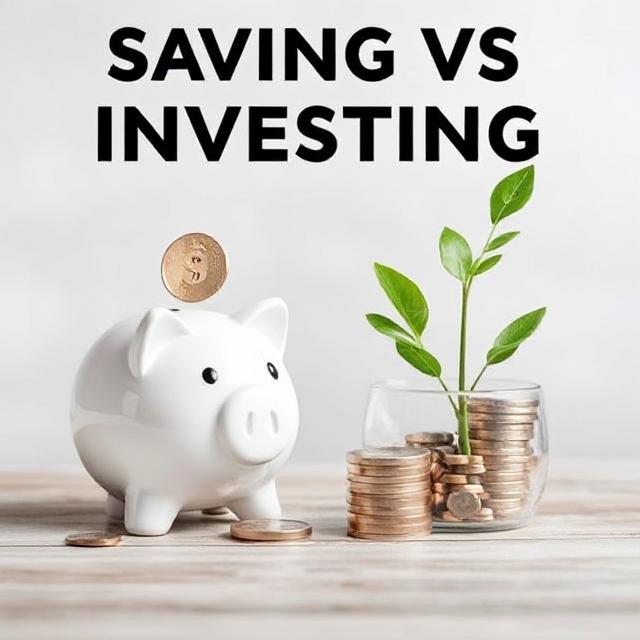
Saving vs Investing: Which One Gives You Financial Freedom Faster?
This question matters because how you split your cash now shapes your path toward long-term goals. You need a clear plan that protects day-to-day life while letting assets grow over time.
Start with a safety net: holding an emergency cushion in a low-risk account covers shocks and short-term goals. Once that cushion is set, reallocating part of your balance into diversified investments can boost average returns and help compound toward the future.
Experts suggest a simple checklist before moving funds: an adequate emergency fund, willingness to leave money invested for several years, and the patience to handle market ups and downs. Understanding risk and expected return helps you choose the right mix for your goals.
Key Takeaways
- Keep a low-risk account for emergencies before shifting funds to markets.
- Investing can increase long-term returns, but it brings more risk and volatility.
- Commit to a multi-year horizon to let investments compound.
- Balance stability and growth to protect daily life while pursuing goals.
- Use expert checkpoints as a roadmap when moving from cash to investment.
What you’re really asking today: how to reach financial freedom faster
Start by asking which dollars must stay liquid and which can ride market cycles for years.
You’re asking how to structure a simple plan so your money grows while protecting day-to-day stability.
Clarify near-term and long-term goals so you know which cash stays in an account and which can go to markets.
Map monthly income and essential expenses. That shows what you can set aside without harming cash flow.
Keep quick access to a portion of your balance for surprises. Avoiding forced sales reduces risk and preserves compounding.
?si=1bf1kGVGVsXDyEP1">?si=1bf1kGVGVsXDyEP1
- Checklist before investing: right-sized emergency reserves, managed high-interest debt, and automated contributions.
- Time alignment: use timelines so volatile assets aren’t used for short-dated needs.
- Access vs. return: liquidity first, growth second in a written plan you can follow when markets wobble.
| Priority | What to check | Why it matters | Action |
| Liquidity | Emergency account | Protects day-to-day cash flow and avoids forced selling | Hold 3–6 months of expenses in a high-yield account |
| Stability | Income vs expenses | Shows consistent savings capacity | Track monthly income and essential expenses |
| Growth | Investable balance | Allows compounding over time with managed risk | Leave funds invested for 2–5+ years and automate contributions |
| Control | Debt & plan | High-interest debt erodes returns; a written plan keeps you on track | Pay down costly debt and document your timeline and goals |
Saving vs. investing defined in plain English
Know the difference so you can match each dollar to its purpose.
Saving investing is about choice: one path favors easy access and safety; the other accepts market swings for growth potential.
Saving means setting aside cash in an easy-access, FDIC-insured savings account or similar place. Your principal is protected and you earn modest interest, so this bucket suits short-term needs and an emergency fund.
Investing means buying assets such as ETFs or stocks. Those holdings expose your balance to market movement. Returns can outpace inflation over time, but they are not guaranteed.
- When to pick safety: you prioritize access, certainty, and low risk for short goals or emergencies.
- When to pick growth: you accept volatility to aim for higher long-term returns and combat inflation.
- Match purpose to timeline: use savings accounts for near-term needs and investment accounts for longer horizons.
Think of this as putting money into the right bucket at the right time. Avoid money putting into markets when you’ll need cash soon.
The safety net first: build your emergency fund before you invest
Before chasing higher returns, make sure you have ready cash to handle unexpected costs.
How much to save: three, six, or twelve months of expenses
Size your fund by job stability and household income. Dual earners with stable roles can aim for about three months of expenses. Households with mixed stability should target six months.
If you rely on a single, less secure income, consider up to twelve months.
Why a high‑yield, FDIC‑insured savings account is the right home
Keep the fund in a high‑yield, FDIC‑insured savings account. This option protects principal while earning modest interest and gives instant access during an emergency.
Access vs. return: when cash liquidity beats market gains
Prioritize liquidity over higher rates so you avoid forced selling in a downturn. Choose low fees and mobile access, and automate transfers each payday to reach the target amount steadily.
| Household type | Suggested amount | Best account | Why it works |
| Dual earners, stable jobs | ≈3 months of expenses | High‑yield, FDIC‑insured savings | Protects cash, earns interest, instant access |
| Mixed stability | ≈6 months of expenses | High‑yield, FDIC‑insured savings | More cushion during income gaps |
| Single earner, insecure income | ≈9–12 months of expenses | High‑yield, FDIC‑insured savings | Prevents tapping investments in a crisis |
Time horizon and risk: when you save and when you invest
Your horizon determines whether cash should sit in an account or work in markets. Match the period you need the funds with the tool that handles risk best.
Short term (under two to three years)
Prioritize liquidity. If you will need the money within a few years, keep it in savings accounts or short-term accounts to avoid market risk.
That prevents forced selling and preserves purchasing power for near-term expenses.
Medium term (two to five years)
For a multiple-year term, consider conservative, diversified portfolios. Mix bonds, cash, and low-volatility investments to balance potential return and downside.
Expect some balance swings and plan not to touch the fund during dips.
Long term (five to ten years and beyond)
Long horizons allow more exposure to stocks and growth-focused investments. Compounding favors patience across many year cycles.
Make sure inflation doesn't erode cash by keeping long-term money invested for growth.
Volatility check
Ask if you can leave the account alone during drawdowns. If not, keep those dollars in liquid accounts and protect essential expenses.
| Horizon | Recommended mix | Why it works |
| Under 3 years | High-yield savings, short-term accounts | Protects principal and preserves timing for expenses |
| 2–5 years | Conservative diversified portfolio (bonds + low-volatility funds) | Improves return potential while limiting large swings |
| 5+ years | Stocks, index funds, diversified investments | Allows compounding and outpacing inflation over time |
Inflation, interest rates, and your real return right now
When inflation outpaces what banks pay, your stored cash loses purchasing power.
How real returns work: If the interest you earn on a savings account is lower than inflation, your real return is negative. That means the same dollars buy less over time.
Even many high-yield savings options can lag inflation. Over years, that gap slowly reduces what your income covers in daily life.
Practical steps to protect purchasing power
- Track inflation versus the rate your account pays so you know if real returns are negative.
- Keep short-term funds in an account for safety, and move longer-term funds toward diversified options that aim for higher return.
- Review your balance regularly so too much money does not sit idle in low-yield savings accounts after your emergency needs are met.
- Factor changes in income and contributions so rising deposits don’t increase inflation drag.
| Focus | Why it matters | Action |
| Inflation vs rate | Shows if your real return is positive or negative | Compare CPI to your account's interest every 6–12 months |
| Short-term funds | Needs liquidity and safety | Keep in high-yield savings or short-term accounts |
| Long-term funds | Need growth to beat rising prices | Consider diversified investing with a proper time horizon |
Saving vs Investing Which One Gives You financial freedom Faster?
Answer: protect short-term needs first, then let surplus money work for the future.
Practical answer: keeping a liquid account protects you now. After an emergency cushion is in place, routing extra funds into a low‑cost, diversified portfolio—like ETFs that track broad indexes—typically offers a higher average return than leaving those dollars in cash.
You must tolerate some risk and commit to a multi‑year horizon. Market swings are normal, and staying invested through cycles helps compounding do its work.
- Saving protects immediate needs; investing advances long-range goals such as retirement.
- The speed advantage depends on having your safety net and leaving surplus invested during downturns.
- Compare a simple example: once your cash cushion is funded, routing surplus to a diversified portfolio usually outperforms parking excess in savings over time.
- Align each account to a purpose so every dollar has a clear role in reaching goals.
Bottom line: no approach is guaranteed, but disciplined investing after safeguarding essentials is the proven playbook for faster progress toward long-term targets.
How to allocate your next dollar: a practical plan you can use
Make each new contribution count. Start with a short checklist that ties the dollar to a clear purpose and a timeline.
Your pre-investing checklist: emergency fund, high‑interest debt, and steady cash flow
Check three essentials: confirm an adequate emergency fund in an FDIC-insured high-yield savings account, pay down high‑interest debt, and verify steady income and manageable expenses so you can contribute without stress.
Blended strategy example: emergency fund + index ETFs for retirement
Keep the fund in a high-yield savings account for access. Then start putting money into broad, low-cost index ETFs inside a taxable brokerage or retirement account once the cushion is set.
Cost control: fees, taxes, and the impact on long‑term returns
Prioritize low expense ratios and minimal trading costs. Taxes and fees compound like a drag on returns, so choose platforms with low fees—Vanguard, Fidelity, Charles Schwab, Betterment, or Wealthfront.
Account choices in the U.S.: high‑yield savings, taxable brokerage, and retirement accounts
- High‑yield savings for short-term needs and emergency fund protection.
- Taxable brokerage for flexible investing money and gradual contributions.
- Retirement accounts to maximize tax advantages over long horizons.
Final step: document the plan, automate contributions, and set a rebalancing cadence so investing money becomes routine and resilient.
Beginner-friendly ways to invest your savings today
A low-friction way to start is picking broad-market ETFs that need little capital and give instant diversification.
ETFs that track indexes such as the S&P 500 let you own exposure to many stocks and funds with low fees. This option reduces the amount of research needed and keeps costs down.
Diversified, low‑cost ETFs and automated portfolios
Use diversified ETFs to get instant exposure across sectors. Many funds have tiny expense ratios and trade like stocks, so starting with a small amount is simple.
- Consider robo-advisors (Betterment, Wealthfront) to automate portfolio selection, rebalancing, and tax-loss harvesting.
- Or open accounts at Vanguard, Fidelity, or Charles Schwab and buy broad-market funds yourself.
- Focus on consistency: steady contributions beat timing the market when putting money to work.
Setting risk level to match your timeline and goals
Match term and risk so your portfolio can ride out volatility without harming near-term plans.
Choose a higher stock mix for long time horizons and more bonds for short terms. Monitor balance and behaviour through cycles rather than reacting to headlines.
Conclusion
Bottom line, build the right-sized emergency fund in an FDIC-insured high-yield savings account and keep that cash for short-term needs.
Then route surplus toward low-cost, diversified portfolios so long-term retirement and other goals can outpace inflation over years.
Review income, expenses, and contribution amounts each year so the plan fits changes in career, business, or family life.
Keep the fund intact while automating small, regular transfers into index ETFs as an example of a simple way to invest excess money for retirement and other long-term goals.
Focus on controllables—savings rate, fees, diversification, and steady behavior—so your plan quietly helps grow money across life.

0 Comments Comments