
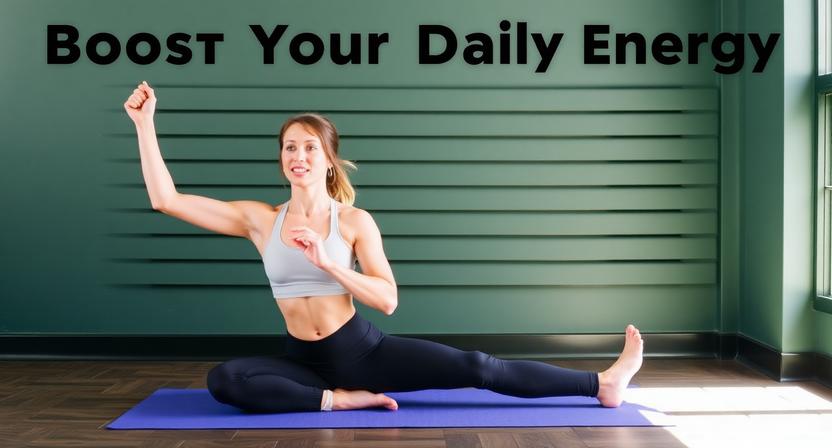
Boost Your Daily Energy with These Simple Exercises

Feel more alert and steady through your day by adding short bouts of movement that fit your schedule. Regular physical activity supports both body and mind, and small sessions can cut fatigue and lift mood. You don’t need a gym or long workouts to see results. This guide shows how Simple Exercise Habits for Daily Energy can help you stay focused, avoid afternoon crashes, and keep motivation high. Expect practical moves—walking, light jogging, quick home moves, and mobility work—that slot into tight time blocks. You’ll learn the benefits, pick a short workout routine, and adapt intensity to your fitness levels. This plan suits busy professionals, parents, students, and anyone who sits a lot in the United States. Start with consistency, not intensity, and build a routine that supports your life.
Small wins, safe form, and steady progress are the goal. For extra tips on hydration and quick boosts, see this guide to ways to boost your stamina and focus: boost your energy.
Key Takeaways
- Short, regular movement raises alertness and reduces fatigue.
- You can use short walks, home moves, and mobility drills without a gym.
- Consistency beats intensity when you begin.
- Plan workouts that fit your time and current fitness levels.
- Small, safe steps lead to lasting gains in health and focus.
Why daily movement boosts your energy levels
Short bursts of movement can give you a steady lift that lasts through the afternoon. This happens because consistent activity changes how your body and mind handle tiredness.
More energy, less fatigue with consistent activity
When you move regularly, your cells get better at using oxygen and fuel. That makes low-energy moments shorter and easier to push through.
Small steps add up: even brief sessions several days a week raise baseline alertness without long workouts.
Heart health benefits that support all-day stamina
Stronger cardiovascular fitness improves blood flow and oxygen delivery. Your heart works more efficiently, so everyday tasks feel simpler and less tiring.
Improved mood and lower stress through exercise
Physical activity triggers endorphins that lift your mood and sharpen focus. A better mood often boosts your motivation to stay active.
Lower stress levels save mental energy and cut the feeling of burnout that makes you sluggish.
Better sleep quality that helps you wake up energized
Regular activity helps you fall asleep faster and deepens restorative sleep. That leads to feeling more refreshed in the morning and ready to move.
Weight management and muscle support for a stronger body
Daily activity burns calories and builds lean muscles. Stronger muscles make chores like stairs and lifting easier, which lowers the effort your body needs each day.
| Benefit | How it works | What you feel | Practical tip |
| Less fatigue | Improved cellular energy use | More alert afternoons | Try 10-minute movement breaks |
| Better heart health | Stronger heart, improved circulation | Tasks feel easier | Include brisk walks |
| Improved mood | Endorphin release | Higher motivation | Pick activities you enjoy |
| Sleep gains | Faster sleep onset, deeper rest | Wake up refreshed | Stay consistent most days |
Focus on steady, manageable movement to get these health benefits and feel better through the day.
Simple Exercise Habits for Daily Energy you can start today
A few intentional minutes of movement each day make tasks feel easier and less draining. Pick one option that matches your available time and energy, and treat it as a quick reset you can repeat.
Brisk walking that fits into your day
Try a 30-minute brisk walk or break it into three 10-minute laps. Walk after lunch, park farther away, or hold a walking meeting. Walking is an easy default when motivation is low.
Easy jogging to boost circulation and mood
Start with a relaxed 30-minute jog or alternate run/walk intervals. Keep conversation-level effort so your breathing feels steady. This on-ramp raises circulation and lifts mood without advanced training.
Quick home workouts with squats, planks, and lunges
If you have 10–20 minutes, do a short workout at home. Squats, planks, and lunges need no equipment and fit small spaces.
Alternate walking or jogging days with strength-focused days to build a balanced routine without a gym.
Yoga and mobility to reduce stress and improve flexibility
Use short yoga flows or mobility drills when you feel tight or stressed. Yoga improves flexibility, builds strength, and helps you sit with less strain.
"Choose 30 minutes for walking or jogging, 10–20 minutes for a home routine, and yoga when you need to unwind."
Decision rule: if you have 30 minutes pick walking or jogging; if you have less, pick a quick workout; if you feel tight, choose yoga. Try a morning option to make this a steady part of your day.
A simple at-home workout routine for daily energy in under 20 minutes
You can follow a focused bodyweight circuit that hits strength, core, and back control in about 15–20 minutes. Complete each move as listed, repeat the circuit twice, and keep rests brief to stay within the time limit.
Squats
Squats build leg strength and help with daily tasks like standing and stairs. Aim for 10–15 reps. Beginners can use a chair as a depth target to keep safe form.
Push-ups (or knee push-ups)
Push-ups train upper-body strength and core stability. Keep a straight line from head to heels. If needed, drop to knee push-ups to progress without stalling.
Plank variations
Planks strengthen core and posture. Try 20–45 second forearm holds or knee planks as a modification. Focus on a neutral spine to protect your back.
Lunges
Lunges build balance, coordination, and leg muscle. Do 10–12 reps per side. Use stationary lunges when space is limited or when you’re starting out.
Dead bug
The dead bug teaches deep core control and keeps your lower back flat while moving opposite limbs. Do 10 slow reps per side with quality muscle engagement.
Hip bridges
Hip bridges activate glutes and support the lower back. Hold the top for 1–2 seconds on each rep. Strong glutes reduce strain from long sitting periods.
Superman-style back work
Lift with control to strengthen the posterior chain and improve posture. Perform 10–15 slow lifts, focusing on squeezing the back muscles rather than range of motion.
- Programming: 2 sets of each move, 10–15 reps (plank timed), 30–60 seconds rest between exercises.
- Scaling: Beginner: knee push-ups, shorter planks, chair squats. Intermediate: standard reps and holds. Advanced: longer holds, added tempo, or extra reps.
- Goal: Preserve form, build consistency, and raise daily alertness without overtaxing you.
"Start with control, progress by reps or hold time, and keep rest times short to finish this training in under 20 minutes."
How to build an exercise routine you’ll actually stick with
Create a tiny, reliable routine that fits your life and you’ll keep showing up. Small wins make steady progress and cut decision fatigue.
Start with a realistic minutes goal
Pick 5–10 minutes as your initial target. This step ensures success even on busy days and lowers the barrier to begin.
Anchor activity to a trusted habit
Attach the routine to something you already do in the morning or evening. After brushing your teeth, do 10 squats or take a 5-minute walk after coffee.
Use the two-minute rule and visible cues
Commit to two minutes when energy is low; momentum often carries you further. Place shoes by the door or keep a mat in sight to nudge action.
Reward, track, and stay flexible
Reinforce progress with small rewards like a favorite podcast during a walk or a hot shower. Log sessions in an app or calendar to make gains visible.
"Think in steps and systems, not all-or-nothing. Tiny, consistent actions become lasting routines."
| Step | Example | Fallback (minimum) |
| Start small | 5–10 minutes per day | 2-minute walk or plank |
| Anchor | After morning coffee or evening rinse | 2 squats after brushing teeth |
| Track & reward | App check, treat with podcast | Mark a calendar X |
Support your workouts with nutrition for steady daily energy
What you eat directly affects how hard your workouts feel and how long you keep them up.
The link between food and training is simple. If your body is under-fueled, workouts feel harder and motivation drops. That makes it less likely you will keep a routine over time.
Why essential nutrients matter for energy metabolism and motivation
Key nutrients help your body turn food into usable fuel. B vitamins and magnesium support nerves and focus, while ubiquinol helps mitochondria produce cellular power.
When metabolism runs smoothly, you feel more alert and find it easier to move, lift weight, and keep good form in your core and back.
What the BIOGENA ONE study reports about fatigue reduction and energy support
The BIOGENA ONE study tested a 99-ingredient formula that includes B vitamins, magnesium, and ubiquinol. After four weeks, 85% of participants reported less fatigue and reported a 54% drop in fatigue symptom severity.
That outcome suggests supplements can be a helpful option when exhaustion limits your movement.
"85% of participants reported less fatigue after 4 weeks and fatigue severity decreased by 54%."
Use supplements as support, not a substitute. Keep regular meals, hydration, and a sensible workout plan as your foundation. Supplements may help you sustain training time and protect form so you can lift weight and preserve your back and core.
| Need | Key ingredients | How they help |
| Cellular energy | Ubiquinol | Supports mitochondrial ATP production |
| Nervous system support | B vitamins, magnesium | Stabilize nerves and support focus |
| Fatigue reduction | Multinutrient formula | Reported 85% less fatigue, 54% severity drop (4 weeks) |
For practical steps, pair balanced meals with your routine, stay hydrated, and consider targeted support if tiredness persists. Learn more about syncing nutrition, exercise, and sleep at wellness trio: exercise, nutrition, and sleep.
Conclusion
Small, consistent movement adds up into real gains you can feel each week. You boost your energy most reliably by keeping a steady routine that fits your time and goals, not by one-off intense workouts. Walk, jog, do a quick home set, or use yoga and mobility depending on the day. The under‑20‑minute circuit described earlier is a practical default plan you can return to when you need structure and an immediate lift. Start with minutes you can keep, anchor the activity to a habit you already do, and use the two‑minute rule when motivation is low. Those steps protect consistency and help you reach the U.S. guideline of about 150 minutes of moderate activity per week.
Next step: pick one habit—try a 10‑minute walk or one circuit at home—schedule it this week, and track it to build momentum. Learn more about official guidance at Mayo Clinic: exercise recommendations.
0 Comments
Be the first to share your thoughts on this article.