
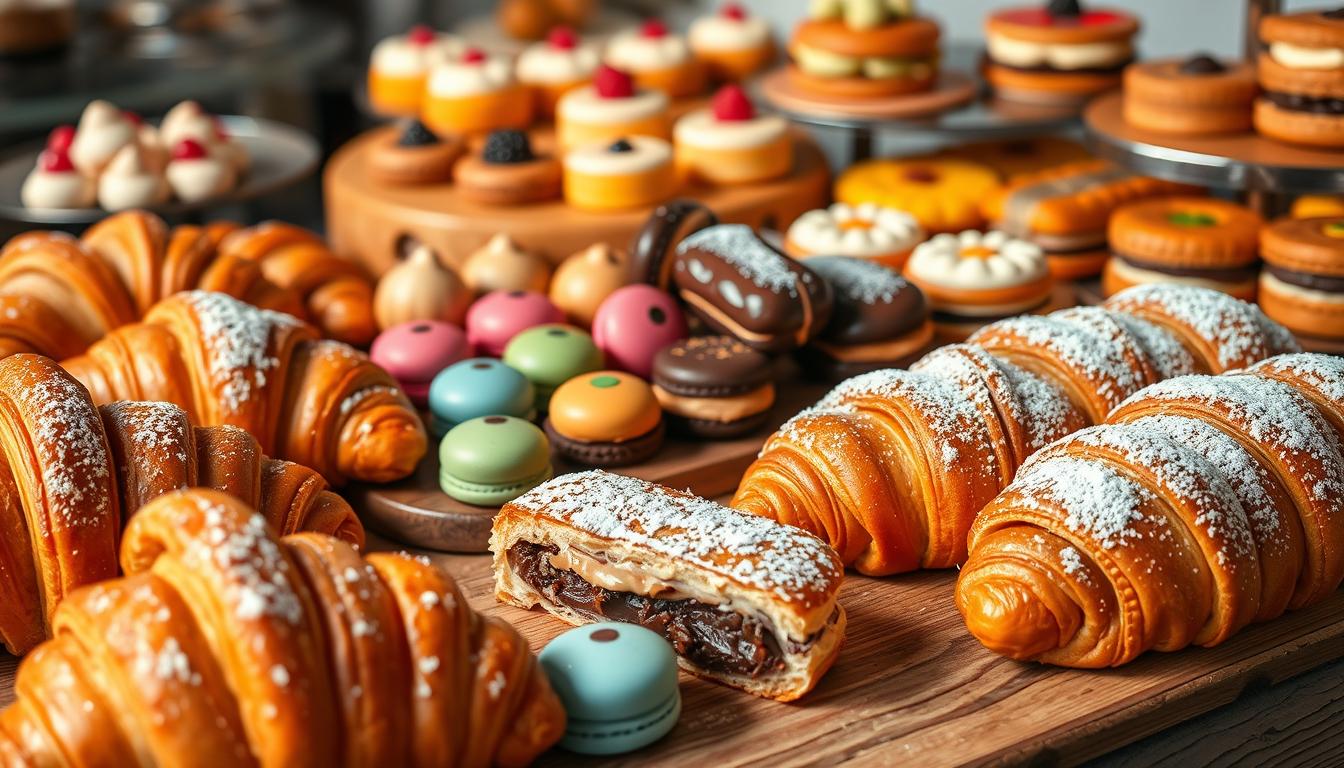
Explore the Art of French Patisserie

The allure of French pastries lies not just in their delicate flavors and intricate designs, but in the rich history and cultural significance they embody. For many, the world of French patisserie is a realm of wonder, filled with the promise of buttery croissants, delicate macarons, and the iconic mille-feuille.

Discover Best French Patisserie
As we explore the art of French patisserie, we uncover a tale as rich and layered as the pastry itself. From the flaky layers of croissants to the intricate designs of modern patisseries, the influence of French pastry can be seen around the globe.
Key Takeaways
- The history of French patisserie is a rich and complex one, spanning centuries.
- French pastries have had a significant influence on global cuisine.
- The art of French patisserie involves intricate designs and delicate flavors.
- Iconic French pastries include croissants, macarons, and mille-feuille.
- Modern patisseries continue to innovate and evolve the traditional French pastry.
The Rich Heritage of French Patisserie
With roots dating back to the Middle Ages, French patisserie has grown to become an integral part of French culture and identity. The history of French pastry dates back to the medieval period, when monasteries were known for producing simple baked goods. However, it wasn't until the Renaissance that pastry-making was elevated to an art form.
 Origins and Evolution Through the Centuries
The evolution of French patisserie was marked by significant milestones, including the establishment of the Guilde des Pâtissiers in 1270, which regulated the profession and set standards for pastry-making. Over the centuries, French patisserie continued to evolve, influenced by various social and cultural changes. The introduction of new ingredients and techniques, such as the use of laminated dough, further enriched the craft.
| Period | Significant Developments |
| Middle Ages | Simple baked goods produced in monasteries |
| Renaissance | Pastry-making elevated to an art form |
| 17th Century | Establishment of the Guilde des Pâtissiers |
The Cultural Significance of Pastries in France
French patisserie is not just about baking; it's an integral part of French culture and daily life. Parisian patisserie, in particular, is renowned for its exquisite pastries and intricate designs, attracting visitors from around the world. The best patisserie in France can be found in Paris, where traditional bakeries continue to thrive alongside modern patisseries.
In France, pastries are an essential component of social gatherings and celebrations. Whether it's a simple breakfast or a elaborate wedding cake, French patisserie plays a significant role in bringing people together. The art of French patisserie continues to be celebrated and enjoyed, both within France and internationally.
Essential Ingredients That Define French Pastry Excellence
At the heart of French patisserie lies a commitment to using only the finest ingredients. This dedication to quality is what sets French pastries apart, making them a staple in authentic French bakeries around the world.
The Importance of Butter in French Baking
Butter is a cornerstone of French patisserie, contributing to the flaky, tender texture of pastries like croissants and puff pastry. The quality of butter used can significantly impact the final product, with many top French pastry shops opting for high-fat, European-style butter.
Flour, Sugar, and Other Key Components
Flour and sugar are other essential ingredients in French baking. The type of flour used can vary, with some pastries requiring the delicate texture of cake flour, while others need the strength of bread flour. Sugar, on the other hand, adds sweetness and texture, with different types of sugar (e.g., granulated, confectioner's) used for various effects.
Traditional vs. Modern Ingredient Approaches
While traditional French patisserie relies on classic ingredients, modern patissiers are experimenting with new flavors and ingredients. This blend of traditional techniques with modern twists is what keeps French patisserie vibrant and evolving.
| Ingredient | Traditional Use | Modern Twist |
| Butter | Used in lamination for croissants | Incorporated with unique flavors like truffle or garlic |
| Flour | Used for pastry dough and cakes | Alternative flours like almond or coconut flour |
| Sugar | Used for sweetness and decoration | Used in creative ways, such as caramelized or flavored |
As quoted by Pierre Hermé, "The quality of the ingredients is fundamental to the success of a pastry." This emphasis on quality is what continues to drive the excellence of French patisserie.
"The art of French patisserie is not just about following a recipe, it's about understanding the ingredients and techniques that make a pastry truly exceptional."
— Pierre Hermé, renowned French patissier
Classic French Pastries Every Enthusiast Should Know
From the buttery layers of a croissant to the delicate flavors of a macaron, French pastries are a treat for the senses. These artisanal french pastries have become an integral part of French cuisine, offering a diverse range of textures and tastes that cater to all palates.
Croissants and Pain au Chocolat
Croissants, with their flaky, golden layers, are a quintessential French pastry. Made from yeast dough, butter, and flour, they require precise lamination to achieve their signature texture. Pain au chocolat, a variation filled with chocolate, is another favorite among both children and adults. To make perfect croissants, it's essential to keep the butter cold and handle the dough gently to maintain the layers.
Éclairs and Choux Pastry Creations
Éclairs are long, thin pastries filled with cream and topped with a layer of glaze. They are made from choux pastry, a dough that is cooked twice, first on the stovetop and then in the oven. Mastering choux pastry is key to creating éclairs and other pastries like profiteroles. The key to successful éclairs is in the piping and baking; they should be firm but not too dark.
Tarts and Galettes
Tarts and galettes are other popular French pastries that showcase the versatility of French baking. Tarts can be sweet or savory, with fillings ranging from frangipane to lemon curd. Galettes, often associated with the Galette des Rois (King's Cake), are typically made with a single crust and filled with frangipane. The art of making the perfect tart crust lies in achieving the right balance between the crust and the filling.
| Pastry | Main Ingredients | Characteristics |
| Croissants | Butter, flour, yeast | Flaky, layered |
| Éclairs | Choux pastry, cream | Long, creamy |
| Tarts | Pastry crust, various fillings | Versatile, can be sweet or savory |
Macarons and Petit Fours
Macarons, a delicate meringuebased cookie sandwich, have gained worldwide popularity. When making macarons, it's crucial to achieve the perfect
"foot" and "shell." Petit fours, small individual pastries, are another staple of French patisseries, offering a variety of flavors in each bite. The art of creating these delicate pastries requires precision and patience.
"The art of French patisserie is not just about following recipes, it's about understanding the nuances of texture and flavor."
Mille-feuille and Opera Cake
Mille-feuille, also known as a napoleon, is a layered pastry made with puff pastry, pastry cream, and caramelized sugar. Opera cake, on the other hand, is a multi-layered cake made with coffee-soaked layers, chocolate ganache, and chocolate glaze. Both are considered classics of French patisserie and require skill and patience to execute perfectly.
In conclusion, these classic French pastries represent the pinnacle of french dessert selection. Whether you're a seasoned baker or a novice, attempting to recreate these pastries at home can be a rewarding experience, allowing you to appreciate the craftsmanship that goes into each delicate piece.
Discover Best French Patisserie Techniques
To create authentic French bakery treats, one must understand the fundamental techniques behind them. French patisserie is renowned for its intricate preparations and precise methodologies, which have been refined over centuries.
Lamination: The Secret Behind Flaky Pastries
Lamination is a critical technique in French patisserie, involving the layering of dough and butter to create flaky, tender pastries. This process, known as "tourage," requires precision and patience. To achieve perfect lamination, it's essential to maintain the dough at the right temperature and to roll it out evenly.
The key steps in lamination include:
- Preparing the dough and butter block
- Rolling out the dough to the correct thickness
- Folding the dough to create layers
- Repeating the process to achieve the desired number of layers
Mastering Choux Pastry
Choux pastry is a versatile dough used in various French pastries, including éclairs and profiteroles. Mastering choux pastry involves understanding the importance of cooking the dough to the right consistency and piping it correctly.
Tips for mastering choux pastry:
- Cook the dough until it's smooth and shiny
- Pipe the dough in consistent, rounded shapes
- Bake until the pastry is golden and crisp
The Art of Perfect Cream Fillings
Cream fillings are a crucial component of many French pastries, requiring a delicate balance of flavor and texture. To achieve perfect cream fillings, it's essential to use high-quality ingredients and to whip the cream to the right consistency.
Some key considerations for cream fillings include:
- Using fresh, high-quality cream
- Balancing sweetness and flavor
- Whipping the cream to the correct consistency
Decorative Finishing Touches
The final touches on a French pastry can elevate it from simple to sublime. Decorative techniques such as glazing, piping, and dusting with powdered sugar add visual appeal and sophistication.
To add a professional finish:
- Use a steady hand when piping borders or designs
- Apply glazes or syrups evenly
- Dust with powdered sugar just before serving
Regional Specialties Across France
Exploring France's regional specialties reveals a world of patisserie delights, shaped by local ingredients and cultural heritage. The atmosphere is warm and inviting, whether you find yourself in Paris, Marseille, or Toulon. The air is filled with the sweet smell of freshly baked treats.
Parisian Patisserie Classics
Paris, the capital of France, is renowned for its patisserie classics. The city's bakeries are famous for producing iconic pastries such as croissants, pain au chocolat, and macarons. These delicacies are not only a staple in Parisian bakeries but have also gained international acclaim.
Alsatian Delights
Alsace, a region in northeastern France, offers its own unique patisserie traditions. Alsatian pastries often feature local fruits, such as cherries and apples, in tarts and other desserts. The region's cultural heritage, influenced by both French and German cuisines, is reflected in its rich and varied pastries.
Southern French Sweet Traditions
Southern France, including cities like Marseille and Toulon, boasts its own sweet traditions. The region is known for its use of almonds, honey, and other local ingredients in pastries. Traditional desserts include navettes, small boat-shaped pastries flavored with orange blossom water.
Breton Pastry Specialties
Brittany, or Bretagne, in northwest France, has its own distinct pastry specialties. The region is famous for its crêpes, both sweet and savory. Breton pastries often incorporate local ingredients like butter, eggs, and sugar, showcasing the simplicity and richness of regional cuisine.
| Region | Specialty | Description |
| Paris | Croissants | Flaky, buttery pastries often enjoyed for breakfast |
| Alsace | Fruit Tarts | Tarts featuring local fruits like cherries and apples |
| Southern France | Navettes | Boat-shaped pastries flavored with orange blossom water |
| Brittany | Crêpes | Thin pancakes that can be sweet or savory |
Legendary French Pastry Chefs and Their Innovations
Legendary French pastry chefs have played a crucial role in elevating the art of patisserie, pushing the boundaries of flavor, texture, and presentation. While respecting the traditions, modern chefs are experimenting with flavors, textures, and presentation, bringing a new dimension to the authentic French bakery experience.
Pierre Hermé: The Picasso of Pastry
Pierre Hermé is renowned for his innovative approach to French patisserie. Often referred to as the "Picasso of Pastry," Hermé has redefined the Parisian patisserie landscape with his exquisite creations and attention to detail. His use of unconventional flavors and artistic presentation has set a new standard in the world of pastry.
Cédric Grolet: Master of Trompe-l'œil Desserts
Cédric Grolet is celebrated for his mastery of trompe-l'œil desserts, creating visually stunning pastries that deceive the eye. His work embodies the essence of modern French patisserie, combining traditional techniques with innovative presentation. Grolet's desserts are not only a feast for the taste buds but also a visual treat.
Other Influential Patissiers Shaping the Craft
Besides Hermé and Grolet, several other influential patissiers have made significant contributions to French patisserie. Chefs like Christophe Michalak and Philippe Conticini have introduced new techniques and flavors, further enriching the craft. Their innovations have helped maintain the relevance of French patisserie in the modern culinary world.
| Pastry Chef | Notable Contribution | Innovation |
| Pierre Hermé | Redefined Parisian patisserie | Unconventional flavors |
| Cédric Grolet | Mastery of trompe-l'œil desserts | Visual presentation |
| Christophe Michalak | New techniques in pastry | Modern flavor combinations |
The legacy of these legendary French pastry chefs continues to inspire a new generation of patissiers, ensuring the art of French patisserie remains vibrant and evolving.
The Perfect Pairings: Beverages to Complement French Pastries
To fully appreciate French pastries, one must consider the ideal beverage to accompany them. The art of pairing beverages with French pastries is an essential aspect of the French culinary experience, enhancing the flavors and textures of these delicate treats.
French pastries are often enjoyed with a variety of beverages, each offering a unique complement to the pastry's flavors. The right pairing can elevate the overall experience, making it more enjoyable and sophisticated.
Coffee and Tea Traditions with Pastries
Coffee and tea are staples in French bakeries, often paired with pastries to start the day. Croissants and pain au chocolat are classic pairings with coffee, while tea is often enjoyed with more delicate pastries like macarons.
Wine and Champagne Pairings
For a more luxurious experience, wine and champagne are paired with French pastries to create a sophisticated dessert course. Champagne is a popular choice for its celebratory feel, while wines like Moscato or Sauternes complement sweet pastries.
Seasonal Pairing Recommendations
Seasonal pairings offer a fresh twist on traditional combinations. For example, during the summer, refreshing beverages like iced tea or rosé are perfect with light, fruity pastries. In winter, hot chocolate or mulled wine pairs beautifully with richer pastries.
How to Experience Authentic French Bakery Treats in America
Authentic French bakery experiences are more accessible than ever in the US, thanks to a proliferation of high-quality bakeries. For those eager to indulge in the art of French patisserie, major US cities offer a range of exceptional bakeries that promise an authentic taste of France.
Top French Bakeries in Major US Cities
Some of the top French bakeries can be found in cities like New York, Los Angeles, and Chicago. For instance, Dominique Ansel Bakery in New York City is renowned for its creative takes on classic French pastries. Similarly, La Brea Bakery in Los Angeles offers a range of artisanal breads and pastries that adhere to traditional French baking methods.
- New York City: Dominique Ansel Bakery, Ladurée
- Los Angeles: La Brea Bakery, Boulangerie Julien
- Chicago: Do-Rite Donuts, Café Jolly
What Makes an Authentic French Bakery Experience
An authentic French bakery experience is characterized by the use of high-quality, traditional ingredients and time-honored baking techniques. The ambiance of a French bakery, with its inviting aroma of freshly baked bread and pastries, also plays a significant role in creating an immersive experience. Attention to detail, from the display of pastries to the décor, is crucial in evoking the charm of a French bakery.
Shopping for French Pastry Ingredients in the US
For those looking to recreate French pastries at home, shopping for authentic ingredients is essential. Specialty stores and online retailers offer a range of French pastry ingredients, including high-quality butter and almond flour. Some recommended sources include:
- King Arthur Baking Company
- Penzeys Spices
- Amazon (for specialty French ingredients)
By exploring these top French bakeries and learning where to find authentic ingredients, anyone can experience the delight of French bakery treats in America.
Conclusion: Embracing the Artistry of French Patisserie
French pastry, with its rich history and diverse range of delectable desserts, remains a testament to France’s culinary prowess. As we have explored, the art of French patisserie is a complex blend of tradition, innovation, and craftsmanship.
To discover best French patisserie, one must appreciate the importance of high-quality ingredients, precise techniques, and attention to detail. From the flaky layers of a croissant to the delicate flavors of a macaron, French pastries continue to captivate audiences worldwide.
Whether you're a seasoned pastry enthusiast or just beginning to explore the world of French patisserie, there's always more to learn and discover. With legendary pastry chefs like Pierre Hermé and Cédric Grolet pushing the boundaries of creativity and innovation, the world of French pastries remains a vibrant and exciting culinary landscape.
As you continue to explore the artistry of French patisserie, be sure to seek out authentic French bakeries and patisseries, where you can experience the full range of flavors and techniques that make French pastries so beloved.
?si=Sd8o1iFYRMdtaP4W
0 Comments
Be the first to share your thoughts on this article.