
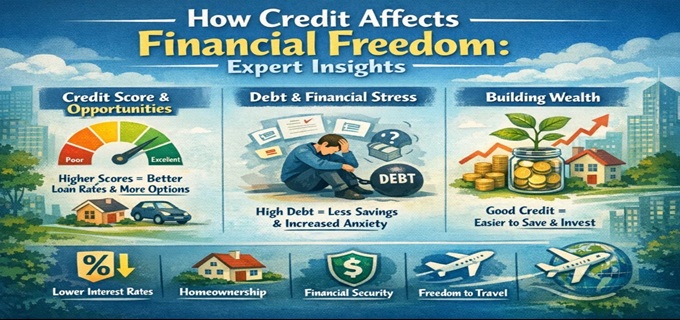
How Credit Affects Financial Freedom: Expert Insights

Many individuals remain unaware of the credit scoring system until they face a major life event. This often happens when trying to buy a house, secure a loan fora business, or finance a large purchase. That three-digit number holds significant power over your financial journey. Your credit score is a numerical snapshot of your creditworthiness. Lenders use it to decide if you qualify for mortgages, credit cards, and other loans. It also influences the interest rates you receive. Scores typically range from 300 to 850. The higher your number, the less risky you appear. A better score can unlock lower rates, saving you a substantial amount of money over time. A poor score can limit your options and increase costs. Understanding this system is the first step toward taking control. This connection between your credit score and your overall economic well-being is profound. It affects more than just borrowing power. It can influence rental applications, insurance premiums, and even some job opportunities.
Grasping how your credit works empowers you to make smarter choices. It puts you in the driver's seat of your financial future. This guide provides expert insights to help you build and leverage good credit to achieve your goals.
Key Takeaways
- Your credit score is a three-digit number that lenders use to evaluate your risk as a borrower.
- Many people don't learn about their score until they apply for a major loan or make a large purchase.
- A higher score can lead to loan approval and significantly lower interest rates, saving you money.
- Your credit influences areas beyond loans, including rentals, insurance, and sometimes employment.
- Understanding and managing your credit is a powerful step toward long-term financial stability.
- Building good credit habits over time is essential for accessing better financial opportunities.
Understanding Credit Scoring: The Foundation of Financial Freedom
At its core, a credit score is a numerical summary of your borrowing history. This three-digit number gives lenders a quick snapshot of your reliability. It helps them decide if you can get credit for a mortgage, auto loan, or credit card.
Your score represents your risk level at the time you apply. A higher number means you are a lower risk. This often leads to better interest rates and terms.
What is a Credit Score and Why It Matters
Scores typically range from 300 to 850. They are sorted into categories like Poor, Fair, Good, Very Good, and Exceptional. Each category opens or closes doors to different financial products.
It is vital to know that each person has their own individual credit scores. Married couples, for example, have separate reports. Lenders will check both when making a decision on a joint application.
The Role of Credit Bureaus and the FICO Score
The most common system is the FICO score, created by Fair Isaac Corporation. About 90% of top lenders use this model. Your FICO number is calculated from the data in your credit report.
Three major bureaus—Equifax, TransUnion, and Experian—compile your credit history. They each use the FICO model, but your scores from them might differ slightly. This happens because not all lenders report information to all three reports.
Checking your credit reports from all three agencies is a key step for your economic health. It ensures all the information is correct.
How Credit Affects Financial Freedom
Practical examples reveal the substantial financial impact of different credit standings. Your three-digit number directly influences the costs you pay
for borrowed money. This connection becomes especially clear when examining major purchases like homes and vehicles.
Impact on Loan Interest Rates and Monthly Payments
Consider a $200,000 thirty-year fixed-rate mortgage. With an exceptional credit score (760-850), lenders might offer a 3.307% interest rate.
Your monthly payment would be approximately $877.
However, with a lower score in the 620-639 range, the same loan could carry a 4.869% rate. This increases your monthly payment to $1,061. The
difference of $184 each month adds up significantly over time.
| Credit Score Range | Interest Rate | Monthly Payment | Total Cost Over 30 Years |
| 760-850 (Exceptional) | 3.307% | $877 | $315,720 |
| 620-639 (Fair) | 4.869% | $1,061 | $382,063 |
Real Life Examples and Financial Implications
The mortgage example shows how your credit score can cost you over $66,000 in additional interest. This principle applies to car loans, personal loans, and credit cards too.
A strong credit profile unlocks better opportunities across your financial life. It can lead to lower insurance premiums and waived security deposits. Understanding how your credit score impacts your financial helps you make informed decisions that save money long-term.
Navigating the Components of Your Credit Score
Your FICO score isn't a single number but a complex calculation based on five distinct factors. Each component carries a different weight in determining your final three-digit result. Knowing these elements helps you focus your improvement efforts where they matter most.
Payment History and Its Influence
Payment history is the most significant factor, accounting for 35% of your credit score. This reflects your track record of paying debts on time across all accounts. It includes credit cards, retail accounts, and installment loans like car or student loans.
Your payment history also considers public records such as bankruptcies. Making at least the minimum payment due helps your score. Even one late payment can cause a significant drop.
Amounts Owed and Credit Utilization
The amounts owed component represents 30% of your score. This measures your credit utilization—how much debt you carry versus your available limits. High balances relative to your credit limit hurt your rating.
A good rule is to keep balances below 30% of each card's credit limit. People with top scores often maintain single-digit utilization rates across all credit cards. Managing this account balance wisely demonstrates responsible credit use.
Building and Maintaining Good Credit
Two often-overlooked factors in your credit score are the length and diversity of your credit history. Mastering these areas requires a strategic, long-term approach.
Your financial track record gains strength with time. Lenders value seeing a consistent pattern of responsible behavior.
Effective Credit Management Strategies
A key strategy is to maintain your oldest accounts in good standing. The average age of your open accounts significantly influences your score.
Closing an old credit card can shorten your overall credit history. This may temporarily lower your rating.
Responsibly managing different types of credit also helps. This includes:
- Installment loans like student or car loans
- Revolving credit, such as credit cards
You don't need every type of account. A healthy mix demonstrates your ability to handle various debt structures.
Establishing a Long Credit History
Patience is essential for building a long history. You cannot accelerate time, but you can start positive habits now.
Every on-time payment adds another positive entry to your record. This builds a compelling story for future lenders.
This consistent effort leads to a good credit score. A strong credit profile opens doors to better opportunities throughout your life.
Strategies for Securing and Using Credit Cards Wisely
When evaluating various payment options, understanding the application process is crucial. Your approach to acquiring revolving accounts should balance immediate needs with long-term effects on your borrowing profile.
Selecting the Right Credit Card Options
Each application for a new card creates a hard inquiry that affects your rating. Multiple applications in a short period can signal risk to lenders. This is especially true for people without established credit histories.
Consider factors like interest rates, annual fees, and rewards programs when choosing a card. Your selection should align with your spending patterns and financial objectives. Strategic choices help you avoid unnecessary hits to your score.
Many institutions now provide free score monitoring to account holders. This allows you to track how your card usage influences your overall profile. Sound management includes making timely payments and keeping balances low.
Treat your cards as payment tools rather than income extensions. Pay balances in full when possible to avoid accumulating debt. Responsible usage over time builds positive payment history that demonstrates your reliability to lenders.
By selecting the right credit cards and using them wisely, you create a strong foundation for future borrowing opportunities. This strategic approach helps you leverage benefits while maintaining healthy financial habits.
Actionable Steps to Enhance Your Credit Health
Taking control of your financial destiny begins with understanding your credit report. This document holds the key to improving your standing with lenders.
Start by obtaining your free credit report from AnnualCreditReport.com. This service provides access to all three bureau reports annually.
Timely Payments and Debt Reduction Tips
Paying bills on time is the most critical step to improve credit. Your payment history weighs heavily on your score.
Even one late payment can significantly impact your rating. Set up automatic payments for all accounts to avoid missed due dates.
Reduce your debt by keeping credit card balances low. Aim to use less than 30% of your available credit across all accounts.
Monitoring and Disputing Credit Report Errors
Regularly review your credit report for inaccuracies. Errors can unfairly lower your score and limit opportunities.
If you find mistakes, dispute them immediately with the credit bureau and the lender. Correcting errors can quickly boost your profile.
These practical steps create a solid foundation for major goals like buying a home. Consistent effort will improve credit over time.
Maximizing Financial Freedom Through Credit Insights
Strategic management of your lending history can dramatically reduce borrowing costs over time. Your three-digit rating directly influences the interest rates you qualify for across various financial products.
Understanding Interest Rates and Loan Options
Lower interest percentages mean significant money saved throughout your loan term. This applies to major purchases like a home or vehicle financing.
| Credit Score Range | Mortgage Rate | Car Loan Rate | Personal Loan Rate |
| 720-850 (Excellent) | 3.5% | 4.2% | 6.8% |
| 680-719 (Good) | 4.2% | 5.8% | 9.5% |
| 620-679 (Fair) | 5.1% | 7.9% | 14.2% |
The table illustrates how better credit scores unlock superior rates. This savings compounds over years, putting more money back in your pocket.
Beyond traditional loans, strong credit can waive security deposits and lower insurance premiums. These benefits create a positive cycle of financial growth.
Conclusion
Your three-digit number serves as a gateway to better rates and expanded financial possibilities. The insights shared here demonstrate how responsible
management of your borrowing profile can transform your economic future. Regular monitoring of your report and implementing the actionable steps outlined willhelp you build a strong foundation. These practices lead to tangible benefits like lower interest costs and increased purchasing power over time. Developing good credit habits requires consistency, but the long-term rewards are substantial. Start today by reviewing your current standing and committing to the strategies that will improve your financial health for years to come.
0 Comments
Be the first to share your thoughts on this article.