
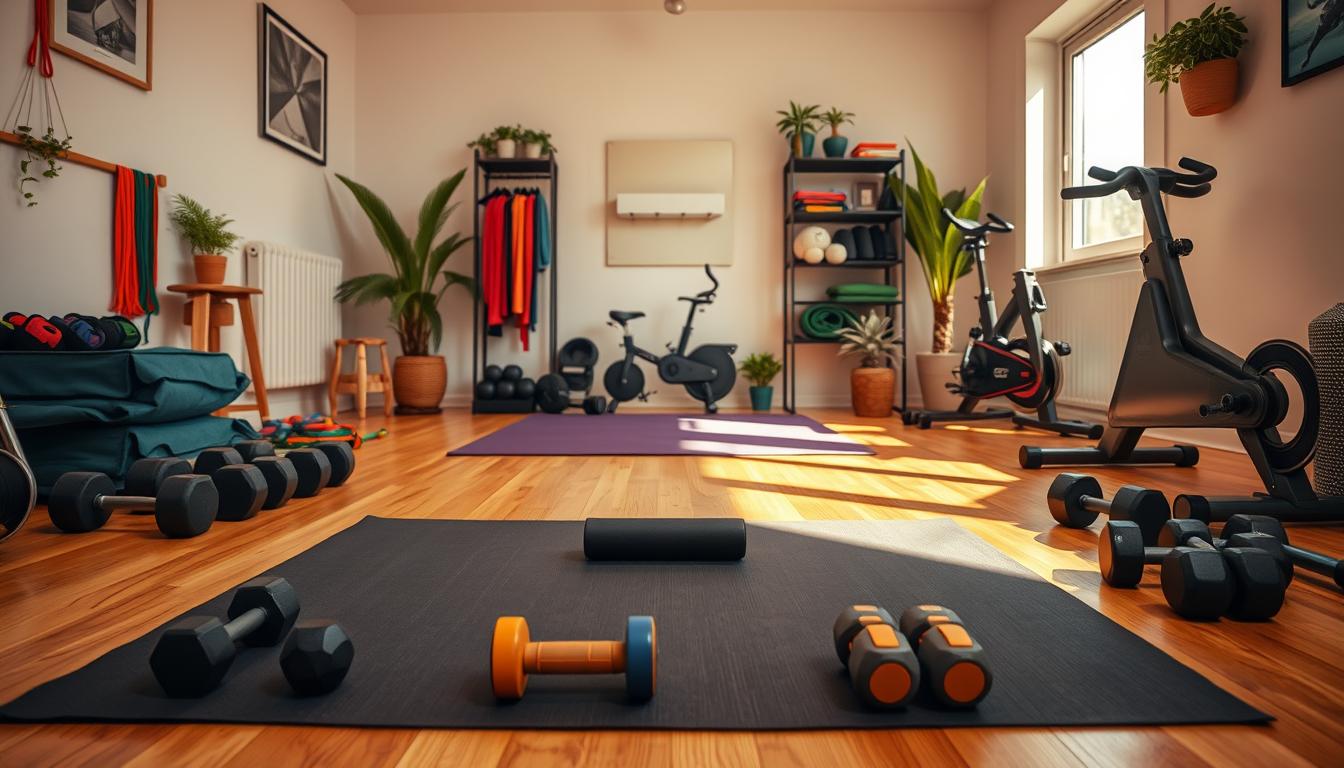
How to Build an Affordable Home Gym (Skip the Gym Fees)

You can replace a recurring gym membership with a one-time investment that pays back fast. The average membership runs about $58 per month, and many people waste roughly $39 of that by under-using facilities. A starter setup for strength and cardio can be done for under $1,000, or much less if you buy used. This guide shows a clear path. You’ll define goals, measure your space, set a realistic budget, then buy essentials in a smart order. Expect practical gear that is versatile, durable, and easy to move if you change homes.
Also consider time costs. Commuting, parking, and waiting add to the real expense of the gym. A compact home setup cuts that friction and helps you stay consistent with fitness.
Key Takeaways
- Replacing a membership with a home gym can save money and reclaim time.
- A practical starter kit (barbell, rack, plates, bench, jump rope) fits many budgets.
- Buying used can drop initial costs into the few-hundred-dollar range.
- Plan by defining goals, measuring space, and staging purchases.
- This approach suits busy people who want steady workouts at home.
Why a home gym beats a gym membership for most people
A quick cost-and-time check shows why most people save more by training at home. The average gym membership runs about $58 per month,
yet many members under-use access and waste roughly $39 of that each month. That gap turns a reasonable price into recurring money down the drain.
Cut the real costs
Your monthly bill is only part of the cost. Add under-use and you may be paying for sessions you never take. A simple payback on equipment often beats ongoing membership fees within months.
Get time back
Typical trips involve driving, parking, changing, and waiting for machines. Those steps can add roughly 40 minutes each way in some cases and sap the will to train. With gear at home, sessions are shorter and more predictable.
Train cleaner and calmer
Gyms can be crowded and have shared surfaces that worry many people. At home you control cleaning, noise, and the atmosphere. No waiting for a rack or bench keeps your workout efficient and lowers friction that kills consistency.
- No waiting: your equipment is always ready.
- Less clutter: favor simple tools over flashy machines.
- Better outcomes: more sessions usually beat perfect gear you rarely use.
Define your goal, budget, and space before you buy anything
Start by deciding what you really want from your workouts—strength, fat loss, steady cardio, or general fitness. A clear goal keeps purchases useful and cuts regret.
Choose your training focus
Pick one primary focus. Strength training needs a barbell, rack, and bench. Cardio priorities favor a jump rope, brisk walking plan, or a compact machine.
Measure your space
Measure floor area and ceiling height. Note obstructions like rafters or garage doors. Map the layout with tape before buying a rack or large gear.
Set a realistic budget and staging plan
Decide what you can afford now and what you’ll add later. Buy 1–2 core items first. Use used plates or dumbbells for savings.
- Minimum viable gym: one versatile tool and a conditioning option.
- Staged buys reduce waste and confirm your routine.
| Goal | Core equipment | Priority notes |
| Strength | Barbell, rack, plates, bench | High initial cost; best for progressive overload |
| Cardio | Jump rope, bike, or rower | Low footprint options fit tight spaces |
| General fitness | Dumbbells, bands, mat | Versatile, low cost, quick results |
How to Build an Affordable Home Gym & Get Rid of Your Gym Membership
Pick a small set of proven tools that unlock the most workouts for the least money.
Start with versatile, non-gimmicky equipment you’ll actually use
Choose multi-use gear that supports presses, squats, pulls, and hinge work. One barbell, a bench, and a few plates let you cover most strength needs.
Prioritize portability, durability, and multi-use items over flashy machines
Durable, portable items save money long term. They survive moves and hold resale value. Avoid single-purpose machines that take space and rarely get used.
Plan a simple buying sequence so you don’t blow your budget upfront
Buy one high-impact item at a time. Start with what unlocks the most workouts, then add targeted upgrades when you actually use them weekly.
- Define affordable: a capable setup, not a commercial gym replica.
- Guardrails: prioritize things you will use every week; skip bulky gadgets.
- Bodyweight multiplier: a few tools plus bodyweight work challenges most people.
| Priority | Why it matters | Budget note |
| Versatility | Supports many exercises and programs | High value per dollar |
| Portability | Easier storage and resale if you move | Choose compact or foldable options |
| Staged buys | Prevents impulse spending and waste | Start small, grow as you use |
For a practical roadmap and sample shopping order, see this affordable setup guide.
What to buy first: the essential home gym equipment
Start your gear list with tools that cover the most exercises in the least space. That approach gets you training fast without overspending.
Dumbbells or adjustable dumbbells
Begin with dumbbells or an adjustable set. They support presses, rows, lunges, and loaded carries in a tiny footprint.
Barbell and plates
A barbell plus plates gives you measurable progressive overload for long-term strength gains. Used iron weight plates are often the best value.
Bumper plates make sense if you plan Olympic lifts or want quieter drops, but they increase cost.
Squat rack or power rack
A sturdy rack with a pull-up bar is the centerpiece. It lets you squat, press, and train safely alone.
Bench options
For most people a flat bench is cheap and versatile. An adjustable bench adds incline work but costs more and needs space.
Resistance bands and jump rope
Resistance bands are high ROI for warm-ups, mobility, and assisted moves. A simple PVC jump rope provides fast, effective cardio and conditioning in small spaces.
- Minimum essentials: dumbbells, barbell, plates, rack, bench, bands, rope.
- Shop smart: buy used plates or CAP Olympic plates and a basic rope to stretch your budget.
For a quick shopping reference, see this budget equipment list.
Budget-friendly upgrades that add variety without taking over your home
A compact set of low-cost upgrades can add big variety without stealing floor space.
Choose solid pull-up hardware. Mount a bar to ceiling joists or a reinforced wall bracket so it feels rock solid. Avoid flimsy door-frame options for long-term safety and confidence during pull-ups and hanging core work.
Weighted vest for everyday intensity
An adjustable weighted vest turns walks, stair climbs, and bodyweight exercises into strength training. Start light and increase as you adapt.
- Guideline: ~20–40 lbs for many females; ~40–60 lbs for many males, depending on fitness.
- Benefit: Adds weight without a big piece of equipment.
Comfort and recovery tools that pay off
A quality yoga mat makes planks, mobility, and floor exercise more comfortable—essential on concrete floors.
High-density foam rollers cut recurring recovery costs by letting you self-massage sore muscles at home.
Compact strength add-ons
An ab roller trains the full core through a single, efficient motion. It is small, cheap, and highly effective.
A portable dip stand lets you perform dips, inverted rows, and other upper-body work without a bulky station.
"Small, durable items often deliver the best mix of variety and value for a limited space."
| Item | Main use | Why buy |
| Ceiling or wall pull-up bar | Pull-ups, hangs, core | Secure, long-lasting, supports heavy weight |
| Weighted vest | Weighted walks, runs, bodyweight | Scales intensity; portable and versatile |
| Yoga mat & foam roller | Comfort, mobility, recovery | Protects floor; reduces recovery costs |
| Ab roller | Core training | High return for size and cost |
| Dip stand | Dips, rows, upper-body | Compact alternative to a full station |
Space-saving setup ideas for apartments, spare rooms, basements, and garages
Even a small corner in an apartment can host a reliable training zone with smart choices. Pick a layout that matches your floor plan: apartment corner, spare room, basement nook, or a garage bay.
Wall-mounted storage and modular systems
Mount hooks and racks for plates, bars, resistance bands, and a jump rope. Wall storage reclaims floor space fast and keeps plates off the floor.
Compact, foldable, and multi-use gear
Choose adjustable dumbbells, a foldable bench, and smart rack attachments that replace bulky machines. These options give big variety while shrinking your footprint.
Dual-purpose zones that work for your lifestyle
Create a small “lift zone” for bar work and a separate conditioning area with rope or bands. In shared rooms, store gear in cabinets or under a desk so your home office stays tidy.
- Layout reminders: leave clearance for the bar path, watch door swing, and check ceiling height.
- Access equals consistency: keep frequently used equipment at arm’s reach.
- Garage strategy: pair tool walls with gym hooks so storage serves both uses.
| Space | Best fit | Quick tip |
| Apartment corner | Adjustable dumbbells, bands | Use vertical racks for plates |
| Spare room | Foldable bench, bar + small rack | Stow bench when not in use |
| Garage/basement | Full rack, plates, conditioning machines | Anchor rack and plan clearance |
Safety essentials when you train alone at home
When you lift at home without a partner, small mistakes can have big consequences. You must design a setup that lowers risk and keeps every session predictable.
Flooring that protects you and your place
Rubber matting gives the best mix of grip and durability for heavy weight work. It resists slipping and protects floors under a rack or bench.
Foam tiles work for lighter equipment and cardio corners. They cushion impact but compress under very heavy loads.
Horse stall mats are a budget favorite where you plan serious squats and drops. They handle abuse and cost less per square foot than many premium tiles.
Spotter arms and safety bars are non‑negotiable
Fit spotter arms or safety bars on your rack before you do loaded squats or bench work. Set heights so a failed rep rests on steel, not on you.
Adjust them each session as your stance or bench position changes.
Quick stability and weight checks you can run now
- Verify all bolts and pins are tight and the rack sits level.
- Anchor the rack if the manufacturer recommends it or if it rocks under load.
- Run lighter sets first to confirm j-cup security, bench wobble, and bar path.
Respect rated limits for gear
Know the published weight ratings for your bench, rack, barbells, and attachments. Choose equipment that gives a safety margin above your max lifts.
Cheap, wobbly gym equipment often costs more in the long run through repairs, replacements, or injuries. Buy well where it matters most.
| Risk area | Action | Why it matters |
| Flooring | Rubber mat or stall mats | Protects floor and prevents slips under heavy weight |
| Spotter arms | Install and adjust each session | Prevents getting pinned during squats and bench |
| Gear rating | Check weight limits | Ensures rack, bench, and barbell handle your lifts |
For a deeper checklist and recommended safety add-ons, see this home gym essentials guide.
Choose the right cardio approach for your budget and routine
Pick movement you enjoy; consistency matters far more than owning the fanciest machine. Your best cardio plan fits your schedule and the space you actually use each week.
No-machine options that work
Low-cost choices like jump rope intervals, brisk walking, cycling outside, and bodyweight circuits deliver big results with almost no gear.
Try short jump rope rounds after strength sets or set aside 30 minutes of brisk walking on recovery days. These options save you time and money while improving stamina and burning fat.
When a machine makes sense
If weather, joint comfort, or a tight schedule prevents outdoor work, a machine can pay off. Compare by footprint and function before you buy.
| Machine | Best for | Footprint & notes |
| Rower | Full-body cardio | Moderate space; high calorie burn |
| Spin bike | Low-impact, compact | Small footprint; easy indoor use |
| Treadmill | Walking/running convenience | Large footprint; versatile but bulky |
- Rule: choose the option you will actually do most weeks, not the flashiest model.
- Practical check: measure storage and estimate weekly use before buying a large piece for your gym.
Build a simple weekly workout plan using your home gym
A short, repeatable schedule makes workouts easy to start and hard to skip. Keep sessions focused and under 60 minutes so training fits your week and stays sustainable.
Strength template around squats, presses, pulls, and hinges
Day split: 3–4 sessions per week. Each session centers on one main compound pattern and a complementary lift.
- Day 1 — Squat focus: squats 3–5 sets, 5–8 reps; accessory: lunges or dumbbell rows.
- Day 2 — Press focus: bench or overhead press 3–5 sets, 5–8 reps; accessory: pull-ups or band rows.
- Day 3 — Hinge & pull: deadlifts or Romanian deadlifts 3–5 sets, 3–6 reps; accessory: hamstring curls or single-arm presses.
- Optional Day 4 — Full-body lighter day with higher reps and band work.
Quick conditioning finishers with jump rope and resistance bands
After strength work, use 5–10 minute finishers to spike heart rate. Try jump rope intervals: 30 seconds on, 30 seconds off × 8 rounds.
Band circuits (3 rounds): band pull-aparts × 15, banded squats × 12, banded rows × 12. These raise intensity without extra equipment.
Progression rules: add reps, add weight, or shorten rest
Progressive overload is simple: add a rep first. When you hit the top rep range for all sets, add a small weight and drop reps as needed.
| When | Do this | Why |
| All sets hit target reps | Add 2–5 lbs (smallest jump) | Preserves form and steady weight progress |
| Can't add weight | Add 1–2 reps per set | Increase volume without large jumps in load |
| Want more intensity | Shorten rest by 10–30 seconds | Improves conditioning and training density |
Log each workout: exercise, sets, reps, and weight. A short record shows progress and keeps motivation high.
Recovery note: keep weekly volume realistic so you can train consistently. Rest, sleep, and modest progression beat sporadic extremes.
For a practical buying and plan reference, check this starter plan and shopping guide.
Save money long-term and make your home gym stick
Turn your budget into long-term value by combining smart used buys with a plan that rewards steady training. This keeps dumbbells and plates in play and prevents equipment pileups.
Buy used smart: Craigslist, Facebook Marketplace, and garage sales
Search local listings daily and be ready to act. Dumbbells and weight plates move fast; patience pays.
Rule of thumb: target about $1 per pound for dumbbells. Iron plates usually give the best price per pound.
Payback math: how a $500–$1,000 setup replaces years of membership dues
If your gym membership costs roughly $58 per month, a $600 setup breaks even in about 10–11 months.
Multiply the savings when more people use the gear or your local membership price is higher. Over several years, you keep that money in your pocket and the equipment holds resale value.
Consistency strategy: earn upgrades by hitting usage milestones
Protect your budget and habits by awarding new purchases only after clear milestones. For example, train 4 days per week for 12 weeks, then add a new set of dumbbells or a specialty plate.
Track sessions like you track lifts. Log days trained and equipment used. That turns new gear into a reward for behavior, not impulse.
| Area | Practical tip | Why it matters |
| Used dumbbells | Watch Craigslist, Facebook Marketplace, garage sales; aim ≤ $1/lb | Cuts price dramatically; quick resale if needed |
| Plates | Prioritize iron weight plates; buy in sets | Best value per pound; durable for home gyms |
| Payback | $500–$1,000 setup vs $58/month membership | Break-even ~9–17 months; long-term money saved |
| Consistency | Earn upgrades after 3 months at 4x/week | Prevents wasted purchases; builds habit |
Conclusion
The right setup turns a modest budget into lasting fitness gains at home.
You can build a functional home gym for under $1,000 and stop paying monthly membership fees that add up. Define your goal, measure your space, set a realistic budget, then buy essentials in a staged order.
Focus on versatile, durable, and safe equipment. That gear outperforms gimmicks and lowers regret while keeping workouts consistent.
The biggest wins are clear: you save time by eliminating commutes and waiting, you save money versus monthly dues, and you train more often because gear is always accessible.
Next step: pick one starter item—adjustable dumbbells or a jump rope—and schedule your first week of workouts. Keep the plan simple and your space tidy so the setup stays useful for years.
0 Comments
Be the first to share your thoughts on this article.