
How to Improve Flexibility Safely: Effective Methods That Works

Do you feel stiff when you bend over or reach for something? That tightness can make daily tasks and workouts harder. Learning the right way to enhance your range of motion is crucial for your body and long-term health. Good flexibility helps you move with ease and confidence. It supports everything from athletic performance to simply feeling better. A consistent routine is the key to making lasting progress without risk. This guide provides proven techniques to help you improve flexibility effectively. You will learn different stretching methods and how to prepare your body. We will also cover the best time and frequency for your training.
By following these steps, you can build a sustainable practice. The goal is to help you move more freely and reduce the chance of injury. Your journey toward greater mobility starts here.
Key Takeaways
- Enhanced flexibility makes everyday movements easier and reduces injury risk.
- A consistent, structured routine is essential for safe and effective progress.
- Proper preparation of the body before stretching is crucial for safety.
- Understanding different stretching techniques helps maximize your results.
- Timing and frequency of your training sessions significantly impact your gains.
- Long-term health benefits extend beyond physical performance to overall well-being.
- These methods are adaptable for all fitness levels and lifestyles.
Understanding the Role of Flexibility in Your Health
The ability to move freely through your full range of motion significantly impacts your quality of life. This capacity affects everything from basic daily tasks to athletic performance.
Research confirms that maintaining adequate joint mobility helps you perform routine activities effectively. Simple actions like reaching overhead or bending become smoother when your muscles and joints work harmoniously.
The connection between flexibility and injury prevention
Your level of mobility directly influences your injury risk. Tight muscles cannot extend fully through their natural range, making them more susceptible to strains during physical activity. Studies show that while immediate pre-activity stretching may not prevent acute injuries, consistent training over weeks enhances muscle power. This long-term approach reduces your overall risk of joint and muscle problems.
How flexibility enhances daily activities and athletic performance
Regular mobility work improves your balance performance significantly. This benefit becomes increasingly important for maintaining independence as you age. Beyond physical performance, research suggests flexibility training may offer cardiovascular advantages. Reducing arterial stiffening could potentially lower heart disease risk while improving overall function. Workplace stretching programs have demonstrated reduced musculoskeletal injuries for those in repetitive positions. Your movement capacity exists on a continuum, meaning improvement is always possible regardless of your starting point.
The Benefits of a Regular Stretching Routine
The rewards of a dedicated stretching routine extend deep into your body's systems. This practice supports both physical performance and long-term wellness.
Improved blood flow and muscle recovery
Your circulation gets a significant boost from consistent stretching. Enhanced blood flow delivers more oxygen and nutrients to your muscles and joints. This process reduces soreness and accelerates recovery after workouts. Your cardiovascular system also benefits, with potential improvements to heart rate and blood pressure.
Enhanced coordination, balance, and stress relief
Stretching lengthens your muscles over time, increasing your range of motion. This leads to better coordination and stability in daily activities. Your muscles function more effectively through their full motion. This improvement supports your overall fitness and movement quality. Regular sessions also provide mental calm by reducing physical tension. This mindfulness component offers a powerful counter to daily stress.
Preparing Yourself for Safe and Effective Stretching
Before diving into stretching exercises, understanding your body's current state is essential. Proper preparation ensures you maximize benefits while minimizing injury risk.
Importance of warming up and assessing your current flexibility
Your muscles respond best when properly warmed. Cold tissues are more prone to injury during stretching movements. Begin with five minutes of light cardio to increase blood flow. This warm-up prepares your body for the demands of stretching. It makes your muscles more pliable and responsive. Assessment helps you establish a baseline for your flexibility journey. Simple tests like the sit and reach measure hamstring range. The zipper test evaluates shoulder mobility. The ideal time for deep stretching is after your main exercise session. Your muscles are already warm from physical activity. This allows for safer, more effective stretching. If you prefer pre-workout stretching, never skip the warm-up phase. Understanding your body's current limitations prevents overstretching. This approach supports steady flexibility gains over time. Mental readiness is equally important. Approach your full-body stretch routine with patience. Listen to your body's signals rather than pushing through discomfort.
Exploring Types of Stretching: Static and Dynamic Techniques
Understanding the difference between static and dynamic stretching is crucial for effective training. These two approaches serve distinct purposes in your fitnessroutine. Each method targets your muscles differently based on when you perform them.
When and how to perform static stretches
Static stretching involves holding a stretch in a fixed position for 15-30 seconds. You should perform this type of stretching after your main exercise when muscles are warm. Move slowly into the stretch position until you feel mild tension. Hold each position without bouncing while maintaining steady breathing. This approach allows muscles to lengthen gradually to their full range of motion. Proper timing ensures maximum benefit without risking injury.
Implementing dynamic movements for a better warm-up
Dynamic stretching consists of active movements that take joints through their natural range of motion. These movements are ideal before physical activity to prepare your body. Unlike static stretches, you don't hold any single position.
Examples include leg swings where you allow your leg to move back and forth naturally. Other effective dynamic movements include hip openers and butt kicks. According to current research, dynamic stretching serves as an excellent warm-up strategy.
This approach increases blood flow and muscle temperature safely. It helps transition your body from rest to activity efficiently.
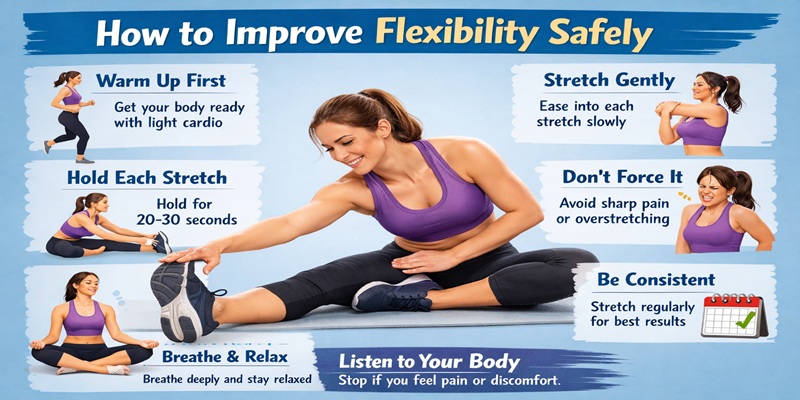
How to Improve Flexibility Safely
Proper execution of stretching movements separates effective training from potentially harmful practices. Your approach determines whether you build lasting mobility or risk setbacks.
Key safety tips to avoid over-stretching and injury
Move gently into each stretch until you feel mild tension. Never push to the point of sharp pain, as this signals potential tissue damage.
Maintain steady breathing throughout each position. Holding your breath creates tension, while rhythmic breathing helps your body relax into the movement.
| Safe Practice | Unsafe Practice | Reason |
| Slow, controlled movements | Bouncing or jerking motions | Prevents muscle micro-tears |
| Mild tension in target muscle | Sharp pain in joints | Protects connective tissues |
| Steady breathing pattern | Holding breath during stretch | Promotes muscle relaxation |
| Gradual progression over time | Forcing rapid flexibility gains | Allows tissue adaptation |
Recognize the difference between productive muscle stretching and harmful joint strain. The sensation should focus on the muscle belly, not surrounding joints.
Some traditional stretches may compromise joint alignment. Evaluate whether old routines still serve your current needs, as recommended by the Mayo Clinic stretching guidelines.
Respect your current limitations while working to increase flexibility. Consistent, mindful practice yields sustainable results without injury risk.
Step-by-Step Guide to Essential Stretching Exercises
Building a practical stretching routine requires focusing on key muscle groups systematically. The American College of Sports Medicine recommends targeting major areas at least twice weekly.
Targeting major muscle groups: Back, legs, neck, and chest
Your routine should address all primary movement areas. Begin with larger muscle groups before moving to smaller ones. For your back, try the child's pose. Kneel on the ground, sit back on your heels, and walk your hands forward. Lower your chest toward the floor and hold for 30 seconds. Your legs benefit from multiple stretches. The quadriceps stretch targets the front of your thigh. Stand and pull your ankle toward your glutes while keeping your knee pointing down.
Examples of practical stretches for everyday routines
Incorporate these simple exercises into your daily schedule:
- Neck relief: Gently tilt your head to each side, holding for 10 seconds
- Chest opener: Extend one arm across your body and press with the opposite hand
- Hips flexibility: Use a kneeling lunge position to stretch the front of your hip
Hold each static stretch for 30-60 seconds to improve your range of motion. Consistency with these fundamental movements builds lasting mobility.
Advanced Techniques to Boost Your Flexibility
Modern flexibility training incorporates tools that directly address the connective tissues surrounding your muscles. These methods offer a different way to enhance your overall suppleness and range of motion.
Integrating foam rolling and self-myofascial release
Research shows foam rolling can produce short-term gains similar to traditional stretching. This technique, known as self-myofascial release, works on the fascia—the tissue enveloping your muscles. Using a roller on your thigh, for example, increases circulation. Roll up and down three to four times, then rock your leg side to side. This action helps break up adhesions that limit movement. Other effective tools include massage sticks, balls, and percussion devices. Each provides a unique way to target tight tissues and trigger points. Spending just a few minutes can yield significant tissue-loosening benefits. Combining these methods creates a powerful synergy. You might foam roll a specific muscle group before your stretching routine. This prepares the tissues, leading to more effective and lasting flexibility gains over time. This approach demonstrates that you can improve flexibility through more than one modality. Experimenting helps you discover the best techniques for your body's unique needs.
Integrating Flexibility Training into Your Overall Fitness Routine
Lasting gains in your range of motion come from a dedicated and strategic routine. This means making stretching a regular part of your life, not just an occasional activity. Consistency is far more critical than the intensity of any single session.
Building a consistent stretching schedule for lasting improvement
The American College of Sports Medicine recommends performing stretching exercises at least two days per week. For the best results, try to stretch after every workout. Your muscles are warm and more receptive, which maximizes your flexibility gains. Dedicate 20-30 minutes to this training several times a week. This investment pays off with better performance and reduced injury risk. It often takes several weeks of daily effort to see major changes. Be patient and trust the process. Schedule sessions after strength training or on rest days for active recovery. For very tight areas, daily stretching is essential. You might even stretch those spots more than once a day. Studies show that even short holds of 10-30 seconds, done regularly, can improve joint mobility. Balance your overall fitness by giving flexibility work the time it deserves.
Conclusion
Developing supple muscles and joints represents a long-term commitment to your physical well-being. The journey toward better mobility yields rewards that extend throughout your daily life and athletic pursuits. You now possess a comprehensive toolkit for enhancing your movement capacity. The methods covered provide a safe way to work with your body's natural limitations while steadily expanding your range. Consistency remains the cornerstone of meaningful progress. Making stretching a regular part of your routine, ideally after workouts, maximizes benefits while minimizing injury risk. Remember that sustainable flexibility gains develop gradually over weeks and months. Patience and proper technique will serve you better than aggressive pushing. Your commitment to this training becomes an integral part of your overall health strategy. The reduced risk of strain and improved movement quality support your body's long-term function. Move forward with confidence, applying these principles to continue increasing your flexibility. Your dedication will pay dividends in enhanced performance and daily comfort.
0 Comments
Be the first to share your thoughts on this article.