
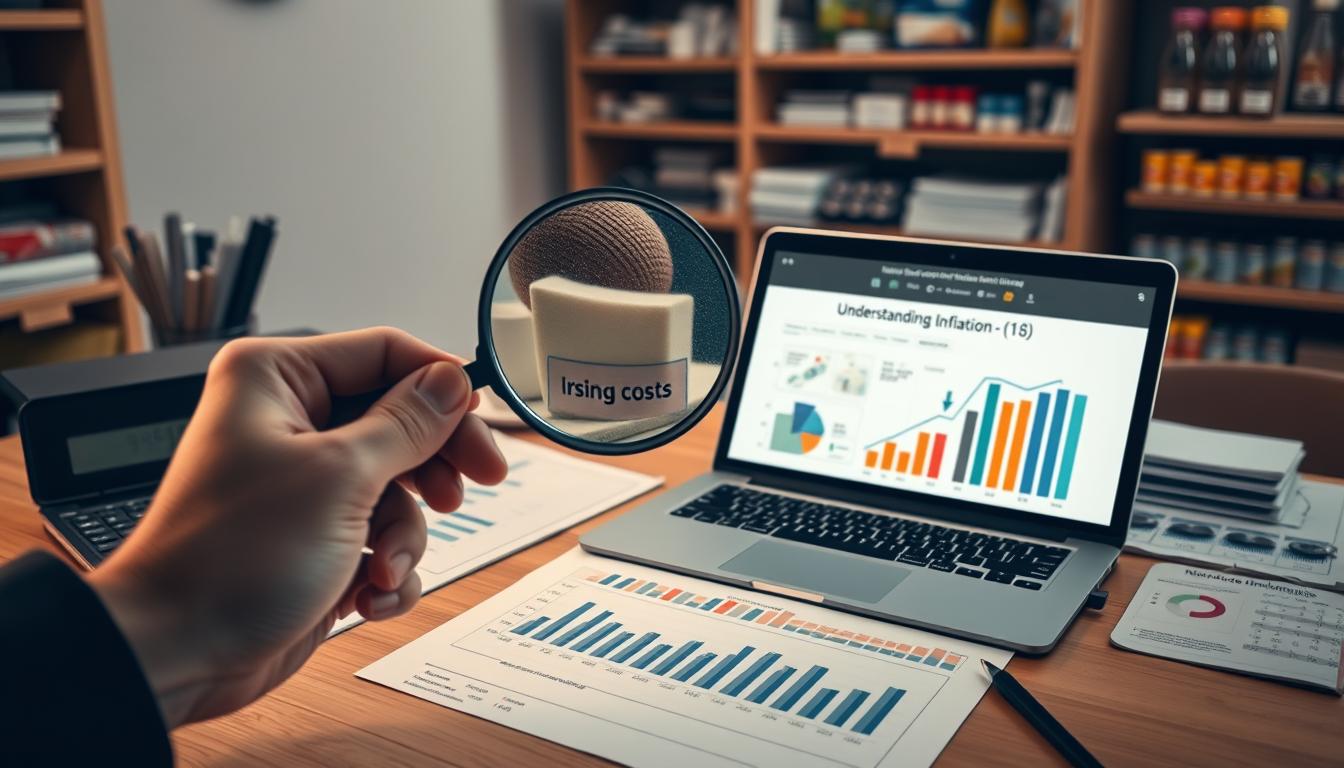
How to Understand Inflation as a Consumer: A Guide
When the cost of everyday items rises consistently across the board, you're experiencing economic inflation. This phenomenon occurs when prices for goods and services increase over extended periods. Your money gradually buys less than it used to. If your grocery bill seems higher or filling your gas tank costs more, you're feeling the real effects. Your purchasing power diminishes during these periods. The economy experiences these cycles regularly, but recent trends have been particularly noticeable. Recent data shows significant fluctuations, with rates reaching 9.1% in June 2022— the highest in forty years.
While prices moderated to 2.4% by September 2024, they've since risen to 3.0% as of January 2025. These changes directly impact your household budget and financial planning.
Key Takeaways
- Inflation represents sustained price increases across multiple product categories
- Your purchasing power decreases when inflation occurs
- Recent economic data shows significant inflation fluctuations
- Everyday expenses like groceries and utilities are affected
- Understanding these trends helps with financial decision-making
- Inflation impacts savings, investments, and long-term planning
- Different consumers experience varying effects based on spending habits
Understanding Inflation and Its Effects on Your Wallet
Price increases for everyday essentials quietly diminish what your income can purchase. This erosion of purchasing power is the most direct effect you experience.
What Inflation Means for Your Purchasing Power
Essentially, your money buys less over time. If your salary doesn't increase at the same pace as prices, you effectively receive a pay cut. This silent erosion impacts your savings and long-term financial goals.
Real-World Examples of Price Changes
Historical comparisons make this concept tangible. Consider these changes in the cost of common goods and services:
- A gallon of gasoline cost 31 cents in 1965 versus about $4.08 today.
- A loaf of bread jumped from 21 cents to roughly $2.50.
- Average annual private college tuition soared from $607 to over $35,000.
This example shows how compound inflation creates dramatic differences. For a deeper understanding of inflation, these real-world price shifts are crucial for any consumer to recognize.
How to understand inflation as a consumer
Your daily shopping experience holds valuable clues about broader economic trends. Recognizing these patterns helps you make smarter financial decisions.
Recognizing Inflation in Everyday Life
Look for coordinated price movements across different spending categories. When your grocery bill, gas costs, and utility payments all trend upward simultaneously, you're observing genuine inflation.
This differs from temporary spikes in specific items. Seasonal produce fluctuations or holiday travel surges represent normal market changes. Sustained across-the-board increases signal deeper economic shifts.
Track your regular expenses monthly to identify these trends. Compare current costs against previous periods to spot meaningful patterns.
Key Economic Indicators to Watch
Several official metrics help gauge the economic climate. The Consumer Price Index (CPI) measures average price changes for common goods and services.
Monitor the inflation rate announced monthly by government agencies. Economists consider a 2% annual increase healthy for sustained growth. Significant deviations from this target warrant attention.
Key reports to follow include:
- Monthly CPI releases from the Bureau of Labor Statistics
- Federal Reserve announcements about interest rate decisions
- Employment data affecting wage pressures
Understanding these indicators empowers you to anticipate financial impacts. You can adjust spending and saving strategies accordingly.
Exploring the Causes and Types of Inflation
Behind every price increase lies specific economic mechanisms that shape your spending reality. Economists categorize these driving forces into distinct patterns with different implications for your wallet.
Demand-Pull vs. Cost-Push Inflation
Demand-pull inflation occurs when consumer demand outstrips available supply. When people spend more freely, businesses may struggle to keep shelves stocked. This scarcity drives prices upward as products become more valuable.
This scenario typically unfolds during economic booms with low unemployment. Rising wages and confidence encourage more spending on goods and services.
Cost-push inflation follows rising production costs that businesses pass to consumers. Higher expenses for materials, labor, or energy force price increase to maintain profitability.
The 1970s energy crisis demonstrated this effect perfectly. Skyrocketing oil costs raised manufacturing and transportation expenses across the economy.
External Factors Impacting Prices
Global events can trigger price increase beyond normal supply-demand balance. Natural disasters disrupt production chains, while conflicts like the Ukraine war affect energy and food prices.
Sometimes multiple causes converge simultaneously. The 2022 inflation surge to 9.1% combined pent-up demand, supply-chain issues, government spending, and geopolitical tensions.
These external factors remind us that inflation often results from complex interactions between market forces and world events.
How Inflation is Measured and Its Impact on Interest Rates
Government agencies use specialized tools called price indexes to track economic trends. These measurements help economists gauge the health of our economy and inform policy decisions.
Understanding Price Indexes: CPI and PCE
The Consumer Price Index (CPI) tracks average prices paid by urban consumers. This index serves as the basis for Social Security adjustments and wage negotiations.
The Personal Consumption Expenditures (PCE) price index provides a broader view of spending patterns. The Federal Reserve prefers this measurement for monitoring purposes.
Both indexes track costs for typical goods and services households purchase regularly. Increases beyond 2% annually signal potential economic concerns.
The Role of the Federal Reserve in Controlling Inflation
When the Federal Reserve detects rising inflation, it adjusts the federal funds rate. This action influences broader interest rates throughout the economy.
Higher interest rates make borrowing more expensive for consumers and businesses. This cooling effect helps stabilize prices by reducing demand.
The Fed employs additional tools like changing discount rates and reserve requirements. These monetary policies aim to balance economic growth with price stability.
Practical Strategies for Navigating Rising Prices
Implementing practical financial strategies becomes essential when economic conditions shift. These approaches help protect your financial stability against market pressures.
Budgeting and Adjusting Your Spending
Begin with a thorough review of your monthly budget. Identify areas where you can reduce discretionary spending while accommodating higher costs for essentials.
Prioritize necessary expenses like groceries and utilities. Look for temporary reductions in non-essential categories that won't significantly impact your lifestyle.
Maintain your emergency savings fund covering three to six months of living expenses. Consider high-yield accounts that offer better interest rates.
Delay major purchases and significant borrowing during periods of high inflation. Postponing home or vehicle purchases can save thousands in interest costs.
Continue investment contributions to retirement accounts despite tempting short-term alternatives. Historical assets like real estate often perform well during these cycles.
Historical Context and Economic Trends in Inflation
Examining past economic cycles provides crucial perspective on current market conditions and future expectations. These historical patterns reveal how different factors can drive sustained price increases across various periods.
Lessons from Past Economic Cycles
The late 1960s saw significant price pressures during the Vietnam War era. Low unemployment and strong growth pushed wages higher, which in turn caused businesses to raise their prices.
During the 1970s, high oil costs created widespread expectations that other prices would also rise. This became a self-fulfilling prophecy as companies and workers built anticipated increases into their decisions.
The Federal Reserve's aggressive response in the 1980s successfully controlled runaway inflation. However, this approach came with significant tradeoffs for the broader economy.
Recent surges remind us that multiple factors can converge simultaneously. Supply chain disruptions and geopolitical tensions combined with strong consumer demand to drive prices upward. The Federal Reserve's monetary policy decisions have played a critical role in moderating these increases.
Historical context shows that controlling rapid price increases often requires difficult choices. These decisions can impact employment levels and overall economic stability.
Conclusion
Economic awareness transforms price increases from threats into manageable challenges. Your understanding of inflation mechanisms provides a solid foundation for financial decisions.
This knowledge directly impacts your purchasing power and long-term security. You can now anticipate changes in costs for essential goods and services.
Remember that economic cycles are typically temporary. Your preparedness makes you an active participant rather than a passive observer.
Both individual consumers and policymakers influence the broader economy. Your informed choices contribute to overall financial stability during periods of inflation.

0 Comments Comments