
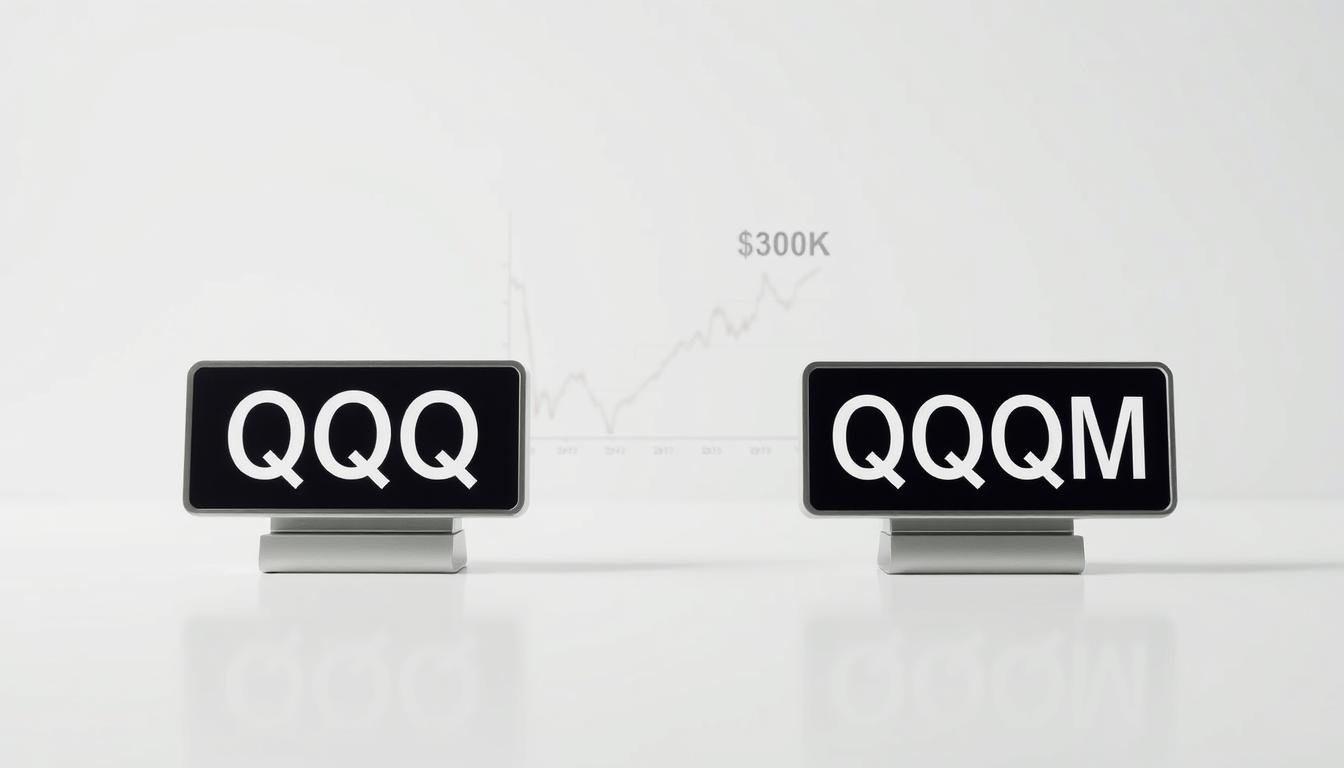
QQQ vs QQQM: Which ETF Turns $100K Into More Wealth? Performance, Fees & Growth Compared

Picture a moment when you have $100K set aside for an investment that aligns with your hopes. You may feel excitement rushing through your veins. You want growth, yet you crave
peace of mind.
Some look at QQQ because it has been around since 1999 with a large asset base. QQQM arrived in 2020 with a smaller footprint and a slightly lower expense ratio. Each tracks
the same tech-focused index. The question is which ETF is better qqq vs qqqm with $100k in, and how will it shape your financial roadmap?
QQQ has a 0.20% expense ratio, while QQQM sits at 0.15%. QQQ holds $288 billion in AUM, compared to QQQM’s $31.2 billion. Both aim to track the tech-driven Nasdaq-100. The path you choose may hinge on cost or established track records.
?feature=shared">?feature=shared
Key Takeaways
- Expense ratios can shape long-term returns.
- Liquidity differs between older and newer funds.
- Larger asset size may bring more stability.
- Lower fees can add up over big investments like $100K.
- Knowing which ETF is better QQQ vs QQQM with $100k in helps frame your future strategies.
Understanding the Tech-Heavy Nasdaq ETFs
Many market participants watch qqq vs qqqm performance with interest. Both exchange-traded funds are tied to the Nasdaq-100, which features a strong focus on technology leaders like Apple, Microsoft, Nvidia, Amazon, and Meta. These innovative firms often drive growth, though they may face swift price
movements when tech sentiment shifts.
Some see this sector weight as an advantage, since new products and trends often emerge from high-tech companies. Others remain cautious about fluctuations that can arise in response to earnings or broader economic shifts. Investors with sizable allocations aim to capture potential gains while staying aware of possible ups and downs.

Studying market momentum helps in deciding whether these funds align with individual risk tolerance. The goal is to strike a balance between pursuing thriving segments and
maintaining a diversified portfolio.
| Key Tech Name | Nasdaq-100 Influence |
| Apple | Consumer Electronics & Services |
| Microsoft | Cloud & Software Solutions |
| Nvidia | Graphics & AI Innovations |
| Amazon | E-commerce & Cloud Services |
| Meta | Social Media & Virtual Platforms |
Investment Fees and Expenses: A Closer Look
Costs make a big difference when analyzing an etf comparison, especially for those committing $100K or more. Management fees may look small at first glance, yet every fraction of a percent can add up over time. For traders placing frequent orders, tighter spreads reduce slippage and help preserve capital. Long-term holders benefit from lower expense ratios, which allow returns to compound more efficiently.
Invesco QQQ and Invesco QQQM illustrate how a subtle 0.05% difference can matter. One fund charges 0.20%, while the other is set at 0.15%. Bid-ask spreads also factor into total costs, so examining both expense ratios and trading volume is important before committing cash.
Expense Ratios and Hidden Costs
Annual fees might not appear hefty at the outset. But a 0.20% rate compared with 0.15% can trim more gains than expected, particularly when a portfolio grows. Hidden costs such as
wider spreads can impact results too, making it essential to weigh each expense component.
Impact on Net Returns
Tighter spreads keep transaction costs lower, while modest fees boost overall returns. This balance leads many active traders to favor higher liquidity. Others find a slight fee
discount appealing for buy-and-hold strategies. Careful review of both ratio and volume data strengthens investment decisions.
| ETF | Expense Ratio | Typical Spread |
| Invesco QQQ | 0.20% | ~3-4 cent |
| Invesco QQQM | 0.15% | ~10 cent |
Fund Holdings and Diversification Strategies
Both QQQ and QQQM allocate a large portion of their capital to well-known names in technology. They track the same 100 non-financial Nasdaq-listed companies, which gives them a near-identical mix of stocks. The biggest chunk often rests in mega-cap tech players. This creates strong growth potential but may lead to concentration. Many investors who seek broader market exposure add other positions outside these tech ETFs for balance.
Another factor involves how a few top holdings can make up a large chunk of the portfolio. It is wise to review those weights and decide if an extra layer of diversification is needed. A mix of different sectors might help reduce the influence of a single company.
| Top Holding | Sector | Approximate Weight |
| Apple | Technology | 12% |
| Microsoft | Technology | 11% |
| Nvidia | Technology | 5% |
Historical Performance Analysis
Thorough investment analysis of past returns provides valuable insight for both seasoned and new investors. QQQ carries a track record exceeding two decades, while QQQM tracks
the same index with near-parallel outcomes.
Year-by-Year Comparison
Reviewing annual fluctuations uncovers how each fund navigates shifting market cycles. Some years bring remarkable gains for tech-driven holdings, highlighting robust growth potential.
"Professional tracking helps ensure minimal deviation for each fund's performance," noted a recent report from Bloomberg Intelligence.
Market Crash vs. Recovery
During downturns, technology-heavy positions may endure sharper declines. Rebound momentum often emerges once economic factors stabilize, pointing to a durable outlook.
Impact of Bull Markets
Sustained uptrends in the tech sector can fuel notable returns. Many innovative firms power market expansion, delivering strong performance for those focusing on investment
analysis.
Risk and Volatility Factors
Both QQQ and QQQM maintain a strong focus on tech equities, creating a narrower market exposure for those seeking high growth. Shares can climb fast when technology thrives, yet that same concentration may lead to sharper dips if the trend shifts. An investor with $100K must weigh these swings and decide if such fluctuations align with personal
comfort and goals.
Funds in a nasdaq etf comparison often react more intensely to market speculation. Strong momentum can drive outsized gains, but signs of overvaluation tend to spark rapid sell-offs. Timing and patience matter when navigating this terrain. Allocating funds without a clear risk strategy invites anxiety during downturns.
- Research tech trends before committing large sums
- Keep a buffer for unexpected market turbulence
- Identify a target horizon that fits possible ups and downs
Which ETF Is Better QQQ vs QQQM with $100K IN?
Choosing between these two funds can feel daunting when dealing with a large investment. Market reputation and ongoing costs often shape an investor’s decision. QQQ carries a more established presence, while QQQM boasts a slight fee advantage that can lead to extra returns over time.
Key Differences in Portfolio Composition
Each fund closely tracks the same core holdings tied to big-name growth stocks. Liquidity and trading spreads vary, which may matter for frequent traders. QQQ tends to have higher volume, creating tighter spreads. QQQM, built for cost-focused strategies, remains appealing for buy-and-hold investors eyeing efficient exposure.
Targeting Tech Growth with $100K
An upfront lump sum invests you immediately, but ongoing fees can have a long-term impact. QQQM’s lower expense ratio offers a small edge whenever fresh funds are added or dividends reinvested. That advantage can compound over years, especially for those who believe in a focused approach to cutting costs while harnessing the tech sector’s dynamic potential.
Tax Efficiency Considerations for US Investors
Many individuals pay close attention to potential capital gains distributions when investing in QQQ or QQQM. Both hold the same underlying stocks, meaning any tax on dividends is
often very similar. Some investors keep these funds in tax-deferred accounts, such as IRAs or 401(k)s, which defers any immediate tax impact.
Growth etfs can still serve as strong long-term choices for those seeking a tech-focused portfolio. Proper management in a brokerage account is vital, since distributions may add to annual tax bills. Dividends could qualify for reduced rates, but it’s wise to
confirm eligibility based on each individual’s situation. This approach helps keep holdings aligned with evolving market conditions while minimizing extra tax burdens.
?feature=shared">?feature=shared
Long-Term vs. Short-Term Growth Perspectives
Investors with a focus on large-cap etfs often weigh their goals against trading costs and liquidity. Invesco QQQ typically sees around 46 million shares traded daily, while QQQM averages closer to 2.3 million shares. This difference can shape strategies for anyone deciding how fast to move in or out of positions.
Some value QQQM’s slight expense advantage, especially when holding a position for extended periods. Others see QQQ’s brisk market activity as an edge for short-term moves. Each approach hinges on one's time horizon and appetite for possible spread costs.
When to Adopt a Buy-and-Hold Strategy
Buy-and-hold can help shield returns from frequent transaction fees. Gains compound over time when large-cap etfs remain steadily in a portfolio, tapping into the tech-driven growth that these funds often deliver. Tactical trades become less pressing under this mindset.
Rebalancing vs. Active Trading
Rebalancing keeps risk on track by adjusting positions at set intervals. It prevents a portfolio from leaning too heavily on a single sector. Active traders eye sudden price swings for profits, yet spreads on lower-volume tickers may cut into gains. Each style must align with the investor’s long- or short-term objectives.
Practical Tips for Choosing Between QQQ and QQQM
Investors often weigh daily trading activity against long-term costs. Invesco QQQ excels with rapid share turnover that may benefit those who seek swift entry or exit. QQQM stands out with a lower expense ratio, which can favor buy-and-hold enthusiasts.
Liquidity plays a crucial role for individuals who plan to trade frequently. A tighter bid-ask spread may offset higher fees if constant maneuvering is part of your strategy. Long-term holders, who add to their positions periodically, may discover that a slightly cheaper product suits their timeline.
Assessing Your Financial Goals
Clarity is essential when deciding how to invest sizeable amounts. Some traders prefer speed, while others value a smoother ride funded by modest costs. The choice depends on how involved you plan to be.
- Frequent trading: A higher liquidity approach might serve your rapid moves.
- Steady growth: Minimizing yearly fees could strengthen compounding over time.
Conclusion
Many see both QQQ and QQQM as smart ways to tap into the Nasdaq-100 through a tech-heavy strategy. Each fund holds similar companies, which include major names in cloud services, e-commerce, and software. The main difference is cost and daily volume.
QQQ tends to have narrower bid-ask spreads and higher liquidity, which may suit those who trade more often. QQQM offers a slightly lower expense ratio that appeals to buy-and-hold investors or anyone aiming to trim fees on a large position. This approach can help manage long-term costs and boost overall net returns.
Deciding between them for a $100K account depends on trading style and comfort with fluctuations. Strong risk tolerance is important since large-cap tech can shift quickly. Those who value frequent trades may favor QQQ for speed and size. Others who prefer lower ongoing costs might lean toward QQQM. Either way, both ETFs open the door to top tech growth and can align with diverse financial goals.
0 Comments
Be the first to share your thoughts on this article.