
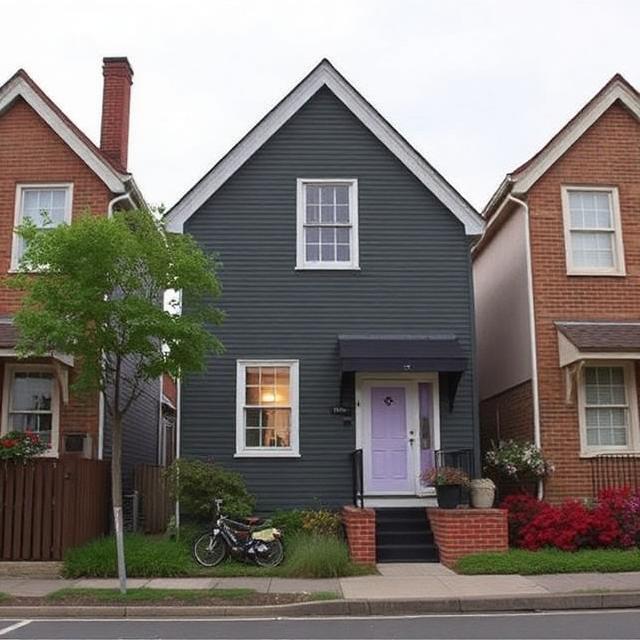
Real Estate Bubbles and How to Spot Them: A Guide
Housing markets can swing fast. A housing bubble happens when rising demand, easy credit, and speculation push home prices far above fundamentals. That surge often ends in a sharp drop that leaves owners with negative equity and rising foreclosures. You’ll learn simple signs you can check in your area: price growth vs. wages, days on market, inventory, and credit trends. Paying attention to interest rates and lending standards helps you see when demand is driven by cheap credit rather than sound fundamentals.
This guide gives a practical framework for evaluating local conditions, avoiding hype, and taking defensive steps that protect your home and investment plans. For a deeper checklist and case studies from the 2000s, visit this detailed guide.
Key Takeaways
- Watch prices vs. wages and rising inventory for early warning signs.
- Track interest rates and credit rules; looser credit often fuels overheating.
- Use data like days on market and price-to-income ratios, not headlines.
- Have an emergency fund and realistic timelines for your property plans.
- Local trends can diverge from national headlines—evaluate your market.
What a Housing Bubble Is and Why It Matters Right Now
A housing bubble shows up when prices race far ahead of wages and common sense. It happens when strong demand, abundant credit, and speculative buying push home prices away from underlying value. The run-up often ends with a quick reversal that can wipe out wealth.
Bubbles form from several factors working together. Loose lending, low rates, excess liquidity, and investor activity can all magnify price increases. You should treat any rapid gains with caution because the same forces can unwind fast.
Why it matters now: if local prices climb faster than incomes or rents, fewer buyers can step in when conditions change. Even a small rise in interest rates or tighter underwriting can cool demand and flip momentum.
Watch for spillovers. Falling prices can create negative equity, reduce mobility, and raise foreclosure risk for many people. Assess your local market and property type rather than relying only on national headlines.
How Housing Bubbles Form: Demand Surges, Easy Credit, and Speculation
Cheap borrowing and excess cash can kick off a rapid price run in local housing markets. When interest rates fall and credit expands, more buyers enter at once and bidding heats up.
Loose underwriting widens the buyer pool. Smaller down payments and weaker verification let marginal borrowers buy. That boost in demand often outpaces supply, lifting home prices fast.
The next driver is investor behavior. When investors expect quick gains they flip homes on short timelines. Frequent flips raise turnover and push price momentum beyond fundamentals.
Why construction and timing matter
Builders respond to growth by adding construction, but new supply arrives late. That lag can worsen volatility when the cycle slows.
- Easy credit + falling rates create the initial demand surge.
- Looser lending and investor flipping amplify price increases.
- When financing tightens or rates rise, demand cools and prices can reverse.
For an authoritative definition and deeper context, see this housing bubble primer.
Real estate bubbles and how to spot them
Start by comparing local wage growth with recent price moves to see if the market is outpacing paychecks. That simple check reveals whether rising demand is sustainable or driven by speculation.
Watch for home prices rising faster than local incomes and rents
If prices climb faster than income, affordability erodes. That gap forces buyers to stretch payment ratios or exit the market.
Track plateaus after rapid price increases as a late-stage warning
A stall after a fast run-up often signals buyer fatigue. When days on market lengthen while sellers hold firm, momentum has likely shifted.
Notice risky lending and buyers stretching beyond safe payment ratios
Scan lending trends for low down payments, weak verification, or rising debt-to-income approvals. Those changes raise default risk if rates rise.
| Sign | What to watch | Quick metric |
| Prices vs income | Affordability gap | Price-to-income ratio |
| Plateau or stall | Rising days on market | DOM increase (%) |
| Risky lending | Weak underwriting | Share of low-down loans |
"Compare local metrics, not headlines; numbers show risk earlier than sentiment."
Hard Numbers You Can Monitor: The Metrics That Signal Trouble
Watch a few core metrics and you can detect weakening market conditions before prices fall. These indicators give you an objective view of affordability, demand, and seller behavior.
Price-to-income and payment-to-income: when affordability breaks
Track price-to-income to see if typical households can afford median home prices without risky leverage.
Stress-test payment-to-income by modeling higher rates. If mortgage payments exceed safe shares of income, buyers face higher default risk.
Price-to-rent ratios: when owning far outpaces renting
Compare prices with local rents. A wide gap suggests buying is driven by optimism, not cash flow.
Inventory, days on market, and list-to-sale trends
Rising inventory and longer days on market while prices hold often precede cuts.
"Widening list-to-sale gaps are an early sign sellers concede before headlines change."
- Use rolling medians and year-over-year checks to remove noise.
- Segment by neighborhood and property type for clearer signals.
- Include rates and credit conditions; they directly affect mortgage affordability.
Lending Standards and Credit Conditions: Reading the Mortgage Market
When banks loosen rules, more buyers enter and price pressure can follow. Watch underwriting changes closely; they often precede shifts in market health.
Subprime growth, adjustable-rate mortgage risks, and teaser loans
Higher subprime share and many ARMs make a market fragile. In past cycles, a large slice of mortgages had low initial rates that reset higher after a few years. Those resets caused payment shocks, rising defaults, and waves of foreclosures.
Signs of looser underwriting: low down payments and weak verification
Look for lower FICO thresholds, larger debt-to-income allowances, and reduced income checks. These changes signal risk tolerance rising at banks and nonbank lenders.
- Track loan features: interest-only, negative-amortization, and teaser-rate structures.
- Watch approval rates, spreads, and investor demand in the secondary market.
- Stress-test any mortgage offer for resets, caps, and worst-case payments.
"If prices keep rising while lending quality falls, vulnerability is increasing."
Interest Rates, Mortgage Payments, and Affordability Shocks
A one- or two-point move in borrowing costs can decide whether a marginal buyer stays in or drops out. As interest rates rise, monthly mortgage payments climb and the pool of qualified buyers shrinks.
Quantify the impact: a 1% rise on a $300,000 loan increases principal-and-interest by roughly $150–$200 per month. A 2% move can add $300–$450, pushing payment-to-income ratios past safe levels for many households.
Rising rates hit leveraged buyers hardest. ARM resets and higher underwriting hurdles often turn approvals into denials. That cools demand and softens prices.
Actions you should take
- Stress-test your budget with higher interest assumptions.
- Watch prequalification amounts — shrinking numbers signal weaker demand.
- Track lender fees and spreads that raise effective costs.
| Trigger | Immediate effect | What you watch |
| 1–2 point rate rise | Higher monthly payments | Payment-to-income change (%) |
| ARM reset wave | Payment shock for borrowers | Share of ARMs and reset schedule |
| Tighter underwriting | Fewer qualified buyers | Prequalification averages |
"Stress-test purchases for higher interest and keep a buffer for taxes, insurance, and maintenance."
Speculative Buying and New Construction: Supply and Behavior Clues
A market crowded with short-term buyers and builders racing to deliver units can tip supply-demand balance fast. Watch both investor activity and construction pipelines to see whether growth is healthy or driven by quick profit expectations.
Investor share, flipping volume, and short holding periods
High investor share and heavy flipping often precede volatility. Track the share of purchases by investors, flipping volume, and median holding periods. Short timelines suggest prices follow expectations, not fundamentals.
Overbuilding risk: when new supply races past sustainable demand
Compare permits and starts with household growth. If construction outpaces absorption, unsold homes pile up and builders cut prices to move inventory.
- Flag widening gaps between new-home incentives and resale prices.
- Note when higher rates stall pre-sales — builders then hold more inventory.
- Segment by property type; condos and single-family homes react differently to added supply.
"A market led by speculation and rapid construction is more fragile when demand slows."
What to Do If You Suspect a Bubble in Your Market
If you think local price moves are driven more by momentum than fundamentals, pause and protect. Move from reacting to headlines toward rules that preserve cash and optionality.
Pause major purchases and avoid timing the peak
Don’t try to pick the exact top. Instead, set clear thresholds: stop bids if price-to-income or days-on-market cross your limits or if speculative signs rise.
Strengthen your emergency fund and stress-test your mortgage
Build or top up six months of living costs so you can cover payments during income gaps or vacancies.
Run worst-case scenarios: higher rates, lower appraisals, and longer vacancy time. Confirm that mortgage payments stay manageable under stress.
Ignore the hype: make decisions by the numbers, not FOMO
Focus on fundamentals—stable income, a meaningful down payment, and cash reserves. Avoid deals that only work under best-case assumptions about rates, rents, or quick profit.
- Consider renting longer or buying smaller to preserve flexibility.
- Require financing contingencies and solid inspection rights in offers.
- Diversify your investment exposure so property doesn’t dominate net worth.
- Plan hold time conservatively; avoid projects that need quick resale to pay.
- Document your buying criteria and tighten them if volatility rises.
"Set rules first. Protect cash second. Let numbers, not noise, guide your choices."
Case Study: The 2000s U.S. Housing Bubble and Its Fallout
A close look at the 2000s shows a chain reaction from policy and low rates to risky lending.
Run-up: After the dot-com slump, lower interest and pro-homeownership policy pushed demand. By 2005–2006 about 20% of mortgages were subprime, and over 75% of those were ARMs with low teaser rates that reset after two to three years.
Run-up: subprime lending, ARMs, policy tailwinds, and a demand surge
Low rates and looser credit expanded the buyer pool. Median U.S. home prices rose roughly 55% from 2000 to 2007, far above income and rent growth.
Bust: negative equity, foreclosures, and lessons for today’s market
When many ARMs reset and the economy slowed, prices fell about 19% from 2007 to 2009. That swing erased equity and triggered a sell-off in mortgage-backed securities.
"Foreclosures exceeded 2.8 million in both 2009 and 2010, compared with about 357,062 filings in 2023."
- Cheap rates plus looser underwriting fueled rapid price growth and stretched credit.
- ARMs with teaser rates created payment shocks when interest and rates rose.
- Construction overshot in some markets, leaving excess inventory that weighed on prices.
- Lenders, investors, and banks faced heavy losses when the market turned.
Lessons for you: avoid heavy reliance on adjustable loans, insist on strong underwriting, keep meaningful down payments, and plan realistic hold periods.
For a detailed historical account, read the 2000s U.S. housing bubble.
Conclusion
Treat rising prices as a prompt to check affordability, lending rules, and supply signals. Use a simple quarterly checklist: compare wage growth with prices, watch inventory and days on market, and monitor changes in mortgage standards and interest rates.
Stay disciplined: stress-test payments, keep cash reserves, and prefer durable property over crowded trades. Time and patience are allies; if risk is high, wait for clearer value instead of forcing a purchase.
Keep this short checklist active—prices, rates, supply, and standards—and review it each quarter. For a practical checklist and signs to watch in your area, see the full housing bubble checklist here: housing bubble checklist.

0 Comments Comments