
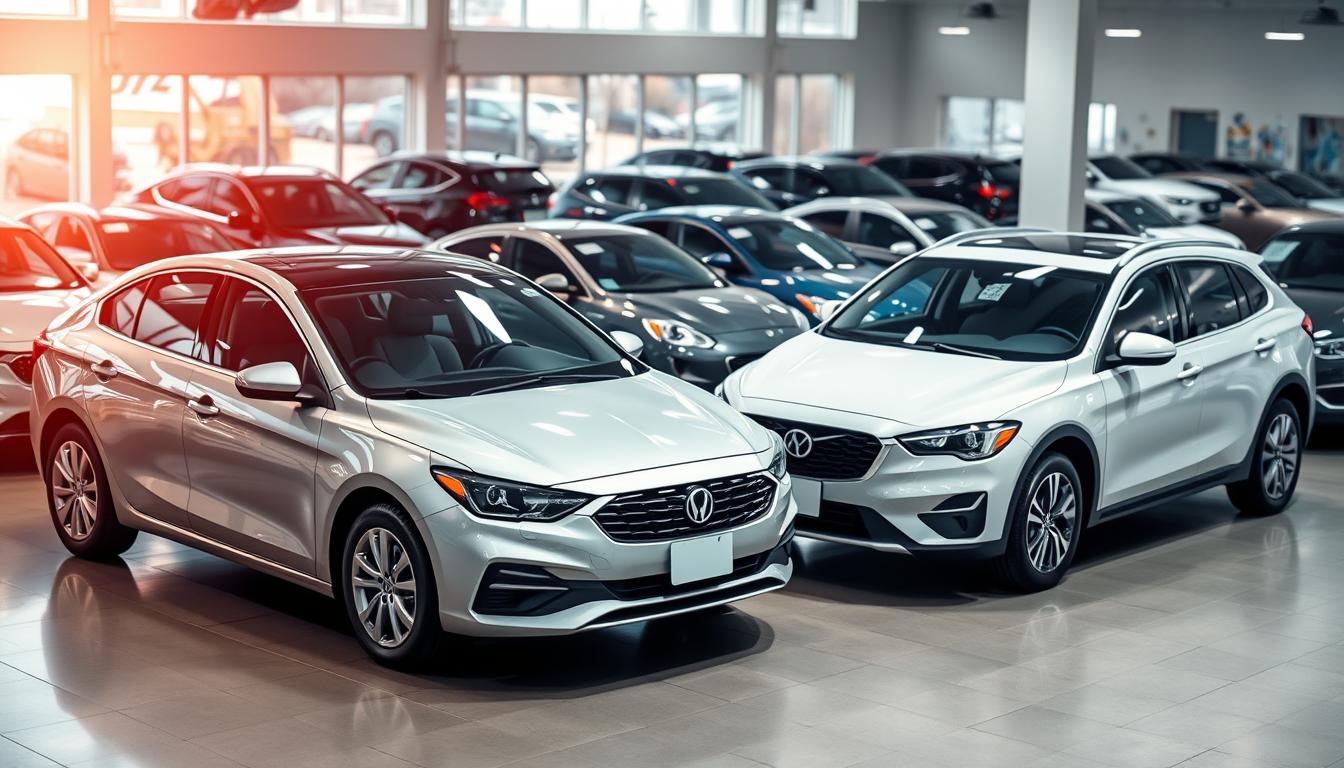
Second Hand vs New Car: Which Option Puts More Money in Your Pocket?
Deciding whether to buy new or select a used option affects more than the sticker price. We measure what "puts more money in your pocket" by total lifetime cost, monthly affordability, and what you can recover when you sell.
Depreciation hits hard: most new vehicles lose roughly 20% of value in year one. That loss can outweigh lower loan interest rates and a factory warranty for early years.
Used models can lower insurance, registration, and monthly payment, but they may carry higher finance rates and repair risk. The best choice depends on your income stability, how many years you plan to keep the vehicle, and driving habits.
This article compares cost drivers, ownership horizons, features and safety, and real-world scenarios so you can choose the option that truly supports your financial goals.
Key Takeaways
- Measure lifetime cost, not just the sticker price.
- Depreciation is a major early loss for brand-new vehicles.
- Lower loan rates for new models may be offset by bigger balances.
- Used vehicles often save on insurance and registration.
- Your ideal choice depends on years of ownership and cash flow needs.
What “puts more money in your pocket” really means in the present market
A smart purchase looks past monthly bills and measures how a vehicle affects your net worth over years. Total cost of ownership includes purchase price, taxes, registration, insurance, financing, fuel, maintenance, repairs, depreciation, and resale value.
The first year matters: depreciation is steepest early—most new car models lose about 20% in year one. That drop can erase the advantage of a lower rate or warranty.
Financing changes the math. Experian reports average new car loans at $41,983 at 6.80% for 69 months and used car loans at $26,795 at 11.54% for 67 months. A smaller principal can still mean a lower payment despite a higher interest rate.
Think cash flow versus long-term wealth. Lower monthly payments can mask higher lifetime costs. Opportunity cost matters: payments and interest are dollars that could grow if invested.
- Compare total costs, not just sticker price.
- Use loan calculators and TCO tools for clear comparisons.
- Ask whether buy new used is justified by warranty and reliability.
Second Hand vs New car Which Put Money in My Pocket
Compare the basics first: purchase price is usually higher for a new car, while a used car often costs less up front and can carry lower registration and taxes.
Financing: Experian (Q2 2025) shows average new-car loan $41,983 at 6.80% for ~69 months versus a used-car loan $26,795 at 11.54% for ~67 months. Lower rates on a new car can be offset by the larger principal; a smaller used loan sometimes yields a lower monthly payment despite a higher rate.
Insurance and depreciation: insurance premiums tend to run higher for new vehicles because replacement value and required coverages are greater. New vehicles typically depreciate ~20% in year one; used models have a gentler curve after the initial drop.
When a new purchase can flip the math
Strong incentives, a 3-year/36,000-mile warranty, better reliability, and modern safety features can make buying new car the smarter long-term choice for some buyers.
"Check incentives, CPO options, and local quotes — condition and warranty matter most."
- Shortlist models and get quotes for loan, insurance, and taxes.
- For used cars, order a history report and a pre-purchase inspection.
- Consider CPO as a middle ground that mixes warranty with lower price.
Cost drivers head-to-head: new car vs. used car
Compare the core cost drivers side-by-side to see how purchase price and near-term expenses shift the ownership picture.
Purchase price and monthly payment
Price matters most up front. New cars usually carry a higher sticker and higher monthly payment. Promotional financing can lower those payments for some buyers.
Used purchases trade a smaller principal for a higher interest rate. The result: lower monthly payment is possible even with a higher APR, thanks to the smaller balance.
Financing and interest rate differences
Experian (Q2 2025) shows average new-car loan of $41,983 at 6.80% for about 68.87 months versus a used-car loan of $26,795 at 11.54% for 67.24 months.
Key takeaway: a lower rate on a larger loan can still mean more total interest paid. Shop APRs, terms, and pre-approval offers to cut overall costs.
Insurance, registration, and taxes
Insurance premiums and registration fees scale with value. That usually makes new purchases costlier for insurance and taxes in most states.
Depreciation and resale value
New vehicles lose roughly 20% in year one (Kelley Blue Book). By three years depreciation slows, which favors buyers who avoid that initial drop.
Maintenance, repairs, and warranty
New cars commonly include a 3-year/36,000-mile warranty, reducing early maintenance costs. Used vehicles carry more repair variability unless certified pre-owned.
"Weigh warranty savings against depreciation loss when projecting three-year ownership costs."
- New cars: predictable early costs, higher insurance and taxes, steeper initial depreciation.
- Used cars: lower upfront price and fees, higher uncertainty on repairs and higher APRs.
Practical tip: compare loan offers, estimate insurance and registration, and run a three-year TCO to decide whether to buy new used based on your cash flow and resale plans.
Ownership horizon: first year, three years, and beyond
Your planned ownership time is a core input to deciding which purchase saves more over time. Short horizons magnify early losses, while long horizons dilute them.
The first year: rapid depreciation vs. warranty savings
First year depreciation often hits ~20%, which can erase upfront advantages. At the same time, a new car usually carries a 3-year/36,000-mile warranty that lowers early maintenance and unexpected bills.
Years three to five: slowing depreciation and rising maintenance
After the initial drop, depreciation slows. Warranties often expire around year three, so maintenance and repair costs rise. Buying a used one at about three years old can capture gentler depreciation while you accept more service items.
Keeping a car for 8–10 years: how time changes the math
Keeping a vehicle eight to ten years spreads fixed costs across many years and can make buying new more competitive. Over long time, insurance and registration fall as value declines. Still, reliability ratings matter most in car years five through ten.
"Plan for maintenance after warranty and keep service records to protect resale value."
| Ownership Horizon | Primary Financial Effect | Action |
| First year | High depreciation, low maintenance | Use warranty, track value drop |
| Three years | Slower depreciation, rising service needs | Consider buying used one or CPO |
| 8–10 years | Lower annual costs, higher repairs | Budget for maintenance, maximize years kept |
- Keep service records to preserve resale value.
- Budget for maintenance once warranties end.
- Match your mileage to warranty limits—high miles change the calculus.
Features, technology, safety, and fuel economy: value beyond the price tag
Recent model upgrades often deliver measurable gains in safety, fuel use, and daily convenience. New vehicles tend to include advanced driver assistance systems, stronger crash structures, and modern airbag layouts that reduce injury risk.
Latest safety tech and driver assists
Adaptive cruise, lane-centering, automatic emergency braking, and parking aids can prevent costly accidents and lower insurance over time. These systems, however, add repair complexity and parts costs when sensors or cameras are damaged.
Fuel efficiency, emissions, and model-year improvements
Each model year often brings improved engine efficiency, hybrid options, or lighter materials that cut fuel use and emissions. Better mpg reduces operating costs and can improve the environmental profile of your ownership period.
Certified pre-owned (CPO) as a middle path
CPO vehicles are inspected, reconditioned with factory parts, and usually include a manufacturer-backed warranty. That combination narrows the gap between affordability and the peace of mind of buying new car.
Weigh the pros and cons: a brand new vehicle maximizes the latest safety and technology but brings higher depreciation and insurance. A CPO used car moderates price while preserving key protections. For non-CPO purchases, a thorough pre-purchase inspection is essential to avoid inheriting costly defects.
"Prioritize safety, reliability, and efficiency—these features deliver the most long-term value per dollar spent."
- Focus on driver assists that you will actually use.
- Factor sensor repair costs into insurance and ownership estimates.
- Choose features that preserve resale value and reduce fuel bills.
Real-world scenarios to test your choice
Real-world buying choices reveal how ownership time, financing, and daily use change which option saves you most.
Buying new with a low interest rate and long ownership
Buy new when you secure a low interest rate and plan to keep the car eight to ten years.
Warranty coverage and predictable maintenance reduce surprise bills. Over many years the large initial depreciation is spread out, improving net cost per year.
Buying used with higher APR but lower insurance and fees
Used cars often carry a smaller loan principal. Even with a higher interest rate, lower insurance, registration, and taxes can cut your monthly payment.
Smaller loan balances can improve cash flow month to month while total interest may be higher over the term.
Commute type, fuel and maintenance trade-offs
High-mileage commuters benefit from newer powertrains and better mpg to save on fuel and maintenance. For short city trips, a modest used one can make sense to limit opportunity cost and parking risk.
Cash versus financed buyer and a quick checklist
Cash removes interest but ties capital; financing spreads payment and adds interest. Shop rates, get pre-approvals, and collect firm insurance quotes before deciding.
| Compare | Key number | Why it matters |
| Loan & APR | Principal, rate, months | Drives total interest paid |
| Payment & fees | Monthly payment, insurance, registration | Impacts cash flow |
| Fuel & maintenance | MPG, service schedule | Controls operating costs |
"Shop rates, get firm insurance quotes, and run the numbers for your specific time horizon."
Conclusion
Conclusion
Decide by modeling real numbers, not headlines. The choice that keeps more value balances price, loan terms, interest rate, depreciation, insurance, fuel, maintenance, and expected resale over the years you plan to keep the vehicle.
If you plan to hold a brand new vehicle for many years and secure a low rate plus warranty, buying new can make sense as depreciation evens out. A well‑inspected used or CPO option often wins for shorter horizons by saving on price, registration, and insurance while still offering strong value.
Shop lenders, get firm insurance quotes, inspect condition, and run a three‑year or longer TCO to find the option that fits your budget and risk tolerance.

0 Comments Comments