
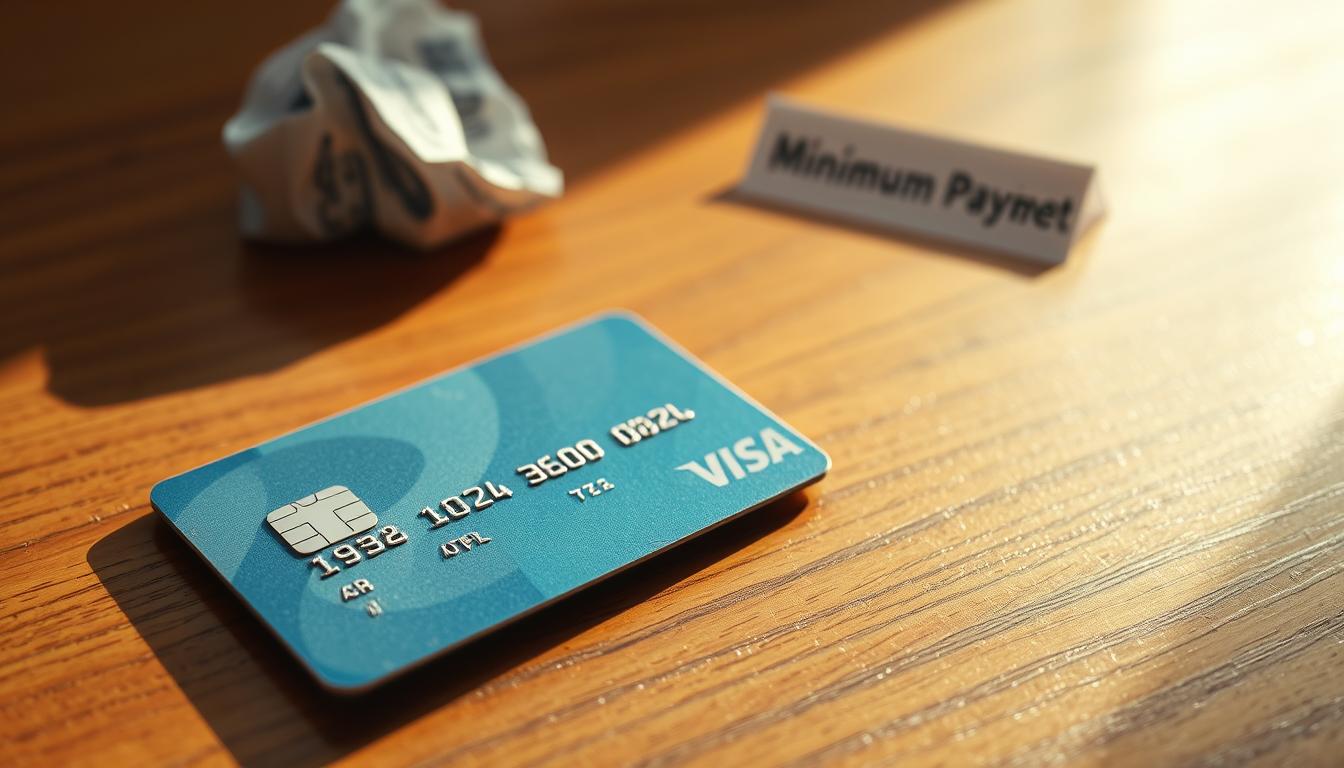
The Hidden Costs of Minimum Credit Card Payments
You rely on small monthly amounts to keep an account current. A minimum payment is the least you must send each billing cycle to avoid late fees and penalty APRs. But that tiny payment often hides a long, costly path. Issuers usually set a floor or a small percentage of your balance. If your balance is low, your whole balance may become due. Paying only the minimum lets interest keep growing. That means your principal falls slowly, and a balance can take years to clear. One missed due date can add fees, raise your rate, and hurt your credit. This guide shows how issuers calculate minimums, why interest swells total cost, and how statement information helps you plan better. You’ll learn clear steps to move from tiny monthly payments to smarter payoff methods that save time and money.
Key Takeaways
- Minimum amounts keep your account current but let interest accrue.
- Issuers use a percent of balance or a fixed floor to set the monthly amount.
- Paying only the smallest sum stretches payoff time and raises total interest.
- Missing one payment can mean fees, penalty rates, and credit harm.
- Reading your statement and paying more speeds payoff and lowers debt.
What a credit card minimum payment really means for your account
Making only the smallest required monthly payment keeps your account current but hides how long debt can last.
Good standing depends on making at least that required amount by the due date. If you miss it, you may face late fees, lose a grace period, or trigger a penalty APR. After 30 days, your issuer can report a delinquency to credit bureaus.
What good standing covers and why the due date matters
Keeping payments on time helps preserve credit access and avoid extra charges. Your card statement shows the amount due, the due date, and a Minimum Payment Warning that estimates time and total interest if you make only minimum payments.
When paying only the minimum can make sense—and when it backfires
Making minimum payments may help in a tight month. It keeps your account in good standing and avoids a late fee.
But, using this as a long-term plan usually backfires. Interest and new charges raise balances, which lengthens payoff time and increases what you pay in interest.
- Check your card statement or cardholder agreement for how your issuer calculates card minimum payments.
- Set reminders or autopay to make minimum payment on time, then add extra payments when possible.
| Action | Immediate effect | Long-term effect |
| Make at least required amount | Account stays in good standing; avoids late fees | Interest continues; payoff stretches |
| Miss due date | Late fee; possible penalty APR | Delinquency after 30 days; credit harm |
| Pay more than required | Lower principal immediately | Less interest; faster payoff |
The Cost of Minimum Payment on Credit Card
Small monthly sums can mask a long, expensive repayment path. Back in the 1970s, issuers often set a 5% figure. Over decades many lowered that share to boost profits and stretch payoff time.
Today, if your balance tops about $1,000, your issuer may set a card minimum at roughly 2% of the statement balance. For lower balances, they often use a fixed floor, commonly $25–$40. If you owe less than that floor, your required amount equals what you owe.
Most of each required payment covers interest first, so your principal falls slowly. That means you can stay in good standing while seeing little progress on debt. Over years, interest and periodic fees add up and raise total money paid.
"Paying only the smallest required amount often turns a short-term balance into a long-term expense."
- Why it adds up: interest eats a big share of each payment, slowing principal reduction.
- What to expect: a card minimum that is either a percent (≈2%) or a fixed floor ($25–$40).
- How to beat it: every extra dollar above the required payment lowers time to payoff and trims interest.
How issuers calculate card minimum payments
Issuers use several simple formulas to turn your balance into a monthly required amount. A short intro explains the common methods so you can predict next month’s number.
Flat percentage of balance
Some cards use a flat percentage of the statement balance. Common ranges run 2%–4%. For example, a $10,000 balance at 2% yields a $200 required amount.
Percentage plus interest and fees
Large issuers often use about 1% of principal plus accrued interest and fees. That can boost the figure when interest or late fees appear.
Fixed floors and small balances
If the formula drops below a fixed floor—typically $25–$40—the issuer applies that floor. If your balance is smaller than the floor, you owe the full balance.
Added amounts, rounding, and billing timing
Past-due sums, overlimit charges, and installment plan amounts may be added to the base. Issuers usually round to the nearest dollar, and the statement date can shift which charges appear.
| Method | Typical range | Example | Effect |
| Flat percentage | 2%–4% | $10,000 → $200 | Straightforward; may prolong payoff |
| Percentage + charges | ~1% + interest/fees | 1% of $10,000 + $160 interest = $260 | Responds to new fees; raises amount |
| Fixed floor | $25–$40 | Balance $20 → $20 due | Protects small balances; avoids tiny payments |
| Adjustments | Varies | Past-due $50 added | Can spike next month’s figure |
Tip: Check your card statement and issuer agreement so you know which formula applies to your account and can plan payments that cut interest and time to payoff.
How minimum-only payments drive interest, balance growth, and time to payoff
When you stick to minimum-only payments, most dollars service interest and little chips away at principal. That means payoff can stretch for years or longer, especially if your rate is high.
Interest compounds monthly on the remaining balance. New purchases can outpace your reductions, so the number you owe may fall slowly or even rise.
Missing a single due date adds fees and can trigger a penalty rate. That raises lifetime interest and lengthens time to clear debt.
- Use your statement's Minimum Payment Warning to see months-to-payoff with minimum-only payments and an accelerated plan.
- Make multiple payments each month: an early minimum payment plus extra later lowers average daily balance and trims interest.
- Avoid new charges while focusing on reduction to stop balance creep and lower utilization.
| Action | Short-term effect | Long-term effect |
| Pay minimum only | Account current; small principal drop | Long payoff time; high total interest |
| Pay minimum early + extra later | Lower daily balance; less interest | Faster payoff; reduced card debt |
| Stop new spending | Stabilizes balance | Improves utilization and score |
Practical move: reallocate discretionary dollars to larger monthly payments. That shortens time to payoff and cuts interest paid across the life of your credit card debt.
Your credit score, utilization, and the risks of paying only the minimum
Meeting just the required amount keeps accounts current, yet it often keeps utilization elevated. Making on-time monthly payments protects payment history, a major factor in your credit score.
Consistently paying only the minimum means balances stay high and your credit utilization remains elevated. High utilization can limit score improvement even when your payments arrive on time.
Missing a due date can trigger an immediate late fee. After 30 days, a delinquent status may appear in credit reports and hurt your score.
- You protect payment history by paying at least the minimum each month, but high balances can hold back gains.
- Lowering balances by paying more reduces utilization and can raise your credit score faster.
- Avoid new charges while you work down balances, and prioritize cards with the highest utilization first.
Set autopay or reminders to guard your account, then add extra amounts when possible. You can also ask a card issuer for a lower rate to reduce interest drag while you pay balance down.
Read your credit card statement to see your true costs
Your monthly statement holds clear clues about how much your balance is really costing you. Review that page each billing cycle so you can spot fees, interest, and the projected payoff time.
Locate and use the Minimum Payment Warning
Find the Minimum Payment Warning on your card statement to compare two scenarios: paying only the required amount and paying enough to clear debt in 36 months.
Use the warning to note projected total interest and the months-to-payoff under each plan. That information shows the true long-term impact of small payments.
Find your issuer’s formula
Look in your cardholder agreement or mobile app to learn how your issuer calculates the card minimum payment. The formula often includes a small percentage plus interest and any fees.
If it’s unclear, call your card issuer and ask for a line-by-line explanation of that month’s required amount.
Why your required amount changes month to month
Minimums shift when balances, accrued interest, late fees, past-due sums, overlimit charges, or installment plan amounts change.
Billing cycle timing and rounding also affect which transactions appear and the final number. Track these components each month to anticipate next month’s payment and avoid surprises.
| Item on statement | How it affects amount | What you can do |
| Minimum Payment Warning | Shows months-to-payoff and total interest | Compare with a 36‑month plan; plan extra payments |
| Interest and fees | Increase required amount | Pay early or add extra to reduce interest |
| Past-due or overlimit | Can spike next month’s due | Clear past-due amounts; avoid new charges |
| Billing close date | Determines which charges appear | Time purchases to a later cycle to lower reported balance |
Reduce costs by paying more than the minimum
A small boost to your monthly amount can change a decade-long plan into a few years. Even adding $10–$20 or doubling what you now send shrinks interest and speeds payoff.
Pay a little extra or double required sums
Doubling a minimum often cuts total interest by years and saves significant money. If you can’t double, add a fixed extra each month to chip away at principal.
Make more frequent payments
Split bills into two or three payments per month. That lowers your average daily balance and trims monthly finance charges.
Use budgeting and small income boosts
Shift discretionary dollars—subscriptions, dining out, or side gig earnings—into extra payments. Small, steady increases move a balance faster than waiting for a windfall.
Set up autopay to protect your account
Autopay for at least the minimum guards against late fees and loss of a grace period. Then log in to submit extra payments manually when you can.
- Ask an issuer for a lower interest rate to reduce interest drag while you pay balance down.
- Consider a 0% intro APR balance transfer if fees and timeline suit your plan.
- Time payments right after statement close and again mid-cycle for added savings.
| Action | Immediate effect | Long-term effect |
| Add $10–$20 monthly | Small principal drop | Faster payoff; less interest |
| Double required amount | Big principal reduction | Months or years shaved from payoff |
| Multiple monthly payments | Lower average balance | Smaller finance charges each month |
| Autopay minimum + manual extra | Avoid late fees | Maintains grace period; accelerates payoff |
Smarter payoff and rate-reduction strategies
Negotiate, transfer, or consolidate to cut interest and speed payoff. Use a mix of tactics so each payment attacks principal faster.
Negotiate a lower interest rate with your card issuer
Call your card issuer and ask for a lower rate. Cite on‑time history and competing offers.
Even a small drop reduces finance charges and shortens the payoff timeline.
Consider balance transfer cards with 0% intro APR
Move high‑rate balances to a 0% promo for 12–21 months to pause interest. Check percentage transfer fees and promo end dates before you act.
Consolidate with a lower-rate loan and fixed timeline
A consolidation loan converts revolving debt into an installment plan. That gives a fixed monthly amount and a clear payoff date.
Choose a debt snowball or avalanche method and stick with it
Snowball builds momentum by clearing small balances first. Avalanche saves more interest by attacking high rates first.
- Stack tactics: negotiate, transfer part of a balance, then automate extra payments.
- Avoid late fees and new charges while you reduce debt.
- Monitor progress monthly and increase payments with any spare money.
Conclusion
Treat that monthly required sum as a safety net, not a long-term repayment plan.
Use statement information such as the Minimum Payment Warning to see months and total interest for minimum-only payments versus a 36-month plan.
Paying more than the minimum trims interest, lowers utilization, and helps your score. Combine tactics — ask for a lower rate, consider a 0% intro transfer, or consolidate with a lower-rate loan — to speed payoff and simplify payments.
Automate at least the minimum, then add extra payments each month. Revisit budget often to free money for reductions and keep momentum toward a zero balance on your cards.

0 Comments Comments