
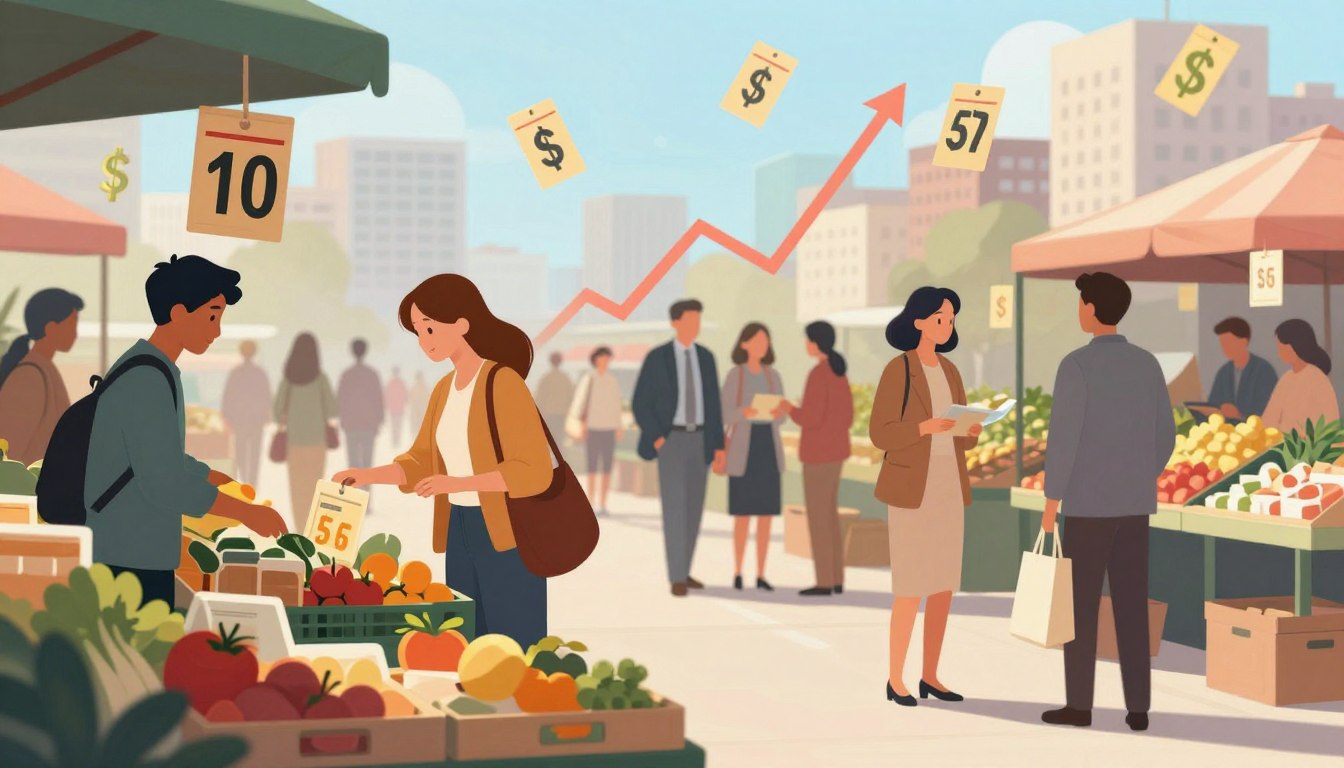
Understand How Inflation Affects Daily Spending Habits

You need a clear, practical view of recent price moves and what they mean for your budget. From 2019 through mid‑2022, inflation climbed from about 1.8% to a peak of 9.1% in June 2022, then eased to 3.7% in September 2023 and 2.4% in October 2024. That data helps explain why you may still feel pressure at the checkout, even as headline rates cool. Median weekly earnings rose to $1,165 in Q3 2024, up 4.2% year over year. Compare that to a 2.6% CPI‑U increase in the same period, and you see pockets of relief for household income. Social Security COLA moves — 8.7% in 2023 and 3.2% in 2024 — also shaped consumer choices for many Americans.
This section shows the practical effects on groceries, housing, utilities, and recreation. You’ll learn simple ways to track prices, prioritize essentials, and time bigger purchases so your cost decisions match real market conditions.
Key Takeaways
- Track headline data to link national rates to your household costs.
- Compare wage growth to price moves to protect your purchasing power.
- Prioritize essentials and find quality substitutions to lower cost without loss.
- Use a simple monthly routine to review fresh data and adjust your budget.
- Time major buys around seasonality, promotions, and financing to save.
What You’ll Learn and Why It Matters in Today’s U.S. Economy
You’ll get clear steps to read price signals and shape budget choices that match the current U.S. economy. This short guide links headline measures to real monthly choices so you can act with confidence.
Context matters: inflation peaked at 9.1% in June 2022 and eased to 2.4% by October 2024. Even so, many consumers remain uneasy—Deloitte found 73% still expressed concern nearly two years after the peak.
Median earnings growth in Q3 2024 rose 4.2% while CPI‑U moved 2.6%, which means some recovery in purchasing power for many households.
- Core concepts: the difference between inflation and cost of living, and why prices move.
- Why you may still feel squeezed despite cooling headline rates.
- How national policy and interest rates change borrowing, rent, and buy timing.
- Which categories respond fastest to price swings so you can prioritize effort.
- A simple budgeting structure to handle price volatility over the next period.
By the end, you’ll translate economic content into concrete monthly and quarterly moves that protect your budget as prices and rates change.
Inflation, Cost of Living, and the CPI: The Basics You Need to Know
The Consumer Price Index, released monthly by the Bureau of Labor Statistics, tracks price changes for a standard basket of goods and services across U.S. regions. What the index measures: the CPI is a price index that averages movements across categories. The BLS collects local data and weights items to
reflect typical household purchases.
How CPI links to your budget
The headline CPI shows the overall inflation rate, while core CPI strips out volatile food and energy. That split helps you read whether broad price pressure or one sector is driving change.
Cost of living versus inflation
Inflation is an average across the economy. Cost of living is your total local expense. Two households can see different outcomes based on housing, commute, and choices.
Recent path and the Fed’s role
Inflation rose from low readings in recent years to a June 2022 peak, then eased into 2024. The Federal Reserve raised the federal funds rate to restore price stability; higher rates raise borrowing costs for mortgages and loans and can cool demand.
- Use CPI data to benchmark your basket against national trends.
- Track subcomponents to spot which prices matter most to you.
- Compare wages to the inflation rate to see real purchasing power.
Where You Feel Inflation Day to Day: Groceries, Housing, Energy, and Beyond
You notice price shifts most clearly at the grocery aisle, the gas pump, and your monthly mortgage statement. Those touchpoints shape choices you make every week and month.
Food and staples
When food costs climb, many consumers switch to private labels or buy in bulk to stretch budgets. U.S. retailers increased store‑brand penetration after 2020, and shoppers trade down to budget ranges without losing essentials.
Tip: compare unit prices and watch for shrinkflation so you don’t pay more for less.
Housing and mortgages
Higher rates raised mortgage payments and slowed home sales, so renting can be the practical bridge for some households. Negotiate lease terms, and watch refinance windows when rate moves ease.
Utilities, transportation, and energy
Supply chain disruptions and fuel shifts put pressure on utility and transport bills. Simple steps—energy audits, thermostat discipline, and trip batching—lower your exposure to volatile prices.
Discretionary goods and services
Dining out, apparel, and recreation are where you can quickly trim cost without harming living quality. Set triggers to pause streaming tiers, delay nonessential buys, or swap services until conditions improve.
- Grocery tactics: store brands, meal planning, and bulk buys cut food price risk.
- Housing strategy: compare rent vs. buy calculations as rates change.
- Utility moves: rebates, audits, and small upgrades lower long‑term cost.
How Inflation Affects Daily Spending: A Step‑by‑Step Plan to Adapt
Start by turning your last three months of bank and card records into a clear, category-level budget. Export transactions, then map each line to buckets that mirror how you buy goods and services today.
Benchmark and update
Replace old price assumptions with current unit costs from weekly circulars and online checks. That keeps your budget tied to real prices, not outdated lists.
Prioritize and substitute
Rank essentials—rent, utilities, groceries, insurance—before wants. Pre‑choose substitutions like private labels or different cuts of meat so you avoid impulse swaps in the aisle.
Time big purchases and finance wisely
Build a rolling 12‑week calendar to align buys with seasonal sales and promotional months. Before you borrow, compare total cost at different rate and term scenarios so you don’t pay more than necessary.
- Quick tools: set automated alerts for category overspending and weekly checkpoints.
- Behavior tip: use a 30‑day delay rule for discretionary items; demand often fades.
- Saving move: redirect substitution savings to emergency funds or to cut high‑interest debt.
For practical guidance on budgeting with changing prices, see inflation and your household budget.
Make Your Paycheck Work Harder: Tracking Income, Savings, and Trade‑Offs
Translate pay increases into concrete protections: savings, debt cuts, and smarter benefits choices. Median weekly earnings for full‑time workers were $1,165 in Q3 2024, up 4.2% year over year, while the CPI‑U rose 2.6% for the same period. That gap gives many households modest real gains you can lock in.
Compare your wage growth to consumer price trends
Track your income growth next to the consumer price series to see whether your purchasing power is improving or eroding. If wage gains beat the inflation rate, route the surplus to automatic transfers.
Rebuild savings and reduce high‑interest debt
Prioritize paying down balances with the highest interest. Even small rate cuts or balance transfers cut monthly costs and speed payoff. Rebuild an emergency fund to cover 3–6 months of essential living costs so you can absorb price shocks.
"If your income lags rising prices, rebalance fixed and variable costs, and explore extra work or role changes."
- Tip: Set tiered savings goals—short, medium, long term—and automate quarterly check‑ins.
- Action: Review benefits like HSA/FSA and negotiate recurring bills each year.
- Model: Consider refinancing only after you compare total interest saved over the years.
For background on broader price dynamics, see common effects of inflation.
Use Data to Stay Ahead: CPI Reports, BLS Releases, and Market Signals
Make a 15‑minute check after each Bureau of Labor Statistics release to scan headline and category lines. Compare the consumer price index and core readings to your recent receipts. This simple routine links national index moves to your household choices.
Monthly checks that pay off
Track shelter, food at home, and transportation in a short dashboard. Flag any rising price index lines so you can pre‑plan substitutions or trim purchases before costs climb.
Watch policy and market signals
Read Federal Reserve statements and rate projections for clues on future interest and borrowing costs. When the Fed signals higher rates, be cautious about new variable-rate debt and re-quote financing on big buys.
Translate signals into action
- Trade down to private labels for staples when retail data shows stress.
- Delay nonessential goods like electronics during price spikes.
- Combine public CPI lines with your spending logs to spot where your experience diverges from national trends.
"Use index trends and Fed guidance to time purchases and protect your budget."
For practical guidance on navigating release quirks and shutdown effects in CPI reporting, see this overview of CPI report issues.
Conclusion
In closing, adopt a simple routine that links the latest price data to your monthly choices. Track prices and the consumer price index from the Bureau of Labor Statistics so you see where goods and services are moving and act before pressure mounts. Prioritize essentials—housing, utilities, and food—trim high‑impact categories, and route savings to emergency cash or high‑interest debt. Consumers who benchmark their local price reality each quarter can spot uneven increases across markets and tailor decisions for their home and neighborhood. Watch rate and interest signals from the Federal Reserve, follow supply and supply chain updates, and pace big buys over months. Small, steady moves protect your purchasing power and let you return to discretionary goals as conditions normalize.
0 Comments
Be the first to share your thoughts on this article.