
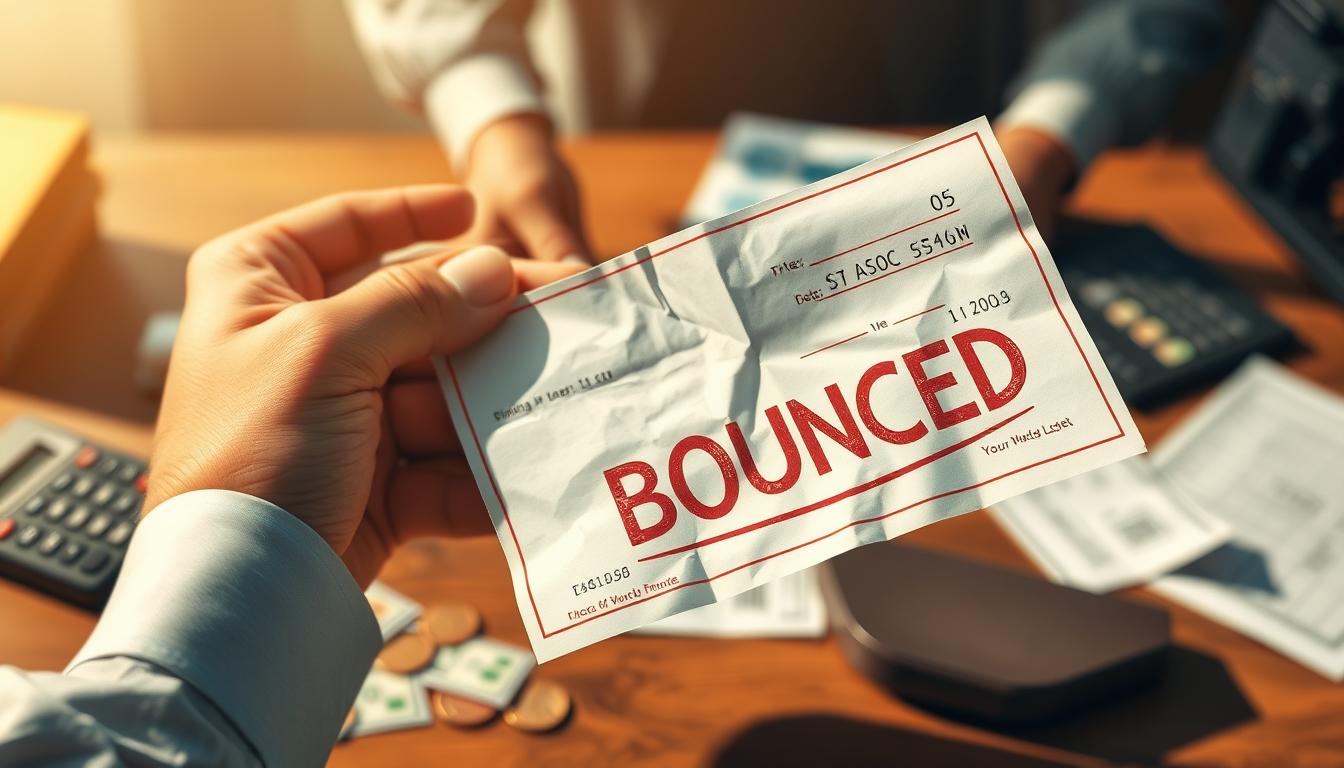
Your Bounced Check? Why Checks Bounce and What Happens Next

When a check you write is returned, you need clear steps fast. A returned item most often means non-sufficient funds (NSF), but it can also occur from mismatched details, stop-payment orders, frozen or closed accounts, or suspected fraud.
Immediate effects hit your wallet and your reputation. The bank may charge an NSF or overdraft fee, the merchant can add a returned-item charge, and the original payment does not go through.
Funds might look available before clearing. Most checks process in about two business days, though holds can extend to 7–9 days. Banks do not always notify you when a check is returned.
Beyond fees, the incident can lead to reports to systems like ChexSystems or TeleCheck and, if done knowingly, possible legal consequences. Quick communication with the payee and your bank often reduces costs and resolves the issue faster.
Key Takeaways
- You will learn what causes a bounced check and how it affects your money.
- Banks and merchants can each charge fees, so costs add up quickly.
- Timelines vary: most clear in two days, but some holds last over a week.
- Reports to banking networks can harm future account access.
- Act fast: contact the payee and your bank to limit consequences.
Understanding Bounced Checks and Your Checking Account Today
A returned payment happens when your account lacks cleared funds or the bank cannot confirm details.
How the process works: The payee deposits the item at their bank, which then asks your bank to verify funds and account details. If banks find mismatches or insufficient cleared balance, the deposit is rejected and the amount is reversed.
Available funds are not the same as cleared funds. Your online balance can show money that is still pending. That amount may be removed later if the payer's bank rejects the deposit.
Account setup, daily balance swings, and holds all matter. Banks use risk signals—like mismatched names or signatures—to block a transaction. Monitoring activity reduces timing errors that cause a returned item.
Who acts next? The payee usually learns first from their bank. As the writer, you must review your account, cover the shortfall, and communicate with the payee and your bank to resolve fees and reversals.
- Know how deposits move between banks and when a payment truly clears.
- Keep records of payments and deposits to reconcile any reversal quickly.
Bounced Check? Why Checks Bounce and What Happens Next
A refusal by your financial institution to honor a drafted payment creates immediate obligations for you and the recipient.
Quick definition:
What a returned (NSF) item is
A returned check (nsf) is a payment your bank declines because the account lacks cleared funds or the item cannot be verified. The refusing bank reverses the deposit and the recipient learns the credit was removed.
What typically happens right after a check bounces
The payee may be notified and still expects payment. Both sides can face a bank fee or a returned-check charge from the recipient.
At-a-glance steps you should take next
- Contact the payee quickly and explain how you will settle the amount.
- Verify your account activity, confirm recent deposits, and cover the shortfall before sending another check.
- Choose an immediate clearing method—debit, credit, or cashier’s check—and document all outreach.
- Ask your bank about a one-time fee waiver if this is an isolated error.
Common Reasons Checks Bounce and How Banks Verify Them
Timing, account status, and simple form mistakes cause many payments to be turned away.
Insufficient funds and timing issues: Most returned items come from insufficient funds or pending deposits that haven’t cleared. You might see an online balance that is not yet available for settlement. This mismatch often causes a payment to be declined when presented.
Account closure, freezes, or restrictions
If your account is closed, frozen, or has restrictions, the payee’s deposit will be rejected no matter the intent of the check writer. Contact your bank quickly to resolve holds and restore proper status.
Stop payments, stale-dated items, and form errors
A stop payment order or a stale-dated item (older than six months) usually fails. Simple errors—wrong payee name, incorrect date, or a mismatched signature—also trigger refusals during verification.
Fraudulent or altered items
Banks run verification checks to catch fraudulent or altered items. If a teller or automated system detects tampering, the payment will not be honored and may prompt an investigation.
Quick tips:
- Review the payee line, amount, and date before signing.
- Keep records of each payment so you can match transactions during any review.
- When timing is tight, choose a different form payment to avoid a second failed item.
| Cause | What the bank verifies | Usual outcome | Action for you |
| Insufficient funds / timing | Cleared balance vs. posted balance | Returned for NSF | Cover shortfall or use immediate payment |
| Closed or frozen account | Account status with issuing bank | Automatic rejection | Contact bank; reopen or transfer funds |
| Stop payment / stale-dated | Payment order and issue date | Declined | Use a fresh, valid form payment |
| Errors / fraud | Payee name, signature, alterations | Refused and possible hold | Correct errors and document communications |
The Check Verification Process: From Deposit to Returned Check
After a payee deposits an item, banks run fast verification steps that can reverse a provisional credit later. The recipient’s bank first captures the image and forwards information to the payer’s bank for confirmation. Your bank then confirms account status, signature matches, and sufficient funds.
Processing windows and holds: Most items clear within two business days, but extended holds of 7–9 business days can apply to large or suspicious deposits. During a hold, money may appear in your online balance before final settlement.
Partial posts can still fail. A deposit may post partially if funds are available from other sources or if systems provisionally credit the account. If verification fails later, the bank may reverse that credit and assess fees under your agreement.
- Keep alerts on so you learn of reversals quickly; the bank may not notify you automatically.
- Avoid spending provisional funds until final settlement clears.
- Gather documents fast if your bank requests proof to resolve a returned check dispute.
Consequences When a Check Bounces: Fees, Credit, and Legal Risks
A returned payment can trigger a chain of costs that exceed the original amount owed. You can face bank penalties, merchant charges, and limits on future account use. Act fast to limit harm.
NSF versus overdraft and extended charges
Two main outcomes occur: if your bank rejects the item you may be charged an NSF fee. If the bank covers it, your account may go negative and you incur an overdraft fee.
Average overdraft fees were $27.08 in 2024. If the balance stays negative, extended overdraft fees may apply.
Merchant charges and reporting
A merchant may redeposit the item and may charge a returned-item fee. Retailers also use services that can flag future attempts.
Credit, reputation, and legal exposure
A returned item won’t directly hit credit scores, but missed payments caused by it can be reported and lower your credit.
"Knowingly issuing a bad check can lead to civil claims or criminal charges depending on state law and amount."
| Area | Typical impact | Action to take |
| Banks | NSF or overdraft fees; extended charges | Contact bank; request waiver |
| Merchants | Returned-item fee; redeposit attempts | Settle amount; ask for fee reduction |
| Networks | ChexSystems/TeleCheck flags; future declines | Resolve balance; dispute errors |
- Calculate total cost: bank fees, merchant fee, late penalties.
- Contact your bank quickly to clarify which fee applies and request relief.
Timing Matters: How Long It Takes a Check to Clear or Bounce
Some deposits move quickly; others sit under review for business days while banks verify them. This affects when funds truly become yours or when a check bounce may be applied to the recipient's account.
Typical clearing times and the two-business-day window
Most items clear in about two business days. Plan for a short wait before treating posted totals as final.
Extended holds (7-9 business days) and large deposits
For large or higher-risk items, the bank may place an extended hold of 7–9 business days. During that time, access to funds can be limited while fraud and source checks run.
What the recipient sees versus what actually clears
Available balance can be provisional. If verification fails later, the bank will reverse the credit and the recipient will lose access to those funds.
- Plan around the typical two-business-day window for clearing.
- Factor in 7–9 day holds on larger deposits or flagged items.
- Avoid spending provisional credits that might be reversed.
- Monitor your account and pending transactions during the clearing window.
- Coordinate timing with the recipient when deadlines matter.
What to Do Next If Your Check Bounces
A quick, clear response can stop added penalties and rebuild trust with the payee.
Start by contacting the payee right away. Tell them how you will settle the amount and give a firm date and method to transfer funds cover. Prompt outreach often prevents added business fees or collections.
Speak with your bank about fees
Call your bank to learn whether an NSF or overdraft fee applied. Ask politely for a one-time courtesy waiver if this is an isolated error.
Cover the amount and any fees
Deposit or transfer enough to restore your account balance. Confirm the updated balance so you avoid triggering another return.
Choose a reliable alternative form payment
Use a debit card, credit card, or cashier’s check to settle fast. These methods clear quickly and help rebuild confidence with the payee.
Document communications and respond to demand letters
Save emails, texts, and call notes. If a demand letter arrives, reply promptly with proof of payment or a repayment plan to limit escalation.
- You contact the payee immediately and offer a repayment date and method.
- You call your bank to confirm fees and request relief when applicable.
- You deposit funds to cover the amount and any assessed fees.
- You choose a fast form payment so the payee receives money without delay.
- You keep records of every step, which may also help if a business sends a demand.
How to Prevent Bounced Checks and Safer Ways to Pay
Routine monitoring and small safeguards prevent many costly payment returns. Use simple tools and habits so you do not face surprise fees or disputes.
Track your account balance with alerts and online banking
Turn on low-balance alerts and review your account activity daily. Mobile apps show pending items so you can avoid writing a check when you do not have enough money.
Enable overdraft protection or link a savings/credit line
Link a savings account or a credit line to your bank account for automatic cover. Proper overdraft protection can stop a single shortfall from creating a cascade of fees.
Keep a balance buffer and proofread every check
Keep a small buffer in your checking account and double-check the date, payee, and amount each time. Store checks safely and retire old or mixed-up checkbooks to reduce errors and fraud.
Use debit, credit, or mobile wallets for immediate payment
When speed matters, use debit, credit, or mobile wallets for instant confirmation that a payment cleared. That choice can help avoid delays that lead to returns.
When to use cashier’s checks for guaranteed funds
For large transactions, a cashier’s check provides guaranteed payment because the bank pays up front. Review protection terms periodically so your setup still fits your needs.
- Quick tip: Reconcile checking activity weekly to spot pending items early.
- Educate anyone with access to the account about these safeguards to help avoid mistakes.
Conclusion
When a written payment fails to clear, quick action limits fees and future problems. A bounced check most often happens from insufficient funds or verification issues. Most items clear in about two business days, though a bank may place extended holds of 7–9 business days.
Bottom line: cover the amount fast, contact the payee, and use a faster payment method when timing matters. Turn on alerts, keep an account balance buffer, and enable overdraft protection or a savings backup to help avoid repeat returned check events. Repeated problems can trigger services like ChexSystems or TeleCheck, plus merchant charges. Act promptly to reduce fees and protect your checking account and credit standing.
0 Comments
Be the first to share your thoughts on this article.