

Travel & holidays
Budget Travelers Guide: Side Gigs, Free Stays & Staycations

Table of Contents
- The State of Budget Travel in 2026: Key Statistics
- The Best Side Gigs to Build Your Travel Fund
- 1. Freelance Writing and Content Creation
- 2. Task-Based Local Gigs
- 3. Pet Sitting and Dog Walking
- House Sitting and House Swapping: The Honest Truth
- House Sitting: What It Actually Is and What to Watch For
- House Swapping: The Different Trade-Off
- How to Make the Most of a Staycation on a Budget
- Treat It Like an Actual Trip
- Spend One Night Away
- Be a Tourist in Your Own City or Town
- Create the Right Environment at Home
- Conclusion
- Frequently Asked Questions (FAQ)
- How much can I realistically earn from a side gig to fund travel?
- External References & Further Reading
Sixty-one percent of Americans say they would like to travel more in 2026 but simply cannot afford it, according to IPX1031's annual travel report. That is more than six in ten people sitting on itineraries they have quietly shelved because the numbers do not add up — airline fees that creep upward, accommodation costs that show no sign of falling, and a general cost-of-living squeeze that leaves the travel budget as the first casualty when it comes time to prioritise.
But here is the thing: people who travel on tight budgets are often the most creative, the most connected to the places they visit, and the most likely to come home with genuinely interesting stories. The traveller who house-sat a farmhouse in Tuscany, the one who funded their entire road trip through a few months of freelance writing, the one who turned a long weekend at home into something better than any overpriced resort could offer — these are not edge cases. They are increasingly the mainstream, as 89% of summer travellers in 2026 report actively taking steps to reduce what they spend.
This guide answers three specific, practical questions that come up again and again for cash-strapped travellers: which side gigs are genuinely worth your time if you are trying to build a travel fund, what is the honest truth about house sitting and house swapping, and how do you make a staycation feel like an actual holiday rather than a disappointment? The answers are grounded in real 2026 data and honest about the trade-offs.
The State of Budget Travel in 2026: Key Statistics
The data tells a clear story: travel remains a priority for most Americans, but the methods are changing — with more people than ever seeking ways to reduce costs, replace expensive accommodation, or earn extra income before they go.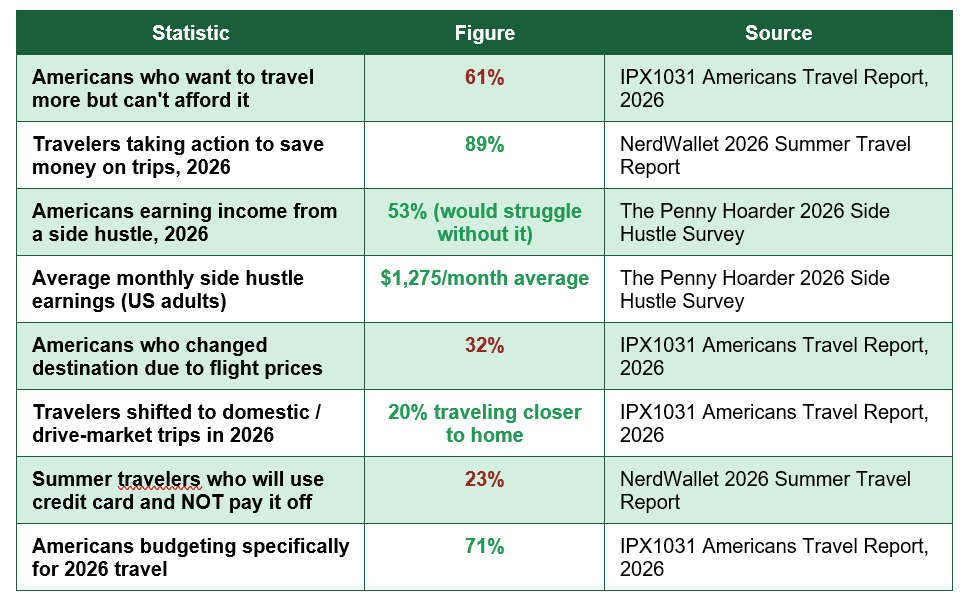
Americans who want to travel more but simply can't afford it: 61% — the largest share reporting this constraint in recent years, driven by the combination of inflation, higher airfares, and elevated accommodation costs (IPX1031 2026 Travel Report)
The Best Side Gigs to Build Your Travel Fund
A side gig built specifically around a travel fund is different from a side hustle built for general income. You have a defined target, a clear timeline, and a specific finish line — which changes the psychology completely. You are not grinding indefinitely; you are sprinting toward something specific. That framing makes the whole enterprise considerably more motivating and more sustainable.The Penny Hoarder's 2026 Side Hustle Survey found that the average American with a side gig earns $1,275 a month from it. For a travel fund of $3,000 — enough for a solid international trip with careful planning — that translates to a three-month sprint before you book. For a domestic road trip fund of $1,500, six to eight weeks. These timelines are genuinely achievable for most people, and they make the goal feel concrete rather than abstract.
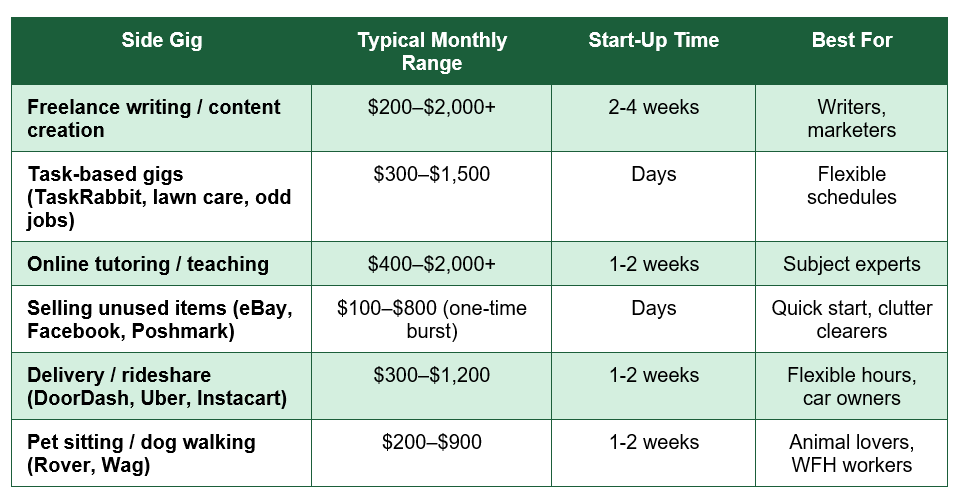
The fastest start: For most people, the single quickest way to kickstart a travel fund is to sell what you already own. Go through your home methodically — clothes you haven't worn in two years, electronics gathering dust, sports equipment from a hobby you've abandoned — and list them on Facebook Marketplace or eBay. This typically yields a one-time injection of $200-$800 within a few weeks and costs nothing in time beyond the listing and the handover. It doesn't scale, but it gets momentum started immediately while you set up a longer-term gig.
1. Freelance Writing and Content Creation
If you can write — and if you are considering a budget travel guide, there is a reasonable chance you can — freelance writing remains one of the most scalable, location-flexible side gigs available. You do not need to be a professional journalist to get started; most content work in 2026 involves writing blog posts, product descriptions, email newsletters, or social media content for small and medium businesses, which rewards clear, competent writing rather than Pulitzer-quality prose.Platforms like Upwork, Fiverr, and ProBlogger's job board are all genuine starting points, and the typical travel-focused writer can often find a natural niche writing destination guides, travel tips, or hospitality content — work that doubles as useful research for your own upcoming trips. Getting your first few paying clients takes more time and rejection than most people expect, but once you have two or three regular clients at even modest rates, the income becomes reliable enough to structure a travel savings plan around it.
2. Task-Based Local Gigs
For speed of start and minimum friction, local task-based gigs are hard to beat. Apps like TaskRabbit, Thumbtack, or simply a well-worded social media post offering lawn mowing, furniture assembly, home organisation, decluttering, or handyman services can generate your first paid booking within days. These gigs pay meaningful hourly rates — $25-$60 or more depending on the task and your market — and every job is a discrete, completed transaction that you can immediately redirect into your travel fund without it getting mixed up with regular income.The additional benefit: task gigs align well with seasonal patterns that also affect travel planning. Autumn and spring home maintenance work is abundant in most regions, fitting naturally into a savings window before summer travel. If you are aiming for a trip in a specific season, mapping your gig timeline against local demand cycles can meaningfully improve both earnings and scheduling.
3. Pet Sitting and Dog Walking
This recommendation might sound modest but it is consistently underrated as a travel fund builder, for a specific reason: the overhead is zero, the schedule is genuinely flexible, and if you work or study from home, the work is compatible with your existing routine in a way that delivery gigs are not. Platforms like Rover and Wag connect you with pet owners who need reliable sitters and walkers, and a track record of positive reviews builds into a genuinely stable mini-income stream within a matter of months.There is also a useful travel-alignment built into this one: many pet owners need a trusted sitter specifically because they themselves are travelling, meaning your busiest income periods — bank holiday weekends, school holidays, peak summer and Christmas — are precisely the periods when your own travel savings motivation will be highest.
House Sitting and House Swapping: The Honest Truth
Accommodation is, for most travellers, the largest single line item in a travel budget — and house sitting and house swapping are the two approaches that can eliminate it entirely. Both are genuinely viable, both are more mainstream in 2026 than they were even five years ago, and both require a realistic, eyes-open assessment of what you are getting into before you commit.House Sitting: What It Actually Is and What to Watch For
House sitting means staying in someone else's home while they are away — typically in exchange for caring for pets, tending a garden, collecting post, and generally maintaining the property. Platforms like TrustedHousesitters, Housecarers, and MindMyHouse connect sitters with homeowners globally, with annual membership fees (typically $80-$150 per year for sitters) providing access to listed sits. In return, your accommodation is entirely free.The appeal is real. A well-matched house sit can place you in a beautiful home in a destination you chose, with the run of the property, often with delightful pets, and zero accommodation cost beyond the membership fee. Experienced house sitters build profiles that attract better sits over time, and with a strong profile and genuine flexibility on destination and timing, it is entirely possible to spend months per year in free accommodation globally.
The downsides are also real and worth stating clearly:
- Timing inflexibility: You sit on the homeowner's schedule, not yours. If you have limited holiday time or inflexible work commitments, matching your availability with available sits in your preferred destinations can take much longer than expected.
- The responsibility is genuine, not nominal: A pet emergency, a burst pipe, or a security incident during your sit is your problem to manage, often in a country where you do not speak the language or know the local emergency services. This is not a passive accommodation experience, and people who approach it as one tend to leave negative impressions that damage their future prospects.
- Competition for desirable sits is significant: Popular destinations, particularly in Western Europe and the US, attract multiple applications for each listing. New sitters without reviews face a genuine chicken-and-egg challenge of needing reviews to get sits and needing sits to get reviews. Starting with local or less competitive sits to build your profile is advisable before targeting marquee locations.
- The premium membership tier matters: On TrustedHousesitters specifically, premium membership unlocks instant video verification and featured profile placement that meaningfully improves your booking rate, particularly early on. Budget for the paid tier if you are serious about this approach.
House Swapping: The Different Trade-Off
House swapping — exchanging your own home with someone in another location for a mutually agreed period — has gained significant mainstream traction following the success of the film The Holiday and the rise of platforms including HomeExchange (formerly Guest to Guest), Kindred, and LoveHomeSwap, which now list hundreds of thousands of homes globally. Unlike house sitting, you need to own or rent a property attractive enough to exchange, which immediately limits the audience — but for those who qualify, it is an extraordinary deal: a real home, with a kitchen, in your chosen destination, for zero accommodation cost beyond the platform membership fee.Specific downsides to be aware of:
- You need an exchangeable home: Most successful house swappers live in places that other people genuinely want to visit, or have a home with particular appeal (proximity to a city centre, a rural setting, distinctive decor). If you live in a suburban area with no particular draw for visitors, your listing will attract fewer requests, and simultaneous exchanges (where both parties swap at the same time) will be harder to arrange.
- Simultaneous vs non-simultaneous exchanges: Many platforms now offer a points-based system (GuestPoints or equivalent) that allows non-simultaneous exchanges, meaning you host someone now and use the earned points to stay at another home later. This is considerably more flexible but adds a layer of complexity and means your points have a real monetary value you need to manage.
- Your home is occupied by strangers: The psychological adjustment of having people you have never met staying in your home — using your belongings, sleeping in your bed, having access to your personal space — is not a minor consideration. Most swap platforms include trust verification and review systems, but the discomfort is real, particularly the first time.
- Legal and insurance considerations: Renters should check their tenancy agreement before listing a swap, as some leases prohibit this. Homeowners should notify their home insurance provider, as standard policies may not cover short-term guest stays, and arranging appropriate cover is the homeowner's responsibility.
The verdict: house sitting suits flexible travellers with time to build a profile, genuine willingness to take on property responsibilities, and the ability to work around homeowner schedules. House swapping suits homeowners in desirable locations who want a real-home experience at their destination and are comfortable reciprocating. Both are genuinely excellent options when the fit is right; both can disappoint when the fit is wrong.
How to Make the Most of a Staycation on a Budget
A staycation has a reputation problem. For many people, the word conjures an image of sitting at home watching television and pretending to feel relaxed while the bathroom ceiling still needs painting. Done well, however, a staycation is something genuinely different: a deliberate, intentional use of time off in your own area, structured to produce the rest, novelty, and pleasure that travel is supposed to deliver — without the cost, the stress of airports, or the logistics of being far from home.The key distinction between a staycation that works and one that doesn't is intention. A holiday works because it removes you from your routines, your obligations, and your default environment. A staycation has to do the same work through deliberate design rather than physical distance.
Treat It Like an Actual Trip
The single biggest mistake people make with staycations is treating them like slightly extended weekends with slightly less work email. The most successful staycations involve the same intentional planning as a real trip: research your area as if you were a tourist visiting for the first time (TripAdvisor, Atlas Obscura, and local tourism websites are useful starting points), make a loose day-by-day itinerary, and tell your household that this period is a holiday with genuine phone and laptop boundaries.Research consistently shows that the majority of the happiness from a holiday comes from the planning and anticipation stage — which means the investment of an evening planning your staycation produces a disproportionate amount of its enjoyment before it even begins. Write down your itinerary. Put it on the fridge. Make it feel real, because it is.
Spend One Night Away
This is the single most impactful, cost-effective upgrade available to a staycation: spend one night, even one, somewhere other than your own home. A budget hotel, a B&B thirty minutes away, a glamping site, a friend's sofa in a different town — the specific location matters far less than the act of waking up somewhere different. This one night does more to satisfy the psychological need for novelty and getaway than an entire week of great day trips from home, and at its most basic it costs under $80 in most markets.Be a Tourist in Your Own City or Town
Most people significantly underuse the interesting things available within thirty minutes of their front door. Pick three to five genuinely interesting local experiences you have never done — a museum you have driven past for years, a walking route through a neighbourhood you do not live in, a restaurant serving a cuisine you have not tried, a local sporting event or cultural performance. The novelty you are seeking from travel is available locally; you just have to actively seek it rather than waiting for it to present itself.City tourism cards, available for most major US and UK cities, typically offer free or discounted entry to multiple attractions bundled into one purchase that almost always pays for itself within a day of use. Libraries offer free passes to local museums in many US cities. Atlas Obscura lists genuinely unusual, often free local attractions that most residents have no idea exist.
Create the Right Environment at Home
If budget or circumstances mean you are spending meaningful time at home during your staycation, invest a modest amount in making that environment feel genuinely different. A set of fresh towels and a candle are enough to make a bathroom feel like a hotel bathroom. Cooking a proper breakfasts every morning — the small, daily pleasure that most people associate most strongly with the hotel experience — costs a few dollars in ingredients and entirely transforms the morning mood. A hammock in the garden, a projector for outdoor film nights, a visit to a farmer's market for locally-sourced food to cook from scratch — these are all free or near-free sensory shifts that signal 'this time is different' to your brain more effectively than most expensive purchases.Conclusion
Being short on cash is not the same as being short on options. The 61% of Americans who say they want to travel more but cannot afford it are not, for the most part, facing an insurmountable barrier — they are facing a planning gap. A three-month freelance writing gig, a pet sitting side hustle, or a disciplined session clearing your home of unused items and listing them for sale can each generate a meaningful travel fund within a timeframe that is far shorter than most people expect. A house sit or a home swap can eliminate the biggest single cost in any travel budget entirely, in exchange for responsibility and some flexibility.And for the times when none of that comes together — when life is busy, funds are genuinely tight, and the trip is not happening this season — a well-planned staycation is not a consolation prize. It is a different and often superior experience for those who approach it with the same intention and creativity they would bring to planning a real trip. The traveller's mindset — curiosity, openness, deliberate attention to your environment — is available wherever you are. The passport is optional.
Frequently Asked Questions (FAQ)
How much can I realistically earn from a side gig to fund travel?
The Penny Hoarder's 2026 Side Hustle Survey found that the average American with an active side gig earns $1,275 per month from it — enough to fund a solid domestic trip or contribute meaningfully toward an international one within a few months of dedicated saving. Results vary significantly by gig type and hours invested; the key is choosing an activity that matches both your skills and your available time, setting a specific travel fund target, and automating a transfer of your gig earnings into a dedicated savings account so the money is ringfenced before it disappears into everyday spending.Is house sitting actually free, or are there hidden costs?
House sitting is genuinely free accommodation in exchange for your time and care, but there are real costs to budget for. Annual membership fees on platforms like TrustedHousesitters run approximately $80-$150 per year for sitters. Travel to and from the sit location is your own cost, as is travel insurance (which is essential and often forgotten). You will also typically cover your own food during the sit. The accommodation itself is free; everything else around it is normal travel expenditure.What is the best platform for house sitting?
TrustedHousesitters is currently the largest and most widely used global platform, with the most listings in popular destination countries. Housecarers is an alternative with a lower membership fee and a solid international listing database. MindMyHouse and Nomador are worth considering for European sits specifically. All platforms offer free browsing of available sits before committing to membership, which allows you to assess the volume and quality of listings in your target destinations before paying a fee.How do I make a staycation feel genuinely restful rather than just staying home?
The most important step is drawing a clear, firm boundary between your holiday time and your regular life — no work email, no home admin, no defaulting to your usual evening routine. Planning specific activities in advance (day trips, restaurant bookings, local experiences you have not tried before), spending at least one night somewhere other than your own home if budget allows, and actively designing your home environment to feel different from usual all contribute meaningfully to the psychological experience of genuine rest and novelty.What are the best free or low-cost travel resources for budget travellers in 2026?
Scott's Cheap Flights (now Going) sends email alerts for genuinely discounted flight deals to your chosen destinations, and has a free tier. Google Flights' price alert function monitors specific routes and notifies you when prices drop. Couchsurfing, while changed from its original free model, retains a community useful for local connections and advice. Credit card points programmes — particularly transferable points on cards like Chase Sapphire, Amex Gold, or Capital One Venture — remain one of the most underused budget travel tools among those who pay their cards in full each month. And Atlas Obscura remains the best single resource for finding free, genuinely interesting local experiences wherever you are in the world.External References
The following sources informed this article and are recommended for further reading:1. IPX1031 - Americans Travel Report 2026
https://www.ipx1031.com/americans-travel-report-2026/
2. NerdWallet - 2026 Summer Travel Report (Harris Poll, 2,000+ Americans)
https://www.nerdwallet.com/travel/studies/summer-travel-report
3. The Penny Hoarder - 2026 Side Hustle Survey
https://www.thepennyhoarder.com/make-money/side-hustle-statistics/
4. Deloitte Insights - 2026 Travel Industry Outlook
https://www.deloitte.com/us/en/insights/industry/transportation/travel-hospitality-industry-outlook.html
5. U.S. Travel Association - Spring 2026 Travel Forecast
https://www.ustravel.org/research/travel-forecasts
6. TrustedHousesitters - Platform Overview and Membership Information
https://www.trustedhousesitters.com/
7. HomeExchange - Home Swapping Platform
https://www.homeexchange.com/
8. Atlas Obscura - Unusual Attractions and Local Experiences
https://www.atlasobscura.com/
0 Comments
Be the first to share your thoughts on this article.