
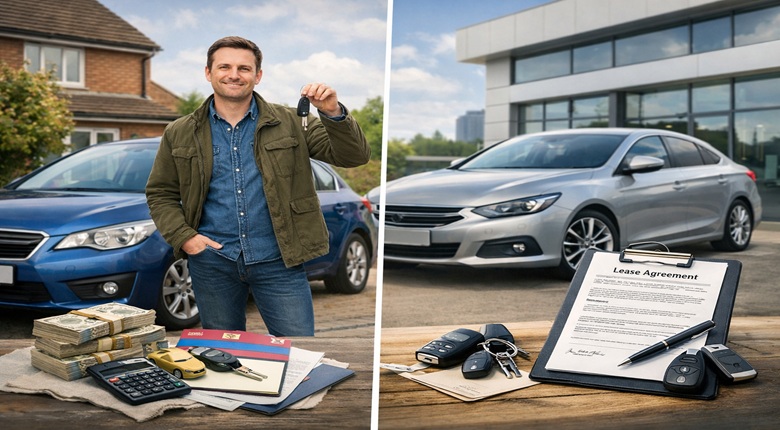
Buying vs Leasing: Which Car Financing Option Is Best?

Deciding how to pay for a new or used vehicle shapes your budget and your freedom to change cars over time. You’ll learn the core difference between a loan and a lease so you know what each payment covers, who owns the title, and what happens at the end of the term.
With a conventional loan, part of each monthly payment goes to interest and part to principal. That process builds equity so the vehicle becomes yours at loan end. This gives you flexibility to sell or trade later.
Leasing often lowers your monthly payments because you pay for depreciation, rent charges, taxes, and fees. Leases add mileage caps and possible end-of-lease charges for excess wear and miles. EV lease deals may pass manufacturer incentives or tax credits to you.
In this guide, you’ll compare payments, long-term costs, and practical pros and cons so you can choose the option that fits your budget and driving habits.
Key Takeaways
- Loans build ownership and equity; leases typically mean lower monthly payments.
- Leases limit miles and can add end-of-term charges for wear and excess miles.
- Loan-financed vehicles give you the freedom to sell or trade when needed.
- EV lease structures can pass incentives that cut your out-of-pocket costs.
- Compare long-run costs, term length, and expected usage before choosing.
Buying vs Leasing A Car: What Each Option Really Means Today
Deciding between a loan or a lease shapes how long you keep a vehicle and who benefits from its value. Your choice affects monthly costs, ownership rights, and what happens at the end of the term.
How a loan builds equity over time
With a loan, each monthly payment splits between interest and principal. As you reduce principal, you build equity that becomes trade-in value or cash when you sell.
Shorter loan years cut total interest but raise monthly payments. If you want lasting ownership, a loan is the path to full title and long-term value.
How a lease works from start to end of term
A typical lease term runs two to three years with mileage limits (often 10,000–12,000 miles per year). Monthly payments cover depreciation, rent charges, taxes, and fees rather than the full purchase price.
At the end, you return the vehicle to the leasing company, buy it at the residual value, or start a new lease. Early termination can be costly, and leases usually require full coverage insurance and may include routine maintenance under warranty.
- Ownership: loans transfer title to you; leases keep title with the leasing company.
- Flexibility: financed vehicles can be sold or traded anytime; leased vehicles follow term rules.
Monthly payments, total costs, and value over time
Your monthly payment tells a story about what you actually fund: either ongoing depreciation and rent charges or progress toward full ownership.
Lower monthly payments vs. higher monthly payments: what you’re actually paying for
Average new-vehicle payments show the difference: leases averaged $612 and loans $749 (Experian, Q2 2025). That lower monthly number often covers projected depreciation, rent charges, taxes, and fees. A higher payment on a loan repays the full vehicle price plus interest and taxes.
Up-front costs, interest, taxes, and fees you should expect
Expect acquisition fees, registration, sales tax, and possible down payments. APR matters more for loans because it affects principal repayment. In leases, rent charges act like interest but are calculated against the depreciation amount.
Depreciation, residual value, and end-of-lease buyout math
Residual value sets the lease buy price at term end. Inflated residuals lower monthly amounts but can make a buyout unaffordable if market value is lower.
- Check residual vs. market value.
- Compare buyout price to used listings.
- Include taxes and fees for the final tally.
Perpetual leasing vs. owning free and clear
Perpetual leasing keeps you paying during steep early depreciation and prevents equity buildup. Paying off a loan ends payments and leaves you with owned value you can sell or trade.
Flexibility, mileage limits, and usage patterns
Estimating yearly miles up front helps you avoid surprise charges when your term ends. Be honest about commutes, weekend trips, and any long drives you plan in the next years.
Mileage caps, per‑mile fees, and buying extra miles
Most contracts set mileage caps between 10,000 and 15,000 miles per year. If you exceed the cap, overage fees commonly range from $0.12 to $0.30 per mile.
Example: 2,000 extra miles at $0.30 equals $600 — often far costlier than pre‑buying extra miles when the contract is signed.
Early termination, lease transfers, and end‑of‑lease choices
Ending a lease early can be as costly as finishing it. Dealers sometimes help with a trade-in, and many leasing companies allow transfers for a fee.
At end lease you can return the vehicle, buy it at the residual, or start another lease. Run the numbers before you decide.
Wear and tear standards vs. self‑managed repairs
Leases enforce strict wear-and-tear rules. Inspectors flag upholstery damage, dents, cracked glass, and worn tires — these trigger charges.
If you own the vehicle, you can manage repairs on your schedule and choice of shop. That control often lowers long-term costs if you keep the vehicle beyond the term.
Ownership, equity, and future value considerations
Full ownership reshapes how you capture value and manage long‑term costs. When you finish loan payments you gain title and equity. That equity can become trade‑in value or cash when you sell the vehicle.
Building equity, trade‑in value, and selling on your terms
You control when and how to sell. Keeping a car past the loan cuts monthly outgo and can free money for other goals.
Tip: Compare residual value with market prices before you decide to sell or keep.
Customization, maintenance, and warranty predictability
Owning gives freedom to modify wheels, audio, or wraps, but excessive mods may lower resale value or affect warranty coverage.
Leasing limits changes and may require removing alterations or paying for damage at term end. Routine maintenance rises as years pass, while leases often keep you inside warranty and reduce repair risk.
| Factor | Owned vehicle | Leased vehicle |
| Equity | Builds over time; trade‑in or sale | No equity; return at end |
| Customization | Allowed; may affect resale/warranty | Restricted; must reverse mods |
| Maintenance predictability | Variable after warranty; costs may rise | Often covered within warranty years |
| Long‑term value | Potential retained value and lower future payments | Steady payments but no asset at end |
Decide by matching your financial horizon: if you want equity and flexibility, prioritize ownership. If you prefer predictability and lower short‑term costs, the other option may suit you better.
Insurance, maintenance, and hidden costs you shouldn’t overlook
Insurance and routine service add steady, often overlooked charges that change the total cost of ownership.
Full coverage, gap protection, and required coverages
If you sign a lease, the lessor will usually require full coverage: collision and comprehensive. That often raises your premiums above minimum state requirements.
Gap insurance is common on leases. It covers the difference between the vehicle’s value and what you owe if it’s totaled or stolen. Many contracts bundle gap protection or offer it as an add‑on.
Routine care, warranty limits, and repair risk over time
Some lease deals include routine maintenance and keep the vehicle under factory warranty, which lowers surprise repairs. Owning through a loan gives you choice of shops and parts but raises repair risk once the warranty ends.
- Budget for registration, tires, brakes, and unexpected service.
- Watch for lease fees: acquisition, disposition, and excess wear charges.
- Compare a loan plus extended warranty vs. a shorter lease within warranty years.
EVs, incentives, and when leasing or buying makes more sense
When electric models carry rebates or pass-through tax credits, monthly payments and drive-off amounts can drop substantially.
How EV tax credits and manufacturer incentives can affect a lease
Incentives from manufacturers or temporary tax programs often lower what you pay each month on a lease.
Some brands now offer credits that replace federal tax benefits ended in 2025. Those programs can make leasing a new car more affordable than financing the same model.
Leasing shields you from sharp depreciation and lets you test battery tech without long-term risk.
- Check whether incentives are passed to the lease or kept by the dealer.
- Compare acquisition and disposition fees to any incentive savings.
- Estimate mileage needs so lease mileage caps match your typical trips.
At term end you can return the vehicle, start another lease, or choose a lease buy if the residual is reasonable. If you plan to keep the EV long and invest in home charging, a loan may deliver better value over time.
Conclusion
Focus on total cost, not only the monthly payment. Compare the $612 average lease payment to the $749 loan number and weigh lower monthly payments against long‑term value. A lease can save you money each month, while a loan builds equity and ends payments when you finish the term.
Match miles and contract limits to your routine. Avoid end lease surprises by estimating mileage and checking residual and buyout math. Factor EV incentives, fees, insurance, and expected repairs into your final cost picture.
Choose the option that fits your timeline and driving. With clear comparisons and realistic miles, you’ll act confidently and keep more control of your money and vehicle value.
0 Comments
Be the first to share your thoughts on this article.