
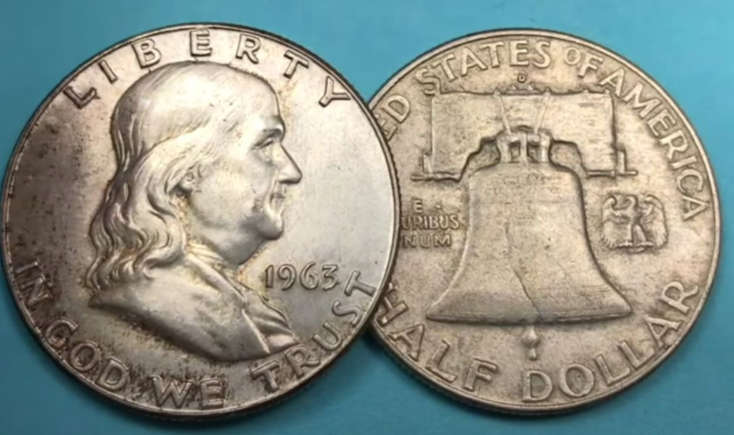
Coins From 1960s that Are Worth Big Bucks Today

Quick guide: this short intro explains which issues from the 1960 era tend to trade above face and why the date and mint matter.
Two primary value lanes drive premiums: copper Lincoln cents with scarce date varieties and 90% silver Washington quarters. Collectors pay extra for RD color on high-grade cents and for certified silver quarters in mint state.
Watch for headline finds like the 1960 small date and Denver small-over-large RPM, plus rare quarters struck on silver planchets in 1965. Authentication often moves a piece from common to high-value status.
Condition sets price. Read the date, check mint marks, assess surface color and wear, and compare current comps before you sell. This guide will show how to verify a coin's value fast and avoid leaving dollars on the table.
?feature=shared">?feature=shared
Key Takeaways
- Focus on date, mint mark, and condition to spot premium pieces.
- Copper cents and 90% silver quarters are the main value drivers.
- Look for small-date varieties, RPMs, and rare silver-struck quarters.
- Grading and third-party authentication greatly affect market value.
- Use step-by-step checks to confirm worth money before selling.
Buyer’s snapshot: which 1960s coins are worth more than face value today
A quick review gives buyers a clear filter for fast wins.
Certain issues stand out: 90% silver quarters dated 1960–1964, select 1960 Lincoln cents with small date or large date differences, and rare 1965 silver transition errors. Use a simple sequence: check date, then mint, then condition, then any error or variety.
Fast wins: silver dates, scarce varieties, and headline errors
Silver quarters (1960–1964) weigh about 6.25 g and hold melt value near $4.50–$5.25 when silver trades around $24/oz. Any example with those dates usually exceeds face value even if worn.
1960 cents come in small date and large date types. Denver pieces with RPM or small-over-large date varieties can carry notable premiums. Proofs and uncirculated examples often fetch more.
Face value vs. market value: understanding “worth” in today’s dollars
Face value is fixed; market value depends on metal content and collector demand. Silver sets the baseline for quarters. Numismatic scarcity, grade, and authentication add premiums—and can push a rare 1965 transition error into the high thousands.
Tip: carry a small scale and a loupe. If a piece weighs ~6.25 g and shows silver traits, mark it for deeper research.
- Filter: date → mint → condition → variety/error diagnostics.
- Expect common worn pieces without silver or rarity to trade near face.
- Document finds and compare recent sales before selling.
Value drivers at a glance: date, mint mark, condition, and errors
Quick checks reveal most value differences. Start with four simple items that change a coin's market price: the date, mint mark, condition, and any visible error or variety. These guide how far a piece can climb above face value.
Reading the obverse and reverse
Where to find the date and mint mark
On Lincoln cents, the date is on the right side of the obverse. Philadelphia coins have no mint mark. Denver coins show a small "D" below the date.
For Washington quarters, mint marks are on the reverse below the eagle. Knowing the origin early saves time.
Circulation, luster, and color
How wear and eye appeal affect value
Condition is about contact marks, luster, and sharp detail. Less circulation means clearer portraits and legends. Check wear areas closely.
Copper cents' color grades matter: RD (95%+ red) commands top prices, RB mixes red and brown, and BN is mostly brown. Color can move value dramatically for the same date and mint.
Tip: examine coins under bright, diffused light with a 5–10x loupe on a soft microfiber pad to avoid adding marks.
- Use the date and mint marks to set expectations for rarity.
- Use condition and errors to estimate premium above face.
- Learn baseline looks so standout pieces pop at a glance.
1960 Lincoln Memorial cent: small date vs. large date, and what’s worth keeping
A quick visual check can separate common change from collectible pieces.
How to read the 1-9-6-0 profile:
The large date penny has a taller "9" above the "1" and a bulkier "6."
The small date penny has tighter digit spacing with a smaller "0" and more even alignment. Line up examples side-by-side to learn the subtle differences quickly.
1960 penny value by variety, color, and grade
Color affects penny value sharply: RD (red) leads, RB follows, and BN trails. MS grades multiply premiums—MS65 RD examples from Philadelphia often outpace comparable large date pieces.
| Variety | Typical Grade | Representative 1960 penny value |
| 1960 P small date (RD) | MS65–MS67 | ~$27 (MS65) to several hundred (MS67) |
| 1960 P large date (RD) | MS65–MS67 | ~$14 (MS65) to ~$375 (MS67) |
| 1960-D small / large (RD) | MS63–MS67 | Ranges from ~$8–$475; top survivors higher |
Mint marks, proofs, and what to keep
Philadelphia pennies have no mint mark on the front. Denver pennies have a small "D" below the date. Proofs from Philadelphia, with cameo and deep cameo finishes, can be very valuable.
Quick triage: keep bright RD business strikes, any proof with cameo contrast, and crisp small date examples for further grading.
Key 1960 Lincoln cent varieties: worth much more than face value
A few Lincoln cent varieties from 1960 hide subtle die work that can lift a common penny into a high-value find.
1960-D small over large date and repunched mint mark: diagnostics
Look for overlapping digits where a faint secondary impression sits behind the primary date. A ghost "D" under the final mint mark signals a repunched mint mark (RPM).
Tools: use a 10x loupe or low-power microscope to confirm under-date hubbing and RPM remnants. Photograph the area for records.
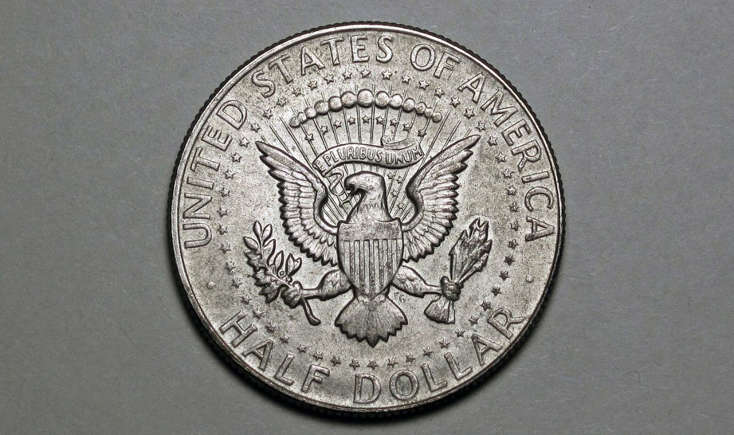
Note: genuine die doubling and RPMs show hub overlap, not simple machine doubling or tooling scratches.
Values by color and grade
Even brown (BN) examples in low grade might be a few dollars. BN at MS60–MS65 typically ranges $6–$20.
Red-brown (RB) specimens begin near $50 in lower uncirculated grades and can reach ~$400 by MS66. Red (RD) examples climb steeply: MS60 around $75 and MS66+ can top $1,375.
| Variety | Condition | Representative value |
| 1960-D small over large (BN) | MS60–MS65 | $6–$20 |
| 1960-D small over large (RB) | MS60–MS66 | $50–$400 |
| 1960-D small over large (RD) | MS60–MS66+ | $75–$1,375+ |
Philadelphia proof small/large over small: authentication tips
There are three proof dies: two small-over-large and one large-over-small. Look for cameo contrast. Frosted devices on mirrored fields greatly increase value.
Typical proof pricing: small-over-large red PR60 ~ $50, top reds near $4,150; deep cameo examples ~PR66 fetch ~ $2,000. Large-over-small red PR60 ~ $30; finest red PR69 may approach $8,500.
Authentication: submit high-grade RD proofs and rare cameo examples to PCGS or NGC before selling to capture full market value.
- First check 1960-D cents for RPM and small date features.
- Then examine Philly proofs and note cameo strength.
- Document findings with macro photos of the date and mint mark.
Silver Washington quarters 1960-1964: why they’re worth more than face value
Any Washington quarter dated 1960–1964 carries intrinsic silver value that sets a price floor. These issues are 90% silver, 10% copper and weigh about 6.25 g. This composition gives most circulated pieces a melt baseline above face value.
Composition, weight, and melt context
At roughly $24/oz silver, a 6.25 g quarter yields about $4.50–$5.25 melt. This anchors expectations: many common date quarters trade near or above that floor in circulation.
Mint marks and mintage differences
Philadelphia examples show no mint mark; Denver pieces carry a small "D" on the reverse below the eagle. High mintage, especially in 1964 and at the denver mint, means most values track metal content unless the piece is uncirculated.
Collector strategy: stack metal or pick uncirculated
?feature=shared">?feature=sharedFor bullion exposure, stack circulated silver by weight. For numismatic upside, cherry-pick attractive uncirculated coins where luster and eye appeal can push values well above melt.
Tip: use a small scale (6.25 g check), listen for a bright ring, and compare weight to 1965+ clad quarters (5.67 g) to confirm silver status before deeper research.
1965 transition quarter errors: the holy grail silver planchet strikes
Occasional planchet mix-ups in 1965 produced quarters on 90% silver blanks, creating the rarest circulation-era error pieces.
How to test: weight, edge, and sound checks for silver vs. clad
Weight is the clearest home test. A genuine silver quarter should weigh about 6.25 g; a clad piece is about 5.67 g. Use a precise digital scale and note small deviations.
Edge inspection confirms composition. Silver shows a solid, consistent edge color. Clad quarters show layered metals at the rim.
Sound helps too. Gently tap a known silver coin and a suspected 1965 while listening for a high ring. Clad coins sound duller. Always handle coins on a soft surface to avoid marks.
Market reality: authentication, rarity, and auction price ranges today
These errors are extremely rare, and market buyers demand certification. Typical auction ranges sit around $6,000–$10,000, with top grades bringing more dollars.
Pro tip: do not clean or polish a suspected silver piece. Submit it protected in a soft flip to PCGS or NGC for authentication and grading.
| Test | Silver result | Clad result |
| Weight | ~6.25 g | ~5.67 g |
| Edge look | Solid silver appearance | Layered alloy visible |
| Sound | Clear ringing tone | Duller sound |
| Typical auction values | $6,000–$10,000 (grade dependent) | Face or melt value |
If you find a suspected silver coin, weigh it and protect it right away. Getting it graded and documented properly can help you get the best price.
Error and variety coins of the 1960s worth money beyond face value
Collectors love coins with clear dates and mint marks because they're easy to price.
Main error types: off-center strikes, cuds and major die breaks, die cracks, strikethroughs, doubled dies, and repunched mint marks (RPMs).
Coins that are off-center but still show the date can sell for 10–50% more than usual.
How premiums map to damage and visibility
Cuds and big die breaks can remove design and create blobs near the rim. These coins usually sell for $50–$150, with rare ones worth more.
Die cracks and small breaks are common but still valuable. Their price goes up if they're visible, especially on portraits or important details.
Doubled dies and RPMs: spotting real varieties
True hub doubling shows clear separation and notching on letters and numbers. RPMs show a faint second mint impression under the visible mark.
Tip: use a 10x loupe, photograph glare-free, and compare to verified variety listings before declaring a rare find.
| Type | Typical premium | Notes |
| Off-center (full date) | 10%–50%+ | Best when date and mint mark remain readable |
| Cud / major die break | $50–$150+ | Location and size matter |
| Doubled die / RPM | Varied—depends on rarity | Authentication recommended |
Final advice: document your finds with clear photos, note the date and mint mark, and get high-value errors authenticated. This will help you get the best price and interest from collectors.
Grading and condition: the factors collectors and auctions value most
Grading gives a clear numeric profile that buyers and auction houses trust when setting price. A short grade tells whether a piece will sit on a dealer table or headline an auction.
Understanding MS and PR scales, plus color designations
The numeric scale runs 1–70. MS (Mint State) applies to uncirculated business strikes. PR (Proof) applies to presentation strikes and uses the same 1–70 range.
For copper cents, use RD, RB, and BN color codes. RD means 95%+ original red and often lifts market interest most for a 1960 date.
What auctions and collectors prioritize
Key factors are original luster, mark-free fields, a sharp strike, and natural eye appeal. These traits drive realized value more than a high grade alone.
Tip: handle coins by the edge, avoid bare-finger contact, and never polish—cleaning cuts value and ruins auction prospects.
Preservation basics
Use inert flips or airtight capsules and keep storage cool and dry. Low humidity and steady temperature help preserve copper tones and overall condition.
Pre-screen before submitting for grading. Send only pieces with a realistic shot at premium grades or those needing authentication.
Records and grading impact
Keep notes on when and where you got your coins. Reports on population and consistent grades help set prices. This makes buyers more confident.
Pricing, auctions, and where to sell your 1960s coins for top value
A clear selling plan protects value and avoids common mistakes. First, check if your coins are real. Look at recent sales for similar coins. Choose the right place to sell based on your coins' rarity and condition.
When to choose a dealer vs. auction: fees, timing, and market cycles
Dealers are quick and easy. They pay less but close deals fast and handle paperwork.
Auctions can get you more money for rare coins. You'll pay listing fees and buyer premiums. Sell when demand is high or silver prices are up.
Finding reputable U.S. dealers: ANA/PNG members and PCGS/NGC authorized
Check if dealers are members of ANA or PNG. Look for PCGS/NGC authorization. Read reviews and ask about their return and authentication policies.
Tip: avoid pawn or jewelry outlets that focus only on metal content and may miss numismatic premiums.
Authentication strategy for high-value errors and proofs
Send suspected error pieces and rare proofs to PCGS or NGC first. This opens up auction competition and builds trust with buyers.
For bulk silver quarters, separate uncirculated or toned examples before selling. Use the silver floor (~$4.50–$5.25 at $24/oz spot) as a pricing baseline for circulated metal lots.
| Venue | Best use | Fees & timing | Typical result |
| Dealer | Quick sale, small lots | Low fees, fast payout | Below top-market but immediate cash |
| Auction house | Rare varieties, high-grade proofs | Listing + buyer premium, multi-week cycle | Highest realized price on scarce items |
| Consignment | Exceptional single lots | Variable reserve and commission | Wide marketing; potential top value |
| Private sale | Targeted collectors | Negotiable; document transfer | Can match auction results with right buyer |
Final checklist: document clear photos of date and mint mark, verify condition, get high-value pieces certified, then choose a sale way that fits rarity and timing.
Coins From 1960s that Are Worth Big Bucks Today: Conclusion
Conclude with a focused pull: isolate all 1960–1964 silver quarters and sort 1960 penny examples into small date and large date groups for closer review.
Quick wins: weigh suspected silver, look for RD color and high MS/PR grades, and flag the 1960-D small-over-large RPM plus Philadelphia proof hub varieties as top targets.
Weigh any suspected 1965 silver planchet error precisely and seek professional authentication before selling. Inspect each coin for date, mint mark, condition, and visible variety or error to separate common pieces from real collectibles.
Handle with care: store in inert flips, avoid cleaning, and use trusted dealers or auction houses with grading to capture full market value. Stay aware of metal spot and collector demand so you price with confidence.
Build a small reference set of known examples to sharpen at-a-glance diagnostics. With this workflow you can spot lincoln memorial pieces and other rare finds and act decisively to maximize returns.
0 Comments
Be the first to share your thoughts on this article.