
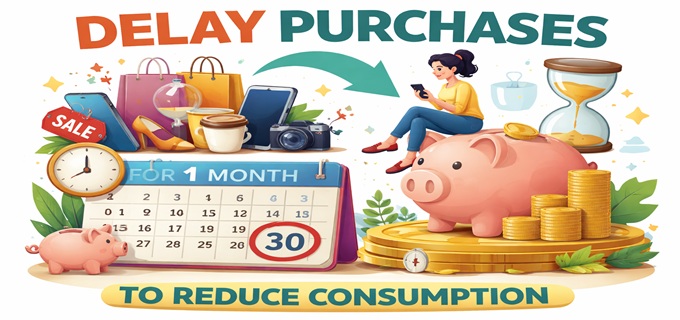
Delay Purchases for 1 Month to Reduce Consumption
This short guide promises a simple test: wait 30 days before buying nonessential items and see how spending changes. The goal is practical — spend less and feel better about the choices you make. Shopping today is fast and frictionless. Companies build checkouts that separate you from money in seconds. That pressure leads to impulse buys that rarely improve your life. The 30-day waiting approach is a behavior tweak you can run anytime. It gives space to question needs and to notice what truly matters. This method borrows ideas from delay-of-gratification research; see one useful summary in this study on delay of gratification.
This article is for people who want to save more, stop regretting buys, and choose spending with clear intent. It is not financial advice, but a repeatable system you can test in the present month.
Key Takeaways
- Try a 30-day pause to cut impulsive spending.
- Frictionless checkouts drive quick buys; slowing down helps.
- Small delays lead to clearer priorities and fewer regrets.
- You can repeat this system anytime spending feels out of control.
- Not financial advice — a practical behavioral tool to save money.
Why delaying purchases works in today’s impulse-driven shopping culture
Retail techniques today nudge you toward instant purchases with little resistance. Targeted ads, saved cards, and timed deals shorten decision time. That makes impulse purchases feel normal and quick. The 30-day rule is simple. When an item tempts you, stop and write the item, price, retailer, and date. Set a 30-day reminder and decide later. This pause breaks the impulse loop and creates a clear space to think.
How a pause protects a budget and limits credit risk
Waiting helps you stick to a category limit and avoid last-minute justifications. If you do use a credit card, impulses can compound into interest and long-term debt. A forced delay lowers the chance of swiping on autopilot.
The benefits of delayed gratification for goals and finances
Learning to wait trains the same skill that supports an emergency fund, debt payoff, travel, or a house down payment. Small pauses replace short-term thrills with steady progress toward bigger goals.
- Less impulsive spending: fewer late-night buys and returns.
- Lower credit risk: fewer surprise balances and interest charges.
- Better goal focus: more funds for long-term plans instead of one-off items.
For practical tactics to handle sudden urges, read this set of tactics for impulse buying. The rest of this guide gives a repeatable system so you can follow the rule even when temptation is strong.
| Measure | Immediate Buy | 30-Day Pause |
| Impact on budget | Often exceeds limits | Usually stays within plan |
| Credit card risk | Higher chance of unpaid balance | Lower chance of impulsive swiping |
| Progress toward goals | Minimal contribution | Builds consistent savings |
How to Reduce your Consumption by Delaying Purchases for 1 Month
A short pause converts a reflexive purchase into a planned one. Use a simple, repeatable approach so you can test the idea without friction.
Set ground rules and define the waiting period
Decide which buys count as non-essential and pick a dollar threshold that triggers the rule. Commit to a waiting period—30 days is the default, but you can choose fewer days if needed.
Write it down: item, price, where to buy, and the date you’ll decide
Open a notes app, spreadsheet, or notebook and record the item, the listed price, the store or site, and the decision date. This capture step makes the urge concrete and easier to review later.
Use your calendar to create a frictionless reminder system
Set an automated reminder on the decision date. Let the calendar carry the burden so you don’t keep the item in mind for days.
Optional: move the would-have-spent money into savings
Pay yourself by transferring the item's price to a savings account during the waiting period. Seeing the balance grow gives immediate reward and supports saving money habits.
Re-evaluate at day 30 and decide with confidence
On the decision day, ask three questions: Do you still want the item? Does the price fit your budget? Can you find a better price elsewhere?
- If yes: treat it as a planned purchase and buy with intent.
- If no: keep the money saved and note what faded—this is how consumption drops over time.
Needs vs. wants: deciding what should not wait
Start by sorting basic needs from nice-to-haves so decisions don't become emotional. This step helps you protect essential expenses while testing the waiting period on optional buys.
Clear needs you can buy now:
- Toilet paper, soap, and true household essentials that keep life running.
- Gas needed to get to work or medical appointments.
- Basic groceries when cupboards are empty and meals are at risk.
Common wants that drive overspending:
- A vanilla latte, a pricey sushi dinner, or shoes bought because they are on sale.
- Upgrading a phone that still works—these want items often hide as "just one sale."
- Small treats that seem harmless but stack into real monthly expenses and overspending.
The gray area:
Some buys sit between needs and wants. If timing matters—say a suit for a work conference—use a shorter waiting period (1–2 days) instead of the full pause. If an immediate replacement prevents a bigger cost, treat it as a need.
"Do I really need this today, or do I just really want this item?"
Use that fast filter to choose wait vs. buy. The goal is a workable way to cut impulsive shopping without making life harder.
Build a spending plan that includes fun money without derailing savings
A smart plan puts paid savings first, then carves out guilt-free fun money. This keeps you steady toward goals while letting planned treats happen. Treat categories as real parts of the budget so you avoid swinging between strictness and binge spending.
Create a realistic plan with discretionary categories
Define fun money as a fixed line item. Give yourself a set amount each month for small treats. That simple move stops impulse spikes and preserves savings and fund contributions.
Pay yourself first to protect savings and pay down debt
Automate transfers to savings and sinking funds (car repairs, travel, gifts) before other bills. This ensures you build an emergency fund and free up cash to pay extra on debt when possible.
Pick a budgeting style that fits your month
Try 50/30/20 for simplicity, an envelope-style split for tight control, or a hybrid if income varies. Use an app or your bank tools to track planned versus actual spending in real time.
"Give yourself permission to enjoy small purchases—when they are planned, they stop derailing progress."
| Method | Best for | Fun money | Savings & debt |
| 50/30/20 | Simple months | 30% discretionary | 20% to savings/debt |
| Envelope-style | Strict control | Fixed cash envelopes | Direct extra to fund/debt |
| Hybrid | Variable income | Flexible limit | Automated transfers |
Different people need different systems. Pick one you can follow. For more practical steps and tools, see these budgeting tips.
Break the cycle of impulse buying triggers
Emotions drive many quick purchases, not clear decisions. Boredom, stress, and late-night scrolling are common triggers that push people toward impulse buys.
Spot emotional patterns
Identify moments when you reach for a purchase to feel better. Log the urge—time, mood, and place—so the pattern becomes visible.
Use the H.A.L.T. check
Hungry, angry, lonely, tired. Run this quick check before you buy. If one applies, pause and address the feeling first.
Cut online temptation
Remove saved card details and delete shopping apps that tempt you at home. A small friction point often stops automatic card swipes.
Shop with an agenda
Bring lists, meal plans, and a gift budget that guide decisions in stores. Planned trips replace wandering that leads to impulse spending.
Limit spending at trigger spots
Use cash or set a preset card limit at malls, coffee shops, or big-box stores. That rule prevents silent creep on balances and improves purchase control.
- Log urges, not just buys, so you can track repeat triggers.
- Tie each tactic to the 30-day pause: the aim is harder impulsive acts and easier intentional ones.
| Tactic | Main effect | Why it works |
| H.A.L.T. check | Short pause | Exposes emotion-driven impulses |
| Remove saved card | Adds friction | Stops instant checkout |
| Shop with list | Less wandering | Keeps purchases planned |
| Cash or preset limit | Hard cap on spend | Prevents autopilot swiping |
Handle FOMO spending and “limited-time” pressure without giving in
FOMO shows up when other people’s highlight reels start shaping what you think you need. Scrolling can make travel, gadgets, and outfits seem urgent. That pushes you toward impulse buys that don't match your plans. Recognize social media influence. Remember that finances vary widely across people. What you see on a feed is a small, edited slice of life. Comparing yourself to highlights hurts your goals and can lead to choices you later regret.
Swap expensive plans for affordable experiences
Choose lower-cost options that still feel special. Cook a group meal instead of an upscale dinner. Host a potluck or plan a nearby cabin weekend rather than a far-flung trip. These ways keep social life intact while protecting savings.
Ignore urgency marketing and let time cool the need
Limited-supply and “sale ends tonight” messages create artificial pressure. Waiting even a few days usually dissolves the rush. Use a simple script to pause:
"If I still really want it after I cool off, I can buy it later—on purpose."
- How FOMO shows up: scrolling makes it feel like everyone is upgrading.
- Why it matters: copying other people’s purchases derails long-term goals.
- Quick tactics: swap pricey outings for shared meals, and delay buys until the urge fades.
| Trigger | What to do | Result |
| Social comparison | Log the urge, wait 48 hours | Clearer choices |
| Limited-time offer | Set a reminder to revisit | Less regret |
| Group pressure | Suggest a low-cost plan | Keep social ties, save money |
Track your spending during the month to make the waiting period stick
Keeping a short, reliable record helps the 30-day pause become a habit instead of an ignored note. A simple tracking routine shows where money slips away and keeps choices visible during the wait.
Find hidden leaks like subscriptions, drive-thru habits, and small daily buys
Small charges add up fast. Look for recurring subscriptions you no longer use, daily drive-thru coffee, and tiny purchases that become big monthly totals.
Logging these reveals patterns you can stop without pain. That visibility helps avoid impulsive purchase rebounds later in the month.
Use a budgeting app or bank tools to track decisions, not just purchases
Pick an app or your bank’s tracking tools to record both what you buy and what you chose to delay. Tag entries as "decision" or "purchase" so you can see wins and near-misses.
This makes behavior measurable: the app shows whether waits turn into buys or fade away.
Review weekly and adjust your approach so you don’t rebound-spend
Set a ten-minute weekly check-in at home. Scan recent transactions, canceled trials, and delayed items. If you feel deprived, tweak fun money instead of abandoning the rule.
- Why it helps: you track where money flows during the month, keeping the pause active.
- What to watch: subscriptions, drive-thru habits, and repeat small buys.
- Practical tip: schedule a weekly reminder in your calendar and use an app to tag decisions.
"Seeing patterns prevents repeating the same impulse on the same days."
Conclusion
A short pause can turn a reflexive want into a clear choice. It helps you spot impulse and shrink impulse purchases. Use that gap to test if an item still matters after a few days. Follow a simple way: note the item and price, set a reminder, then reassess before you make a purchase. Ask if you really need the item and whether the price fits your plan. Financially, fewer impulse purchases mean less reliance on credit and lower risk of debt. That shifts more cash toward goals and steadier finances instead of quick thrills. Start with one category—clothes, gadgets, home things, or takeout—and apply the pause. This small habit helps saving money become the default, one better decision at a time in this article.

0 Comments Comments