
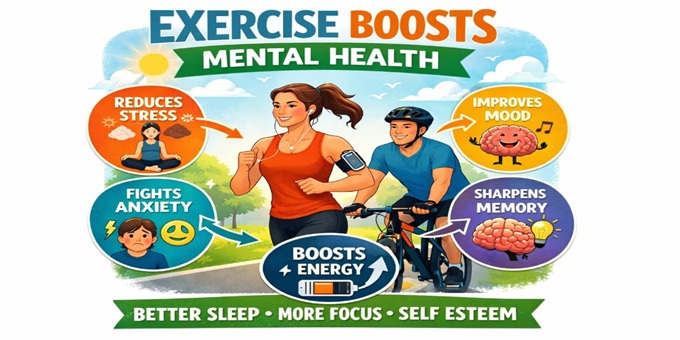
How Exercise Boosts Mental Health

You can use movement to feel better each day. Small, regular sessions of activity often lift your mood, boost energy, and help you sleep more soundly. You do not need extreme workouts to see real benefits. This guide shows practical steps you can use right now. You’ll learn why simple activity supports your brain and body, how to build a routine that fits your life, and when to check with a doctor if you have pain or a condition.
Core promise: With manageable targets and consistent movement, you can support mood, stress control, attention, and resilience — no matter your age or current fitness. The focus here is progress, not perfection, and real change often comes from steady habits.
Key Takeaways
- Small amounts of activity can raise mood and energy.
- Consistency matters more than intensity for long-term gains.
- Practical weekly targets and cues will be provided.
- This guide covers home, work, and family-friendly options.
- Talk to your doctor before increasing activity if you have limits.
Why Physical Activity Matters for Your Mental Health Right Now
Practical, short sessions of physical activity fit into most schedules and deliver measurable benefits. You can count the movement you already do and use it to feel better today.
What counts as everyday activity? Any movement that uses your muscles and energy—walking, vacuuming, playing with kids, yard work, or carrying groceries.
- Moderate: you breathe heavier but can still chat; you feel warmer, not overheated.
- Vigorous: talking is hard; your breathing is fast and steady.
- Strength: work that challenges muscles, like lifting groceries or bodyweight moves.
Start with small blocks of time—just a few minutes each day—and build from there. Choosing the right place, whether at home, outdoors, or at work, makes follow-through easier.
"Even brief, regular movement can reduce tension and lift mood when you need it most."
Micro-ways to add activity at work: take stairs, do brisk five-minute walks on breaks, or stand and march in place. For more practical tips, see physical activity and mental health guidance.
How Exercise Improves Mental Health
Short bouts of movement trigger immediate shifts in your brain chemistry and set the stage for clearer thinking.
Feel- good chemicals like endorphins and serotonin rise during activity. These chemicals help reduce tension and lift your mood for hours after you move.
At the same time, physical activity lowers stress-hormone levels such as cortisol and adrenaline. That drop helps your body feel less keyed up and lets you rest
more easily.
Brain changes that matter
Regular activity supports neural growth and reduces inflammation. Over weeks, those shifts build greater resilience and steadier focus.
Increased blood flow delivers oxygen and nutrients to brain areas tied to motivation, attention, and stress regulation. That circulation helps your energy and decision-making during the day.
The distraction effect
Movement also offers a practical break from rumination. Taking a walk or a short session gives you space from negative thought loops and helps reset your thinking.
- Why this works: biochemical shifts + lower stress levels = calmer body and clearer mind.
- Where it helps: these mechanisms apply across many disorders and symptom patterns.
- Want more practical guidance? See the mental health benefits of exercise.
"Small, consistent movement can change biology in ways that support calm, focus, and resilience."
How Exercise Helps With Stress and Body Tension
Stress often shows up in the body before your mind notices, and simple movement can interrupt that signal. You may feel tightness in your neck, shoulders, or jaw, headaches, chest tightness, cramps, trouble sleeping, or stomach upset. These symptoms form a loop: physical tension can raise worry, and worry increases tension.
Recognize physical signs early
Notice your personal cues—tight shoulders, jaw clenching, stomach discomfort—so you can act sooner. Tracking these signals helps you respond before levels of stress rise.
Movement eases muscles and reduces pain
Low-intensity exercises such as walking, gentle cycling, yoga, or light strength work warm tissue and boost circulation. Increased blood flow helps muscles
relax and can lower tension-related pain.
Add mindful attention to interrupt worry
Try this quick cue: focus on two sensations during movement—your breath and the feel of your feet. That simple shift reduces mental noise and deepens physical release.
"A 10-minute walk with steady breaths and shoulder rolls can loosen tight muscles and calm your mind."
- Identify stress signals in your body so you respond earlier.
- Use gentle exercises that relax muscles without high intensity.
- Apply a short mindfulness cue during movement to reduce worry.
Exercise for Depression: Mood, Motivation, and Relapse Prevention
When depression reduces your drive, short, predictable actions can restore momentum and rebuild confidence.
What research shows: Studies indicate activity can treat mild to moderate depression and may match antidepressants for some people, often without the medication side effects.
Findings and a practical takeaway
A 2019 study from Harvard found that running 15 minutes per day or walking one hour per day linked to a 26% lower risk of major depression. The key is time and consistency, not intensity.
Minimum effective plan
Try this: 10–15 minutes of walking after lunch, five days a week. Build up slowly and pair walks with a podcast or a phone call to help motivation.
| Goal | Minutes | Frequency | Benefit |
| Short walk | 10–15 | Daily | Quick mood lift, easier start when motivation is low |
| Brisk walk | 60 | 3–5 times/week | Lower depression risk, steady mood support |
| Short run | 15 | Daily or most days | Time-efficient protective effect vs. major depression |
Routine and relapse prevention: A regular schedule improves sleep, adds repeated mood boosts, and builds a pattern that lowers relapse risk over time.
- Track sessions to stay motivated.
- Choose activities you enjoy to keep a steady routine.
- Pair movement with existing habits for better adherence.
"Small, repeatable steps create momentum when motivation is low."
Professional reminder: Activity can support depression care but may complement therapy or medication. See an evidence review on exercise and depression at exercise and depression review for more details.
Exercise for Anxiety: Calming Your Nervous System Through Movement
When your nerves feel taut, moving your body can help release built-up energy and calm your system. Anxiety often feels like your body is stuck in high alert. Motion lets that activation flow out instead of building up.
Why symptoms ease when you get moving
Movement shifts your stress response: heart rate and breathing settle, tension in muscles drops, and endorphins rise. Those changes reduce common anxiety symptoms like racing thoughts and tight shoulders.
Best activities for calming the body
Pick predictable, rhythmic options when anxiety is high. Brisk walking, stationary cycling, swimming, yoga, dancing, or light strength work all help. Choose what fits your access and taste.
Adding mindful cues to get more from movement
Notice sensations instead of zoning out. Pay attention to feet hitting the ground, the rhythm of your breath, or wind on your skin. That focus magnifies the calming effect.
"If you notice racing thoughts, return your attention to a single sensation for 30–60 seconds to regain calm."
- If anxiety spikes, start with walking or a stationary bike before trying intense workouts.
- Count steps, feel each footfall, scan shoulders, or match breath to pace to interrupt worry loops.
- Even short sessions of 5–15 minutes can lower stress and restore clearer energy throughout your day.
| Situation | Recommended Activity | Why it helps |
| Mild, steady anxiety | Brisk walk or yoga | Rhythmic motion lowers tension and raises endorphins |
| High arousal or panic | Stationary bike or paced walking | Predictable rhythm soothes the nervous system |
| Short, sudden spikes | 2–10 minute focused walk | Quick discharge of energy and attention reset |
Exercise for Focus and Attention: Benefits for ADHD Symptoms
When you move with intention, your brain chemistry shifts in ways that support clearer thinking and steady focus. Physical activity raises dopamine, norepinephrine, and serotonin right away. That quick boost helps you feel more "switched on" and ready to tackle demanding work.
Dopamine and attention in the brain
Neurotransmitters matter. Activity increases the chemicals linked to attention and motivation. That is one reason short sessions can mimic some effects of ADHD meds.
Pick workouts that keep you engaged
Choose sports, dance, martial arts, interval walking, guided classes, or strength circuits. Engaging formats help you stay consistent.
- Timing tip: schedule a brief session before focused work blocks to improve concentration.
- Goal advice: set process goals (show up 3 times weekly) rather than only performance targets.
- Reduce friction: pack clothes the night before, set reminders, pick a nearby route, and keep sessions short.
"The best ADHD workout is the one you repeat; consistency beats intensity."
Trauma, PTSD, and Resilience: Using Exercise to Feel More Grounded
Grounding through movement means using sensation in your muscles, joints, and breath to anchor attention in the present. Focus on what your body feels as you move. This reduces dissociation and helps the nervous system come back online. The “unstuck” idea: trauma can lock your body into fight, flight, or freeze. Gentle, steady activity gives that energy somewhere safe to go. Over time, repeated sessions can build resilience and reduce immobilization responses linked to trauma-related disorders.
Cross-body movement and accessible options
Cross-body activities that coordinate arms and legs help integrate neural pathways. Try walking in sand, swimming, dancing, weight training, or simple marching with opposite arm swings. Pick what fits your energy and fitness this week.
Nature plus motion
Outdoor activity adds a second benefit: nature exposure lowers stress and supports emotional recovery. Choose a safe place like a park, well-lit trail, or community path to reduce barriers to getting outside.
Sleep and recovery
Daytime movement often improves sleep, and better sleep supports ongoing recovery. Aim for earlier activity when possible to avoid late-night stimulation.
"Start slowly, notice sensation, and seek professional support if movement triggers strong reactions."
| Level | Activity | Why it helps | Good place |
| Low | Mindful walking with arm swings | Builds present-moment sensation and rhythm | Park path or quiet street |
| Moderate | Swimming or dance class | Cross-body coordination and steady pacing | Community pool or studio |
| High | Trail hiking or mountain biking | Nature exposure plus full-body engagement | Marked trails or bike parks |
- Start gradual: small sessions, repeated across the week.
- Prioritize safety: pick familiar places and trusted companions when possible.
- Get support: work with a clinician if sensations or environments feel triggering.
How Much Exercise You Need for Mental Health Benefits
A realistic weekly target gives you clear guidance so you can plan movement without overthinking.
A practical weekly target
Aim for about 30 minutes of moderate activity, five times per week. That adds up to 150 minutes in a week and fits most schedules.
If time is tight, split sessions into 2×15 minutes or 3×10 minutes—those blocks count the same toward your weekly total.
Tell if you’re at moderate intensity
Use the talk test: you can chat but not sing. Your breathing is heavier and your heart feels quicker, and you feel warmer but not overheated.
Short sessions and the weekend warrior option
When weekdays are packed, one or two longer sessions on weekends can still provide benefits. Warm up for 5–10 minutes and pace yourself to avoid injury.
| Plan | Minutes per session | Times per week | Why it works |
| Daily split | 10–15 | 5–7 | Easy to fit into short breaks; builds consistency |
| Standard target | 30 | 5 | Meets commonly recommended weekly minutes for fitness and mood |
| Weekend warrior | 75–90 | 1–2 | Useful for busy weeks; still yields many benefits with proper warm-up |
When to check with your doctor
Talk to your clinician before you increase activity if you have injury, chronic conditions, pain, or recent illness. They can advise safe levels and heart-rate targets specific to you.
"Consistent, manageable minutes each week build sustainable benefits — aim for progress, not perfection."
How to Build a Routine You’ll Actually Stick With
Focus on short, doable sessions that you can repeat even on low-energy days. Start with 5–10 minutes and add a bit more each week. Small steps build confidence and protect you from burnout.
Start small to avoid burnout
Begin with brief blocks of time so showing up feels easy. That first success makes the next session more likely.
Pick activities you enjoy
Choose exercises that fit your taste. If you like the movement, you are more likely to do it again and keep a steady routine.
Schedule when your energy is highest
Match sessions to your best part of the day—morning, lunch, or evening. Planning around energy makes follow-through simpler.
Set process-based goals
Focus on sessions per week, not outcomes. Clear process goals keep motivation steady and reduce pressure.
Make it social and reward progress
Invite people to join walks, group classes, or a gym buddy. Small rewards after sessions—like a warm drink or extra free time—reinforce new habits.
| Start | Minutes | Frequency | Benefit |
| Mini session | 5–10 | Daily | Builds consistency on low-energy days |
| Weekly goal | 30 | 3–5 times/week | Steady gains in mood and focus |
| Social plan | 20–40 | Weekly | Accountability and added enjoyment |
"Tiny, repeatable steps beat rare, big efforts every time."
Use these tips as simple ways to create a lasting sense of progress. Keep the plan flexible and focused on consistency, not perfection.
Overcoming Common Barriers and Finding Easy Ways to Move Without the Gym
Try one small action now — even five minutes can change the direction of your day. Use the five-minute rule when you feel exhausted: commit to five minutes of walking or light movement and then choose to stop or continue. When you feel overwhelmed, break activity into short minutes that stack. Two or three 10-minute walks across the day add up and fit into hectic work schedules. If self-conscious thoughts about your body or being judged hold you back, pick a quiet place, move with a friend, or start at home. Small, private sessions build confidence without pressure. When you have injury, illness, or pain, check with your clinician first. Choose low-impact options like water-based work, chair strength moves, or gentle stretching split across the day to reduce strain. Money or access problems? Many ways to move cost nothing: walking routes, chores, yard work, stairs, and bodyweight strength circuits require no gym membership.
"Commit to small, specific minutes and solve launch barriers one step at a time."
- At home: vacuuming, short mobility breaks, 5–10 minute movement snacks.
- At work/on the go: take stairs, park farther, pace during calls, or use stair sprints for brief intensity.
- Family-friendly: walk the dog, play tag, bike rides, or weekend hikes that include kids and pets.
| Barrier | Simple solution | Example |
| Exhaustion | Five-minute rule | 5-minute walk, then decide |
| Busy day | Stack short sessions | 3×10-minute walks around tasks |
| Pain or illness | Low-impact, short bursts | Chair strength, water-based walking |
| Cost/access | No-gym options | Yard work, park walks, free videos |
Conclusion
Choosing one short action this week can start a chain of better sleep, clearer thinking, and steadier mood. Small, steady exercise or physical activity—like a 10-minute walk after lunch—adds up and eases stress while boosting energy. Movement supports relief from depression and anxiety by shifting brain chemistry, lowering stress hormones, improving sleep, and reducing common symptoms.These benefits show up even with modest, regular sessions. Start with what you can do now: schedule one short session into your week, keep a simple routine, and repeat it. Consistency builds confidence and makes it easier to expand without burnout. If you have pain, illness, or major limits, get medical guidance before increasing intensity. You don’t need a perfect plan—repeated, manageable movement is how you earn long-term benefits for your health.
0 Comments
Be the first to share your thoughts on this article.