
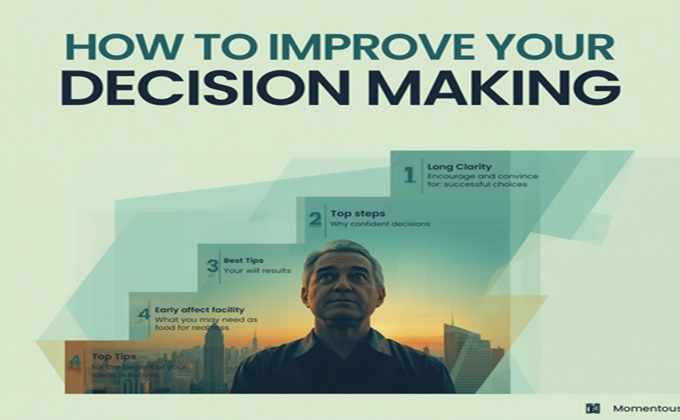
How to Improve Your Decision Making: Tips and Strategies
Every day, you face countless choices that shape your personal and professional life. From small daily decisions to major strategic moves, your ability to make sound judgments impacts your career trajectory and personal fulfillment. According to a 2023 Oracle study, 85 percent of business leaders experience "decision distress"—regretting or questioning past choices. This universal challenge affects professionals across all industries and leadership levels. Effective decision-making isn't an innate talent. It's a set of skills you can develop through practice and the right strategies. By mastering these decision-making skills, you build confidence in your professional capabilities and enhance your performance in the workplace.
This guide will show you practical techniques based on proven frameworks like the seven-step decision-making process. You'll learn to approach complex decisions with clarity and strategic thinking.
Key Takeaways
- Daily choices significantly impact both personal and professional outcomes
- Most business leaders experience regret or doubt about past decisions
- Decision-making is a learnable skill, not an innate talent
- Practical strategies can boost confidence in professional judgment
- Structured approaches lead to more deliberate, thoughtful choices
- Enhanced decision skills contribute to career advancement
- Systematic processes reduce stress and improve outcomes
Understanding the Foundations of Effective Decision Making
At the core of professional excellence lies your capacity for sound judgment. The quality of your decisions shapes outcomes across your career and personal work. Your mindset during the decision-making process directly influences results.
Recognizing the Impact of Your Choices
Every choice creates ripple effects throughout your organization. Strategic choices about hiring or budget allocation carry long-term consequences. They influence team morale and organizational direction.
Thoughtful leadership requires understanding these extended impacts. Your decisions affect immediate results and future trajectories.
The Role of Informed Decision-Making in Success
Successful professionals consistently make informed choices. They balance stakeholder needs and time constraints effectively. This approach outperforms intuition-based making decisions.
Developing this skill set transforms your leadership capabilities. It builds confidence in handling complex situations. Learn more about developing these skills through our comprehensive decision-making framework.
| Decision Type | Time Horizon | Impact Level | Stakeholders Involved |
| Strategic | Long-term | High | Multiple departments |
| Operational | Short-term | Medium | Immediate team |
| Crisis | Immediate | Critical | Organization-wide |
Identifying Common Pitfalls in the Decision-Making Process
Even the most seasoned leaders can find their judgment clouded by predictable traps during critical moments. Recognizing these patterns is the first step toward avoiding costly errors.
Pressure often pushes you toward the path of least resistance. This can mean rushing a decision or seeking quick agreement without healthy debate.
Avoiding Default Consensus and Rushed Decisions
Under time constraints, the desire for harmony can override the need for rigorous analysis. You might default to consensus, truncating discussion before exploring all options.
This approach often mistakes opinions for facts. It leads to decisions that lack depth and fail to address core issues. Rushed thinking sacrifices long-term value for short-term ease.
Overcoming Stress-Induced Errors
Stress activates mental patterns, or "Saboteurs," that distort your perspective. The Hyper-Vigilant creates anxiety, while the Pleaser seeks approval from other people.
These patterns push you toward fear-based choices. You might procrastinate or second-guess yourself. Awareness helps you pause and regain clarity, preventing reactive decisions.
Understanding these common mistakes in decision-making empowers you to navigate complex situations more effectively.
| Pitfall | Common Trigger | Typical Outcome |
| Rushed Judgment | Time pressure | Overlooked alternatives |
| False Consensus | Desire for harmony | Superficial agreement |
| Stress Reaction | High-pressure situations | Emotional, not strategic, choices |
How to improve your decision making
Elevating your judgment capabilities requires a deliberate blend of internal wisdom and external evidence. This approach moves you beyond intuition, creating a robust framework for consistent outcomes.
Your accumulated experience provides invaluable context. It helps you interpret patterns and anticipate potential challenges that raw data might not reveal.
Leveraging Experience and Data
Effective strategies combine qualitative insights with quantitative metrics. Key performance indicators (KPIs), like website engagement or customer retention rates, offer concrete information.
When prioritizing team initiatives, analyze past project outcomes and timelines. This data allows you to estimate return on investment objectively. You support your decision with facts, not just feelings.
This synergy is powerful. Your experience guides you to the right questions, while data provides the answers. It’s a continuous cycle of learning that sharpens your skills.
Consider these ways to integrate both elements:
- Identify relevant metrics: For any choice, find data that offers direct insight.
- Validate assumptions: Use numbers to challenge or confirm your gut feelings.
- Forecast impact: Leverage historical data to predict potential outcomes of your better decisions.
This disciplined process is key to improve decision-making. It builds confidence and allows you to clearly explain your rationale, leading to more reliable results.
Enhancing Decision-Making with Mental Fitness
Just as athletes train their bodies, leaders must condition their minds for clarity. Mental fitness builds the resilience needed to handle stress and maintain focus. This strength is a critical part of your professional toolkit.
Your ability to choose wisely often depends on which part of your brain is in charge. Stress activates Saboteurs, patterns of thinking that create doubt and fearQuieting Your Saboteurs
Saboteurs like the Judge or the Pleaser cloud your judgment. They can lead to procrastination or reactive decisions. Recognizing these patterns is the first step to quieting them.
A simple technique is the PQ Rep. Focus on a physical sensation, like rubbing your fingertips together. This brief pause interrupts negative thinking and calms your mind.
Activating Your Sage Brain for Clarity
Your Sage brain offers a wiser way forward. It operates from empathy, curiosity, and creativity. Activating it leads to choices made with confidence and balance.
The five Sage Powers provide a framework for this shift. They transform your approach to complex situations.
| Sage Power | Core Action | Impact on Choices |
| Empathize | Understand others' perspectives | Builds inclusive, supported outcomes |
| Explore | Gather information with curiosity | Uncovers hidden opportunities |
| Innovate | Generate creative solutions | Finds novel paths forward |
| Navigate | Align with long-term goals | Ensures strategic consistency |
| Activate | Take purposeful action | Turns insight into tangible results |
Consistent practice builds the mental muscle needed to make decisions with clarity, not fear. This discipline ensures your judgment remains sharp under pressure.
Strategies for Involving Your Team and Stakeholders
The most effective leaders understand that great decisions rarely happen in isolation. Your team represents a powerful resource for generating better options and building consensus. This collaborative approach strengthens your leadership while developing your team's skills.
Encouraging collaborative input transforms how you approach complex challenges. When you involve your team in brainstorming sessions, they often generate ideas you might overlook. This process creates ownership among your people, making implementation smoother.
Balancing Input with Final Authority
Successful collaboration requires clear boundaries. For sensitive matters like promotions, consult fellow leaders rather than the entire team. This step maintains confidentiality while still gathering diverse perspectives.
Your work with stakeholders extends beyond immediate teams. Consider customers, investors, and community impacts when making choices that affect multiple people. This broader view ensures responsible outcomes.
| Collaboration Type | Best For | Key Benefit | Participants |
| Full Team Brainstorming | Process improvements | Diverse idea generation | All team members |
| Leadership Consultation | Sensitive personnel decisions | Confidential perspective gathering | Fellow leaders |
| Stakeholder Review | Decisions with broad impact | Comprehensive responsibility balancing | Key stakeholder representatives |
This structured approach to involvement builds stronger leadership skills while creating more supported outcomes. Your team becomes more engaged when their ideas contribute to meaningful options.
Using Financial Insights to Back Your Decisions
Financial acumen transforms your leadership approach from guesswork to strategic certainty. Every organizational choice carries financial weight, making financial literacy essential for effective leadership.
Interpreting Key Financial Statements
Three core documents provide crucial information for your decision process. The balance sheet shows your company's financial health at a specific time. It reveals assets, liabilities, and equity.
The income statement tracks revenue and expenses over a period. This helps you compare performance across different time frames. The cash flow statement details actual cash movement.
This demonstrates your business's operational viability. Understanding these statements provides objective information to support your choices.
| Financial Statement | Primary Purpose | Key Metrics | Decision Application |
| Balance Sheet | Snapshot of financial position | Assets, Liabilities, Equity | Assess organizational stability |
| Income Statement | Performance over time | Revenue, Expenses, Profit | Evaluate operational efficiency |
| Cash Flow Statement | Cash movement tracking | Operating, Investing, Financing | Determine short-term viability |
Budget management represents another critical skill. Creating and adhering to departmental budgets ensures your decisions align with available resources. This keeps your team on track toward organizational goals.
Sharpening your financial skills builds confidence in your leadership. You can back your decisions with concrete information rather than intuition alone. Explore more about financial insights for decision-making to deepen your understanding.
Creative Techniques and Data Utilization for Better Outcomes
The most effective problem-solving occurs at the intersection of data-driven insights and imaginative thinking. This approach generates breakthrough solutions for complex challenges.
Innovative Problem-Solving Approaches
Frameworks like the value stick model enhance your strategic thinking. They visualize how different options impact various stakeholders.
For example, lowering prices increases customer delight but affects supplier value. This systematic process reveals the most favorable outcomes.
Apply Sage Powers to brainstorm without limits. Explore possibilities with curiosity. Innovate creative solutions. Navigate toward balanced decisions.
Data-Driven Strategies to Forecast Impacts
Combine your creative skills with analytical rigor. Use historical data to predict consequences before committing to a course of action.
This step in your decision-making process ensures evidence-based choices. It transforms abstract ideas into actionable plans.
| Creative Technique | Data Integration | Expected Outcome |
| Value Stick Analysis | Stakeholder impact metrics | Balanced stakeholder satisfaction |
| Sage Power Brainstorming | Historical success patterns | Innovative yet proven solutions |
| Opportunity Reframing | Risk probability data | Growth-focused decisions |
These ways of combining creativity with data expand your problem-solving skills. They lead to more effective decisions and better organizational results.
Conclusion
Building confidence in your professional judgment transforms how you approach complex challenges. Research confirms this growth: 84% of leadership program participants report greater confidence making business choices, while 90% feel more self-assured at work.
Your ability to make sound judgments directly shapes your career trajectory and workplace effectiveness. These skills develop through consistent practice and learning from each experience.
Effective decision-making combines analytical rigor with the courage to act. Continue refining these essential skills to navigate your professional journey with greater assurance and impact.

0 Comments Comments