
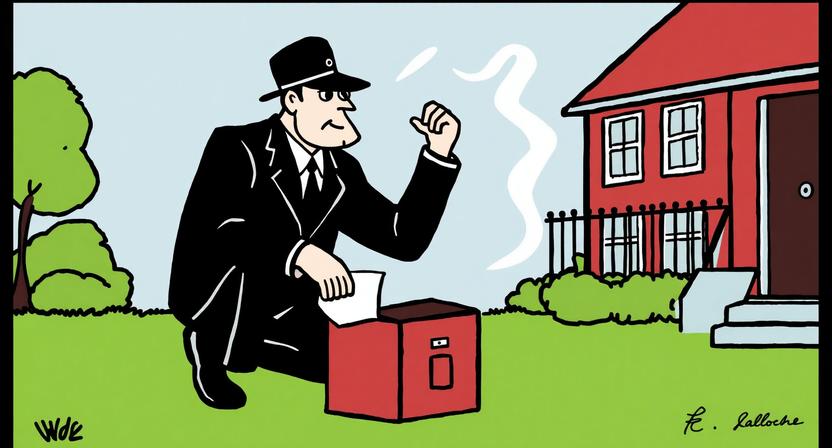
I Have a Letter from a Debt Collector – What Can They Do?
My hands were shaking when I opened the envelope. The letter was printed on official-looking letterhead with bold text demanding immediate payment of £2,347 for a credit card debt I'd let slip during a difficult period. The language was aggressive, filled with warnings about "legal action," "doorstep collection," and "serious consequences." At the bottom, in red text: "URGENT: Respond within 7 days to avoid escalation." I felt physically sick. The shame was overwhelming—shame that I'd let things get this bad, shame that someone was now pursuing me, fear of what might happen next. Would they show up at my door? Could they take my belongings? Would I be arrested? My mind spiraled through catastrophic scenarios, each more terrifying than the last.If you're reading this with a similar letter in your hand and that same knot of anxiety in your stomach, I need you to know three things immediately:
First: You are not alone. Millions of UK residents receive debt collection letters annually. This is more common than you think.
Second: Debt collectors have far less power than their threatening letters suggest. They rely on fear and intimidation because actual enforcement is limited, expensive, and difficult.
Third: You have rights, options, and time. The apocalyptic urgency suggested in these letters is almost always manufactured pressure, not legal reality. Let me walk you through exactly what debt collectors can and cannot do, what your rights are, and how to handle this situation strategically rather than panic-driven.
Understanding Who You're Dealing With
Before we discuss what they can do, let's clarify who "they" are. Not all debt collectors are the same, and the distinction matters.
Original Creditors
These are the companies you originally owed money to—the credit card company, bank, utility provider, or store. When you first miss payments, you're dealing with the original creditor's internal collections department. Original creditors have the most power because the debt is still legally theirs. They can report missed payments to credit agencies, add interest and charges (within limits set by your original agreement), and ultimately take legal action.
Third-Party Debt Collection Agencies
After several months of non-payment (typically 3-6 months), many original creditors sell the debt or hire third-party agencies to collect on their behalf. These include companies like Lowell, Cabot Financial, Hoist Finance, and hundreds of smaller agencies. When hired on commission: The agency acts on behalf of the original creditor and passes most recovered money back to them, keeping a percentage as commission. When debt is sold: The debt collection company has purchased your debt (often for pennies on the pound) and now owns it. They profit by collecting more than they paid for the debt.
Bailiffs and Enforcement Agents
These are different from debt collectors and have significantly more power—but they can only act with a court order or for specific debts like council tax, magistrates' court fines, or unpaid tax. We'll discuss these separately.
What Debt Collectors CAN Do
Let's start with what debt collectors are legally permitted to do. Understanding their actual powers helps separate real consequences from empty threats.
They Can Contact You
Debt collectors can contact you by:
- Letter (most common initial contact)
- Telephone calls to your home or mobile
- Email (if they have your address)
- Text messages
- Visits to your home (with significant restrictions—see below)
They can contact you at reasonable times—generally between 8 AM and 9 PM on weekdays, and not on Sundays or bank holidays unless you've agreed otherwise.
They Can Request Payment
Obviously, they can ask you to pay the debt. They can:
- Send payment demands
- Request full payment or offer payment plans
- Add reasonable collection costs to the debt (though these can be challenged)
- Send regular reminders and statements
They Can Report to Credit Reference Agencies
Missed payments and defaulted debts can be reported to credit reference agencies (Experian, Equifax, TransUnion), which impacts your credit score for up to six years from the default date.
This is one of the most significant real consequences. A damaged credit score affects:
- Ability to get credit cards, loans, or mortgages
- Interest rates offered on credit products
- Some job applications (particularly in financial services)
- Some rental applications
- Mobile phone contracts
However, once a default is already registered (which typically happens before debt collectors get involved), additional collection activity doesn't further damage your credit—the damage is already done.
They Can Take Legal Action (With Limitations)
Debt collectors can apply to the court for a County Court Judgment (CCJ) against you. This is a legal ruling that you owe the debt.
However, this requires:
- Filing court documents
- Paying court fees (which they'll add to your debt)
- Providing evidence of the debt
- Following proper legal procedures
Many debts are never taken to court because:
- Court fees cost money
- They must prove you owe the debt
- You can defend against claims
- They may accept affordable payment plans instead
- Some debts aren't economically worth pursuing legally
If a CCJ is granted and you still don't pay, they can apply for enforcement through bailiffs or other means—but this requires additional court applications and fees.
They Can Visit Your Home (With Strict Limitations)
Debt collectors can visit your home, but their powers during visits are extremely limited. They can:
- Knock on your door
- Ask to speak with you
- Request payment
- Discuss payment arrangements
That's it. They have no right to enter your home, no right to take belongings, no special authority beyond any other stranger at your door.
According to guidelines from the Financial Conduct Authority (FCA), debt collectors visiting homes must:
- Identify themselves clearly
- Not visit at unreasonable hours
- Leave if asked to do so
- Not pressure or harass you
- Not misrepresent their powers
In my experience dealing with debt collectors, home visits are actually rare. They're expensive for agencies, usually unproductive, and create public relations risks. The threat of visits is used far more often than actual visits occur.
What Debt Collectors CANNOT Do
This is where the threatening letters and aggressive calls diverge from reality. Debt collectors have significant limitations that they rarely advertise.
They Cannot Enter Your Home Without Permission
Unless they're court-appointed bailiffs with specific enforcement powers (and regular debt collectors are NOT bailiffs), they have absolutely no right to enter your home.
They cannot:
- Force entry
- Push past you if you open the door
- Enter through unlocked doors or windows
- Return if you've asked them to leave
- Claim they have a right to enter (this is a lie)
If a debt collector claims they can enter your home without court authority, they're either lying or impersonating a bailiff—both of which are serious offenses you can report.
They Cannot Take Your Belongings
Regular debt collectors have zero power to seize possessions. None. This power exists only for court-appointed bailiffs with specific enforcement authority.
If a debt collector threatens to "take your car" or "remove goods," they're bluffing unless they're actually a bailiff with a court order (which they must show you).
They Cannot Threaten You or Harass You
Debt collectors must follow strict rules established by the FCA. They cannot:
- Use threatening, abusive, or intimidating language
- Apply excessive pressure
- Contact you at unreasonable times
- Contact you at work if you've asked them not to
- Discuss your debt with third parties (neighbors, family, employers)
- Pretend to have powers they don't have
- Misrepresent the consequences of non-payment
- Ignore requests to only contact you in writing
- Continue pursuing a debt that's statute-barred (we'll discuss this)
If debt collectors violate these rules, you can complain to their company, escalate to the Financial Ombudsman Service, and report them to the FCA. These are serious violations that can result in fines and loss of licenses.
They Cannot Arrest You
You cannot be arrested or imprisoned for failing to pay regular consumer debts in the UK. Debt is a civil matter, not criminal.
The only debt-related situation that can lead to arrest is willful refusal to pay court fines or contempt of court—and even then, it requires multiple court hearings and deliberate non-compliance with court orders.
If a debt collector suggests you could be arrested, they're lying. Full stop.
They Cannot Take Money from Your Bank Account
Only bailiffs with court authority or HMRC for tax debts can access bank accounts, and even then, it requires specific legal processes.
Regular debt collectors cannot:
- Access your bank account
- Take money without your permission
- Set up direct debits without authorization
- Freeze your account
They Cannot Contact You If You've Requested Written-Only Communication
You have the right to request that debt collectors only contact you in writing. Once you make this request (in writing, keeping a copy), they must stop phone calls and visits. This is an incredibly powerful tool for managing the stress of debt collection. Many people find letters far less anxiety-inducing than unexpected calls or door knocks.
Your Legal Rights and Protections
UK law provides significant protections for debtors. Understanding these rights transforms your position from helpless victim to informed participant.
The Right to Debt Verification
You can request proof that you actually owe the debt. Debt collectors must provide:
- Documentation proving the debt exists
- Evidence showing they have authority to collect it
- A breakdown of the amount including any added charges
Send a "prove the debt" letter (templates available from Citizens Advice) requesting this information. Until they provide adequate proof, you're not obliged to pay.
I once challenged a debt collector who claimed I owed £870 for an old utility bill. When I requested verification, they couldn't provide adequate documentation. After months of back-and-forth, they eventually wrote off the debt because they couldn't prove it.
The Statute of Limitations (Statute-Barred Debts)
In England and Wales, most unsecured debts become "statute-barred" after six years if:
- The creditor hasn't started court action, AND
- You haven't acknowledged the debt in writing, AND
- You haven't made any payment toward the debt
In Scotland, the limitation period is five years.
Once a debt is statute-barred, creditors cannot take court action to recover it. However, the debt still technically exists—it's just unenforceable through courts. Critical warning: If you acknowledge a statute-barred debt in writing or make any payment, even £1, you restart the clock. Debt collectors know this and often try to trick people into acknowledging old debts.
If you receive a letter about an old debt:
- Don't acknowledge it in writing
- Don't make any payment
- Calculate if it might be statute-barred
- Seek advice from Citizens Advice before responding
Protection from Harassment
The Protection from Harassment Act 1997 protects you from harassment by debt collectors. If their behavior crosses the line into harassment—excessive contact, threats, intimidation—you can:
- Complain to the company
- Report to the FCA
- Contact police if behavior is severe
- Seek legal injunctions in extreme cases
Data Protection Rights
Under GDPR and the Data Protection Act 2018, you have rights regarding how debt collectors handle your personal information:
- Right to know what data they hold
- Right to correct inaccurate information
- Right to restrict processing in some circumstances
- Right to complain to the Information Commissioner's Office
What You Should Do Right Now
If you have a debt collection letter in your hand, here's your strategic action plan:
Step 1: Don't Panic (Easier Said Than Done, I Know)
Take a deep breath. The language in these letters is deliberately designed to create panic and immediate reaction. Resist that impulse. You have time to respond thoughtfully.
Step 2: Don't Ignore It
While you shouldn't panic, you also shouldn't completely ignore the letter. Ignoring debt doesn't make it disappear—it makes situations worse.
Step 3: Verify the Debt
Send a letter (not email—send recorded delivery) requesting:
- Proof you owe this debt
- Original credit agreement or documentation
- Breakdown of the amount claimed
- Proof they have authority to collect
Templates are available free from Citizens Advice (www.citizensadvice.org.uk).
Step 4: Check If It's Statute-Barred
Calculate when you last:
- Made a payment toward this debt
- Acknowledged the debt in writing
- Were contacted about it
If it's been over six years (five in Scotland) with none of these actions, the debt may be statute-barred. Don't acknowledge it—seek advice from Citizens Advice.
Step 5: Assess Your Situation
Be honest about your financial situation:
- Can you afford to pay this debt in full?
- Can you afford a payment plan?
- Are you in genuine financial hardship?
Step 6: Communicate Appropriately
If you can pay: Contact them to arrange payment. You may be able to negotiate a settlement (paying less than the full amount to close the debt).
If you can afford monthly payments: Propose a realistic payment plan. Use a budget calculator to determine what you can genuinely afford.
If you're in hardship: Explain your situation and provide evidence (benefit letters, bank statements showing essential expenses). Many collectors will freeze interest and accept token payments (£1-5 monthly) in genuine hardship situations.
Step 7: Request Written-Only Communication
If calls and potential visits are causing anxiety, write requesting all communication be in writing only. This is your legal right.
Step 8: Keep Records
Document everything:
- Copies of all letters (sent and received)
- Notes from phone calls (date, time, who you spoke with, what was discussed)
- Payment confirmations
- Evidence of harassment or rule violations
Step 9: Seek Free Advice
Organizations offering free debt advice:
- Citizens Advice:www.citizensadvice.org.uk
- StepChange:www.stepchange.org
- National Debtline:www.nationaldebtline.org
- Christians Against Poverty:www.capuk.org
These organizations provide free, confidential, expert advice and can help you deal with debt collectors.
Step 10: Consider Formal Debt Solutions
If you have multiple debts you can't afford, formal solutions might be appropriate:
- Debt Management Plan (DMP): Informal arrangement to pay debts at reduced rates
- Individual Voluntary Arrangement (IVA): Formal agreement to pay affordable amounts over 5-6 years, with remainder written off
- Debt Relief Order (DRO): For people with less than £30,000 debt, minimal assets, and low income
- Bankruptcy: Nuclear option for unmanageable debt situations
Each has pros and cons. Free debt advice organizations can help you determine what's appropriate.
My Personal Experience
When I received that initial letter demanding £2,347, I did exactly what you shouldn't do: I panicked, ignored it, and hoped it would disappear. It didn't. After three weeks of anxiety, I finally called Citizens Advice. They walked me through requesting debt verification. When the debt collector sent documentation, I reviewed it carefully and discovered they'd added £400 in "collection fees" that weren't actually valid under my original credit agreement. I challenged these fees in writing. After weeks of back-and-forth, they removed £380 of invalid charges. The actual debt was £1,967. I couldn't pay it in full, but I could afford £50 monthly. I proposed this formally in writing with a budget breakdown. They initially rejected it, demanding £150 monthly. I held firm, explaining it was genuinely all I could afford. Eventually, they accepted £50 monthly. I set up a standing order, got the agreement in writing, and made payments consistently. Eighteen months later, when I'd paid about £900, they offered to settle the remaining balance for £700. I managed to borrow from family, paid it, and received written confirmation the debt was settled in full. Total paid: £1,600 instead of £2,347. The key was verifying the debt, challenging invalid fees, and negotiating from a position of knowledge rather than fear.
The Emotional Dimension
Finally, let's address what most financial advice ignores: the emotional weight of debt collection. Receiving these letters is genuinely traumatic for many people. The shame, anxiety, and fear are real and valid. Some people experience panic attacks, depression, or physical health impacts from debt collection stress.
Please know:
- This doesn't define your worth as a person
- Many circumstances leading to debt are beyond your control
- There is no debtor's prison in the UK
- Millions face similar situations
- Solutions exist, regardless of how hopeless it feels
If debt collection is severely impacting your mental health, please:
- Talk to someone (friend, family, counselor)
- Contact your GP if experiencing depression or anxiety
- Contact Samaritans (116 123) if you're in crisis
- Remember that debt is solvable, and your wellbeing matters more than money
The Bottom Line
Debt collectors have limited power. They can ask for payment, report to credit agencies, and ultimately pursue court action—but their threatening letters vastly overstate their immediate authority.
You have rights, options, and time. By understanding what they can and cannot do, verifying debts, communicating strategically, and seeking free expert advice, you transform your position from powerless to empowered.
That letter in your hand is stressful, but it's not a catastrophe. It's a problem with solutions. Take it one step at a time.
Appendix: References and Resources
Free Debt Advice Organizations:
-
Citizens Advice
- https://www.citizensadvice.org.uk/debt-and-money/
- Free, impartial advice on dealing with debt collectors
-
StepChange Debt Charity
- https://www.stepchange.org/
- Free debt advice and debt management plans
-
National Debtline
- https://www.nationaldebtline.org/
- Free confidential debt advice (0808 808 4000)
-
Christians Against Poverty (CAP)
- https://capuk.org/
- Free debt help with local support
-
Business Debtline
- https://www.businessdebtline.org/
- For self-employed and small business debt (0800 197 6026)
Your Legal Rights:
-
Financial Conduct Authority - Debt Collection Rules
- https://www.fca.org.uk/consumers/debt-collection

0 Comments Comments