
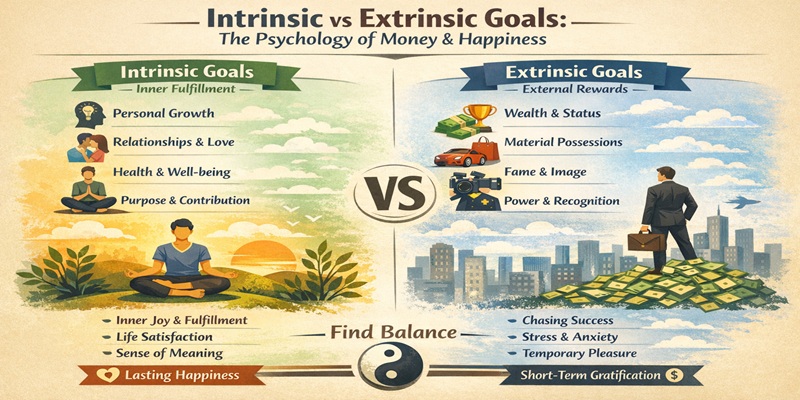
Intrinsic vs Extrinsic Goals: The Psychology of Money & Happiness
What really links your income and your day-to-day joy? You might expect higher pay or visible success to lift your mood forever. Research summarized in long debates shows that extra cash helps at first, then returns taper once basic needs are met. This article asks a clear question: why cash can feel like it should guarantee joy yet often fails to create lasting satisfaction. We introduce a simple contrast between intrinsic extrinsic goal pursuit. One type centers on meaning and close ties. The other aims at wealth, image, and rewards. That contrast shapes long-term well-being in predictable ways. You’ll see evidence-based findings on income, inequality, and self-determination theory. You’ll learn why your motivations push you toward more pay, more stuff, or more praise — and why emotional returns can shrink.
This is not an anti-money argument. It’s a practical framework to help you use resources so they support the life you want. By the end, you’ll get reflection
prompts and decision tools before a job change, big purchase, or status move.
Key Takeaways
- Income helps up to a point; extra earnings give smaller boosts over time.
- Intrinsic goals—meaning and connection—tend to support lasting well-being.
- Extrinsic aims—wealth and image—can create short-term gains and long-term gaps.
- Research on self-determination and inequality explains these patterns.
- You’ll get tools to decide when to chase pay, status, or deeper purpose.
Why money doesn’t automatically equal happiness
Income removes big stressors at low levels, but its emotional payoffs shrink as basic needs are met.
When income improves well-being by meeting basic needs
At low income, extra cash often secures food, stable housing, safety, and healthcare. That reduces constant worry and lifts daily mood fast. You see a clear, practical gain when urgent needs stop dominating life.
Why the money-happiness link shrinks in wealthier contexts
Cross-country research shows this pattern. Howell reports R = .28 in poorer nations versus R = .10 in richer ones. That change across levels supports the idea of diminishing returns. The extra cash often buys convenience or image upgrades rather than deeper satisfaction. Key factors include adaptation, social comparison, and shifting priorities from security to status.
How income inequality can lower trust and reduce overall happiness
When wealth concentrates, community trust falls and social bonds fray. Oishi, Kesebir, & Diener link higher U.S. inequality years to lower happiness and trust. In other words: your personal well-being depends not only on what you earn but also on the social hand you live in.
Next step: if cash alone is limited in effect, you’ll want to explore which goal pursuits give lasting satisfaction.
Intrinsic vs extrinsic goals in psychology (and why your motivations matter)
Your reasons for doing something shape how it feels later. Two broad goal types steer daily choices: one centers on inner growth, learning, and close ties; the other focuses on external rewards like pay, status, and image.
Intrinsic aims: meaning, learning, relationships, and personal growth
Intrinsic goals show up as learning new skills, deepening relationships, or pursuing personal growth that matters to you even when no one applauds. These pursuits build competence and lasting satisfaction because they add real abilities and stronger bonds over time.
Extrinsic aims: wealth, status, image, and external rewards
Extrinsic goals target pay, visible success, or praise. They give fast feedback but often leave you chasing the next milestone. When external markers become your main identity, emotional returns can fade quickly.
Self-determination theory: autonomy, competence, and relatedness
Self-determination theory says three core needs drive durable well-being: autonomy (choice), competence (mastery), and relatedness (connection).
If your work supports those needs, the same tasks feel energizing. If not, they drain you.
How goal types shape satisfaction over time
Intrinsic pursuits tend to compound: skills, bonds, and purpose grow together. Extrinsic pursuits often reset the bar — the next raise or title feels required to stay satisfied.
Real life: you can be ambitious and still center personal growth. Aim to let external success supplement, not replace, your inner sense of worth.
For a clear summary of motivation differences, see how extrinsic and intrinsic motivations compare. This sets up the research-based contrasts in the next section.
Money & Happiness: The Psychology of Intrinsic Vs Extrinsic Goals
When routines shift, your priorities and their effects on satisfaction become clearer. A post‑graduation change is a useful example: new schedules, new job tests, and time to see what actually lifts your mood.
What studies show
Niemiec, Ryan, & Deci (2009) found graduates who set intrinsic goals—like personal growth and skill building—were more likely to reach those aims one year later and reported higher well‑being than peers focused on wealth or fame. This study links goal type to lasting satisfaction after a big life move.
Why cash or fame alone often falls short
Extrinsic goals create a moving target. You may get a higher salary or public recognition, yet your feelings depend on comparison and the next milestone.
The hidden opportunity cost
Overinvesting in external rewards costs time, attention, and relationships. A higher‑paying job can reduce autonomy and sleep, and research connects that pattern to poorer mental health.
- Balance matters: extrinsic aims can support you when they back intrinsic values.
- Practical tip: evaluate job trade‑offs for time and connection, not just cash.
For a practical overview of these dynamics, see a related post‑graduation study that explores how goals shape outcomes.
How to use your money and time to support intrinsic goals
Use your resources and free time so they reinforce what matters to you most. Small choices in spending and scheduling add up. When your actions map to core values, satisfaction grows more reliably than chasing image or applause.
Spend in ways that align with your values, not others' expectations
A 452-person study found purchases tied to relationships, learning, and helping predicted greater well‑being than buys aimed at status. That link held even after
researchers accounted for whether items were experience or material.
Experience vs material: alignment matters more than category
An experience bought for approval can feel hollow. A material item that supports autonomy or competence can deepen satisfaction.
- Example: concert tickets for FOMO vs a small gathering that strengthens relationships.
- Example: upgrading a car for image vs paying for a course that boosts career autonomy.
Quick decision pause and reflection questions
Try this three‑step pause: name your primary motivation (intrinsic or extrinsic), state which need it serves (autonomy/competence/relatedness), and estimate the time and attention cost.
Questions to ask about a job or status move: "Will this job increase my autonomy?" "What relationships will this schedule strain?" "Am I choosing this because I value it or to gain approval?"
Build wealth while protecting purpose and mental health
Set boundaries around work, spend to reduce friction on what matters (better sleep, movement, therapy, community), and pick "enough" targets to avoid endlesscomparison. Intentional choices let your finances and time support a life that fits your values.
Conclusion
Your choices, not just your income, steer how satisfied you feel over time. Remember: extra cash helps most when it removes real needs. After basic security, aim focus toward meaningful pursuits that build skill and ties. Self-determination theory explains why autonomy, competence, and relatedness matter. When your goals match those needs, daily feelings and long‑term life improve more than when you chase status alone. Practical takeaway: you don't have to reject wealth, but make sure it serves values, relationships, and personal growth rather than replacing them. Try this: pick one upcoming decision and evaluate it for intrinsic alignment and opportunity cost. For more on how income links to well‑being and social context, see a clear review of the correlation between money and happiness at this related post. Align your pursuit with what truly fulfills you, and your everyday life is likely to feel richer over time.

0 Comments Comments