
Make Informed Decisions: Learn How to Use Data to Guide Decisions

Every day, businesses face countless choices. Relying on instinct alone can lead to biased and uncertain outcomes. Many people trust their "gut" feelings, even when facts suggest otherwise. Today's world generates an incredible amount of information—over 402 million terabytes daily. This creates unprecedented opportunities. You can build a solid foundation for your critical business moves. A significant PwC survey reveals a powerful advantage. Highly data-driven organizations report three times more improvement in their decision- making processes.
This demonstrates a clear competitive edge. This shift from guesswork to evidence-backed strategy is fundamental. It allows companies of all sizes to compete
effectively. You will learn to verify your hunches with systematic analysis.
This guide outlines practical strategies for this transformation. You will see how evidence-based choices lead to sustainable growth and improved customer
experiences.
Key Takeaways
- Intuition alone often leads to biased and uncertain business outcomes.
- An abundance of daily data provides a solid foundation for critical choices.
- Data-driven organizations see significantly higher improvements in their decision-making.
- Systematic analysis helps verify and quantify the implications of your actions.
- Adopting an evidence-based approach is a key competitive advantage.
- This method leads to sustainable growth and better customer experiences.
Understanding Data-Driven Decision-Making
At its core, data-driven decision-making replaces uncertainty with a structured, evidence-based methodology. This systematic process involves gathering relevant data tied to your key performance indicators. You then transform this raw information into actionable insights.
Definition and Key Concepts
Being truly data-driven means basing your decisions on facts, patterns, and evidence. This approach minimizes subjective opinions and emotional responses that can cloud judgment. The goal is to make choices without bias.
This methodology appears in various forms within a business context. You might collect survey responses to understand customer preferences. Conducting user testing to observe actual behavior is another common example. Analyzing demographic shifts for strategic planning is also a key application.
Benefits for Your Organization
The benefits of adopting a data-driven decision framework are substantial. Your team will make more confident and impactful choices. You shift from being reactive to proactive, anticipating market changes.
Modern business intelligence tools have democratized data analysis. They make visualization and interpretation accessible to professionals without advanced technical skills. This removes traditional barriers for your organization.
Consider Google's Project Oxygen. It analyzed over 10,000 performance reviews to identify behaviors of high-performing managers. Starbucks transformed its real estate strategy using location data. Amazon's recommendation engine, powered by data analytics, drives a significant portion of consumer purchases. These cases show the powerful insights available.
The Importance of Accurate Data Collection and Analysis
Quality outcomes in business intelligence depend entirely on the integrity of initial data capture. Your data collection process must align with specific business goals. This ensures the information gathered directly supports your strategic questions.
Start by identifying what data you already possess. If gaps exist, develop a systematic approach to collect new information. Internal sources include financial records and customer databases. External sources cover market research and competitor metrics.
| Data Source Type | Primary Examples | Collection Tools | Key Applications |
| Internal Operational | Sales reports, CRM data | Universal reporting systems | Process optimization |
| External Market | Industry benchmarks, trends | Power BI, analytics platforms | Strategic planning |
| Customer Behavior | Website analytics, surveys | Google Analytics, SurveyMonkey | Experience improvement |
Validation protects data quality throughout your analysis. Clean datasets remove errors and ensure consistency. This prevents misguided conclusions from flawed information.
Identifying Reliable Data Sources
Evaluate potential sources using four criteria: credibility, relevance, timeliness, and accuracy. Ask critical questions about each source's origin and methodology.
Modern analytics platforms like Microsoft Power BI aggregate multiple sources. They streamline comprehensive data analysis for better business insights. Proper source identification transforms raw numbers into actionable intelligence.
How to use data to guide decisions
A powerful business transformation begins when you consciously choose to prioritize analytical insights over internal hunches. This commitment forms the bedrock of a truly evidence-based approach.
Leveraging Facts Over Gut Instinct
Your intuition can spark an idea, but data provides the verification. Before any significant decision, pause to identify what relevant information you possess.
If information is missing, consider proactive collection methods. Systematic data analysis involves searching for meaningful patterns and correlations. This process turns raw numbers into actionable intelligence.
Validating Your Strategy with Analytics
Modern analytics tools allow you to tie strategic choices back to concrete evidence. This creates a transparent trail explaining why specific actions were taken.
You can monitor outcomes in real-time, making adjustments based on performance. Adopting a data-driven decision-making framework builds organizational confidence. It ensures your decisions are grounded in reality, not just past behavior or gut instinct.
Strategies for Implementing a Data-Driven Culture
Transforming your company into a data-driven organization demands a deliberate and structured strategy. This cultural shift ensures that evidence, not instinct, informs every choice.
A successful transformation hinges on two core pillars: a well-defined data process and the effective use of business intelligence tools.
Developing and Documenting Your Data Process
First, establish a clear and documented process for handling information. This creates consistency and accountability across your entire organization.
Your process should outline how data is collected, validated, analyzed, and shared. This clarity empowers teams and supports confident, data-driven decisions. A formal approach prevents confusion and aligns efforts with strategic goals.
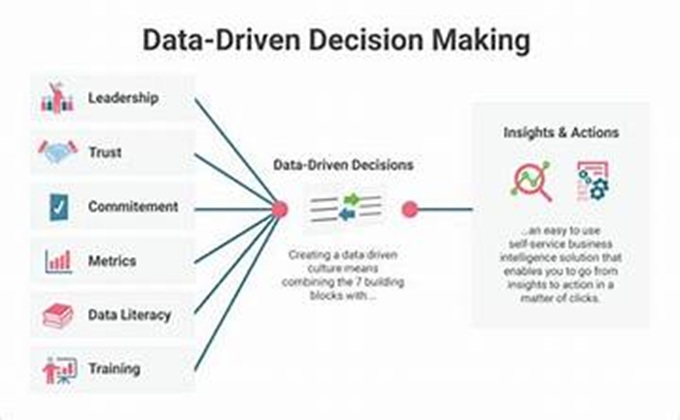
Strong leadership commitment is essential for driving this change. When management visibly champions evidence-based choices, it signals the importance of this new culture.
Utilizing Business Intelligence Tools
Powerful business intelligence (BI) tools are the engine of a data-driven culture. Platforms like Tableau, Power BI, and Looker turn complex data into understandable visuals.
These tools aggregate information from various sources. They provide real-time monitoring of key performance indicators. This allows your team to identify trends and make informed decisions quickly.
Selecting the right tools makes sophisticated analysis accessible to non-technical staff. This fosters a data-literate environment where everyone can contribute. For a deeper dive into cultural change, explore this resource on how to build a data-driven culture in your.
| BI Tool Feature | Primary Benefit | Impact on Culture |
| Interactive Dashboards | Real-time performance visibility | Promotes transparency and shared understanding |
| Automated Reporting | Saves time and reduces manual errors | Encourages regular data review and discussion |
| Data Integration | Unifies disparate systems | Creates a single source of truth for the organization |
Ongoing training is critical to maximize the benefits of your new tools and processes. This investment builds team confidence and ensures your strategy delivers lasting value.
Utilizing Big Data and Analytics in Your Business
The era of big data analytics has revolutionized how organizations interpret complex business environments. These sophisticated tools process massive information volumes at incredible speeds, revealing patterns impossible for manual analysis.
Real-Time Insights and Predictive Trends
Real-time insights allow you to monitor business performance and customer behavior as events unfold. This capability enables immediate responses to market opportunities rather than reactive adjustments.
Predictive analytics forecast future trends and outcomes with remarkable accuracy. Machine learning algorithms identify correlations in vast data sets, supporting proactive decision-making.
Consider Amazon's recommendation engine, which drives 35% of consumer purchases. Financial institutions use advanced algorithms for fraud detection. Streaming services analyze viewing patterns to reduce customer churn.
These applications demonstrate how big data transforms strategic planning across industries. Retailers optimize product placement while manufacturers implement predictive maintenance.
Integrating Data Visualization for Better Insights
The human brain processes visual information 60,000 times faster than text. This makes visualization essential for transforming raw numbers into actionable insights. Complex datasets become instantly understandable through effective visual representation.
Visual storytelling bridges the gap between technical analysis and strategic decision-making. Your team can spot trends and anomalies that remain hidden in spreadsheets.
Choosing the Right Visualization Techniques
Selecting appropriate visual tools depends on your data type and analytical goals. Bar charts excel at comparisons, while line graphs reveal trends over time. Pie charts work well for proportions, and scatter plots uncover correlations.
Heat maps highlight geographic patterns and density distributions. Your analysts need different visualizations than executives. Operational teams benefit from real-time monitoring displays.
Modern business intelligence tools provide built-in visualization capabilities. These platforms democratize data insights across your organization. Interactive dashboards make complex analysis accessible to non-technical staff.
Start with simple exercises like graphing monthly spending patterns. Progress to multi-dimensional analysis that informs strategic choices. Proper visualization accelerates understanding and drives better outcomes.
Overcoming Challenges in Data-Driven Decision Making
Even the most promising data initiatives encounter significant roadblocks during implementation. Organizations face common hurdles that can undermine their evidence-based approach.
These challenges range from technical issues to cultural resistance. Addressing them systematically ensures your data-driven decisions deliver maximum value.
Addressing Bias and Ensuring Data Quality
Poor-quality information leads directly to flawed analyses. Inaccurate or incomplete data damages business performance and customer relationships.
Confirmation bias presents another critical challenge. Decision-makers often interpret information to support existing beliefs. A major energy company successfully implemented debiasing techniques.
Their program raised awareness of cognitive biases among leadership. This ensured decisions based on objective evidence rather than preconceived notions.
Improving Data Security and Collaboration
Many organizations struggle with data residing in disparate systems across departments. This fragmentation prevents comprehensive analysis and coordinated responses.
Data security remains paramount for maintaining customer trust. Protecting sensitive information requires robust management practices.
Effective communication transforms complex findings into accessible narratives. Clear presentation ensures stakeholders understand and act on valuable insights.
Actionable Steps to Enhance Your Data Process
A clear roadmap is essential for transforming your organization's relationship with information. This structured approach ensures every analytical effort directly supports your strategic goals.
Following a defined set of steps prevents wasted effort and focuses your team on what truly matters. It builds a repeatable cycle for continuous improvement.
Building Analytical Skills and Team Confidence
The foundation of any successful initiative is a skilled and confident team. Start by defining clear, measurable goals for your data analysis projects.
This first step ensures you collect only relevant information. It aligns your efforts with key performance metrics.
Next, identify and prepare your data sources. Systematic collection and validation are critical for accuracy. This prevents flawed conclusions.
Organizing and exploring the data reveals hidden patterns and trends. Visualization tools make complex information easy to understand for all analysts.
| Process Step | Key Action | Primary Outcome |
| Define Objectives | Articulate specific business goals | Focused data collection |
| Perform Analysis | Apply analytical techniques | Actionable business insights |
| Implement & Evaluate | Monitor outcomes against KPIs | Validated strategic choices |
Drawing sound conclusions places your findings in a real-world context. This leads to actionable recommendations for your sales or marketing teams.
The final steps involve implementation and continuous evaluation. Measure outcomes against your original goals to validate your approach. For sustained success, focus on improving data quality at every stage.
On an individual level, practice spotting patterns in daily tasks. Tie choices back to available information to build a data-driven mindset.
Conclusion
Building a culture of analytical thinking transforms how companies approach strategic challenges. Your journey toward becoming an insight-driven organization doesn't require massive overhaul. Start with focused initiatives that deliver quick wins and build momentum.
This approach helps you make informed decisions based on objective evidence rather than subjective biases. Real-time data measuring specific goals enables dynamic responses to changing conditions. This creates a foundation for sustainable success.
As you expand your capabilities, you'll discover new opportunities for growth. Leveraging data across customer experience, process automation, and AI innovation creates lasting competitive advantages. Your commitment to evidence-based business decisions positions your organization for long-term success in today's competitive landscape.
0 Comments
Be the first to share your thoughts on this article.