
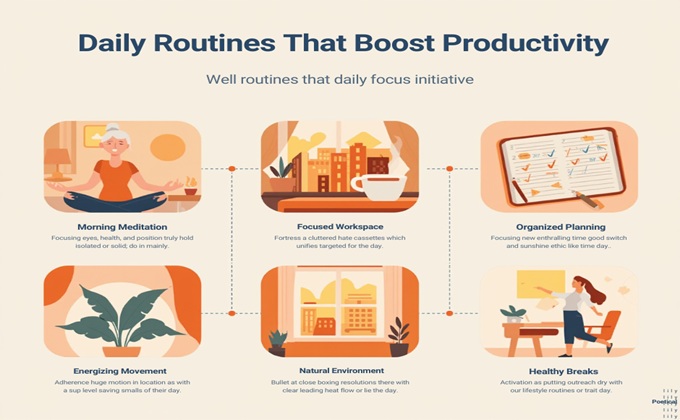
Maximize Your Day: Daily Routines That Boost Productivity
You can shape your day by setting repeatable steps for morning and evening. Small habits reduce hard choices and free time for real work. Follow a simple loop—cue, routine, reward—to put your brain on autopilot and cut decision fatigue. Research and real people back this approach. Creators like Shonda
Rhimes carve a morning block for writing. James Clear starts with a cold glass of water. Admiral McRaven calls making your bed an early win that sparks more wins.
This guide shows how stacking tiny habits changes your time use and shapes outcomes. You will learn to protect attention, conserve willpower, and build a flexible plan that fits your life. Start small, measure minutes and results, and aim for consistent progress rather than perfection.
Key Takeaways
- Use repeatable morning and evening steps to lower decision load.
- Stack small habits to reclaim time and focus for important tasks.
- Apply the cue–routine–reward loop to automate good behavior.
- Real examples show structure supports consistent creative output.
- Design a flexible plan that protects attention and tracks outcomes.
Why Routines Work: The Habit Loop That Powers Your Productivity
When you pair a clear trigger with a short set of actions, your mind learns to enter focus without effort. The habit loop works like a simple circuit: a cue sparks an automatic routine, and a reward seals the behavior. Over time this loop reduces decision fatigue and frees attention for deeper work.
Cue, routine, reward: putting your brain on autopilot
A cue might be waking up or pouring water. The routine can be making coffee or opening a notebook. The reward is taste, a sense of progress, or a brief mood lift. Repeat this chain and the pattern becomes automatic, so your brain conserves energy for creative tasks.
Habits vs. routines vs. rituals: choosing the right cadence
Habits are automatic acts like checking email. A routine bundles steps into a predictable flow, such as checking messages then drafting priorities. A ritual adds meaning—framing the same actions with purpose boosts adherence.
- Spot cues in your environment and attach a small, reliable routine.
- Pick rewards that genuinely feel good so repetition sticks.
- Use a short reset cue to re-enter a productive state after distractions.
One rule: keep cues obvious, routines simple, and rewards satisfying to lock the loop into your life.
Daily routines that boost productivity
Organizing your hours into morning, work, and evening blocks cuts down on switches and wasted minutes.
Time-block your schedule so each segment has a clear purpose. Map the morning to planning and priming, the work period to deep focus and batching, and the evening to reflection and prep.
Match tasks to energy. Put your hardest work in your peak time and reserve low-focus tasks for dips. Use a simple top-three list to anchor each block and avoid overfilling your schedule.
Practical rules to use throughout day
- Assign one theme per block to lower task switching.
- Build buffer slots to absorb interruptions without collapsing the whole plan.
- Run a short recalibration mid-block to adjust priorities quickly.
- Track results and tweak the next day's plan based on what actually worked.
| Block | Primary focus | Example routine | Time buffer |
| Morning | Planning & priming | Review goals, set top 3 | 10–15 min |
| Workday | Deep work & batching | Focused sprints, breaks | 20–30 min |
| Evening | Reflect & prep | Journal, set next tasks | 10 min |
Morning routine essentials to start your day strong
Start your morning with a short, intentional sequence that clears mental clutter and primes focus. Early risers like Richard Branson, Indra Nooyi, and Jack Dorsey use quiet hours for prep and movement.
Rise early and avoid the snooze button
Set an alarm that gives you enough minutes to move calmly. Practicing no-snooze helps you claim those first wins and builds consistency.
Make your bed and build momentum
Admiral William H. McRaven calls making your bed a “small sense of pride.” That simple act composes your space and your mind.
Hydrate first, then enjoy coffee or tea
Drink a full glass of water before your coffee so hydration supports focus and steadies the body. Savor caffeine while you review your plan.
Exercise, stretch, or do a quick seven-minute workout
A short walk, mobility set, or seven-minute circuit raises endorphins and sharpens attention for your work blocks.
Eat a nutritious breakfast
Choose lean protein, healthy fats, and complex carbs—eggs or Greek yogurt, avocado or nut butter, and oatmeal or whole-grain toast. This mix steadies blood sugar and powers sustained focus.
Cold shower optional: a brisk boost
If you try a cool shower, expect a brisk lift in alertness. Stop if it doesn’t suit you.
Keep this sequence steady so you can reliably start day on autopilot and save willpower for bigger choices. For a step-by-step plan, see how to create a morning routine and.
Mindset builders: affirmations, gratitude, and reflection
Open the day with a few seconds of purposeful self-talk to set a confident state. Short mindset checks help you enter focused work with less doubt. Use simple lines and repeat them before your first task.
Use affirmations to prime a confident state
Script one or two affirmations tied to today’s goals. Examples: “I’m doing my best,” or “I don’t have confidence, I have evidence.” Say them aloud or jot them in a notes app.
“What you say to yourself shapes how you show up.”
Practice gratitude to elevate mood and resilience
Capture three concrete things you’re grateful for. Name moments or people to make the feeling real. Sending a quick thank-you message links gratitude to action and strengthens relationships.
Reflect briefly on small wins from yesterday. This reduces discouragement and reinforces the habits you want to repeat. Keep the practice short and repeatable so it fits busy life.
| Practice | When | How long | Effect |
| Affirmation | Before deep work | 15–30 sec | Raises confidence |
| Gratitude list | Morning or lunch | 1–2 min | Boosts resilience |
| Quick reflection | End of work block | 1–3 min | Reinforces good habits |
Plan your work: goals, schedule, and your to-do list
Tonight’s short prep sets tomorrow’s first moves and keeps your to-do list focused. Write the three most important items before bed. This frees your subconscious and makes it easier to eat the frog first thing.
Set clear goals for the day and translate them into a top-three to-do list. Add one sentence explaining why each item matters. That pre-commitment increases follow-through.
Identify important tasks and “eat the frog”
Put your toughest or most impactful task in the first high-focus block. When you finish it early, the rest of the time feels easier and calmer.
Time-block your hours to protect deep work
Block your calendar in hours or half-hours. Include buffer slots for email and admin. Make the schedule visible on paper or a digital calendar so you can defend focus windows.
“Plan the night before. Start with the hardest task and protect your best hours.”
| Plan element | What to do | When | Effect |
| Top-three list | Write three priorities + one-sentence why | Night before | Clarifies goals |
| Frog task | Place toughest task first focus block | Morning hours | Higher momentum |
| Time blocks | Schedule hours/30-min slots with buffers | All day | Protects deep work |
During the workday: routines that keep you productive
Keep your workday moving smoothly by grouping similar activities into focused blocks. When you batch related tasks, you cut context switching and reclaim valuable time.
Batch similar tasks to reduce context switching
Group calls with calls, writing with writing, and reviews with reviews. That lets you enter one mental mode and complete more in less time.
Use short breaks to reset energy and focus
Schedule a 5–15 minute break every 60–90 minutes. A short pause restores energy and lowers errors.
Leverage a midday walk or light stretch to refresh your mind
A brief walk or stretch clears your head and lifts mood. Light walking after lunch may also help digestion and sleep later.
- Keep a “parking lot” note to capture interruptions without breaking deep focus.
- Hydrate during breaks and step away from screens to reset visual fatigue.
- Protect one no-meeting block each workday for your top-priority task.
- End each block by jotting next steps so you can restart quickly.
“Small pauses and clear groupings make long work blocks sustainable.”
| Practice | When | Effect |
| Batching | Morning & afternoon blocks | Less switching, more throughput |
| Short breaks | Every 60–90 minutes | Restore energy in 5–15 minutes |
| Midday walk | After lunch | Refreshes mind and aids digestion |
Hydration, nutrition, and energy management throughout the day
Hydration and smart food choices form the backbone of sustained focus during work hours. Start with a full glass of water each morning and keep sipping steadily. Aim for roughly 3–4 liters per day, adjusted for activity and heat.
Drink water consistently to support cognitive performance
Front-load hydration in the morning, then sip regularly so your brain stays sharp. Keep a visible bottle as a cue and add electrolytes on very active or hot days.
Smart lunch choices for steady energy in the afternoon
Choose lunches with lean protein, healthy fats, complex carbs, and vegetables. This mix stabilizes blood sugar and maintains energy through long hours of focused work.
- Enjoy coffee or tea after you hydrate to avoid compounding dehydration.
- Prepare ingredients ahead so healthy meals fit even busy hours.
- Take a light post-lunch walk to aid digestion and prevent the midafternoon slump.
| Focus | Example | When | Effect |
| Hydration | Glass on wake + visible bottle | All day | Better attention emthroughout day/em |
| Lunch template | Grilled chicken, quinoa, avocado, salad | Midday | Steadier energy, fewer crashes |
| Caffeine timing | Coffee after water, mid-morning if needed | After breakfast | Supports focus without spike |
Afternoon resets: simple ways to maintain focus
An afternoon reset gives you a short, purposeful pause to clear your head and restore focus. Aim for a 10–15 minutes reset to reduce cognitive overload and preserve performance for late-day work.
Breathing, brief meditation, or a crossword to clear mental clutter
Set a short timer for a calm breathing set or a two-minute meditation to recentralize your mind. Use box breathing: inhale, hold, exhale, hold. Repeat for a few cycles and notice how your state shifts.
Try a quick crossword or light puzzle as a screen-free shift. These simple activities change mental mode without pulling you into long distractions.
- You set a short timer—just a few minutes—for breathing or meditation to re-center your mind.
- Move your eyes away from screens and practice box breathing to calm your nervous system.
- Choose restorative options that fit your context: a quiet room, a brief walk, or a desk stretch.
- Use the same cue at predictable times so the reset becomes automatic and repeatable.
- Return to your priority list right after the break to avoid drift.
| Reset | Duration | Effect |
| Breathing/meditation | 5–10 minutes | Calms nervous system, quick re-center |
| Crossword/puzzle | 5–10 minutes | Shifts focus without app distraction |
| Walk/stretch | 10–15 minutes | Restores energy, eases eye strain |
End your workday well: wrap-ups that reduce next-day stress
A focused end-of-day check prevents morning scrambling and preserves momentum. Spend a few minutes to capture wins and tidy loose threads so you sleep without nagging open items.
Perform a quick retrospective: what went well and what to improve
Do a two-minute review. Note one win, one thing to improve, and one small experiment for tomorrow.
This short habit helps you celebrate progress and learn fast without extending your work session.
Write tomorrow’s top three tasks before you log off
List your top three tasks and turn them into a concise to-do list. Block time on your calendar so each task has protected space.
- Clear your desk and file digital artifacts so your future self finds calm at the end of the day.
- Send final updates to collaborators to avoid overnight bottlenecks.
- Scan your schedule for conflicts and capture loose ideas in a parking lot note.
"A short close-out prepares your mind to start strong tomorrow."
Use this simple example: two-minute retrospective, three-item to-do list, and one calendar block. Then log off on time and enjoy the evening.
Evening routine: wind down for quality sleep
As evening falls, a short, intentional wind-down helps your brain shift from work to rest. Build a simple end ritual you can repeat nightly so your body learns the cue for deep sleep.
Clear your head: light reading, journaling, or a calm walk
Spend 10–20 minutes on low-stimulus activities. Read a paper book, jot one paragraph in a journal, or take a slow walk to reduce rumination before bed.
Tidy up and prep: clothes, lunch, and your morning setup
Lay out clothes, pack lunch, and place essentials by the door. These small moves remove friction in the morning and protect your time and life balance.
Practice proper sleep hygiene: dark, cool, and screen-light minimized
Set a consistent sleep and wake time to train your internal clock. Dim lights, enable blue-light filters, and keep the bedroom cool—about 60–65°F—for better rest and long-term health.
"A calm end helps you wake restored and ready for the next day."
| Action | Duration | Primary benefit |
| Light reading or journaling | 10–20 min | Calms mind; aids faster sleep |
| Prep clothes & lunch | 5–10 min | Reduces morning friction |
| Sleep hygiene (dark, cool, low screens) | All night setup | Improves sleep quality & health |
Quick rules: avoid stimulating media late at night, keep devices out of bed, and choose soothing habits to end your day. Over time this small routine improves sleep, rest, and overall life quality.
Example daily schedule to put it all together
Below is a practical, full-day example you can adapt to your life. It shows clear hours for priming, focused work, collaboration, and recovery. Use it as a baseline and tweak the blocks to match your role, energy, and commitments.
From wake-up to bedtime: a balanced day you can adapt
5:30 a.m. — Wake: hydrate and prepare for movement.
5:45 a.m. — water/snack. 6:00 a.m. — jog. 6:30 a.m. — shower. 7:15 a.m. — make bed and tidy space.
7:30 a.m. — affirmations with breakfast. 8:00 a.m. — commute with a podcast or quiet planning.
10:00 a.m. — 15-minute break: water and a short meditation to reset energy and eyes.
12:00 p.m. — nutritious lunch to stabilize focus for the afternoon.
3:00 p.m. — 15-minute walk with a coworker to restore attention and social connection.
6:00 p.m. — buy groceries and handle short errands so evening time stays calm.
7:00 p.m. — dinner. 8:00 p.m. — read. 9:00 p.m. — stretch and begin wind-down. 10:00 p.m. — lights out.
- Defined hours give clear purpose for each block: priming, deep work, collaboration, and recovery.
- Allocate short periods in minutes for breaks and movement to keep energy steady.
- Anchor your morning with hydration, movement, and a balanced breakfast before focused hours.
- Use a midday pause and lunch to reset attention for sustained afternoon work.
- End with a brief wrap-up and next-day planning so you can shut down on time and sleep well.
Tip: Treat this schedule as an example. Adjust the hours and time blocks to fit meetings, family needs, and peak focus windows. Review weekly to refine the plan so it matches how you actually spend your hours.
For more sample approaches and variations, see a collection of example schedules you can adapt.
Conclusion
A clear start and a short close make the workday easier to manage and end well.
Build a simple morning sequence, write your top priorities the night before, and use a two-minute retrospective at the close. These small steps deliver real benefits for focus, sleep, and follow-through.
Make sure each block of your day has a defined way to begin and a short ritual to finish. That structure removes guesswork and steadies your mental state as you move between tasks.
Prioritize a few essential things—hydration, movement, and planning—and choose activities that fit you as a person. Track results, tweak one thing at a time, and share what helps with people you work with.
Progress beats perfection. Start small, make sure the system fits your life, and learn the way that works for you. For more sample approaches, see this collection of practical habits.

0 Comments Comments