
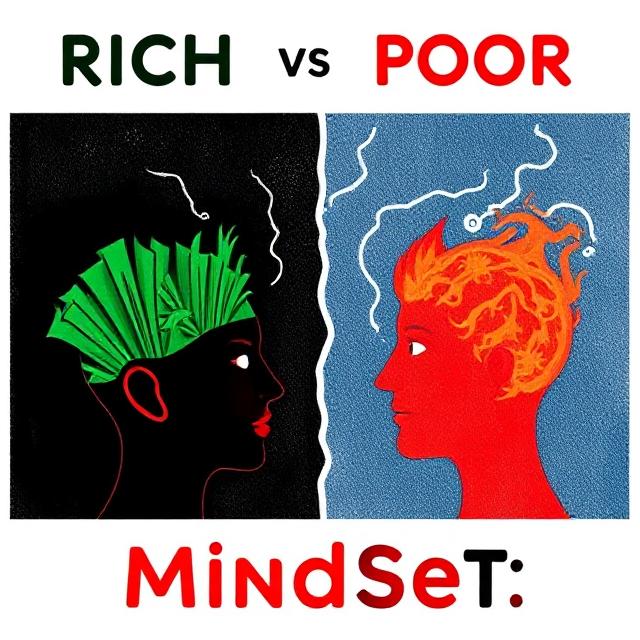
RICH vs POOR MindSet: Unleash Your Path to Prosperity
You’ll get a clear, practical view of the spectrum between wealth and scarcity, rooted in assets, liabilities, and cash flow so you can orient your financial life toward building net worth, not appearances.
Your mindset forms from family, schooling, and daily habits. It steers how you spend, save, and invest money.
This section explains why real wealth often hides behind modest looks and why negative net worth is driven by toxic debt like credit cards and payday loans.
You will learn practical habits that shift your choices about time, income, and opportunity so they compound into lasting security. Treat money as a tool to design a better life, not only something to work money harder for.
Key Takeaways
- Understand assets, liabilities, and cash flow to build net worth.
- Your beliefs about money shape daily decisions that add up over time.
- Wealth is about productive assets, not appearances.
- Escaping toxic debt starts with reframing money’s purpose.
- Practical habits and systems create measurable progress today.
Your guide to the RICH vs POOR MindSet in today’s world
?si=UoZunwseJIzFOWO9">?si=UoZunwseJIzFOWO9In a fast-changing economy, how people think about income and risk defines financial outcomes.
Robert Kiyosaki frames two core mindsets: scarcity, which treats a paycheck as safety, and abundance, which builds assets and uses debt strategically.
This section gives you a practical map:
- Compare clinging to a job with building optional income streams.
- See why simple advice to only get a job and hoard cash can fail in inflationary times.
- Learn when to tighten expenses and when to invest in skills that raise future income.
— Robert Kiyosaki
| Focus | Scarcity | Abundance |
| Primary goal | Protect paycheck | Build assets |
| View of debt | Fear and avoid | Use strategically |
| Typical trap | Hoard cash, miss growth | Overreach without plan |
| Next step | Tighten spending | Invest in skills |
Use the simple self-checks here to spot habits that help or hinder progress. Then set systems, not just motivation, so small changes compound.
RICH vs POOR MindSet at a glance: how you see money, time, and opportunity
How you frame cash, hours, and risk shapes whether money expands or vanishes.
This snapshot helps you spot habits that move you toward assets and optionality or keep you trading time for a steady paycheck.
Rich mindset snapshot: abundance, assets, and making money work
You treat money as a tool. You focus on income-producing assets like real estate, stocks, and funds. You invest in skills and systems that let you make money while you sleep.
You allocate time to learning and opportunity scanning. You use automated investing and consistent contributions to benefit from compounding.
Poor mindset snapshot: scarcity, paycheck security, and earn-and-spend cycles
You see money mainly as wages. You feel safer if you keep your job. This limits your growth and makes you react to expenses.
- You prioritize paycheck security and near-term consumption.
- You miss compounding by delaying investing or avoiding asset-building.
- You spend time solving cash gaps rather than creating leverage.
| Focus | Typical action | Outcome |
| Time use | Skill growth, opportunity scan | Optional income |
| Money view | Tool for assets | Compound gains |
| Risk | Calculated testing | Higher upside |
| Job | One input among many | Less reliance on paycheck |
Action point: Map one habit today—automate 5% of each paycheck into a diversified fund—and watch how small, consistent choices shift your long-term results.
Let compound interest work for you, not against you
Small, steady moves today can let interest become your ally instead of your enemy. Start by treating time and regular contributions as the tools that let small sums grow into real assets.
Make money work: investing income into assets that compound
Automate a slice of each paycheck to buy diversified assets. That steady habit turns reinvested returns into a flywheel that accelerates growth over years.
Avoid the paycheck-to-paycheck trap and mounting credit card debt
High-rate revolving balances are negative compounding. Card debt and payday loans can turn $1,000 of balances into far larger obligations quickly.
"Compound interest is the eighth wonder of the world: he who understands it, earns it; he who doesn't, pays it."
Simple example: how $1,000 grows—or becomes $10,000 in debt—over time
This example shows the split path: disciplined investing vs. unpaid revolving balances.
| Scenario | Action | Result over time |
| Invest $1,000 | Reinvest returns in diversified assets | $1,000 can grow to ~$10,000 with consistent returns and time |
| Carry $1,000 balance | Revolve on high-rate credit card | Fees and interest can turn it into ~$10,000 of obligations |
| Balanced plan | Pay high-rate debt while automating small investments | Breaks the cycle and builds assets steadily |
- You’ll see how compounding acts like a flywheel for small, steady contributions.
- You’ll learn why card debt multiplies what you owe and how to stop it.
- You’ll get an action step: automate a small investment and set autopay to avoid interest.
Spending habits that build wealth vs spending that keeps you broke
Every purchase is a vote for the life you want. When you treat spending as a tool, you direct cash toward essentials and assets instead of trends and image. That simple shift protects savings and grows net worth.
Essential spending and needs over trends, image, and impulsive buys
Prioritize necessity and long-term value. Buy fewer, better things that last. Avoid blending needs with wants when marketing nudges you to upgrade.
Mindful finance: questions that stop impulsive purchases before they happen
Use a short checklist to pause: Do I really need this? Do I already have something that works? Will this truly improve my life? These prompts can prevent over $1,000 in unnecessary outlays in months.
- Needs-first framework: funnel cash to essentials and investments before upgrades.
- Apply small frictions—24-hour waits or cart cooling-off—to reduce impulse buys.
- Factor cost-of-ownership: subscriptions, maintenance, and downtime add up.
- Reserve splurges for planned priorities so daily impulses don't erode savings.
From instant gratification to long-term goals and a clear money timeline
A clear timeline lets you see how small choices today speed up or slow down your milestones. Tools that visualize your plan make long-term goals tangible and keep daily spending linked to outcomes.
Translate big goals into monthly targets with real-time feedback on spending
You’ll convert vague aspirations into specific monthly targets so progress is measurable, motivating, and trackable. Visual timelines show you where you stand this month and next.
You’ll use feedback loops that display how everyday purchases affect your timeline. That real-time view helps you resist impulse buys and keep work and job choices aligned with priorities.
- You’ll treat time as a project resource and map payoff dates, buffers, and investment targets on one line.
- You’ll anchor habits—automatic transfers and reminders—so you spend less willpower and more focus on high-impact things.
- You’ll run quick scenario checks (for example, cut dining out by $150/month) to see the year-end effect.
"Small monthly wins compound into life-changing results."
Review monthly. Celebrate wins, tweak tactics, and keep the metrics you control—savings rate and debt payoff rhythm—front and center. This mindset turns money from temptation into a tool that supports your goals.
Risk, debt, and leverage: think like rich, not just about a paycheck
Calculated risk-taking and clean debt management create optionality that a steady job alone rarely provides.
Take measured bets. Diversify across skills, income streams, and asset types so one setback doesn’t erase progress. Learn fast from small failures and update your playbook.
Calculated risk and evaluation
Do simple diligence: check unit economics, downside scenarios, and diversification. This reduces concentration risk and lets you test opportunities before you scale.
Strategic borrowing vs toxic debt
Use strategic debt to buy income-producing assets like real estate or a small business. Avoid revolving balances that drain cash and compound high interest.
| Focus | Smart choice | Poor choice |
| Debt use | Leverage to buy assets | Finance depreciating goods |
| Risk stance | Calculated, diversified | Fear-driven or reckless |
| Income goal | Build multiple income streams | Rely only on job paycheck |
| Tax planning | Use structures to protect estate and income | No planning, higher taxes |
Practice owner thinking. Focus on cash flow, legal structures for estate and tax efficiency, and rules that stop revolving card balances. That mindset helps you make money work harder and keeps your finances resilient.
Lifelong learning compounds faster than stocks, bonds, or real estate
Master new skills deliberately and you shift your earning curve. Many millionaires started without family wealth. They studied, practiced, and changed how they make money.
Education is the highest-return asset you can buy. Focus on courses, mentors, and projects that tie directly to promotions, clients, or venture readiness. Small weekly investments of time build durable advantages.
Adopt a global view. Learn how markets and customers differ across countries so you can spot opportunity beyond your job and local constraints. That perspective helps you adapt faster and find better ways to make money.
Practical steps: map a learning roadmap, seek outside advice, and test skills with real projects. Feedback from practice compounds knowledge in ways financial markets cannot match for your personal trajectory.
| Area | Action | Short-term payoff |
| Technical skill | Project-based course, portfolio | Clients, higher rates |
| Business & communication | Mentor + practice pitches | Better negotiations, promotions |
| Global market awareness | Market study + outreach | New customers, partnerships |
| Finance & estate basics | Practical classes, apply to personal plan | Smarter investments, tax choices |
Get started today: practical ways to shift your mindset and money
A focused 30-day plan turns vague good intentions into measurable money progress. Use this month to build momentum with three simple moves: track spending, set one clear goal, and automate transfers so savings grow without effort.
First 30 days: track spending, set one goal, automate savings
Track every dollar this month for insight. Set one priority goal and split your paycheck so a small amount moves to savings or investments on payday.
Debt triage: cut interest, refinance, and stop revolving card debt
List balances, rates, and minimums. Target the highest-rate accounts first and explore refinance or 0% balance transfer offers to reduce interest.
Safeguards: enable autopay in full, set spending alerts, and build a starter emergency buffer to end revolving credit card balances.
Build assets: diversify into index funds, real estate, or a small business
Pick one asset lane and commit a fixed amount monthly. Consider broad index funds, beginner-friendly real estate approaches, or a small side business to increase income and long-term assets.
Protect health and time: invest in wellness and choose time-smart options
Pay for things that prevent costly setbacks—good sleep, fitness, or basic equipment. Save time by outsourcing tasks that free hours for work or income growth.
- Weekly reviews to adjust allocations and celebrate wins.
- Use a purchase checklist to avoid impulse buys and redirect money to your top goal.
- Document one before-and-after example to prove small habit changes work.
| Focus | 30-day action | Expected result |
| Spending | Track daily & set one goal | Clear budget and small savings |
| Debt | Refinance or transfer high-rate balances | Lower interest, faster payoff |
| Assets | Automate contributions to chosen lane | Consistent growth and income options |
| Health & time | Invest in prevention and convenience | Fewer setbacks, more productive hours |
Conclusion
Recognizing patterns is the first step to change money habits. You might have traits from both rich and poor mindsets. But, you can fix this mix.
Start with one action: automate your investments, cut high-interest balances, or learn a new skill. These actions grow over time.
You can change your rich poor mindset with simple actions. Make scorecards for savings, debt, and investments. See setbacks as chances to improve your plan.
Think like rich by acting like an owner. Protect your money, invest in learning, and use smart tax plans. Pick one thing today and plan your next check-in.
1878

0 Comments Comments