
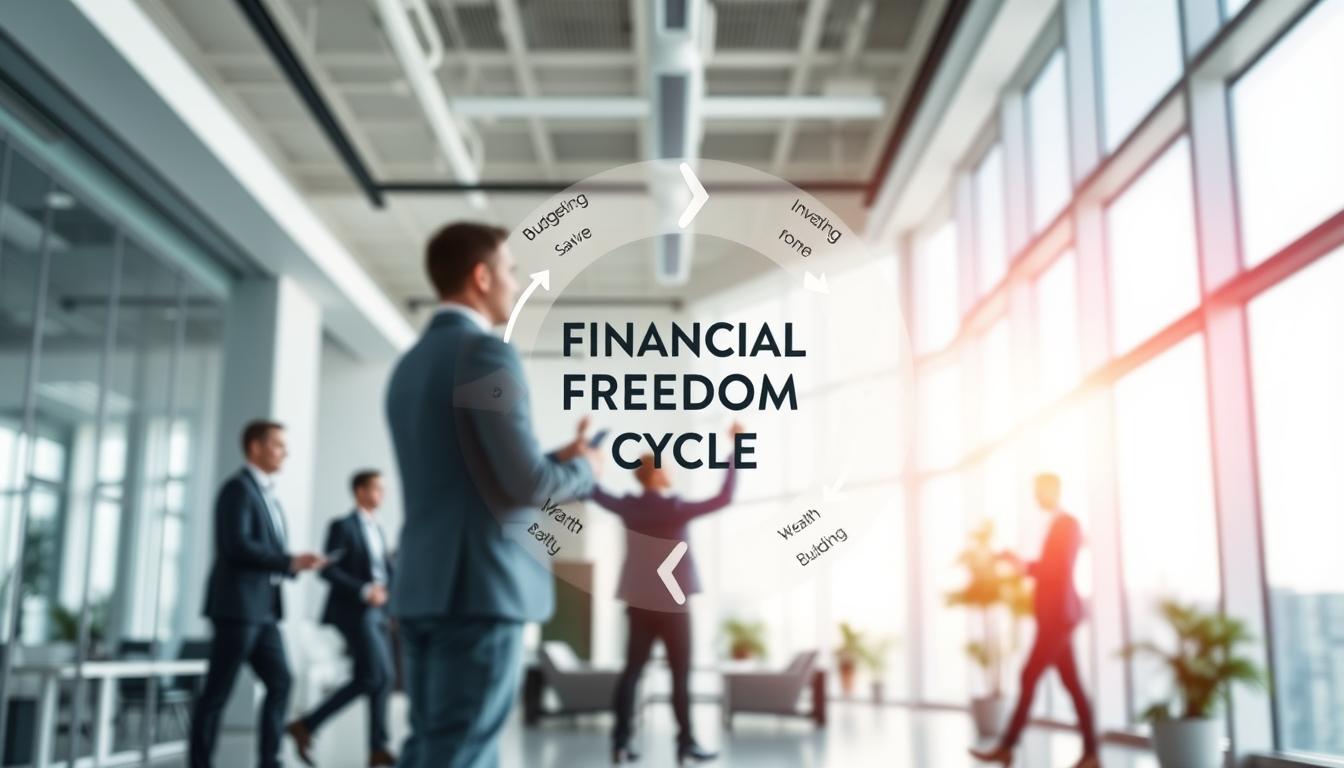
The Financial Freedom Cycle: A Step-by-Step Guide
This guide shows you a clear path to replace anxiety with steady progress. You’ll learn how the Financial Freedom Cycle works as a repeatable framework, not a one-time event. The focus is on habits you can keep: budget, remove debt, save, invest, and protect. Start where you are today. This guide is written for you, regardless of income. Many people depend on a paycheck more than low pay causes harm. You will gain practical steps to gain control over your money and your choices. Expect a step-by-step progression from stabilizing monthly cash flow to building long-term systems that work while you live your life. The outcomes are measurable: less stress, more options, and better responses to problems.
Core promise: you’ll replace financial worry with intentional decisions that compound over time and create lasting results.
Key Takeaways
- You’ll get a practical, repeatable framework to guide your money decisions.
- Consistent habits—budgeting, debt paydown, saving, investing, protection—matter most.
- The guide maps a clear path financial progress from foundation to purpose.
- Freedom shows up as less stress, more choices, and calm responses.
- This plan works for you today, no matter your current income.
What Financial Freedom Means in Real Life Today
Imagine an unexpected car repair that’s a minor annoyance instead of a full-blown crisis. That change shows what financial freedom looks
like in everyday terms: you pay the bill, keep your routine, and move on. You get day-to-day stability when you have no high-interest debt, some money saved, and a steady plan to grow assets. Financial peace means covering groceries, deductibles, or home repairs without borrowing or skipping other bills. High income or a big salary doesn’t guarantee independence. If your spending rises with income, you stay paycheck-dependent and stressed. That limits what you can say yes to at work, in health choices, or when people you care about need help.
- Minor emergencies stay minor.
- Spending becomes predictable.
- Planned savings replace reactive debt.
Real life today in the U.S. looks like fewer money emergencies and more options. To keep this, you need a repeatable process that makes smart money decisions over years. Learn how the stages of life approach helps you do that.
Understanding the Financial Freedom Cycle
You can work more and earn more and yet feel no closer to long-term security.
Diagnose the stuck pattern: you trade time for money, repeat the paycheck loop, and stay one surprise from falling behind.
How the pattern keeps you tied to paychecks
Raises often vanish into lifestyle upgrades. After years of hard work, your net worth can look the same.
How to shift: owner thinking and systems
Stop thinking like an employee and start thinking like an owner. Owners measure progress by assets and income streams, not just salary.
- Gerri: left corporate sales, bought rentals, and reached independence in five years.
- Mark: stopped upgrading his lifestyle and redirected extra pay into investments that grew over decades.
Systems and assets mean automatic investing, intentional budgeting, and rules that repeat without willpower. Present action, guided by past lessons and a clear future, creates steady progress.
| Role | Primary Action | Outcome (years) |
| Employee | Trade time for salary | Low net worth |
| Owner | Build assets and systems | Growing wealth |
| Systems | Auto-invest & planned budget | Compounding returns |
"Freedom is earned and requires present action supported by clarity about past and future."
The Four Freedoms That Define Independence
Begin with four practical freedoms that show whether your plan is building real independence. Use them as a short checklist to test if your goals buy a better life.
Freedom of time
Time means fewer mandatory hours and more control over your schedule. You stop reacting to every demand and start choosing what fills your day. This looks like shorter workweeks, flexible shifts, or the ability to say no to low-value tasks.
Freedom of money
Your income becomes a tool to buy back time. You use pay to outsource chores, hire needed skills, or invest in systems that save hours each week.
Money buys options, not status. The goal is flexibility, not a higher spending target.
Freedom of relationship
When you are not trapped by constant pressure, you choose the people you spend your life with. That includes friends, mentors, and colleagues who add value.Choice in relationships improves both personal and professional life because you spend time where it matters most.
Freedom of purpose
Purpose aligns your work, time, and money so daily actions match long-term meaning. It ties past lessons to present steps and your near future.
When these four freedoms stack, each one strengthens the next and creates durable independence.
- Use the four freedoms as a checklist for goals and monthly actions.
- Prioritize time money choices that add flexibility over status spending.
- Let income fund skills and services that free your schedule.
| Freedom | Concrete Sign | How to Fund |
| Time | Control of daily hours | Reduce obligations, outsource tasks |
| Money | Ability to pay for priorities | Redirect income to investments and services |
| Relationship | Choice of companions | Remove financial ties that force bad relationships |
| Purpose | Work matches values | Align budget and goals with long-term aims |
"Use money as a tool to create options, and let those options buy you the time to live the life you intend."
Next step: build the foundation with a budget, clear goals, and a plan that turns values into monthly action.
Build Your Foundation With a Budget, Goals, and a Plan
A clear monthly plan keeps your spending intentional and your goals on track.
Zero-based budgeting means you give every dollar an assignment before the month begins. You tell each dollar where to go — bills, debt, saving, or
fun — so there is no drift.
Zero-based budgeting in practice
Start by listing income and assigning amounts to every category. Track actual spending each week. When you overspend, move another category down or adjust next month. Adjustment is skill, not failure.
Spending awareness
Track where your money goes to spot quiet leaks like unused subscriptions. Awareness helps you cut waste fast.
Goals that work
Make goals specific, measurable, written, and time-bound. Example: pay off $20,000 in 12 months. Break that into weekly amounts and treat it like a recurring step.
| Activity | What to do | Monthly result |
| Assign | Give each dollar a job before the month | Less impulse spending |
| Track | Record spending daily or weekly | Spot subscriptions and leaks |
| Adjust | Use real data to reset categories | Better control next month |
The budget is the control center that funds debt payoff, saving, and investing without guessing. Once your plan is visible, the next step is removing debt and stopping leaks on the path to steady progress.
Remove Debt and Stop Leaking Money
Cutting debt is the fastest way to turn your paycheck into real options and less stress.
Debt is a structural blocker: interest and minimum payments siphon off the cash you could use to build savings, grow wealth, or change jobs. Every dollar that goes to lenders shrinks your ability to choose.
Build momentum with the snowball
List debts from smallest to largest. Pay minimums on all accounts, then throw extra cash at the smallest balance until it’s gone. When a debt clears, roll that payment to the next smallest. This creates quick wins that reduce stress and boost progress.
Live below your means without feeling deprived
Design your lifestyle so spending supports goals, not status. You can still enjoy life while protecting progress.
Simple monthly cuts that add up
- Cancel unused subscriptions and switch to generic brands.
- Meal plan, brew coffee at home, and reduce energy use.
- Use coupons, cashback, and buy high-cost items later to avoid new debt on a car or home.
When debt payments disappear, you redirect that money into savings and investing, and compounding does the rest.
Next step: use the freed cash to build a small emergency fund so purchases don’t pull you back into old habits.
Create Stability With Emergency Savings and Planned Purchases
A steady buffer of cash turns urgent surprises into simple errands. Build that buffer once you are out of high-interest debt so small shocks don’t force new borrowing.
What “fully funded” means
Fully funded generally means 3–6 months of core expenses held where you can access them quickly. That amount covers essentials for several months
so a car repair, broken appliance, or medical deductible stops being a crisis.
Where to keep this money
Use a dedicated savings account or separate account inside your budget. Keep routine bills in checking and the emergency fund distinct so you don’t spend bymistake.
Planned purchases with sinking funds
Set up sinking funds for predictable big expenses like travel, insurance deductibles, or home maintenance. Divide the total cost by the months until the purchase to pick the monthly contribution.
- Define each sinking fund and its target amount.
- Automate monthly transfers to the right account.
- Only tap emergency savings for true emergencies, not wants.
When you stop reacting to surprises, you can invest steadily and keep your path to a stronger future.
Make Your Money Grow With Long-Term Investing
Small, consistent choices now let your money grow into options for the years ahead. Thinking in decades, not paychecks, lets compound growth do heavy lifting while you live your life.
Start early and think in decades
Compound growth rewards time. The earlier you start, the more your regular contributions multiply. Aim to increase contributions as your income rises.
Use workplace accounts and capture the match
Contribute to your 401(k) or 403(b) at least enough to get the employer match. That match is effectively free and accelerates growth. A majority of wealthy people used their company account to build wealth.
Roth strategies and tax-free growth
Roth IRA or Roth 401(k) contributions grow tax-free. That tax treatment gives flexibility in retirement and can lower taxes on withdrawals.
How much to invest
A simple target is to invest about 15% of your income toward retirement. If you’re behind, start lower and step up yearly.
Navigating market volatility
The stock market will have ups and downs. Expect market chaos like inflation and headlines. Don't panic sell. Stay invested, follow a plan, and let long-term growth work.
"Consistency and discipline often beat timing and hype."
When your investing engine runs, protect progress and align investments with the life you want. For concrete next steps, see steps to start building wealth.
Protect Your Progress and Build a Life You Actually Want
Protecting what you’ve built keeps a single accident from undoing years of steady progress. Defense is an often-missed phase of any plan. One uninsured event can erase slow gains, so protection belongs in your monthly playbook.
Insurance as your financial defense
Core coverages include term life, auto, homeowners or renters, health, disability, long-term care, identity theft protection, and umbrella policies.
Right-size coverage by comparing costs, raising deductibles where prudent, and bundling where it lowers premiums. Protection should stop ruin without
wasting premiums.
When an advisor adds value
An adviser helps with strategy, rebalancing, coordinating accounts, and withdrawal plans. They help you stay steady during market swings and avoid timing mistakes. Use an advisor when your situation grows complex or you want disciplined rebalancing and tax-aware withdrawals.
Mindset shifts that accelerate results
Owner thinking means you plan decades, not paychecks. Focus on value instead of always buying the cheapest option.
- Tom feared investing. He started small, learned the rules, and now contributes steadily to investments with less anxiety.
- Emily stopped buying cheap replacements. She buys quality once, which saves money and supports long-term success.
Freedom beyond money
Your plan should include generosity, legacy, and purposeful choices. Give in ways that align with your goals so you help others without destabilizing your path. "Protection and a resilient mindset let your gains compound without constant backtracking." Next step: review your coverage, consider advice when needed, and keep learning from trusted books and resources like what is financial freedom. Then move to the conclusion and act on one protective change this week.
Conclusion
Close the loop by turning monthly habits into a steady path that builds options over years.
Summarize the process: budget and goals → eliminate debt and leaks → build emergency and sinking funds → invest for the long term → protect with insurance and advice → design a purpose-driven life. The outcome is financial independence, earned by repeated steps. Daily choices compound over years and create real options in your work and time.In the next 72 hours: draft a zero-based budget, list your debts, set one measurable goal, and open or label an emergency savings account. Start saving wisely with a simple plan like this saving wisely. Define success in your own terms and align your money system to support that future. Stay steady—this path requires attention, but it protects your home, schedule, and peace of mind.

Все подробности: <a href=https://l-parfum.ru/catalog/Antonio_Banderas/Black-Seduction/>https://l-parfum.ru/catalog/Antonio_Banderas/Black-Seduction/</a>
дизайн интерьера фото <a href=https://dking.studio/>дизайн интерьеров спб</a>