
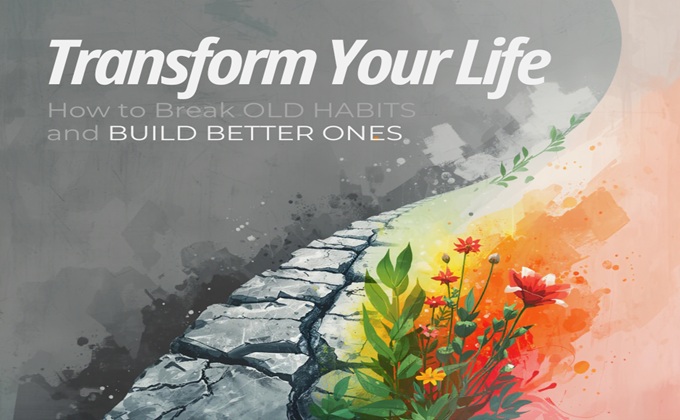
Transform Your Life: How to Break Old Habits and Build Better Ones
You can reshape daily routines so they move you toward your goals with less friction. Research shows nearly 40% of what you do each day runs on automatic patterns. That means small, steady changes unlock big wins for life and health. Start with a simple system: identify the cue, adjust the routine, and reward the new action. This loop is the framework Charles Duhigg explains and many people use in practice. Practical guides recommend tiny steps, clear cues, and tracking tools that make new behavior automatic. Use real examples—like commuting habits or toothbrushing—to see how routines save mental bandwidth and cut decision fatigue.
For a concise roadmap and extra resources, check a focused guide on habits at James Clear’s site. You’ll get strategies and articles that help convert information into action, one day at a time.
Key Takeaways
- Nearly half your day is governed by habits; small shifts create major impact.
- Use the cue–routine–reward model to design repeatable change.
- Start tiny, track progress, and shape environments for success.
- Reducing decision fatigue frees focus for important goals.
- Apply proven strategies across health, work, and personal life.
Understand Why Habits Run Your Life Today
What you do often repeats without much thought. A habit is a learned behavior the brain runs with minimal effort. Researchers at Duke University estimate about 40% of daily behaviors happen this way.
What habits really are
That automatic fraction of your day explains why routines feel effortless. Simple actions like driving a familiar route, brushing teeth, or checking notifications become default responses. Repetition locks them in so your mind saves cycles for harder problems.
Decision fatigue and saved energy
When many choices pile up—especially during uncertain times—people burn mental energy fast. Routines lower decision fatigue and free cognitive resources for complex tasks at work and in life. Small standardizations, such as set meals or a morning checklist, reclaim time without costing flexibility.
| Everyday behavior | Why it becomes automatic | Immediate benefit |
| Commuting | Repeated route and cues | Less decision effort each morning |
| Toothbrushing | Daily cue after meals | Health maintained with little thought |
| Checking phone | Frequent rewards (notifications) | Mood spikes but attention drains |
| Outfit choices | Standardized options | Saves minutes and reduces stress |
For practical resources on changing routines and their mental health benefits, see this helpful guide.
How habits form in your brain: cue, routine, reward
Neural circuits learn patterns by linking a cue with a routine and a reward. This simple loop explains why many actions become automatic. The cue triggers a set of steps. The routine runs. The reward reinforces the cycle.
The habit loop explained with real-world examples
Consider a phone notification: cue—open the app—reward of social feedback. That loop trains the brain fast because the reward is immediate.
Another example: a light left on is your cue to flip the switch. The routine saves energy. The reward is a lower utility bill over time.
Chunking: the brain’s shortcut for turning steps into a single behavior
Chunking compresses multiple actions into one smooth behavior. With repetition, your body and brain execute the package with little thought. This frees mental space for harder decisions.
Immediate vs. delayed rewards and why some habits stick faster
Immediate rewards, like a dopamine hit from notifications, condition behavior quickly. Delayed rewards, like fitness gains, take longer to reinforce a routine.
You can redirect a loop by keeping the cue and reward but swapping the routine. Use time cues (end of work) or place cues (gym bag by the door) to prompt the behaviors you want.
"Designing rewards that matter makes the right routines more likely to stick."
- Break down the loop: see cue, routine, reward.
- Use real examples to make the loop tangible.
- Stack small routines so learning accelerates and effort drops.
How to break old habits and build better ones
Start by mapping a single loop: spot the trigger, record the routine, and note the payoff.
Diagnose your loop
Diagnose your loop: pinpoint the cue, routine, and reward
Write out one habit loop so you remove guesswork. Note the cue's timing, the exact routine, and the reward you expect.
Keep the cue and reward, swap the routine
Keep the same trigger and payoff but replace the routine with something healthier that gives a similar reward.
Example: under stress (cue), instead of eating fatty foods (routine), put on music and walk for three minutes (new habit) to get the same stress relief (reward).
Start small: make it “so easy you can’t say no”
Begin with a tiny step: one minute of movement, one glass of water, or one sentence of journaling. That low bar builds consistency.
Use shaping to progress in manageable steps
Once the tiny action feels automatic, raise the demand a bit. Move from “tiny” to “easy” to “normal” in small steps so change sticks.
| Action | Cue | New routine | Reward |
| Stress snack | Afternoon stress | 3-minute walk with music | Calm, quick relief |
| Skip water | Start work | Keep bottle by keyboard | Hydration and focus |
| Evening scrolling | Bedtime light | Read one page | Relaxation and sleep readiness |
| Missed journaling | Morning coffee | One sentence on phone | Clarity and momentum |
- Plan an if/then trigger that fits your day.
- Remove friction: lay out shoes, prep playlists, set water near you.
- Test one example each week and adjust what actually gives the reward you want.
- Track one action per day to reinforce identity and keep a visible chain of progress.
Strategies that make new habits stick
Your best chance at lasting change comes from stacking practical actions onto what you already do.
Habit stacking tethers a small new habit to a stable anchor. For example, after you brew coffee, fill a water bottle. That pairing lets the new step piggyback on automatic routines and saves willpower.
Premack principle pairs a less liked task with a preferred activity. Do a short chore, then listen to a favorite podcast as your reward. This makes the necessary behavior feel worth completing.
Identity-based habits shift focus from outcomes to who you are. Say, "I am someone who trains daily." That identity nudges decisions so actions match beliefs and long-term goals.
Bright-line rules remove wiggle room. Clear, binary boundaries—like "no screens after 10 p.m."—stop late-night drift and protect progress under stress.
- Pick one simple step, repeat it at the same time and place.
- Make following through frictionless at work and home.
- Celebrate small wins so momentum and motivation stay fresh.
"Design clear anchors, rewards, and rules so new routines survive real life."
Design your environment for effortless behavior change
Designing spaces with intention makes desired actions effortless and repeatable. Small visual and sensory cues guide your choices without heavy willpower. You can shape what your brain and body expect by arranging places purposefully.
Optimize cues at home, work, and on your phone
Place reminders where you can’t miss them: gym shoes by the door, water on your desk, calendar alerts on your phone. Keep healthy snacks visible and hide tempting apps to add friction for old routines.
Design each area with a clear purpose so the right routine fits the space. Use bedtime alarms for wind‑down and screen limits at night to protect sleep and overall health.
Leverage social support and accountability
One way to raise adherence is simple: tell people you trust and report daily, even one sentence. Group study, walking meetings, or co‑working calls make it easier for you and others to show up.
- Use visible checklists and phone reminders.
- Revisit environments monthly and tweak cues as goals change.
- Create shared rituals that make habits social and sticky.
For extra ideas, try these simple ways that help sustain change.
Plan, track, and troubleshoot for long-term success
Decide the exact cue, a short time window, and one testable win before you start. This makes each step measurable and keeps goals clear.
Set clear cues, timelines, and measurable wins
Set clear cues, timelines, and measurable wins
Write a cue, a time window, and a measurable win you can verify at the end of the day. That single step clarifies what success looks like.
Use calendars, checklists, and habit trackers to see your progress
Schedule each step in Google Calendar or Outlook with recurring reminders. Break projects into checklists in Trello so tasks arrive as short chunks.
Track streaks with apps like Streaks, Habitshare, or Habitica. Visible progress across days boosts motivation more than willpower alone.
Anticipate pitfalls: focus on one keystone habit and avoid overload
Pick one keystone habit and protect it. Habit change compounds fastest when you master a single routine rather than chasing many goals.
Repetition builds craving for the reward; consistency beats intensity. When setbacks happen, record causes, revise quickly, and pick one tweak for the next day.
- You define clear steps by writing a cue, a time window, and a measurable win.
- You schedule each step in a calendar so reminders prompt action when energy is available.
- You monitor progress with checklists and trackers that show streaks across days and weeks.
- You prioritize one keystone habit to avoid overload and let change compound.
"Plan small, track daily, and fix fast — that loop turns effort into lasting progress."
Conclusion
A single focused routine, repeated daily, reshapes your time and energy.
Use the habit loop—cue, routine, reward—as your design template. Pick one keystone habit, set a clear cue, and choose a tiny step you can do every day at the same place and time.
Protect that step with bright‑line rules and simple environment fixes so your brain, body, and mind face fewer conflicts and more momentum.
You can add accountability by sharing progress and using checklists or trackers. For practical guides and extra strategies, visit this short guide on habit change: six effective strategies.
Keep pacing yourself: focus on one routine until it feels automatic, then shape the next. Small, steady steps turn information into action and real progress in health, life, and behavior every day.

0 Comments Comments