
Trump 1.0 Alums Share Chilling Google Message: Lawfare Context & Second-Term Implications
?feature=shared">?feature=shared
This group claims the investigations involved deep dives into private communications, including attempts to challenge legal protections like lawyer-client privilege. The officials allege the move was meant to intimidate and pressure them. Their accounts paint a picture of ongoing conflict between Trump’s first administration figures and federal investigators as Trump prepared to return to power.
Key Takeways
- Former Trump officials received court-ordered notices of FBI access to their Google accounts.
- They viewed the legal actions as a strategic effort to hinder Trump’s political influence.
- The situation highlights tensions between government investigations and political actors.
The Google Message and 'Lawfare' Claims
A message from Google alerted former Trump 1.0 officials to FBI surveillance linked to the Biden administration. They described this alert as an example of "lawfare," a term used to claim legal tactics are being used to target political opponents.
Overview of the Chilling Message
Before the potential second term of former President Trump, Google sent notices to some Trump 1.0 alumni. These notices informed them that the FBI was conducting surveillance on their accounts. The surveillance was reportedly authorized through court-ordered legal processes.
The message was described as "chilling" by those who received it, indicating surprise or concern. It meant digital privacy was compromised under legal orders, which was unusual for these officials. The alert included key details about data access, signaling a deeper investigation.
Reactions from Trump 1.0 Alumni
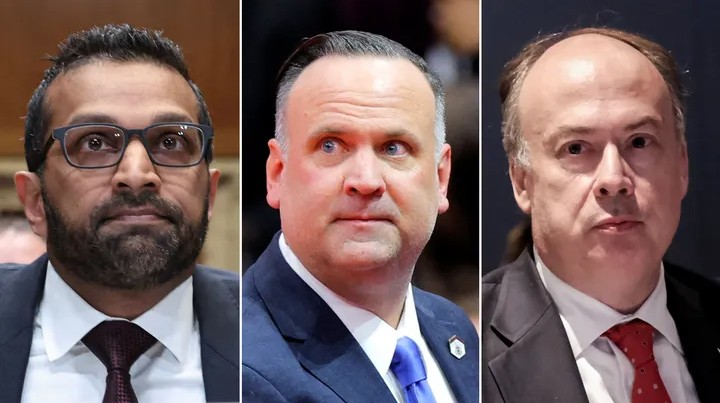
Trump 1.0 officials like Dan Scavino and Kash Patel publicly claimed the Google message proved unfair treatment. They argued that the FBI's legal surveillance was politically motivated under the Biden administration.
They labeled these actions as "lawfare at its finest." This phrase expressed their view that legal systems were weaponized for political attacks rather than justice. Their response highlighted distrust towards federal agencies and raised questions about surveillance limits on political figures.
The Concept of 'Lawfare' in U.S. Politics
"Lawfare" is the use of legal means to damage or delegitimize opponents. In U.S. politics, it often refers to lawsuits, investigations, or legal actions that critics say are driven by political goals.
Supporters of the term believe lawfare erodes fairness in law enforcement and courts. Opponents argue that legal processes are necessary to hold officials accountable. In this case, Trump 1.0 figures framed the FBI's activities as part of a political struggle, raising ongoing debates about justice and power.
Contrasting Trump 1.0 and Trump 2.0 Approaches
Donald Trump's second term reflects a shift in focus from his first. He aims to act faster on key issues and sharpen his strategies, especially around legal defenses and political methods. These changes highlight how he seeks to strengthen his position compared to his initial presidency.
Lessons Learned from Trump 1.0
During his first term, Trump encountered setbacks due to scattered priorities and internal disagreements. He did not fully capitalize on his political capital after winning the presidency, which limited the impact of his agenda.
This time, he is concentrating more on core issues like immigration and law enforcement. He aims to avoid distractions such as divided attention on healthcare or tax cuts seen in his first term. Trump also shows more caution about who he surrounds himself with, seeking loyal executives who align with his goals to avoid past pitfalls.
Legal Strategies in Trump 2.0
Trump 2.0 faces multiple legal challenges, including ongoing prosecutions and past convictions impacting public opinion. He and his team have responded by emphasizing the phrase "LAWFARE at its finest," framing these actions as politically motivated attacks rather than legitimate legal processes.
This narrative supports a strategy of delegitimizing court proceedings and rallying supporters against perceived injustices. Unlike his first term, his legal defense now appears more coordinated and publicly framed to maintain his base’s trust while fighting these challenges in courts and the media.
Evolution in Political Tactics
In his second term, Trump uses more direct communication methods, often bypassing traditional media channels to engage supporters. This mirrors but refines the approach from Trump 1.0, focusing on consolidating power more efficiently.
He intends to act more aggressively early in his term, launching decisive policies quickly, especially on immigration and law enforcement. His team also seeks to reshape institutional power by replacing key officials in the executive branch with loyalists who will execute his vision without resistance. This marks a stronger, more calculated political style than his earlier presidency.
Institutional Impacts: Civil Service, Bureaucracy, and Executive Orders
Changes in executive actions and personnel policies shaped how government agencies operated. These shifts affected the workflow of the civil service and altered the traditional bureaucracy. The balance between political control and career staff was a key point of tension.
?feature=shared">?feature=shared
Executive Orders and Policy Implementation
Executive orders serve as tools for presidents to direct government action without needing Congress. Trump’s administration used these orders aggressively to push policy goals. However, this approach often bypassed established bureaucratic processes.
This led to rapid changes but also created strain within government agencies. Some orders disrupted ongoing programs or changed priorities overnight. The reliance on executive orders placed pressure on civil servants to implement directives quickly, sometimes without clear guidance.
The frequent use of executive orders also sparked legal challenges. Opponents argued some orders overstepped presidential authority, leading to court battles. This legal uncertainty complicated enforcement and slowed some policy efforts.
Reshaping the Civil Service
Efforts focused on reducing the influence of nonpartisan career employees. The administration encouraged loyalty-based hiring and transfers rather than merit-based promotions. Experienced workers were moved outside their expertise or pushed to resign.
Such moves reversed decades of civil service reform aimed at professionalism and impartiality. The traditional merit system, protected by laws like the Pendleton Act, was weakened by new policies that favored political appointees.
Staff morale dropped as job protections diminished. Programs designed to safeguard whistleblowers and ensure accountability faced new challenges. These changes risked making the civil service less stable and less effective.
| Key Changes | Effects |
|---|---|
| Loyalty-focused hiring | Reduced meritocracy |
| Transfers outside expertise | Lowered staff effectiveness |
| Cuts to job protections | Decreased morale and legal safeguards |
Challenges to the Bureaucracy
The bureaucracy faced internal disruption as leadership tried to centralize control. Career officials resisted some policy shifts, creating friction with political appointees. At times, they raised legal and ethical concerns about administrative decisions.
Data and operations were sometimes shuffled or restricted unexpectedly. These actions affected key agencies related to defense, security, and veterans’ affairs, where much of the civil service is concentrated.
Political interference and forced workforce changes made recruitment and retention harder. Despite a workforce size similar to the 1960s, the government served a much larger population, increasing operational demands.
Such instability risked reducing government efficiency, increasing costs, and damaging public trust in federal institutions responsible for implementing law and policy.
Congressional Dynamics and Checks on Executive Power
The interaction between Congress and the executive branch shapes how power is checked and balanced. Congressional oversight, the role of Senate confirmations, and debates over institutional reforms all factor into how Congress responds to presidential action and attempts to limit executive overreach.
Congressional Oversight and Party Discipline
Congress uses oversight to monitor executive actions and hold the president accountable. This includes hearings, investigations, and subpoenas to gather information and expose potential abuses.
Party discipline affects how aggressively oversight is pursued. When the president’s party controls Congress, there is often less willingness to challenge the executive branch. Conversely, opposition parties may push harder for investigations.
Oversight effectiveness depends on political will and the committee system. While Congress has tools to check the president, partisan loyalty can reduce oversight intensity, especially if members fear political repercussions or value party unity.
Recess Appointments and Senate Confirmation
The Senate plays a key role in confirming executive appointments, which helps check the president's influence over federal agencies.
Presidents may use recess appointments to bypass Senate approval temporarily. This allows appointees to serve without confirmation during breaks in Senate sessions.
However, recess appointments are controversial and often lead to legal challenges. The Senate can respond by holding longer sessions or blocking nominees, limiting the president’s ability to install preferred candidates unilaterally.
This dynamic creates tension between the branches and reflects ongoing conflicts over control of the federal bureaucracy.
Potential for Institutional Reform
Discussions of reform focus on strengthening Congress’s ability to check the executive branch more effectively.
Proposals include clearer rules on executive orders, limits on recess appointments, and enhanced powers for congressional investigations.
Reforms could reinforce congressional authority in areas where the executive has expanded its reach, such as national security and administrative governance.
But any change requires political consensus, which can be difficult amid deep partisan divides. Still, the pressure to update institutional frameworks grows after periods of contested executive actions.

0 Comments Comments