
Why Emotional Investing Hurts Long-Term Returns Explained
You make better choices when your plan guides you, not headlines. Emotional investing means letting fear or greed drive your trades instead of a clear strategy. That often leads to buying near peaks and selling after big drops. In this short guide you will learn how emotions show up in your returns and how they can quietly erode gains over time. The goal is simple: keep your portfolio aligned with your financial goals and avoid reactionary decisions during market volatility.
We outline common triggers, the biases that shape investor behavior, and practical steps like automation and guardrails to keep you disciplined. This is informational guidance, not personalized advice. All investing carries risk, including possible losses of principal.
Key Takeaways
- Emotions can push you to buy high and sell low, damaging returns.
- Staying the course through market swings often improves long‑term outcomes.
- Identify triggers and use automation to reduce reactive moves.
- A clear strategy protects your investment plan and financial goals.
- This article focuses on process and risk awareness, not personalized advice.
Why Emotional Investing Hurts Long-Term Returns
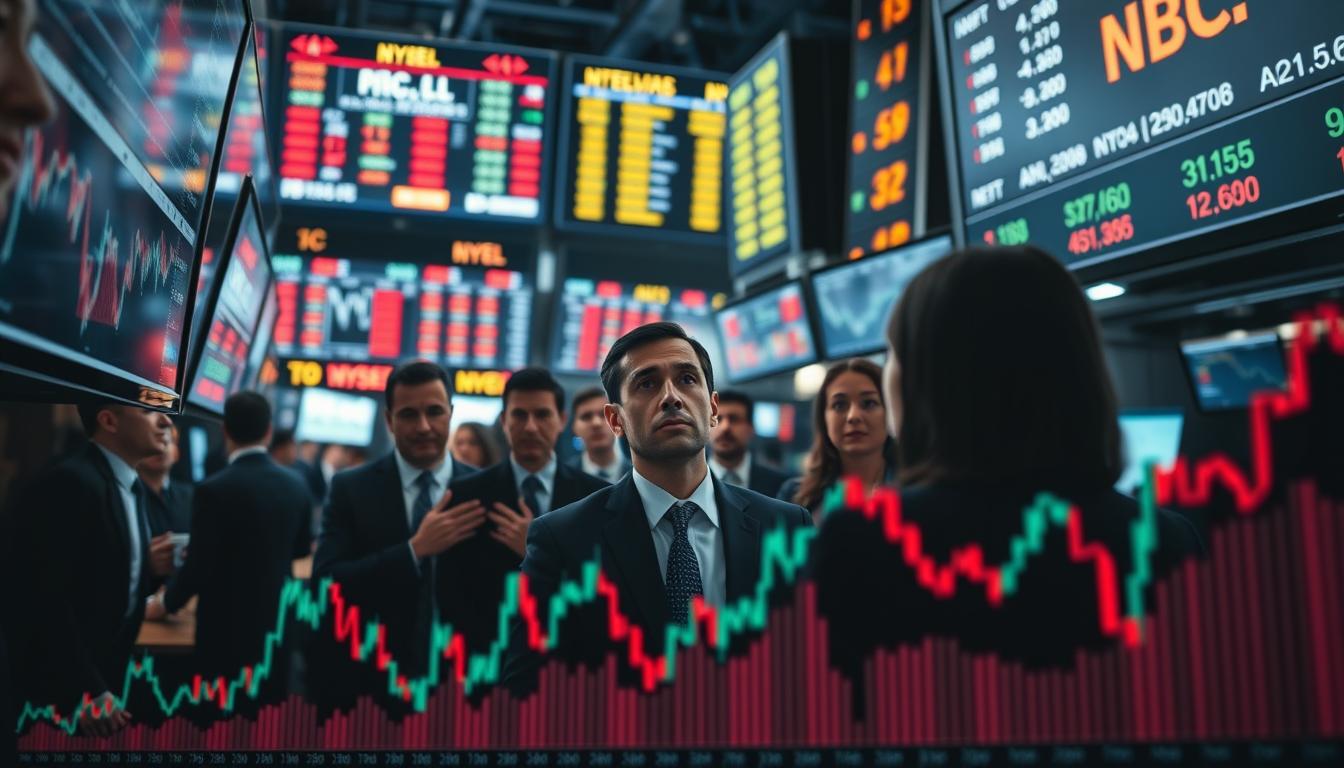
Reacting to headlines or rallies can push your portfolio away from the plan that matters most. Quick moves driven by fear or FOMO tend to cluster at the wrong moments in the market cycle.
The classic fear/greed cycle looks simple: greed draws you into hot trades near market tops, while fear sends you out after big drops.
Those actions often lock in real losses and reduce your chance to benefit when markets recover. Buying late in a rally and selling after a fall hurts long-run results.
In calm periods you may underestimate risk, assuming recent gains will continue. When volatility spikes, you then overestimate risk and make hasty decisions.
- Investors often shift from stocks to lower-risk assets or fixed-rate income after prices fall.
- Interest-rate jitters can amplify anxiety and prompt defensive reallocations at the worst time.
- Pre-committed rules and a clear plan help keep your investment decisions steady.
How market headlines and noise trigger emotional investing
News coverage is built to capture attention, not to preserve your plan. When big index moves hit the tape, headlines often use charged verbs like tumbles, soars, or claims such as "S&P 500 loses $5 trillion" to spark immediate reactions.
Why dramatic S&P 500 and Dow headlines are designed to provoke reactions
Editors know that urgency drives clicks. Sensational framing makes volatility feel larger than it is. That language primes you to make fast money decisions instead of checking the data.
How constant market coverage can pull you away from your long-term plan
Always-on reporting creates an urgency bias: you feel forced to act now, even though your horizon may be measured in years.
Short-term performance is often noise compared with the long-term compounding your planning depends on. Treat most headlines as entertainment-level signals unless they change your assumptions, goals, or tolerance.
- Focus on data: check whether the facts alter your strategy before you change allocations.
- Use an advisor: a financial advisor can help filter drama into actionable steps.
- Set rules: pre-defined responses reduce the chance that headlines drive your decisions.
The behavioral finance biases behind your worst investing mistakes
Small, repeatable biases often do more damage to your portfolio than a single big market shock. These patterns shape the choices you make and explain many mistakes that push your plan off course.
Loss aversion: losses feel worse than gains feel good
Loss aversion means you react more strongly to a loss than to a similar gain. You may sell to stop the pain, locking in a real loss while missing a later recovery.
FOMO and performance chasing
When markets run hot, you can abandon your strategy to chase recent performance. Buying high raises your risk and makes the next drop harder to handle.
Overconfidence and the myth of timing the market
Believing you can time markets leads to excessive trading, higher fees, and worse net performance. Short-term moves often miss the best days that drive long-term gains.
"Reacting to short-term noise usually costs you more than it saves."
Perfectionism and staying in cash too long
Waiting for a perfect entry can leave you on the sidelines for key days. That delay erodes buying power and slows compound growth.
Practical fixes:
- Pre-commit to rules that limit reactive decisions.
- Automate contributions to reduce timing pressure.
- Use an objective checklist before changing allocations.
| Bias | Typical action | Cost to your investment |
| Loss aversion | Sell after a drop | Locks in losses and misses recoveries |
| FOMO | Buy high into trends | Raises downside risk |
| Overconfidence | Frequent trading | Higher fees, taxes, and missed best days |
| Perfectionism | Stay in cash too long | Lost compounding and purchasing power |
These patterns affect many investors because they make decisions to feel better now instead of to meet long-term goals. For more on the psychology behind these choices, see the psychology of investing.
Identify your investor personality so you can plan around it
Your investor personality shapes most of your worst mistakes; identify it to prevent repeat errors. Start by matching behavior to one of the five profiles below, then add simple guardrails to keep your plan on track.
The anxious conservative
The anxious conservative panics during market volatility and may sell at troughs. That reaction can make your portfolio miss recoveries and slow progress toward your financial goals.
Fix: automate contributions and schedule quarterly reviews.
The overconfident risk-taker
Overconfident investors pile into a few stocks or assets and amplify losses when markets turn. Limit concentration with a position-size rule—no single holding above ~5% of your portfolio.
The pack follower
Pack followers buy after trends peak because they assume the “smart money” already knows something. Use a 30-day waiting period and a simple
checklist before making new investment decisions.
The perfectionist
Perfectionists wait for ideal entries and stay too conservative in practice. Set a strategy with target buys and use dollar-cost averaging to act
before you miss key market days.
The distracted delegator
Delegators ignore portfolios for years, then react during spikes in market volatility. Prevent this by rebalancing on a schedule and working with an advisor or robo-advisor for ongoing guidance.
Personality shifts across markets
Your tendencies often flip in bull versus bear markets. Build a plan with guardrails—position sizing, waiting periods, journaling and automation—that work in both environments.
For more behavioral guidance and practical rules, see how to avoid reactive decisions.
How emotional decisions show up in your returns over time
Small, repeated reactions to market noise can erase years of progress. When you sell during a drawdown, you often miss the rebound days that drive most long-term gains. That pattern compounds: a single panic sell becomes a habit that shrinks compound growth over years.
Why missing the market’s best days can slash long-term performance
Data from J.P. Morgan shows the point clearly: missing the market’s 10 best days from 2003–2022 cut returns by more than half. Those isolated days matter because gains cluster; a few strong days drive a large share of multi-year results.
What long-run S&P 500 comparisons reveal about discipline vs reaction
Comparing steady participation with stop-start behavior shows a simple truth: disciplined investors capture compounding. Reactive moves reduce your exposure to recoveries and raise the odds you miss key days.
How DALBAR-style behavior gaps can translate into real dollars lost
DALBAR’s 2025-style analysis highlights the real cost of poor timing. For example, behavior gaps can turn a $100K start into roughly $130K less over time compared with a disciplined plan. That’s not theory — it’s real money left on the table.
Why time in the market usually beats timing the market for many investors
Your objective should be process, not prediction. For many investors a repeatable strategy and a written plan outperform attempts to time highs and lows. Design rules so your decisions respond to data, not headlines.
For practical behavioral guidance, see psychology in investing.
Your step-by-step plan to reduce emotion in your investment strategy
Create rules now so you won't improvise during the next sharp market swing. A compact, written plan makes good decisions easier under stress.
Create a written Investment Policy Statement
Define your goals, time horizon, required returns, and risk tolerance. Add target allocation and explicit rules for when you will and won't trade.
Set a market volatility response plan
Pre-commit actions at thresholds. Example: at -10% review and rebalance; at -20% reassess cash needs and allocations.
Automate and use dollar-cost averaging
Automate contributions to 401(k), IRA, or brokerage accounts so investing continues through calm and volatile periods.
Diversify and rebalance on a schedule
Spread across asset classes, sectors, styles, and geographies to reduce single-market stress. Rebalance quarterly or at preset drift thresholds.
Limit headline exposure and add guardrails
Use position-size caps (for example, ~5%), 30-day waiting periods for hot ideas, and an investment journal to record your rationale.
When to use an advisor
A financial advisor or robo-advisor can provide behavioral guidance, plan enforcement, and accountability when you need help following the strategy.
Checklist: IPS → volatility rules → automation → DCA → diversification → rebalance → guardrails → advisor.
Conclusion
Your behavior, not the market’s noise, usually decides how much money you keep over years.
Emotional investing often pushes you to sell after drops and buy after rallies, which reduces overall returns and increases the chance of real losses.
Stick to a written plan, automate contributions, diversify, and rebalance on a schedule. Those steps cut the number of emotional choices you must make during volatility and keep your portfolio aligned with your financial goals. Next steps: identify your investor type, limit headline exposure, set clear guardrails, and schedule a process-focused review. Make discipline your edge instead of trying to control markets. Risk reminder: all investing involves risk, including loss of principal; ETFs may trade above or below NAV and fees or commissions reduce returns. Index trademarks and licensing apply. This information is for U.S. investors and is informational, not personalized advice.

0 Comments Comments