

Financial Literacy
12 Biggest Financial Mistakes in Your 40s & 50s

56% of UK adults have no will. Only 1 in 11 has income protection. The average person in their 40s has far less in their pension than they need. These are the decades where the biggest wealth-building mistakes get locked in — not because people are careless, but because life is busiest, and the future feels furthest away. Here are the 12 most costly financial errors, the numbers behind them, and what to do instead.

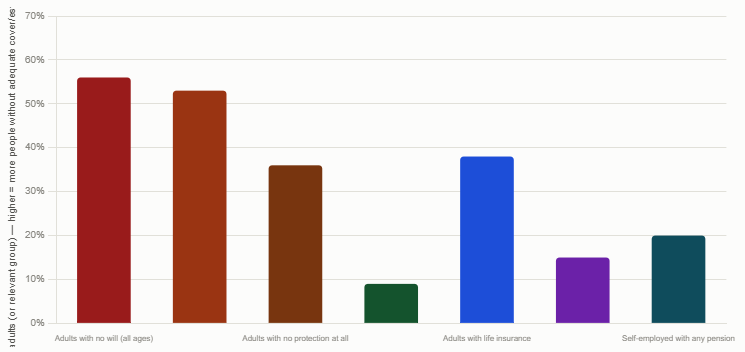
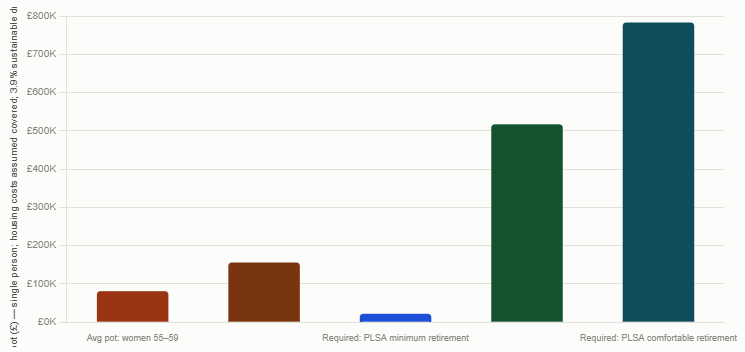
The consequences are not abstract. Research by the Money and Pensions Service (MaPS) found that 56 percent of UK adults have no will, including 53 percent of adults aged 50 to 64. The Drewberry Individual Protection Survey (2025) found that only 1 in 11 Brits has income protection, and more than one in three has no personal protection at all. The average median pension pot for a 55 to 59-year-old is £81,000 for women and £156,000 for men — both materially below what is needed for a moderate retirement lifestyle.
None of these outcomes are the result of financial stupidity. They are the result of financial busyness: the rational postponement of decisions that feel non-urgent in the decade when they are actually urgent. This guide names the 12 most costly of those postponements, explains what each one costs, and provides the practical step to correct each before it becomes permanent.
The Numbers: 56% of UK adults have no will; 53% aged 50–64 have no will (MaPS, January 2025). Only 1 in 11 Brits has income protection; 36% have no personal protection at all (Drewberry, 2025). Average pension pot age 55–59: men £156,000, women £81,000 (The Investors Centre, citing ONS, July 2026). Required pension pot for moderate retirement: ~£517,000 (PLSA standard at 3.9% drawdown).
Kalkine.co.uk (August 2026) identifies this as the foundational retirement planning mistake: ‘The biggest mistake investors can make when planning retirement is concentrating entirely on the size of their pension pot. A £300,000 pension, £500,000 pension or £1 million pension may sound impressive, but the headline balance does not tell investors how long the money will last or how much income it can sustainably generate.’ The correct question is not ‘How much do I have?’ but ‘What annual income will this generate, and is that enough?’
The fix: Log into every pension you hold and find the current projected income at your target retirement age. Your provider will show this in the annual pension statement or via its online platform. Compare the projected income to the PLSA standards (minimum £13,400/year, moderate £32,700/year) for a single person to determine your gap. Then consult a pension calculator or an IFA to identify what additional monthly contribution would close it.
Lost pension pots do not disappear. But they do:
The PLSA’s modelling consistently indicates that contributions of 12 to 15 percent of salary are needed to build a pension pot sufficient for a moderate retirement lifestyle, assuming a full working career and a combination of State Pension and private savings. An employee on £45,000 per year saving 8 percent of qualifying earnings (calculated on the band £6,240 to £50,270, so on £38,760) contributes approximately £3,101 per year combined. Over 25 years at 5 percent growth, this generates approximately £150,000 — well below the £517,000 required for a moderate retirement (after State Pension contribution).
The 40s and 50s are the last period in which additional pension contributions have enough compound time to make a meaningful difference. Boldin.com’s 2026 retirement planning research notes that ‘not saving enough in your 40s loses compound growth that catch-up contributions in your 50s can’t replace at the same rate.’ Time is the irreplaceable variable in pension growth, and the 40s are the last decade where meaningful time still exists.
The fix: Calculate the contribution rate needed to reach your retirement income target. The rule of thumb: take half your age when you start contributing and use that as the percentage of pre-tax income to put into a pension each year. A 44-year-old starting from scratch should aim for 22%. Use your workplace pension’s modelling tool or MoneyHelper’s pension calculator to set a target monthly contribution, then increase it by 1% each year at pay review time until the target is met.
Dying without a will (intestate) means the estate is distributed according to intestacy rules that may not reflect the individual’s wishes. In England and Wales, if a married person dies intestate, the spouse inherits the first £322,000 of the estate and half the remainder; children inherit the other half. Unmarried partners receive nothing under intestacy rules — regardless of the length of the relationship or shared financial life. Blended families face particular complications.
An out-of-date will is almost as problematic. A will written before a second marriage may inadvertently benefit an ex-spouse or exclude current dependants. A will that does not account for a significant inheritance, a property acquisition, or a change in the beneficiary’s circumstances may distribute assets in ways that were not intended and generate unnecessary tax.
The fix: Write or update your will. A professionally drafted will costs approximately £150–£300. A Lasting Power of Attorney (LPA) — which allows a trusted person to manage your finances and/or health decisions if you lose capacity — is a separate and equally important document: without it, the court must appoint a deputy, a process that is expensive, slow, and emotionally difficult for families. In 2026, you can make an LPA online at GOV.UK for £82 per document.
For adults in their 40s and 50s, underinsurance carries specific and serious risks:
The mechanism is insidious because no individual expense appears excessive. Upgrading from a three-bedroom to a four-bedroom house is reasonable when children arrive or grow. Moving from economy to business class for long-haul travel is a modest luxury at £80,000 per year. Private school fees for one or two children are a considered parental investment. But the cumulative effect of these individually justifiable decisions can be to consume the pension saving capacity of the peak earning years entirely.
The Employee Benefit Research Institute (US equivalent data) finds that approximately half of workers retire earlier than planned due to health, redundancy, or caring responsibilities. In the UK, the Institute for Fiscal Studies and other retirement researchers document similar patterns. An individual who has been living at the top of their income range for a decade arrives at early involuntary retirement with a consumption expectation that their pension savings cannot sustain.
The fix: Before committing to any major increase in ongoing expenditure in your 40s or 50s — school fees, a larger house, a more expensive car — model the pension impact first. Every £500/month increase in spending instead of pension saving costs approximately £135,000 in pension wealth at retirement over 15 years at 5% growth. That is the real cost of the upgrade. Make the trade-off explicit before making it.
The comparison:
The fix: Before directing additional cash to mortgage overpayment, check: (1) Does your employer match additional pension contributions? If yes, always take the match first. (2) Are you a higher-rate taxpayer? If yes, 40% pension relief typically outperforms mortgage interest savings. (3) What is your mortgage interest rate? At current rates (4–5%), the pension’s tax relief advantage usually still outperforms. Use a pension vs mortgage overpayment calculator to model your specific numbers.
The income projection depends on the drawdown rate, the investment return assumption, the impact of inflation, and whether any of the income needs to be guaranteed (for example, through an annuity to cover essential costs). The Morningstar UK 2025 safe withdrawal rate of 3.9 percent assumes 90 percent confidence over 30 years — meaning that even at £500,000, the pension generates approximately £19,500 per year before the State Pension is added. For a couple both receiving the full State Pension, total retirement income from a £500,000 pot would be approximately £44,594 — above the moderate standard for a couple. For a single person with a £200,000 pot, total income is approximately £20,347 — well below moderate.
The fix: Stop thinking in pot size and start thinking in projected annual income. Log into your pension dashboard at MoneyHelper or your provider's app and find the retirement income projection. If it does not show one, request it from your provider or use the MoneyHelper pension calculator. Then compare the projected income to the PLSA retirement standards for your household type and adjust contributions accordingly.
The specific financial impacts of divorce in the 40s and 50s:
The realistic numbers:
The fix: Include a care cost estimate in your retirement modelling. A conservative assumption: £40,000 per year for three years = £120,000. Add this to the retirement pot target. Review Origen’s April 2026 guide and consider consulting a specialist care fee adviser if either parent is already receiving or approaching a need for care — the family experience provides both a planning prompt and practical knowledge of costs in your area.
The 40s and 50s are particularly dangerous for self-employed workers who have deferred pension saving during the years of building a business. The rationale is understandable: in the early years of self-employment, every available pound goes into the business. But by the mid-40s, a self-employed individual who has not started pension saving has lost 20 years of compound growth that employed peers have accumulated through auto-enrolment alone. The recovery from this position is possible but requires significant annual contributions in the remaining working years.
The fix: If self-employed, open a SIPP immediately if you do not already have one. The annual allowance (£60,000 gross in 2026/27) provides substantial capacity for larger contributions in profitable years, and contributions receive 20% basic-rate tax relief automatically plus higher-rate relief via Self Assessment. The carry-forward rules (unused allowance from the three previous tax years, up to £60,000 per year) allow a profitable 50-year-old to make a significant one-off contribution in a good year to partially close the pension gap.
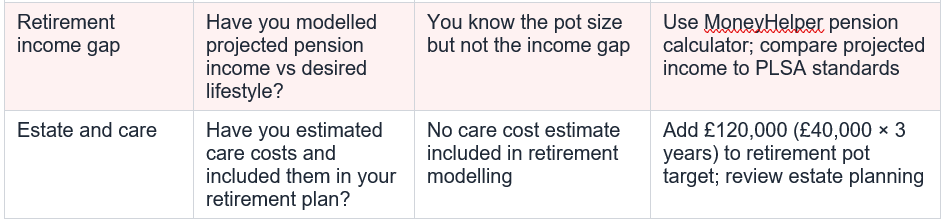
A simple annual financial review checklist for adults in their 40s and 50s:
The fix: Put the annual financial review in the diary now — the same week each year, before the tax year end (5 April) is a natural prompt. Use the checklist above and update each item. For anything that requires specialist input, book one appointment with a qualified IFA annually. The cost of the review (in time and potential adviser fees) is a fraction of the cost of any of the 12 mistakes described in this guide.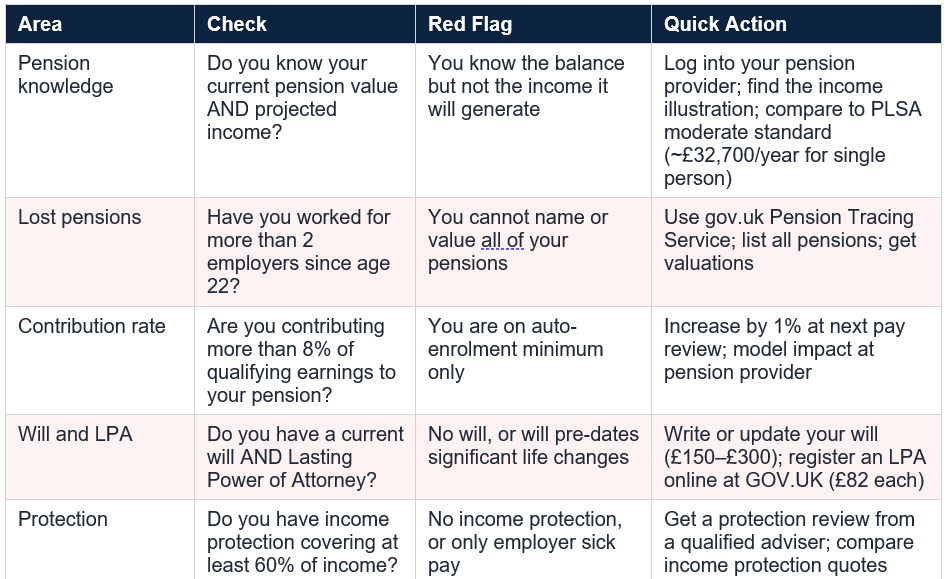
The financial decisions made — or not made — in the 40s and 50s have compounding consequences that play out over the following 30 to 40 years. Every year of inadequate pension contribution compounds. Every year without income protection is a year in which a health event could remove the capacity for recovery. Every year without a will is a year in which a death would leave the estate to the intestacy rules rather than the deceased’s wishes.
None of these mistakes are irreversible in the 40s — the 40s and early 50s are specifically the window in which they can still be corrected with meaningful effect. The pension gap can be closed. The will can be written. The protection can be put in place. The lost pension pots can be found and consolidated. The annual financial review can be scheduled.
The best time to make these corrections was the 30s. The second best time is now.
The most common and costly financial mistakes in the 40s are: not knowing the projected income from their pension (only knowing the pot size); leaving old pension pots dormant from previous employers; treating the 8% auto-enrolment minimum as an adequate contribution rate; having no will or a will that has not been updated since major life changes; being underinsured for income, life, and critical illness; and allowing lifestyle inflation to consume the pension saving capacity of peak earning years. A Taylor Tailored (July 2026) guide identifies ignoring pension consolidation, failing to review protection, and not planning for life events like divorce or care costs as the defining financial mistakes of the decade.
What are the most common financial mistakes in your 50s?
The 50s introduce additional specific risks: not modelling whether pension savings are sufficient to generate the target retirement income (pot size vs income generation); failing to consolidate multiple pension pots; not understanding the impact of the pension access age (rising to 57 from April 2028) on early retirement plans; failing to plan for care costs in later life; not having a Lasting Power of Attorney in place; and remaining underinsured for income and life cover despite the statistical increase in health events in the 50s. Boldin.com's 2026 research notes that not saving enough in your 40s creates a compounding gap that catch-up contributions in the 50s cannot fully replace.
How common is it to have no will in your 50s in the UK?
Very common. Research from the Money and Pensions Service (MaPS), published January 2025, found that 56% of all UK adults have no will — including 53% of adults aged 50 to 64. This is the majority of people in the decade when wills are most financially significant. Without a will, the estate is distributed according to intestacy rules that may not reflect the individual's wishes, and which provide nothing to unmarried partners regardless of the length of the relationship.
Is income protection insurance worth getting in your 40s and 50s?
For most people, yes. The Drewberry Individual Protection Survey (2025) found that only 1 in 11 Brits (approximately 9%) has income protection, and that 37% know they are underinsured. For people in their 40s and 50s — when earnings are highest and financial commitments (mortgage, dependants, school fees) are most extensive — the inability to work for six months or more due to illness or injury carries the greatest financial risk. Statutory sick pay (£118.75 per week in 2026/27) provides minimal income for 28 weeks; after that, there is no income unless employer sick pay or personal insurance provides it. Income protection premiums for a healthy 40-year-old covering 60% of income are typically £30–£60 per month — significantly lower than most people expect. The cost comparison: months of premiums vs months of lost income make the arithmetic compelling for most people in this age group.
Should I overpay my mortgage or increase pension contributions in my 40s and 50s?
The answer depends on your tax position, employer matching, and mortgage interest rate. For higher-rate taxpayers with employer matching available: the pension almost always wins. A £1,000 net contribution by a 40% taxpayer with a 5% employer match generates approximately £1,917 in the pension before any investment growth — no mortgage overpayment produces this return. For basic-rate taxpayers with no employer match and a mortgage rate above 4%: the comparison is closer and sometimes favours mortgage overpayment. The key rules: always take the full employer match first; factor in 40% pension tax relief for higher-rate taxpayers; and model both options with a pension vs mortgage calculator for your specific numbers. Consult a qualified IFA if the amounts are significant.
How much should I have in my pension in my 40s and 50s?
A rough rule of thumb: your pension pot at any age should be approximately 10 times your target annual retirement income minus the State Pension income (i.e. the income gap your private pension must fund). At a 3.9% sustainable withdrawal rate (Morningstar UK 2025), a pot of £100,000 generates approximately £3,900 per year. To generate £20,000 per year from a pension in drawdown requires approximately £513,000 in the pot. The average median pension pot for those aged 55–59 is £156,000 for men and £81,000 for women (The Investors Centre, July 2026) — significantly below the required figure for a moderate retirement lifestyle. If your pot is below these benchmarks in your late 40s or early 50s, increasing contributions immediately and taking specialist pension advice is the appropriate response.
Table of Contents
- Why the 40s and 50s Are When Mistakes Get Locked In
- Mistake #1: Not Knowing What Your Pension Is Actually Worth
- Mistake #2: Leaving Lost Pension Pots Scattered Across Old Jobs
- Mistake #3: Treating the Pension Minimum as the Plan
- Mistake #4: Having No Will — Or an Out-of-Date One
- Mistake #5: Being Underinsured for Income, Life, and Illness
- Mistake #6: Lifestyle Inflation That Silently Eats the Pension Gap
- Mistake #7: Prioritising Mortgage Overpayment Over Pension
- Mistake #8: Ignoring the Retirement Income Gap vs. Pot Size
- Mistake #9: Not Planning for the Divorce Risk
- Mistake #10: Failing to Model the Care Cost Reality
- Mistake #11: The Self-Employed Pension Gap
- Mistake #12: Not Getting an Annual Financial Review
- The Quick Self-Audit: Where Do You Stand?
- Conclusion: These Are the Decades That Decide the Retirement
- Frequently Asked Questions
Protection & Estate Planning Gap
Pension Pot vs What You Actually Need
Why the 40s and 50s Are When Mistakes Get Locked In
The 40s and 50s are the decades of peak earnings, peak complexity, and — for most people — peak financial inertia. Mortgages are being paid. Careers are demanding. Children may be at home, or just leaving. Ageing parents may need attention. Against this backdrop, the financial decisions that determine the quality of retirement are being made by default rather than by design: pension contributions left at minimum, protection never reviewed, wills not written, pension pots from old jobs forgotten in dormant accounts.The consequences are not abstract. Research by the Money and Pensions Service (MaPS) found that 56 percent of UK adults have no will, including 53 percent of adults aged 50 to 64. The Drewberry Individual Protection Survey (2025) found that only 1 in 11 Brits has income protection, and more than one in three has no personal protection at all. The average median pension pot for a 55 to 59-year-old is £81,000 for women and £156,000 for men — both materially below what is needed for a moderate retirement lifestyle.
None of these outcomes are the result of financial stupidity. They are the result of financial busyness: the rational postponement of decisions that feel non-urgent in the decade when they are actually urgent. This guide names the 12 most costly of those postponements, explains what each one costs, and provides the practical step to correct each before it becomes permanent.
The Numbers: 56% of UK adults have no will; 53% aged 50–64 have no will (MaPS, January 2025). Only 1 in 11 Brits has income protection; 36% have no personal protection at all (Drewberry, 2025). Average pension pot age 55–59: men £156,000, women £81,000 (The Investors Centre, citing ONS, July 2026). Required pension pot for moderate retirement: ~£517,000 (PLSA standard at 3.9% drawdown).
Mistake #1: Not Knowing What Your Pension Is Actually Worth
One of the most remarkable findings from the interactive investor Great British Retirement Survey (2025) was the scale of pension unawareness: a significant proportion of pension savers in their 40s and 50s do not know the current value of their pension, what it is invested in, or what income it is projected to provide in retirement. They are saving — but saving into a black box, with no modelled connection between today’s contributions and tomorrow’s income.Kalkine.co.uk (August 2026) identifies this as the foundational retirement planning mistake: ‘The biggest mistake investors can make when planning retirement is concentrating entirely on the size of their pension pot. A £300,000 pension, £500,000 pension or £1 million pension may sound impressive, but the headline balance does not tell investors how long the money will last or how much income it can sustainably generate.’ The correct question is not ‘How much do I have?’ but ‘What annual income will this generate, and is that enough?’
The fix: Log into every pension you hold and find the current projected income at your target retirement age. Your provider will show this in the annual pension statement or via its online platform. Compare the projected income to the PLSA standards (minimum £13,400/year, moderate £32,700/year) for a single person to determine your gap. Then consult a pension calculator or an IFA to identify what additional monthly contribution would close it.
Mistake #2: Leaving Lost Pension Pots Scattered Across Old Jobs
The average UK worker changes employer multiple times during a career. Each change that involved a workplace pension created a new pension pot. The Pension Tracing Service estimated that approximately 3.3 million pension pots are lost or unclaimed in the UK, with a combined value of around £26.6 billion (Pension Tracing Service / DWP 2022 estimate, still widely cited). The interactive investor Great British Retirement Survey (2025) found that the biggest barrier to consolidating pension pots was that savers simply did not know how to do it.Lost pension pots do not disappear. But they do:
- Generate ongoing charges that reduce the value of the pot over time, particularly if the investment options are legacy funds with high expense ratios.
- Remain in investment strategies set at the start of the employer relationship — often a default fund appropriate for a 25-year-old, not a 48-year-old approaching retirement.
- Miss the benefit of the contributions and employer matching that current employment generates, because the individual has no visibility of how the old pots fit into the overall retirement picture.
Mistake #3: Treating the Pension Minimum as the Plan
Auto-enrolment has been transformative for UK pension saving, bringing 11.4 million workers into pension saving who would not otherwise have participated. But the 8 percent minimum contribution rate (3% employer, 5% employee) was designed as a legal floor, not a retirement planning target. The mathematics of 8 percent contributions alone are insufficient for most workers to retire on anything approaching a moderate income.The PLSA’s modelling consistently indicates that contributions of 12 to 15 percent of salary are needed to build a pension pot sufficient for a moderate retirement lifestyle, assuming a full working career and a combination of State Pension and private savings. An employee on £45,000 per year saving 8 percent of qualifying earnings (calculated on the band £6,240 to £50,270, so on £38,760) contributes approximately £3,101 per year combined. Over 25 years at 5 percent growth, this generates approximately £150,000 — well below the £517,000 required for a moderate retirement (after State Pension contribution).
The 40s and 50s are the last period in which additional pension contributions have enough compound time to make a meaningful difference. Boldin.com’s 2026 retirement planning research notes that ‘not saving enough in your 40s loses compound growth that catch-up contributions in your 50s can’t replace at the same rate.’ Time is the irreplaceable variable in pension growth, and the 40s are the last decade where meaningful time still exists.
The fix: Calculate the contribution rate needed to reach your retirement income target. The rule of thumb: take half your age when you start contributing and use that as the percentage of pre-tax income to put into a pension each year. A 44-year-old starting from scratch should aim for 22%. Use your workplace pension’s modelling tool or MoneyHelper’s pension calculator to set a target monthly contribution, then increase it by 1% each year at pay review time until the target is met.
Mistake #4: Having No Will — Or an Out-of-Date One
The Money and Pensions Service (MaPS) research published in January 2025 found that 56 percent of UK adults have no will — including 53 percent of adults aged 50 to 64. This is not a fringe observation about the financially disorganised. It describes the majority of adults at the age when wills matter most: the age of mortgages, dependent children, blended families, business interests, and accumulated assets.Dying without a will (intestate) means the estate is distributed according to intestacy rules that may not reflect the individual’s wishes. In England and Wales, if a married person dies intestate, the spouse inherits the first £322,000 of the estate and half the remainder; children inherit the other half. Unmarried partners receive nothing under intestacy rules — regardless of the length of the relationship or shared financial life. Blended families face particular complications.
An out-of-date will is almost as problematic. A will written before a second marriage may inadvertently benefit an ex-spouse or exclude current dependants. A will that does not account for a significant inheritance, a property acquisition, or a change in the beneficiary’s circumstances may distribute assets in ways that were not intended and generate unnecessary tax.
The fix: Write or update your will. A professionally drafted will costs approximately £150–£300. A Lasting Power of Attorney (LPA) — which allows a trusted person to manage your finances and/or health decisions if you lose capacity — is a separate and equally important document: without it, the court must appoint a deputy, a process that is expensive, slow, and emotionally difficult for families. In 2026, you can make an LPA online at GOV.UK for £82 per document.
Mistake #5: Being Underinsured for Income, Life, and Illness
The Drewberry Individual Protection Survey (September 2025) produced findings that are simultaneously unsurprising and alarming: only 1 in 11 Brits (approximately 9 percent) has income protection insurance; only 38 percent hold life insurance; only 15 percent have critical illness cover; and more than one in three adults (36 percent) have no personal protection in place whatsoever. Sixty percent of adults either know they are underinsured (37 percent) or simply do not know whether they are (23 percent). Cars, homes, and pets are better insured than their owners.For adults in their 40s and 50s, underinsurance carries specific and serious risks:
- Income protection: the 40s and 50s are typically peak earning years. An inability to work for six months or more due to illness or injury can be financially catastrophic without income protection. Statutory sick pay (£118.75 per week in 2026/27) covers the first 28 weeks; employer sick pay varies and is often not guaranteed for more than three to six months.
- Life insurance: the 40s and 50s are when mortgages are largest, children are still dependent, and the financial impact of a partner’s death is highest. Term life insurance is cheapest when bought early; buying it in the 50s after a health event has occurred is significantly more expensive — or unavailable.
- Critical illness cover: cancer, heart attack, and stroke are all conditions whose statistical incidence rises materially in the 40s and 50s. Critical illness cover provides a tax-free lump sum on diagnosis, which can fund treatment, adapt the home, cover a partner’s income loss, or retire debt.
Mistake #6: Lifestyle Inflation That Silently Eats the Pension Gap
Lifestyle inflation is the gradual and largely invisible process by which spending rises to meet — or exceed — rising income. Taylor Tailored’s July 2026 guide to financial mistakes by decade identifies this as a specific and significant risk for people in their 40s and 50s: as income reaches its peak, the impulse to upgrade home, car, holidays, and lifestyle competes directly with the pension contributions needed to fund an equivalent lifestyle in retirement.The mechanism is insidious because no individual expense appears excessive. Upgrading from a three-bedroom to a four-bedroom house is reasonable when children arrive or grow. Moving from economy to business class for long-haul travel is a modest luxury at £80,000 per year. Private school fees for one or two children are a considered parental investment. But the cumulative effect of these individually justifiable decisions can be to consume the pension saving capacity of the peak earning years entirely.
The Employee Benefit Research Institute (US equivalent data) finds that approximately half of workers retire earlier than planned due to health, redundancy, or caring responsibilities. In the UK, the Institute for Fiscal Studies and other retirement researchers document similar patterns. An individual who has been living at the top of their income range for a decade arrives at early involuntary retirement with a consumption expectation that their pension savings cannot sustain.
The fix: Before committing to any major increase in ongoing expenditure in your 40s or 50s — school fees, a larger house, a more expensive car — model the pension impact first. Every £500/month increase in spending instead of pension saving costs approximately £135,000 in pension wealth at retirement over 15 years at 5% growth. That is the real cost of the upgrade. Make the trade-off explicit before making it.
Mistake #7: Prioritising Mortgage Overpayment Over Pension
One of the most common financial debates for people in their 40s is whether to overpay the mortgage or increase pension contributions. The emotional appeal of mortgage freedom is powerful: outright home ownership provides security, eliminates the monthly payment, and eliminates interest. Mathematically, however, the choice is not always obvious — and for higher-rate taxpayers with employer pension matching available, the pension almost always wins.The comparison:
- Mortgage overpayment: saves mortgage interest at the rate charged (typically 4–5% in 2026). Tax-free benefit, risk-free.
- Pension contribution (basic rate taxpayer, no employer match): a £1,000 net contribution becomes £1,250 gross. Invested at 5% annual growth, it grows over time inside a tax-free wrapper.
- Pension contribution (higher-rate taxpayer, with 5% employer match): a £1,000 net contribution generates £1,667 gross (after 40% relief) plus a £250 employer match = £1,917 invested. The net contribution of £1,000 has generated £1,917 in the pension before any investment growth. No mortgage overpayment can match this.
The fix: Before directing additional cash to mortgage overpayment, check: (1) Does your employer match additional pension contributions? If yes, always take the match first. (2) Are you a higher-rate taxpayer? If yes, 40% pension relief typically outperforms mortgage interest savings. (3) What is your mortgage interest rate? At current rates (4–5%), the pension’s tax relief advantage usually still outperforms. Use a pension vs mortgage overpayment calculator to model your specific numbers.
Mistake #8: Ignoring the Retirement Income Gap vs. Pot Size
The focus on pension pot size — ‘I have £400,000 in my pension’ — is the wrong frame for retirement planning in the 40s and 50s. What matters is the sustainable income that the pot will generate, across a 20 to 30-year retirement, in the specific circumstances of the individual. Kalkine.co.uk’s August 2026 retirement planning guide makes this point directly and specifically for UK investors in 2026: the headline balance can be misleading without the income projection.The income projection depends on the drawdown rate, the investment return assumption, the impact of inflation, and whether any of the income needs to be guaranteed (for example, through an annuity to cover essential costs). The Morningstar UK 2025 safe withdrawal rate of 3.9 percent assumes 90 percent confidence over 30 years — meaning that even at £500,000, the pension generates approximately £19,500 per year before the State Pension is added. For a couple both receiving the full State Pension, total retirement income from a £500,000 pot would be approximately £44,594 — above the moderate standard for a couple. For a single person with a £200,000 pot, total income is approximately £20,347 — well below moderate.
The fix: Stop thinking in pot size and start thinking in projected annual income. Log into your pension dashboard at MoneyHelper or your provider's app and find the retirement income projection. If it does not show one, request it from your provider or use the MoneyHelper pension calculator. Then compare the projected income to the PLSA retirement standards for your household type and adjust contributions accordingly.
Mistake #9: Not Planning for the Divorce Risk
Divorce in the 40s and 50s — sometimes called ‘grey divorce’ — has a particularly severe financial impact, because it divides accumulated wealth at precisely the point when wealth accumulation should be at its most productive. Taylor Tailored’s July 2026 guide to financial mistakes by decade identifies the financial impact of divorce as one of the most significant and least-discussed planning failures for this age group.The specific financial impacts of divorce in the 40s and 50s:
- Pension sharing orders: courts can split pension assets between divorcing spouses. Without understanding the value of pension assets — particularly defined benefit pensions, which are difficult to value and require an actuary — one party may receive significantly less than their fair share.
- Property equity division: for couples who have spent their 30s and 40s building equity in a shared home, divorce requires a division that may necessitate the sale of the property or a significant mortgage on a smaller property at an age when mortgage terms are shortening.
- Loss of survivor benefits: a divorced person loses entitlement to survivor pension benefits from a former spouse's defined benefit pension, and may lose entitlement to benefits that had been part of the household’s assumed retirement plan.
Mistake #10: Failing to Model the Care Cost Reality
One of the most commonly overlooked financial risks in the 40s and 50s is the cost of care in later life. Origen Financial Services’ April 2026 guide to money mistakes in the 40s, 50s, and 60s identifies care cost planning as a near-universal omission. The UK’s social care system requires individuals to self-fund care costs until assets (excluding the main home in some circumstances) fall below £23,250 (England, 2026/27), at which point means-tested support begins.The realistic numbers:
- Average residential care home cost in England: approximately £34,000 to £47,000 per year in 2025–26, depending on region and type of care.
- Average nursing home cost: approximately £57,000 to £76,000 per year in higher-need cases.
- Average duration of care home stay: approximately two to three years, though the range is very wide and a significant minority require care for five years or more.
- ONS data: one in three women and one in five men spend time in a care home at some point in their later life.
The fix: Include a care cost estimate in your retirement modelling. A conservative assumption: £40,000 per year for three years = £120,000. Add this to the retirement pot target. Review Origen’s April 2026 guide and consider consulting a specialist care fee adviser if either parent is already receiving or approaching a need for care — the family experience provides both a planning prompt and practical knowledge of costs in your area.
Mistake #11: The Self-Employed Pension Gap
The Investors Centre’s July 2026 pension statistics data reveals that just 20 percent of self-employed workers in the UK pay into any pension — down from 50 percent in the late 1990s. Auto-enrolment, the mechanism that has driven 82 percent of employed workers into pension saving, simply does not apply to the self-employed. The 4.4 million self-employed workers who are outside the auto-enrolment framework must take active steps to build retirement provision or they will arrive at retirement with only the State Pension — which, at £12,547.60 per year, falls short of even the minimum retirement standard.The 40s and 50s are particularly dangerous for self-employed workers who have deferred pension saving during the years of building a business. The rationale is understandable: in the early years of self-employment, every available pound goes into the business. But by the mid-40s, a self-employed individual who has not started pension saving has lost 20 years of compound growth that employed peers have accumulated through auto-enrolment alone. The recovery from this position is possible but requires significant annual contributions in the remaining working years.
The fix: If self-employed, open a SIPP immediately if you do not already have one. The annual allowance (£60,000 gross in 2026/27) provides substantial capacity for larger contributions in profitable years, and contributions receive 20% basic-rate tax relief automatically plus higher-rate relief via Self Assessment. The carry-forward rules (unused allowance from the three previous tax years, up to £60,000 per year) allow a profitable 50-year-old to make a significant one-off contribution in a good year to partially close the pension gap.
Mistake #12: Not Getting an Annual Financial Review
The twelfth and most structural mistake is the one that allows all the others to persist: not having an annual financial review. This does not mean an expensive meeting with a wealth manager. It means setting aside one day per year to look honestly at the current financial position across all dimensions and to update decisions made in a previous year with the information available today.A simple annual financial review checklist for adults in their 40s and 50s:
- Pension: current value, projected income at target retirement age, current contribution rate, any old pots that need tracing or consolidating.
- Protection: current income protection, life insurance, and critical illness cover — does the coverage still reflect the current mortgage balance, dependant situation, and income level?
- Estate planning: is your will current? Does it reflect your current wishes, family structure, and asset profile? Is your LPA in place?
- Savings and ISA: have you used the ISA allowance (£20,000 in 2026/27)? Are savings in the most appropriate account type for the tax position?
- Protection gap: have you modelled the financial impact of six months of illness or income loss? What would actually happen?
- Retirement income gap: does the updated pension projection close the gap to the PLSA standard you are targeting? Is the gap narrowing or widening?
The fix: Put the annual financial review in the diary now — the same week each year, before the tax year end (5 April) is a natural prompt. Use the checklist above and update each item. For anything that requires specialist input, book one appointment with a qualified IFA annually. The cost of the review (in time and potential adviser fees) is a fraction of the cost of any of the 12 mistakes described in this guide.
The Quick Self-Audit: Where Do You Stand?
Conclusion
The 12 mistakes documented in this guide are not exotic or unusual. They are the most common financial behaviours of adults in the UK in their peak earning, peak life-complexity decades. Fifty-six percent have no will. Six in ten are underinsured. Most have pension pots that will not produce the income they expect. Most have not modelled the retirement income gap, the care cost reality, or the financial impact of a significant life event like divorce or illness.The financial decisions made — or not made — in the 40s and 50s have compounding consequences that play out over the following 30 to 40 years. Every year of inadequate pension contribution compounds. Every year without income protection is a year in which a health event could remove the capacity for recovery. Every year without a will is a year in which a death would leave the estate to the intestacy rules rather than the deceased’s wishes.
None of these mistakes are irreversible in the 40s — the 40s and early 50s are specifically the window in which they can still be corrected with meaningful effect. The pension gap can be closed. The will can be written. The protection can be put in place. The lost pension pots can be found and consolidated. The annual financial review can be scheduled.
The best time to make these corrections was the 30s. The second best time is now.
Frequently Asked Questions
What are the biggest financial mistakes people make in their 40s?The most common and costly financial mistakes in the 40s are: not knowing the projected income from their pension (only knowing the pot size); leaving old pension pots dormant from previous employers; treating the 8% auto-enrolment minimum as an adequate contribution rate; having no will or a will that has not been updated since major life changes; being underinsured for income, life, and critical illness; and allowing lifestyle inflation to consume the pension saving capacity of peak earning years. A Taylor Tailored (July 2026) guide identifies ignoring pension consolidation, failing to review protection, and not planning for life events like divorce or care costs as the defining financial mistakes of the decade.
What are the most common financial mistakes in your 50s?
The 50s introduce additional specific risks: not modelling whether pension savings are sufficient to generate the target retirement income (pot size vs income generation); failing to consolidate multiple pension pots; not understanding the impact of the pension access age (rising to 57 from April 2028) on early retirement plans; failing to plan for care costs in later life; not having a Lasting Power of Attorney in place; and remaining underinsured for income and life cover despite the statistical increase in health events in the 50s. Boldin.com's 2026 research notes that not saving enough in your 40s creates a compounding gap that catch-up contributions in the 50s cannot fully replace.
How common is it to have no will in your 50s in the UK?
Very common. Research from the Money and Pensions Service (MaPS), published January 2025, found that 56% of all UK adults have no will — including 53% of adults aged 50 to 64. This is the majority of people in the decade when wills are most financially significant. Without a will, the estate is distributed according to intestacy rules that may not reflect the individual's wishes, and which provide nothing to unmarried partners regardless of the length of the relationship.
Is income protection insurance worth getting in your 40s and 50s?
For most people, yes. The Drewberry Individual Protection Survey (2025) found that only 1 in 11 Brits (approximately 9%) has income protection, and that 37% know they are underinsured. For people in their 40s and 50s — when earnings are highest and financial commitments (mortgage, dependants, school fees) are most extensive — the inability to work for six months or more due to illness or injury carries the greatest financial risk. Statutory sick pay (£118.75 per week in 2026/27) provides minimal income for 28 weeks; after that, there is no income unless employer sick pay or personal insurance provides it. Income protection premiums for a healthy 40-year-old covering 60% of income are typically £30–£60 per month — significantly lower than most people expect. The cost comparison: months of premiums vs months of lost income make the arithmetic compelling for most people in this age group.
Should I overpay my mortgage or increase pension contributions in my 40s and 50s?
The answer depends on your tax position, employer matching, and mortgage interest rate. For higher-rate taxpayers with employer matching available: the pension almost always wins. A £1,000 net contribution by a 40% taxpayer with a 5% employer match generates approximately £1,917 in the pension before any investment growth — no mortgage overpayment produces this return. For basic-rate taxpayers with no employer match and a mortgage rate above 4%: the comparison is closer and sometimes favours mortgage overpayment. The key rules: always take the full employer match first; factor in 40% pension tax relief for higher-rate taxpayers; and model both options with a pension vs mortgage calculator for your specific numbers. Consult a qualified IFA if the amounts are significant.
How much should I have in my pension in my 40s and 50s?
A rough rule of thumb: your pension pot at any age should be approximately 10 times your target annual retirement income minus the State Pension income (i.e. the income gap your private pension must fund). At a 3.9% sustainable withdrawal rate (Morningstar UK 2025), a pot of £100,000 generates approximately £3,900 per year. To generate £20,000 per year from a pension in drawdown requires approximately £513,000 in the pot. The average median pension pot for those aged 55–59 is £156,000 for men and £81,000 for women (The Investors Centre, July 2026) — significantly below the required figure for a moderate retirement lifestyle. If your pot is below these benchmarks in your late 40s or early 50s, increasing contributions immediately and taking specialist pension advice is the appropriate response.
0 Comments
Be the first to share your thoughts on this article.