
Business
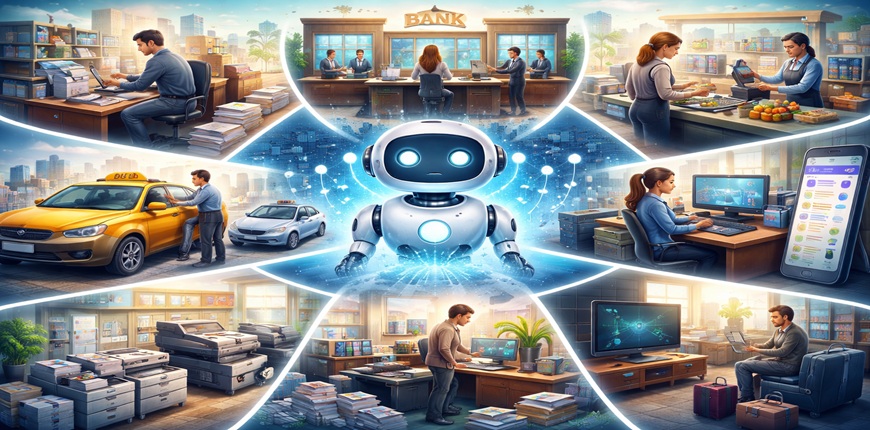
7 Businesses That Will Disappear in the Next 10 Years: Survival Guide for the AI Era

The landscape of global commerce is shifting at a velocity unprecedented in human history. As we move deeper into the 2020s and approach the mid-2030s, the "Fourth Industrial Revolution" is no longer a futuristic concept—it is a present reality. Driven by breakthroughs in Artificial Intelligence (AI), robotics, and decentralized technologies, the very foundations of traditional business models are being dismantled.
For entrepreneurs, investors, and workers, the question is no longer if disruption will happen, but when. History is littered with the corpses of once-dominant industries that failed to adapt—think of Blockbuster in the age of Netflix or Kodak in the digital camera revolution. However, the next decade promises a scale of extinction that will dwarf these previous shifts.
In this comprehensive guide, we analyze the 7 types of businesses that will disappear in the next 10 years, the technological forces driving their demise, and how you can position yourself to thrive in the new economy.
Frequently Asked Questions (FAQ)
This isn't just about robots taking factory jobs; it's about software eating the service industry, algorithms outperforming middle management, and decentralized networks rendering traditional intermediaries obsolete. The businesses listed below are not necessarily "bad" businesses; they are simply models built for a world that no longer exists.
"The future of travel is not about booking a flight; it's about the seamless integration of experience, logistics, and personalization—all handled by autonomous agents."


In the next 10 years, AI and automation will remove the friction that these businesses once solved. The result will be a world that is more efficient, more personalized, and more decentralized. But it will also be a world where many traditional business models are no longer viable.
For those who are prepared, this is an era of unprecedented opportunity. The cost of starting a business is dropping, the speed of innovation is increasing, and the potential for global impact is greater than ever. But for those who cling to the models of the past, the next decade will be a painful lesson in the power of technological disruption.
As we look toward 2035, the question is not "What businesses will disappear?" but "What will you build to replace them?" The future belongs to those who can see the change coming and have the courage to adapt.
References
For entrepreneurs, investors, and workers, the question is no longer if disruption will happen, but when. History is littered with the corpses of once-dominant industries that failed to adapt—think of Blockbuster in the age of Netflix or Kodak in the digital camera revolution. However, the next decade promises a scale of extinction that will dwarf these previous shifts.
In this comprehensive guide, we analyze the 7 types of businesses that will disappear in the next 10 years, the technological forces driving their demise, and how you can position yourself to thrive in the new economy.
Table of Contents
Introduction: The Great Acceleration- Traditional Travel Agencies: The Rise of the AI Concierge
- Cable TV and Linear Broadcasting: The End of the Schedule
- Physical Bank Branches: The Fintech and DeFi Revolution
- Traditional Print Media: The Shift to Real-Time Digital Intelligence
- Traditional Taxi Services: The Dawn of the Robotaxi
- Fast Food Cashiers and Manual Service Roles: The Automation Wave
- Data Entry and Basic Bookkeeping: The Algorithmic Takeover
- Synthesis: The Common Thread of Disruption
- Future-Proofing: How to Survive the Next Decade
Frequently Asked Questions (FAQ)
Introduction: The Great Acceleration
The next decade will be defined by what economists call "The Great Acceleration." While the 20th century was defined by the transition from steam to electricity, the 21st century is defined by the transition from human-led processes to machine-optimized systems. According to recent reports, AI and automation are predicted to replace or significantly alter over 1.3 billion jobs worldwide by 2035 [1].This isn't just about robots taking factory jobs; it's about software eating the service industry, algorithms outperforming middle management, and decentralized networks rendering traditional intermediaries obsolete. The businesses listed below are not necessarily "bad" businesses; they are simply models built for a world that no longer exists.
1. Traditional Travel Agencies: The Rise of the AI Concierge
For decades, the local travel agent was the gatekeeper of the world. They held the brochures, the booking systems, and the "insider" knowledge required to navigate complex international itineraries. However, the first wave of disruption—online booking sites like Expedia and Airbnb—was only the beginning.The Death of the Intermediary
In the next 10 years, the traditional "storefront" travel agency will become a relic of the past. The reason is simple: Hyper-Personalized AI Concierges. Today, you might spend hours scrolling through reviews and comparing flights. By 2030, your personal AI—which knows your budget, your dietary preferences, your past travel history, and even your current stress levels—will generate a complete itinerary in seconds.Why They Can't Compete
Traditional agencies rely on commissions and a "human touch" that is increasingly becoming a bottleneck rather than a benefit. AI-driven platforms can process millions of data points—real-time weather, geopolitical stability, local event schedules, and dynamic pricing—to offer a level of optimization that no human agent can match."The future of travel is not about booking a flight; it's about the seamless integration of experience, logistics, and personalization—all handled by autonomous agents."
The Transition
We are already seeing this shift with "Answer Engines" (like Perplexity and OpenAI's SearchGPT) that provide direct answers and booking links rather than a list of blue links. For a business to survive in the travel space, it must move away from "booking" and toward "experience curation" for high-net-worth individuals who still value human prestige over algorithmic efficiency.2. Cable TV and Linear Broadcasting: The End of the Schedule
If you're under the age of 30, the concept of a "TV schedule" is already an anomaly. The idea of waiting until 8:00 PM on a Tuesday to watch a specific show is as outdated as a rotary phone. But for many cable companies and traditional broadcasters, this remains their core business model. In the next 10 years, the final nail in the coffin for linear broadcasting will be driven by three factors: AI-curated content, Decentralized Streaming, and Interactive Entertainment.The Shift from Channels to Personal Streams
The traditional "channel" is a one-to-many model. It broadcasts the same content to millions of people simultaneously. In contrast, the future is one-to-one. By 2030, your "home screen" won't just be a list of apps; it will be a continuous stream of content—some produced by studios, some generated by AI, and some from independent creators—all curated specifically for your mood and preferences.Why They Can't Compete
Traditional broadcasters are burdened by massive overhead: physical studios, expensive satellite and cable infrastructure, and rigid advertising models. As digital advertising becomes more precise and performance-based, the "shotgun approach" of traditional TV ads is losing its ROI.The AI Disruption
Perhaps the most significant threat to traditional TV is Generative AI. Within the next decade, we will see the emergence of "AI-on-demand" entertainment. Imagine telling your TV, "Show me a 30-minute sci-fi thriller starring a young Harrison Ford and set in Neo-Tokyo." The AI will generate the script, the visuals, and the voice-overs in real-time. This level of personalized, infinite content will make traditional "reruns" and "scheduled programming" obsolete.3. Physical Bank Branches: The Fintech and DeFi Revolution
The neighborhood bank branch was once the center of the community. It was where you went to get a mortgage, deposit a check, or talk to a financial advisor. Today, it is an expensive piece of real estate that most people avoid. In the next 10 years, the physical bank branch will follow the path of the post office—still existing in some capacity, but no longer the primary engine of finance.The Rise of Neo-Banks and Fintech
The rise of "Neo-banks" like Revolut, Chime, and Monzo has shown that a bank doesn't need a building to be successful. These companies operate with a fraction of the overhead of traditional banks, allowing them to offer better interest rates, lower fees, and a vastly superior user experience.Why They Can't Compete
Traditional banks are hamstrung by legacy systems and high operational costs. A physical branch requires rent, utilities, security, and staff. In contrast, an AI-driven fintech platform can handle millions of transactions per second with near-zero marginal cost.The Decentralized Future (DeFi)
Beyond fintech lies Decentralized Finance (DeFi). Built on blockchain technology, DeFi allows individuals to lend, borrow, and trade assets without any intermediary at all. While still in its early stages, the next decade will see the integration of DeFi into mainstream financial systems. When you can get a loan instantly through a smart contract at a lower rate than your local bank can offer, the need for a physical branch—and the bankers who staff it—disappears.4. Traditional Print Media: The Shift to Real-Time Digital Intelligence
The newspaper was once the primary source of truth for the world. But in the age of real-time digital information, the concept of "yesterday's news" is an oxymoron. In the next 10 years, traditional print media—including most local newspapers and many specialized magazines—will cease to exist in their physical forms.The Speed of Information
Social media, real-time news aggregators, and AI-driven news feeds have made the 24-hour news cycle look slow. By the time a newspaper is printed and delivered, the story has already been analyzed, debunked, and forgotten.
Why They Can't Compete
Print media is a logistics business as much as it is a journalism business. It requires paper, ink, printing presses, and a massive distribution network. In a world where digital distribution is instantaneous and free, the economic model of print media is fundamentally broken.The AI Editor
In the next decade, we will see the rise of AI-driven hyper-local news. Instead of a city-wide newspaper, you will have a personalized news feed that reports on things that matter specifically to you: a new restaurant opening on your street, a local school board meeting, or a traffic delay on your commute. These "AI journalists" will be able to scrape data, summarize reports, and even conduct interviews at a scale and speed that human newsrooms cannot match.5. Traditional Taxi Services: The Dawn of the Robotaxi
The taxi industry was once the backbone of urban mobility. It was a career that provided a middle-class living for millions. But the arrival of Uber and Lyft in the early 2010s was only the first wave of disruption. The second wave, which will fully arrive in the next 10 years, is the Autonomous Vehicle (AV) Network.The Shift from Human Drivers to AI Fleets
By 2030, the "driver" will be the most expensive and inefficient part of the transportation equation. A human driver needs to sleep, eat, and be paid a living wage. An autonomous vehicle, on the other hand, can operate 24/7 with minimal maintenance. Companies like Waymo and Tesla are already deploying robotaxis in select cities, and the technology is improving exponentially.Why They Can't Compete
Traditional taxi services and even current ride-hailing models (like Uber and Lyft) are based on the cost of human labor. When you remove the driver, the cost of a ride drops by 70-80%. At that point, owning a car becomes a luxury, and calling a robotaxi becomes cheaper than taking the bus.The Economic Impact
The displacement of millions of taxi and delivery drivers will be one of the most significant social challenges of the next decade. For businesses in this space, the only path to survival is to transition from "transportation services" to "fleet management" and "logistics optimization."6. Fast Food Cashiers and Manual Service Roles: The Automation Wave
The fast-food industry has always been about speed and efficiency. But as labor costs rise and technology improves, the human element of the fast-food experience is being phased out. In the next 10 years, the traditional "counter service" model will be replaced by Robotic Automation and AI-driven Kiosks.The Shift to "Dark Kitchens" and Automated Stores
We are already seeing the rise of "dark kitchens"—restaurants with no dining room that only serve delivery orders. In the next decade, we will see "dark stores" that are fully automated from order to delivery. You walk in, your phone is recognized, your order is prepared by a robotic arm, and you walk out. No cashier, no server, no human interaction.Why They Can't Compete
The economics of fast food are razor-thin. Labor is often the largest expense. By automating the ordering and preparation process, fast-food chains can significantly reduce their costs while increasing their speed and consistency.The Future of Service
The only fast-food businesses that will survive with a human staff are those that offer a "premium" or "artisan" experience. For the vast majority of "commodity" food, the human cashier is a bottleneck that will be removed by 2030.7. Data Entry and Basic Bookkeeping: The Algorithmic Takeover
For decades, data entry and basic bookkeeping were the entry-level jobs of the white-collar world. But in the age of AI, these roles are becoming obsolete. In the next 10 years, any job that involves "moving data from one place to another" will be handled by Autonomous AI Agents.The Rise of the "Self-Driving" Back Office
Today, software like QuickBooks and Xero already automates much of the bookkeeping process. But in the next decade, we will see the emergence of "self-driving" back offices. AI will be able to read invoices, categorize expenses, reconcile bank statements, and even file taxes with near-perfect accuracy.Why They Can't Compete
A human bookkeeper or data entry clerk is slow, prone to error, and expensive. An AI agent can process thousands of transactions in seconds, identify patterns that a human might miss, and operate 24/7 without a break.The Shift to High-Value Advisory
For accounting firms and data-driven businesses, the only way to survive is to move up the value chain. Instead of "doing the books," they must become "strategic advisors" who use AI-generated insights to help their clients grow.Synthesis: The Common Thread of Disruption
What do all of these businesses have in common? They are all intermediaries or labor-intensive service models. Whether it's a travel agent, a taxi driver, or a bank teller, these roles exist because, in the past, we needed humans to navigate complex systems or perform repetitive tasks.In the next 10 years, AI and automation will remove the friction that these businesses once solved. The result will be a world that is more efficient, more personalized, and more decentralized. But it will also be a world where many traditional business models are no longer viable.
Future-Proofing: How to Survive the Next Decade
The disappearance of these businesses doesn't mean the end of opportunity. On the contrary, the next decade will see the birth of entirely new industries that we can't even imagine today. To survive and thrive, you must focus on the things that AI cannot do: creativity, empathy, and complex problem-solving.1. Focus on "High-Touch" over "High-Tech"
As the world becomes more automated, the value of human connection will increase. Businesses that offer a premium, human-centric experience—like luxury travel, boutique consulting, or artisan craftsmanship—will thrive.2. Embrace AI as a Partner
Don't fight the technology; use it. The most successful businesses of the next decade will be those that use AI to augment their human capabilities, not replace them.3. Continuous Learning
The "once-and-done" model of education is over. To stay relevant, you must be a lifelong learner. The skills you have today may be obsolete in five years, so you must be prepared to reinvent yourself constantly.Conclusion: The End of Business as Usual
The next 10 years will be a period of profound transformation. The businesses that disappear won't just be replaced by digital versions of themselves; they will be replaced by entirely new paradigms. The travel agent is becoming an AI concierge; the taxi driver is becoming an autonomous network; the bank teller is becoming a decentralized protocol.For those who are prepared, this is an era of unprecedented opportunity. The cost of starting a business is dropping, the speed of innovation is increasing, and the potential for global impact is greater than ever. But for those who cling to the models of the past, the next decade will be a painful lesson in the power of technological disruption.
As we look toward 2035, the question is not "What businesses will disappear?" but "What will you build to replace them?" The future belongs to those who can see the change coming and have the courage to adapt.
Frequently Asked Questions (FAQ)
Q1: Is AI really going to replace all of these jobs by 2035?
A: AI won't necessarily replace every single person in these roles, but it will fundamentally change the nature of the work. For example, we may still have "travel advisors," but they will focus on high-end, bespoke experiences rather than simple flight bookings. The "commodity" versions of these businesses are the ones most at risk.Q2: Which industries are the safest from AI disruption?
A: Industries that require high levels of empathy, complex physical manipulation in unstructured environments, and original creative problem-solving are generally the safest. This includes roles like healthcare providers (nurses, therapists), specialized trades (electricians, plumbers), and high-level strategic consultants.Q3: How can I prepare my small business for the next 10 years?
A: Start by identifying the parts of your business that are repetitive or data-driven. These are the areas most likely to be automated. Then, look for ways to use AI to handle those tasks so you can focus on the "human" parts of your business—building relationships, solving unique problems, and creating value that a machine can't replicate.Q4: Will the disappearance of these businesses lead to mass unemployment?
A: While many traditional jobs will disappear, new ones will be created. The challenge is the "skills gap"—the time it takes for workers to transition from old roles to new ones. This is why continuous learning and adaptability are so critical for the next decade.Q5: What is "Answer Engine Optimization" (AEO)?
A: AEO is the next evolution of SEO. Instead of optimizing for "blue links" on a search results page, AEO focuses on providing direct, authoritative answers to user queries that AI-driven search engines (like Perplexity or SearchGPT) can easily understand and cite.References
- Global Report on AI and the Future of Work 2026-2035.
- The Great Acceleration: Economic Trends for the Next Decade.
- McKinsey Global Institute: Automation and the Workforce.
0 Comments
Be the first to share your thoughts on this article.