
Investing
5 Surprising Stocks to Watch Before Year-End

Anthropic, Nvidia, Lowe's, Kimberly-Clark and the cybersecurity names are all in the headlines as the year closes. Here is what is confirmed, what is not, and what to watch. Anthropic $83 IPO, $92 fair value; Nvidia fair value $310 to $250; Lowe's Q3 revenue +9.3%; Kenvue deal closed 2 Nov; Zscaler FY27 growth guide about 17%.
Year-end is when headlines start promising surprises. The seven items that inspired this post cover a new AI listing, a Fed meeting, earnings season for cyber firms, Nvidia's fair value, the big retailers, Kimberly-Clark's Kenvue deal and some unexpected picks. I could not find the "unexpected picks" piece, so I built the list from the ones I could verify. Treat the five names as a research list, not a shopping list.
The five are Anthropic, Nvidia, Lowe's, Kimberly-Clark and Zscaler with Okta. They are "surprising" mainly because each has a twist: a fresh IPO trading near its estimated value, a $250 fair value after a leadership shock, a retailer growing revenue 9.3%, a megadeal that just closed, and cyber stocks that sold off on slower guidance. Morningstar's own market strategist says undervaluation is "extremely concentrated" right now, momentum has reversed and the market expects one more rate hike by year-end. That is the context for everything below.
Key takeaway: None of these five is a free lunch. Each carries a specific risk, and the macro backdrop of sticky inflation and a probable December hike affects all of them.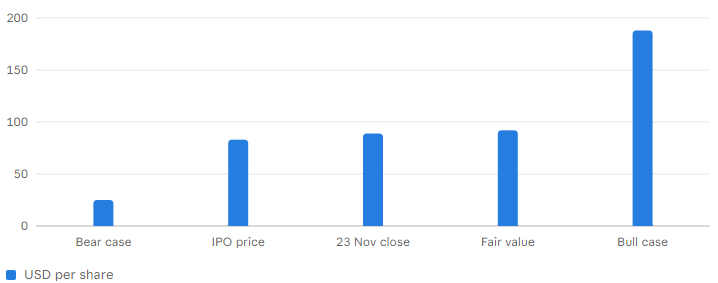
Oxford Economics, in a note dated 16 November, said it expects a 25 basis point hike in December and thinks markets are overpricing the chance of a 50 basis point move. So the base case is a quarter-point increase, with the October PCE report due this week as the next test (the exact release date is my reading of the calendar, so confirm it with the Bureau of Economic Analysis).
Odds come from CME FedWatch as reported by each source on different dates. They change daily. Why this matters for stocks: higher rates raise the discount rate on long-dated profits. That hits high-growth names like Anthropic and Zscaler most, and housing-linked names like Lowe's through mortgage rates. A hotter PCE print would strengthen the hike case, and a cooler one might ease it (my reasoning, not a forecast).
The spread of outcomes is huge. The bull case is $188 and the bear case is $25. The bear case factors in slower enterprise adoption and competition from open-weight models, and Morningstar notes more than $900 billion in compute commitments as a key concern. From $88.91, $188 is about 111% higher and $25 is about 72% lower (my calculation).
I have tried to rely on Morningstar and market data, but you should weigh that conflict of interest. One data conflict: the Fox page shows a $1.28 trillion market cap, below Morningstar's $1.7 trillion fair-value equity figure, which may reflect different share counts. I have not reconciled them. What to watch: how the stock behaves as early trading excitement fades, the first earnings report as a public company, and whether revenue growth keeps pace with the compute spending (my reasoning).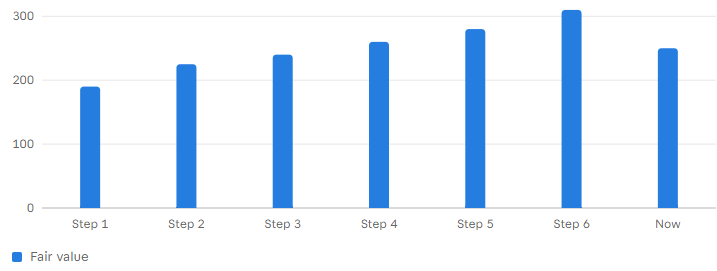
Morningstar kept $250 after the latest earnings, citing the CEO transition and technology and geopolitical factors, and said shares rose about 4% after hours. It still rated the stock 4 stars, wide moat and Very High Uncertainty at the time of the cut. I could not confirm anything newer than those two notes, so the headline phrase about holding "for now" is consistent with them, but I have not seen a later update.
I will keep the personal details minimal. The investment point is simple: Nvidia is a company whose value depends heavily on one leader's relationships with customers and partners, and Morningstar says it is unclear whether a new CEO can manage product initiatives as well [6]. What to watch: the permanent CEO announcement, whether big customers keep their orders on schedule, and how the shares trade versus $250 (my reasoning).
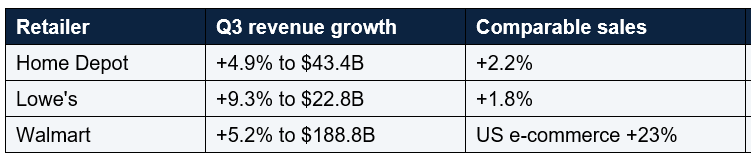
Lowe's figure includes acquired sales, as the reported revenue growth outpaced comps. Walmart does not report a comparable figure in the cited summary. Sources as listed. Home Depot posted its strongest comp of the year, but traffic remains negative and existing home sales sat at 3.75 million, the slowest pace since 2010. Morningstar's fair value for Home Depot is $325, with a 3-star rating.
Lowe's reported its sixth straight quarter of positive comps, with online sales up 17.4%. Walmart raised its outlook, but the stock fell about 2% because the raise only caught up to expectations, and TIKR notes it trades at about 46 times earnings. Morningstar's last fair value I could verify for Walmart was $81, with a 1-star rating at the fiscal second quarter, though older notes show $56 to $62 for earlier dates. The theme: even the winners are priced for steady growth, and housing remains stuck. That is why a rate hike matters more to Lowe's and Home Depot than to Walmart (my reasoning).
Morningstar's view from the announcement was a $133 fair value, 4 stars, narrow moat and a High uncertainty rating, and it said Kimberly shares fell about 12% on the news . That note is a year old. I could not find a current Morningstar update since the close, so treat the $133 as dated. The risks are the ones you would expect. The Fool notes the financing commitments are heavy. There is also the question of whether Kimberly-Clark keeps its long record of dividend increases, which the Fool's author thinks it will try to do. What to watch: the first combined results, progress on the synergy plan and debt reduction (my reasoning).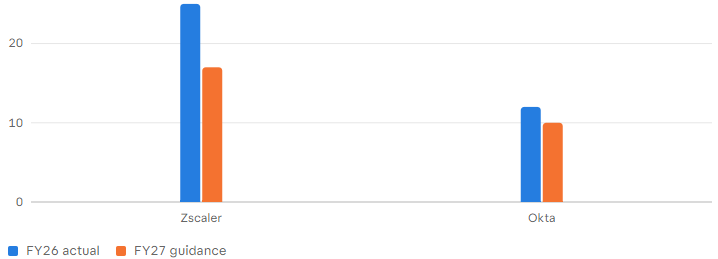
Okta is the slower, steadier cousin. Its second-quarter revenue rose 11% to $805 million and it guides to 10% to 11% growth for the year. Zacks projects about 9.5% growth in both fiscal 2027 and 2028. What to watch: whether guidance holds, how AI-agent security products show up in bookings, and rising capital spending at Zscaler.
They also differ a lot in risk. Anthropic and Nvidia have wide valuation ranges and Very High uncertainty by Morningstar's own rating. Kimberly-Clark and the retailers are steadier businesses with slower growth. Cybersecurity sits in between. Finally, notice how many of these views come from a single source, Morningstar. That is useful, but it is one opinion, and its fair values change. Nvidia's moved seven times in a year.
Morningstar values it at $92, and the stock closed near $88.91 on 23 November per one quote page. Its bull and bear cases are $188 and $25, so the range is wide.
What is Nvidia's Morningstar fair value now?
$250, cut from $310 after CEO Jensen Huang resigned, and kept at $250 after the latest earnings.
Did the Kimberly-Clark and Kenvue deal close?
Yes, on 2 November 2026. The company expects about $2.1 billion in run-rate synergies.
When do cybersecurity stocks report?
CrowdStrike reports on 1 December after the close. Zscaler is listed for the same day, though that date is estimated.
Will the Fed raise rates in December?
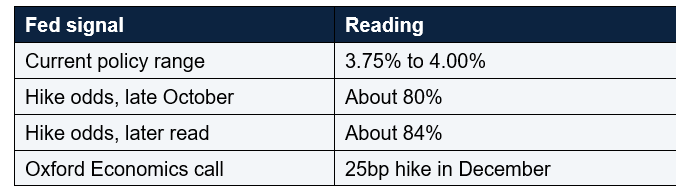
Markets priced about 80% to 84% odds of a 25 basis point hike in recent reports, and Oxford Economics expects one.
Table of Contents
- The backdrop: PCE and the December Fed
- Stock one: Anthropic
- Stock two: Nvidia
- Stock three: Lowe's, and how the retailers compare
- Stock four: Kimberly-Clark
- Stock five: cybersecurity, led by Zscaler and Okta
- What the five have in common
- Mistakes to avoid with a watch list
- Conclusion
- FAQ
Year-end is when headlines start promising surprises. The seven items that inspired this post cover a new AI listing, a Fed meeting, earnings season for cyber firms, Nvidia's fair value, the big retailers, Kimberly-Clark's Kenvue deal and some unexpected picks. I could not find the "unexpected picks" piece, so I built the list from the ones I could verify. Treat the five names as a research list, not a shopping list.
The five are Anthropic, Nvidia, Lowe's, Kimberly-Clark and Zscaler with Okta. They are "surprising" mainly because each has a twist: a fresh IPO trading near its estimated value, a $250 fair value after a leadership shock, a retailer growing revenue 9.3%, a megadeal that just closed, and cyber stocks that sold off on slower guidance. Morningstar's own market strategist says undervaluation is "extremely concentrated" right now, momentum has reversed and the market expects one more rate hike by year-end. That is the context for everything below.
Key takeaway: None of these five is a free lunch. Each carries a specific risk, and the macro backdrop of sticky inflation and a probable December hike affects all of them.
Anthropic: Morningstar cases vs trading price (USD per share)
The backdrop: PCE and the December Fed
Start with the macro, because it moves every stock on this list. The Fed's policy range sits at 3.75% to 4.00%, and at the last meeting it said inflation "remains elevated". Markets were pricing about an 80% chance of a 25 basis point hike in December, which would take the range to 4% to 4.25%. A later read put the odds near 84%.Oxford Economics, in a note dated 16 November, said it expects a 25 basis point hike in December and thinks markets are overpricing the chance of a 50 basis point move. So the base case is a quarter-point increase, with the October PCE report due this week as the next test (the exact release date is my reading of the calendar, so confirm it with the Bureau of Economic Analysis).
Odds come from CME FedWatch as reported by each source on different dates. They change daily. Why this matters for stocks: higher rates raise the discount rate on long-dated profits. That hits high-growth names like Anthropic and Zscaler most, and housing-linked names like Lowe's through mortgage rates. A hotter PCE print would strengthen the hike case, and a cooler one might ease it (my reasoning, not a forecast).
Stock one: Anthropic
Anthropic listed on 19 November at an $83 IPO price. The range had been $70 to $78. On 23 November, Fox Business showed a close of $88.91, down 1.43% on the day, in a $84.61 to $94.24 range. The page also showed a second price of $87.64, so treat the exact close with care. Morningstar values Anthropic at $92 per share, which it says is about $1.7 trillion of equity value, or roughly 13 times 2027 sales on a 47% five-year revenue growth assumption. On the first day of trading it kept that estimate and said the shares were in the 3-star range. At $88.91, the stock is about 3.4% below $92 (my calculation).The spread of outcomes is huge. The bull case is $188 and the bear case is $25. The bear case factors in slower enterprise adoption and competition from open-weight models, and Morningstar notes more than $900 billion in compute commitments as a key concern. From $88.91, $188 is about 111% higher and $25 is about 72% lower (my calculation).
I have tried to rely on Morningstar and market data, but you should weigh that conflict of interest. One data conflict: the Fox page shows a $1.28 trillion market cap, below Morningstar's $1.7 trillion fair-value equity figure, which may reflect different share counts. I have not reconciled them. What to watch: how the stock behaves as early trading excitement fades, the first earnings report as a public company, and whether revenue growth keeps pace with the compute spending (my reasoning).
Nvidia: Morningstar fair value estimate history (USD)
Stock two: Nvidia
Nvidia is the oldest name here, but the story changed. Morningstar's fair value has moved a lot in a year: $190, then $225, $240, $260, $280, $310, and now $250. The cut to $250 from $310, about 19%, came after founder and CEO Jensen Huang resigned amid investigations; CFO Colette Kress is interim CEO.Morningstar kept $250 after the latest earnings, citing the CEO transition and technology and geopolitical factors, and said shares rose about 4% after hours. It still rated the stock 4 stars, wide moat and Very High Uncertainty at the time of the cut. I could not confirm anything newer than those two notes, so the headline phrase about holding "for now" is consistent with them, but I have not seen a later update.
I will keep the personal details minimal. The investment point is simple: Nvidia is a company whose value depends heavily on one leader's relationships with customers and partners, and Morningstar says it is unclear whether a new CEO can manage product initiatives as well [6]. What to watch: the permanent CEO announcement, whether big customers keep their orders on schedule, and how the shares trade versus $250 (my reasoning).
Stock three: Lowe's, and how the retailers compare
The headline asked whether Walmart, Target, Home Depot or Lowe's look attractive after earnings. I will share what the numbers show and leave the verdict to you. I could not find reliable Target results, so Target is left out.Lowe's figure includes acquired sales, as the reported revenue growth outpaced comps. Walmart does not report a comparable figure in the cited summary. Sources as listed. Home Depot posted its strongest comp of the year, but traffic remains negative and existing home sales sat at 3.75 million, the slowest pace since 2010. Morningstar's fair value for Home Depot is $325, with a 3-star rating.
Lowe's reported its sixth straight quarter of positive comps, with online sales up 17.4%. Walmart raised its outlook, but the stock fell about 2% because the raise only caught up to expectations, and TIKR notes it trades at about 46 times earnings. Morningstar's last fair value I could verify for Walmart was $81, with a 1-star rating at the fiscal second quarter, though older notes show $56 to $62 for earlier dates. The theme: even the winners are priced for steady growth, and housing remains stuck. That is why a rate hike matters more to Lowe's and Home Depot than to Walmart (my reasoning).
6. Stock four: Kimberly-Clark
Kimberly-Clark closed its $48.7 billion purchase of Kenvue on 2 November. Kenvue holders received $3.50 in cash and 0.14625 of a Kimberly-Clark share. The company reiterated about $2.1 billion in run-rate synergies. Roughly 54% of the combined company is owned by existing Kimberly-Clark holders.Morningstar's view from the announcement was a $133 fair value, 4 stars, narrow moat and a High uncertainty rating, and it said Kimberly shares fell about 12% on the news . That note is a year old. I could not find a current Morningstar update since the close, so treat the $133 as dated. The risks are the ones you would expect. The Fool notes the financing commitments are heavy. There is also the question of whether Kimberly-Clark keeps its long record of dividend increases, which the Fool's author thinks it will try to do. What to watch: the first combined results, progress on the synergy plan and debt reduction (my reasoning).
Revenue growth, % per year: past vs guidance
Stock five: cybersecurity, led by Zscaler and Okta
Cyber earnings season is about to ramp up. CrowdStrike reports fiscal third-quarter results on 1 December after the close, and one data provider also lists Zscaler for 1 December after the close, though it notes the date is estimated from past reporting. I did not find a confirmed Okta date. Zscaler is the stock with the most to prove. In September it guided to fiscal 2027 sales and ARR growth around 16.5%, well below what Morningstar had modeled, and shares dropped about 20%. Morningstar cut its fair value to $250 from $300 and still viewed shares as undervalued. Zscaler's revenue grew 25% in fiscal 2026.Okta is the slower, steadier cousin. Its second-quarter revenue rose 11% to $805 million and it guides to 10% to 11% growth for the year. Zacks projects about 9.5% growth in both fiscal 2027 and 2028. What to watch: whether guidance holds, how AI-agent security products show up in bookings, and rising capital spending at Zscaler.
What the five have in common
Strip away the logos and the five share a few traits. Each has a narrative that is bigger than its recent numbers. Each has a specific date or event that could re-rate it: the PCE print, a CEO appointment, a first earnings report, the Kenvue integration, December cyber results. And each is sensitive to what the Fed does in December (my reasoning).They also differ a lot in risk. Anthropic and Nvidia have wide valuation ranges and Very High uncertainty by Morningstar's own rating. Kimberly-Clark and the retailers are steadier businesses with slower growth. Cybersecurity sits in between. Finally, notice how many of these views come from a single source, Morningstar. That is useful, but it is one opinion, and its fair values change. Nvidia's moved seven times in a year.
Treating a headline list as a buy list is the first mistake. A catchy "stocks to buy before year-end" title says nothing about your goals, time horizon or existing holdings. The second mistake is anchoring on fair value. A fair value estimate is a model output. Anthropic's runs from $25 to $188 depending on assumptions. Use ranges, not single numbers. Third, stale information. Several notes I found were a year old, and the Kimberly-Clark view predates the deal closing. Check dates before relying on anything. Fourth, ignoring concentration. Four of the five are tied to big themes such as AI spending or housing. If you hold several, you may own the same bet more than once (my reasoning). And do not make year-end tax or timing moves without talking to a qualified adviser.
Conclusion
The five stocks here, Anthropic, Nvidia, Lowe's, Kimberly-Clark and Zscaler with Okta, give a decent snapshot of what investors are debating at the end of 2026. Anthropic trades near Morningstar's $92 estimate with a very wide range around it. Nvidia's $250 fair value reflects a leadership shock. Lowe's grows but housing is weak. Kimberly-Clark now has to integrate Kenvue. Cyber stocks face earnings on 1 December.Above all of it sits the Fed. A likely December hike keeps pressure on valuations. Use this list to decide what to research further, not what to buy. This is general education, not advice, and I am not a financial adviser. Check live prices and company filings before acting.FAQ
Is Anthropic stock undervalued?Morningstar values it at $92, and the stock closed near $88.91 on 23 November per one quote page. Its bull and bear cases are $188 and $25, so the range is wide.
What is Nvidia's Morningstar fair value now?
$250, cut from $310 after CEO Jensen Huang resigned, and kept at $250 after the latest earnings.
Did the Kimberly-Clark and Kenvue deal close?
Yes, on 2 November 2026. The company expects about $2.1 billion in run-rate synergies.
When do cybersecurity stocks report?
CrowdStrike reports on 1 December after the close. Zscaler is listed for the same day, though that date is estimated.
Will the Fed raise rates in December?
Markets priced about 80% to 84% odds of a 25 basis point hike in recent reports, and Oxford Economics expects one.
0 Comments
Be the first to share your thoughts on this article.