
Investing
Is Alphabet the Magnificent Seven Stock to Buy for 10 Years?

Alphabet's search business is thriving, its cloud arm is surging, and now it owns a hefty piece of a $1.2 trillion AI company. Here is the case, and the catches. Q3 revenue $127.6B, up 25%, Google Cloud $30.7B, up 103%, Cloud backlog $561B, Q3 capex $51.4B, free cash flow minus $9.1B, Anthropic about $1.2T undiluted at listing, GOOGL about $282 on 23 Nov.
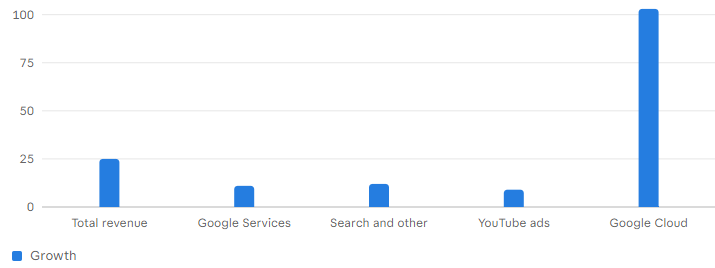
Alphabet is a strong candidate for a long hold, and it is also more complicated than the headline suggests. In the third quarter, revenue rose 25% to $127.6 billion, and Google Cloud revenue more than doubled, up 103% to $30.7 billion. Search grew 12% and query growth hit a five-year high. Then there is the big new asset. Anthropic listed on 19 November, and without full dilution its market value was close to $1.2 trillion. Alphabet owns a meaningful slice, though I could not confirm the exact percentage from a filing.
The catches are real. Alphabet spent $51.4 billion on capital expenditure in one quarter and its free cash flow was negative $9.1 billion. Its trailing P/E looks cheap partly because of investment gains. And the stock fell sharply after the October report.
Key takeaway: On the evidence, Alphabet is a reasonable long-hold candidate with unusual strengths: cloud growth, a big AI stake and a profitable core. But it is a bet that very large AI spending pays off, and the valuation is less cheap than the trailing P/E suggests.
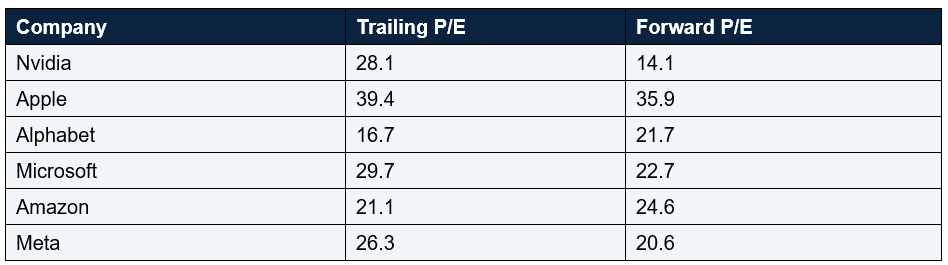
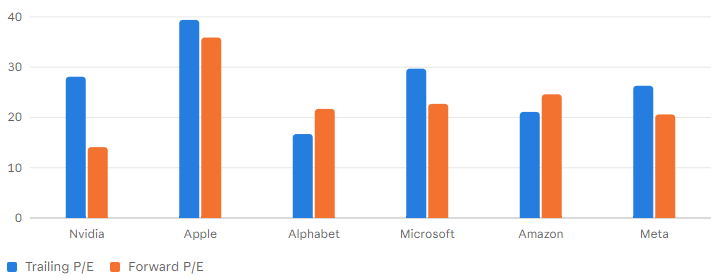
Tesla (359.1 trailing, 170.3 forward) is left out. Prices and estimates have moved since. Apple looks the most expensive of the group on both measures. Microsoft sits at 22.7 times forward earnings, very close to Alphabet's 21.7. So Apple is hard to justify on price, and Microsoft is similar rather than clearly worse.
Look closer at the table, though. On the forward measure, Nvidia (14.1) and Meta (20.6) are cheaper than Alphabet. Alphabet is only the cheapest on the trailing P/E, and I explain why that figure flatters it in section 7. So "not Microsoft" is a judgment about business quality and growth, not a clear valuation win.
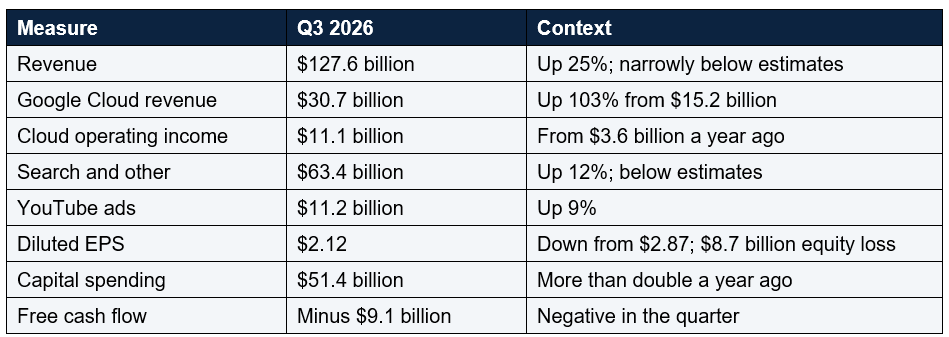
9to5Google, Zacks, Verdict, Neoteo, InvestingLive. Estimates comparisons are from InvestingLive. The result was mixed. Alphabet's 13th straight quarter of double-digit revenue growth is impressive. But revenue came in a touch below the roughly $127.9 billion expected, and search and YouTube advertising fell short. The market noticed: the stock fell 12.6% on 29 October, its worst day of the past year.
The awkward news: more queries did not mean proportionally more money. Chief business officer Philipp Schindler said AI Mode's strong query growth affected revenue because those queries are less monetized, and that foreign exchange was the largest single factor in the slowdown from Q2. That is the central worry for the bull case. If people increasingly ask an AI instead of clicking ads, search could grow in usage but earn less per query. The Motley Fool's cheap-stock article names exactly this, concern about AI's impact on the search franchise, as the main risk [8]. Nobody knows yet how it resolves. I would watch revenue per query, not only query counts.
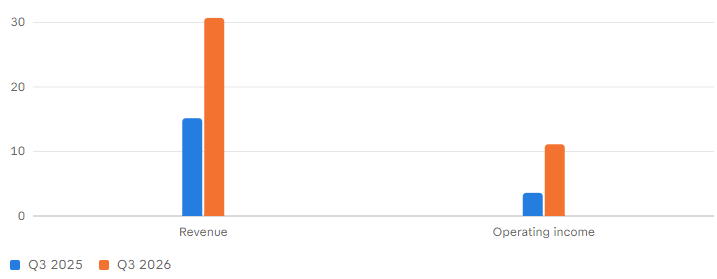
Cloud backlog, the value of signed future commitments, reached $561 billion, and management expects slightly more than 55% to be recognized as revenue over the next 24 months. That is about $308 billion over two years if it plays out (my calculation), which is far above the current run rate. The bill is the other side. Alphabet raised its 2026 capital spending guidance to $195 billion to $205 billion and signaled that 2027 spending will top $300 billion. Those are enormous figures. The bet is that cloud demand will fill the capacity. If demand disappoints, the spending still has to be paid for, and depreciation will weigh on profits.
One more piece of context: capex of $51.4 billion was below the roughly $56 billion analysts expected. So the spending was not out of control against forecasts, but the full-year and 2027 guides are what matter.
How much does Alphabet own? Anthropic had raised $65 billion at a $965 billion post-money valuation in May. Google agreed to invest up to $40 billion, starting with $10 billion at a $350 billion valuation. TIKR uses a stake of about 12%, taken from a commentator, and values it at about $180 billion at a $1.5 trillion valuation. I could not find the exact post-IPO percentage in a filing, and the IPO likely diluted it, so treat 12% as an estimate. With that caution, here is simple arithmetic. A 12% stake at $1.2 trillion would be about $144 billion, and at $1.5 trillion about $180 billion (my calculation). Against Alphabet's market value of about $3.45 trillion, the first figure is roughly 4% (my calculation).
There is also SpaceX. Alphabet disclosed a stake of about $94.1 billion in SpaceX, roughly 6%, in its June-quarter filing. The two holdings drove an enormous paper gain: Alphabet's second-quarter net income was $112.1 billion. Why this matters for a 10-year hold: the stake is a large asset that is not tied to search ads or cloud. But it also makes Alphabet's reported earnings jumpy. In Q3, an $8.7 billion equity loss helped push earnings per share down to $2.12 from $2.87. And the stake is in a company that competes with Gemini, so it is both a hedge and a rival.
Another number: the stock was about $282 on 23 November, up 6.3% that day, with a 52-week range of $264 to $409 and a market cap near $3.45 trillion. I could not find a clear reason for the 23 November jump, so I will not guess. The stock was down nearly 6% for the year as of 13 November. The fair summary is that Alphabet is not expensive for its growth, but "cheapest of the seven" depends on which P/E you choose. A 21.7 forward multiple for a company growing revenue 25% is reasonable, not a bargain-bin price.

My calculation, compound growth, before tax, no dividends added. These are illustrations, not predictions. For context, one Motley Fool writer cited expectations of about 15% annual earnings growth over the next five years. If earnings grow that fast and the multiple stays flat, a 10%-plus return is plausible, but it is an assumption, not a promise. The key point is that the starting price matters. A stock about 31% below its 52-week high of about $409 (my calculation) has a gentler starting point than one at the peak, though cheaper does not mean safe.
Volatile earnings. Equity stakes in Anthropic and SpaceX can produce big gains and losses in reported profit. Concentration in one backlog story. Cloud growth of 103% is remarkable, but much of the backlog is future promises, and only about 55% is expected within two years. Rival conflict. Alphabet owns part of a company that competes with its own Gemini models. Things I did not research. I did not look at antitrust cases or regulation in this post, which are real risks for any long hold. Please check them yourself.
If you are drawn to it, think in terms of position size, a long horizon, and a plan for a drop of 30% or more, which this stock has already shown peak to trough in the past year (my calculation). This post is general education, and I am not a financial adviser. Please check live prices, the company's filings and your own situation before deciding.
Revenue narrowly missed estimates, search and YouTube ad sales fell short, and EPS dropped on an $8.7 billion equity loss. The stock fell 12.6% on 29 October.
How big is Alphabet's Anthropic stake?
I could not confirm it from a filing. TIKR uses about 12%, which would be about $180 billion at $1.5 trillion. The IPO probably diluted the percentage.
Is Alphabet really the cheapest Magnificent Seven stock?
On a trailing P/E of 15.8, yes. On a forward basis, Nvidia and Meta looked cheaper in late October, and trailing earnings include large investment gains.
How fast is Google Cloud growing?
Revenue rose 103% to $30.7 billion in Q3, with operating income of $11.1 billion and a $561 billion backlog.
What is the biggest risk of a 10-year hold?
Probably AI changing how search earns money, combined with very large capital spending: $195 billion to $205 billion in 2026 and over $300 billion signaled for 2027.
Table of Contents
- Why Alphabet and not Apple or Microsoft?
- The third quarter in one table
- Search: thriving, with a monetization question
- Cloud: a $561 billion backlog and a big bill
- The Anthropic stake, and SpaceX
- Is it really cheap? Reading the P/E carefully
- The cash flow catch
- What a 10-year hold could look like
- The risks that could break the thesis
- What to watch
- Conclusion
- FAQ
Alphabet is a strong candidate for a long hold, and it is also more complicated than the headline suggests. In the third quarter, revenue rose 25% to $127.6 billion, and Google Cloud revenue more than doubled, up 103% to $30.7 billion. Search grew 12% and query growth hit a five-year high. Then there is the big new asset. Anthropic listed on 19 November, and without full dilution its market value was close to $1.2 trillion. Alphabet owns a meaningful slice, though I could not confirm the exact percentage from a filing.
The catches are real. Alphabet spent $51.4 billion on capital expenditure in one quarter and its free cash flow was negative $9.1 billion. Its trailing P/E looks cheap partly because of investment gains. And the stock fell sharply after the October report.
Key takeaway: On the evidence, Alphabet is a reasonable long-hold candidate with unusual strengths: cloud growth, a big AI stake and a profitable core. But it is a bet that very large AI spending pays off, and the valuation is less cheap than the trailing P/E suggests.
Alphabet Q3 2026 revenue growth by segment (% year on year)
% growth by Source: Alphabet Q3 2026 results via Verdict, NY1 (AP), Zacks
Why Alphabet and not Apple or Microsoft?
Your headline says "Not Apple. Not Microsoft." Let me test that with the numbers I could find. Motley Fool published a comparison table from Finviz data in late October.Tesla (359.1 trailing, 170.3 forward) is left out. Prices and estimates have moved since. Apple looks the most expensive of the group on both measures. Microsoft sits at 22.7 times forward earnings, very close to Alphabet's 21.7. So Apple is hard to justify on price, and Microsoft is similar rather than clearly worse.
Look closer at the table, though. On the forward measure, Nvidia (14.1) and Meta (20.6) are cheaper than Alphabet. Alphabet is only the cheapest on the trailing P/E, and I explain why that figure flatters it in section 7. So "not Microsoft" is a judgment about business quality and growth, not a clear valuation win.
The third quarter in one table
Here is the third quarter, reported on 28 October. Figures are from several reports that agree on the main numbers.9to5Google, Zacks, Verdict, Neoteo, InvestingLive. Estimates comparisons are from InvestingLive. The result was mixed. Alphabet's 13th straight quarter of double-digit revenue growth is impressive. But revenue came in a touch below the roughly $127.9 billion expected, and search and YouTube advertising fell short. The market noticed: the stock fell 12.6% on 29 October, its worst day of the past year.
Search: thriving, with a monetization question
Search is the engine that pays for everything else, and the quarter had both good and awkward news. The good news: search and other revenue grew 12% to $63.4 billion, and Alphabet said its year-over-year query growth rate was the highest in five years. CEO Sundar Pichai said AI investments are driving overall search query growth, including commercial queries. The Gemini app also reached 1 billion users.The awkward news: more queries did not mean proportionally more money. Chief business officer Philipp Schindler said AI Mode's strong query growth affected revenue because those queries are less monetized, and that foreign exchange was the largest single factor in the slowdown from Q2. That is the central worry for the bull case. If people increasingly ask an AI instead of clicking ads, search could grow in usage but earn less per query. The Motley Fool's cheap-stock article names exactly this, concern about AI's impact on the search franchise, as the main risk [8]. Nobody knows yet how it resolves. I would watch revenue per query, not only query counts.
Google Cloud: revenue and operating income ($ billion)
$ billion by Source: Verdict, 9to5Google; Q3 2026 reported 28 October
Cloud: a $561 billion backlog and a big bill
The cloud numbers are the most striking part. Google Cloud revenue rose from $15.16 billion to $30.71 billion in a year, and operating income went from $3.59 billion to $11.12 billion. Alphabet attributed the growth to enterprise AI infrastructure and solutions, core cloud services and sales of its Tensor Processing Unit systems.Cloud backlog, the value of signed future commitments, reached $561 billion, and management expects slightly more than 55% to be recognized as revenue over the next 24 months. That is about $308 billion over two years if it plays out (my calculation), which is far above the current run rate. The bill is the other side. Alphabet raised its 2026 capital spending guidance to $195 billion to $205 billion and signaled that 2027 spending will top $300 billion. Those are enormous figures. The bet is that cloud demand will fill the capacity. If demand disappoints, the spending still has to be paid for, and depreciation will weigh on profits.
One more piece of context: capex of $51.4 billion was below the roughly $56 billion analysts expected. So the spending was not out of control against forecasts, but the full-year and 2027 guides are what matter.
The Anthropic stake, and SpaceX
Now the headline asset. Anthropic's IPO priced at $83 a share on 18 November and trading began on 19 November. It opened at $111.50 and closed that first day at $97.17, a fully diluted value of $1.76 trillion according to CNN. By the weekend, the fully diluted figure had fallen to about $1.65 trillion, and without full dilution the value was closer to $1.2 trillion, the figure in your headline. CryptoNews put the undiluted figure at about $1.27 trillion at the 20 November close.How much does Alphabet own? Anthropic had raised $65 billion at a $965 billion post-money valuation in May. Google agreed to invest up to $40 billion, starting with $10 billion at a $350 billion valuation. TIKR uses a stake of about 12%, taken from a commentator, and values it at about $180 billion at a $1.5 trillion valuation. I could not find the exact post-IPO percentage in a filing, and the IPO likely diluted it, so treat 12% as an estimate. With that caution, here is simple arithmetic. A 12% stake at $1.2 trillion would be about $144 billion, and at $1.5 trillion about $180 billion (my calculation). Against Alphabet's market value of about $3.45 trillion, the first figure is roughly 4% (my calculation).
There is also SpaceX. Alphabet disclosed a stake of about $94.1 billion in SpaceX, roughly 6%, in its June-quarter filing. The two holdings drove an enormous paper gain: Alphabet's second-quarter net income was $112.1 billion. Why this matters for a 10-year hold: the stake is a large asset that is not tied to search ads or cloud. But it also makes Alphabet's reported earnings jumpy. In Q3, an $8.7 billion equity loss helped push earnings per share down to $2.12 from $2.87. And the stake is in a company that competes with Gemini, so it is both a hedge and a rival.
Is it really cheap? Reading the P/E carefully
The Motley Fool called Alphabet the cheapest Magnificent Seven stock on a trailing P/E of 15.8, well below its 10-year average of 28.7. That sounds compelling. But I would be careful. Trailing earnings include those large gains on the Anthropic and SpaceX stakes. When the gains are big, the "E" in the P/E is inflated, and the ratio looks lower than the underlying business would suggest. The forward P/E of 21.7 is a more cautious reading, and on that basis Nvidia and Meta looked cheaper in late October.Another number: the stock was about $282 on 23 November, up 6.3% that day, with a 52-week range of $264 to $409 and a market cap near $3.45 trillion. I could not find a clear reason for the 23 November jump, so I will not guess. The stock was down nearly 6% for the year as of 13 November. The fair summary is that Alphabet is not expensive for its growth, but "cheapest of the seven" depends on which P/E you choose. A 21.7 forward multiple for a company growing revenue 25% is reasonable, not a bargain-bin price.
Magnificent Seven P/E, late October 2026 (Tesla excluded)
P/E (times) by Source: Finviz via The Motley Fool, 25 Oct 2026. Alphabet trailing P/E includes investment gains
The cash flow catch
If I had to name the one weakness, it is cash flow. Free cash flow was negative $9.1 billion in the quarter as capex hit $51.4 billion. One Motley Fool writer said free cash flow was "atrocious" even while saying the stock was reasonably priced at under 17 times earnings. This is not a sign of distress. Alphabet has a profitable core: Google Services earned $39.2 billion in operating income in the quarter. The negative free cash flow comes from deliberate investment. But it changes the character of the company. For years, Alphabet was a cash machine. Now it is spending like a utility builder, and shareholders must trust the returns. The dividend is small, about 0.3%, so there is little income cushion while you wait. A 10-year hold depends on growth, not payouts.What a 10-year hold could look like
Here is what a decade could look like at different annual returns. This is not a forecast, just arithmetic on $10,000 (my calculation).My calculation, compound growth, before tax, no dividends added. These are illustrations, not predictions. For context, one Motley Fool writer cited expectations of about 15% annual earnings growth over the next five years. If earnings grow that fast and the multiple stays flat, a 10%-plus return is plausible, but it is an assumption, not a promise. The key point is that the starting price matters. A stock about 31% below its 52-week high of about $409 (my calculation) has a gentler starting point than one at the peak, though cheaper does not mean safe.
The risks that could break the thesis
A 10-year hold means living through the risks. Here are the main ones. AI disruption of search. If AI answers replace clicks and monetize poorly, search profits could shrink. Capex that does not pay off. Spending of $195 billion to $205 billion this year and over $300 billion next year is a huge bet on demand.Volatile earnings. Equity stakes in Anthropic and SpaceX can produce big gains and losses in reported profit. Concentration in one backlog story. Cloud growth of 103% is remarkable, but much of the backlog is future promises, and only about 55% is expected within two years. Rival conflict. Alphabet owns part of a company that competes with its own Gemini models. Things I did not research. I did not look at antitrust cases or regulation in this post, which are real risks for any long hold. Please check them yourself.
What to watch
Four things will tell you whether the thesis is working. First, the fourth-quarter report, expected on 3 February 2027, when analysts expect earnings of about $3.22 a share on $138.8 billion of revenue. Second, search revenue per query and the effect of AI Mode on monetization. Third, cloud conversion: how much of the $561 billion backlog turns into revenue, and at what margin. Fourth, capex and free cash flow, because the market will want to see spending turn into earnings. Also keep an eye on the Anthropic share price. It is volatile and newly listed, so Alphabet's reported results may swing with it.Conclusion
So is Alphabet the Magnificent Seven stock to buy for 10 years? It has a case that is hard to match: a profitable search business, a cloud unit growing 103% with a $561 billion backlog, and a large stake in a newly public AI leader. But it is not a clean bargain. The trailing P/E looks low partly because of investment gains, the forward P/E is similar to Microsoft's, and free cash flow is negative while capex heads towards $300 billion. The thesis rests on AI spending paying off and search holding up.If you are drawn to it, think in terms of position size, a long horizon, and a plan for a drop of 30% or more, which this stock has already shown peak to trough in the past year (my calculation). This post is general education, and I am not a financial adviser. Please check live prices, the company's filings and your own situation before deciding.
FAQ
Why did Alphabet fall after strong Q3 results?Revenue narrowly missed estimates, search and YouTube ad sales fell short, and EPS dropped on an $8.7 billion equity loss. The stock fell 12.6% on 29 October.
How big is Alphabet's Anthropic stake?
I could not confirm it from a filing. TIKR uses about 12%, which would be about $180 billion at $1.5 trillion. The IPO probably diluted the percentage.
Is Alphabet really the cheapest Magnificent Seven stock?
On a trailing P/E of 15.8, yes. On a forward basis, Nvidia and Meta looked cheaper in late October, and trailing earnings include large investment gains.
How fast is Google Cloud growing?
Revenue rose 103% to $30.7 billion in Q3, with operating income of $11.1 billion and a $561 billion backlog.
What is the biggest risk of a 10-year hold?
Probably AI changing how search earns money, combined with very large capital spending: $195 billion to $205 billion in 2026 and over $300 billion signaled for 2027.
0 Comments
Be the first to share your thoughts on this article.