
Vehicles & Cars
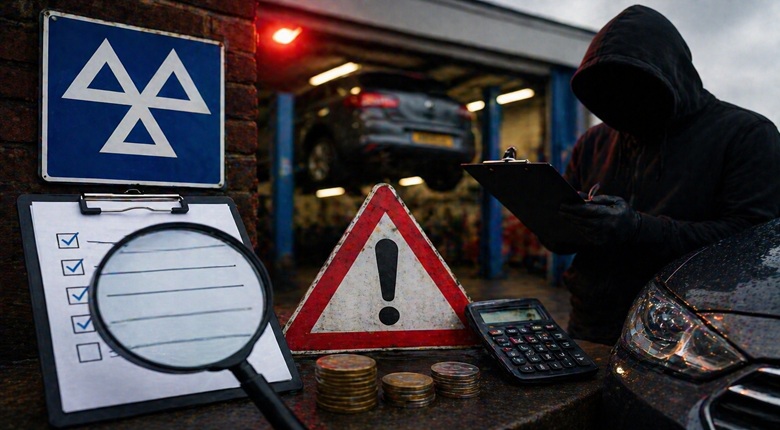
UK MOT Scams on the Rise: How to Spot Them
Table of Contents
- The MOT Fraud Epidemic by the Numbers
- What Is a Ghost MOT? The Most Common Scam Explained
- The Full Range of MOT Scams: Beyond Ghost MOTs
- Why MOT Fraud Is Growing
- The Red Flags: Warning Signs of a Scam MOT
- How to Verify Your MOT Certificate Is Genuine
- What the DVSA Is Doing to Stop It
- The Legal Consequences: For Drivers and Testers
- How to Choose a Trustworthy MOT Garage
- How to Report MOT Fraud
- What to Do If You Think Your MOT Was Fraudulent
- Conclusion: Your MOT Certificate Is Only Worth the Test Behind It
- Frequently Asked Questions
- External References
The MOT Fraud Epidemic by the Numbers
The annual MOT test exists to make UK roads safer. It checks that the approximately 40 million cars driven in the UK meet minimum safety and environmental standards every year — brakes, tyres, lights, emissions, steering, and structural integrity. For most drivers, it is a routine if occasionally expensive part of car ownership. For a growing number of rogue garages and dishonest testers, it has become an opportunity for fraud.MOT fraud cases nearly doubled in just one year, according to data published by GB News in April 2026. Recorded ghost MOT incidents rose from 976 to 1,809 in a 12-month period. In the same period, the DVSA barred 156 garages and 335 individual testers from conducting MOT examinations following fraud investigations. Halfords warned that official statistics likely represent only a fraction of the true scale of the problem, because detecting fraudulent certificates is extremely difficult.
Ghost MOTs — fraudulent certificates issued for vehicles that were never actually inspected — account for 80 percent of all MOT fraud according to the DVSA. The remaining 20 percent includes a range of other scams: bribing testers to pass unroadworthy vehicles, manipulating advisory records, excessive charge claims, and unnecessary repair work. This article explains every category of MOT fraud, the specific warning signs that your MOT may not have been legitimate, how to verify a certificate, and what to do if you suspect you have been a victim.
DVSA spokesperson, LBC (updated February 2026): While only a small number of testers and garages are involved in MOT fraud, it does happen and puts our roads at risk. DVSA wants to create a level playing field for all and we’ve taken action, helping to reassure drivers that their vehicle’s MOT will be conducted to the correct standard.
What Is a Ghost MOT? The Most Common Scam Explained
A ghost MOT is a fraudulent MOT certificate issued for a vehicle that was never physically inspected at a test centre. The vehicle may not have entered the garage at all, or the pass was recorded on the DVSA’s system without any of the required checks being carried out. The certificate — digital or paper — appears identical to a genuine one. The DVSA record shows the test, the date, the mileage, and the pass. Only by examining the vehicle itself, or by identifying anomalies in the data, is the fraud typically detectable.Ghost MOTs are carried out by dishonest testers who either:
- Issue a certificate for a payment without the vehicle ever visiting the test centre (the most extreme form)
- Perform a cursory glance at a vehicle and record a pass for a vehicle that would clearly fail a genuine inspection, without carrying out the required systematic checks
- Issue a pass in exchange for a bribe from a customer whose vehicle they know will fail
The scale of what is missed: A genuine MOT inspection checks dozens of safety-critical components including: tyre tread depth and condition, brake performance and condition, steering components, lights and indicators, windscreen condition and visibility, exhaust emissions, bodywork structural integrity, suspension components, and fuel system. A ghost MOT checks none of these. The vehicle passes regardless of its actual condition.
The Full Range of MOT Scams: Beyond Ghost MOTs
| Scam Type | What Happens | Risk to Driver | How to Spot It |
| Ghost MOT | Certificate issued without inspection | Driving an unroadworthy vehicle; legal consequences; accident risk | Check DVSA MOT history; request to observe test; note suspicious speed |
| Pass-for-cash bribe | Driver pays extra to pass a failing vehicle | Unroadworthy vehicle on roads; fraud and bribery liability | Avoid soliciting; legitimate garages never offer this |
| Unnecessary repairs | Garage invents faults or exaggerates advisories to charge for unneeded work | Financial loss; legitimate advisories may be ignored | Second opinion from another DVSA-approved garage |
| Overcharging | Charges above the DVSA maximum fee (£54.85 in 2026) without disclosure | Financial loss | Know the maximum fee; check for disclosed additional charges |
| Advisory inflation | Exaggerating minor issues to create work or scare driver into unnecessary repairs | Financial loss; unnecessary repair costs | Independent assessment from a second garage |
| Mileage manipulation | Recording incorrect mileage on the MOT certificate | Falsified vehicle history; affects resale and insurance | Compare DVSA MOT history mileage records to odometer readings |
| Identity fraud | Dishonest tester uses another tester’s credentials to record fraudulent tests | Undermines system; victim tester’s record compromised | Check tester’s DVSA credentials; report discrepancies |
Why MOT Fraud Is Growing
Several factors have contributed to the documented increase in MOT fraud cases. The first is the economic pressure created by the frozen MOT fee. The maximum fee has been fixed at £54.85 since 2012 — effectively nearly 15 years of unchanged pricing despite significant cost inflation in labour, equipment calibration, and garage overheads. Legitimate garages have been absorbing real-terms price cuts for over a decade. Some DVSA industry forum contributors noted that properly conducting an MOT costs them more than the maximum fee allows them to recover, creating pressure to cut corners or find supplementary income.Second, the DVSA’s digital MOT records system has created the technical infrastructure for ghost MOTs to be easier than ever to commit: a tester with access to the system can record a test without a vehicle being present. The paper trail is entirely digital and, until recent counter-measures, there was limited real-time verification that a vehicle was physically in the bay when the test was recorded.
Third, cost-of-living pressure on drivers has increased the demand for cheaper MOTs and, in some cases, for pass certificates on vehicles the driver knows are likely to fail. Where demand exists, supply follows: rogue testers offering ‘guaranteed passes’ are a documented phenomenon, advertised covertly through word of mouth.
The Red Flags: Warning Signs of a Scam MOT
The following are specific, documented indicators that an MOT test may not have been carried out properly. Some can be checked at the garage itself; others require checking your DVSA records after the test.At the Garage
- The test was completed implausibly quickly. A genuine MOT inspection takes a minimum of 45 minutes for a typical car, and often 60 minutes or more. If your car is returned in 15 to 20 minutes, it cannot have been properly inspected.
- No time in the inspection bay. Your car should be observed on the ramp with the mechanic performing visible physical checks. If you drop off your car and collect it without any visible time in an inspection bay, or if you are told there is no room to observe, be suspicious.
- No test results documentation or verbal summary. A genuine MOT result includes either a pass certificate or a failure notice, a list of any advisory notices (items that are not failures but should be monitored or repaired), and an explanation of any failures. If you receive only a certificate with no advisories on a car with visible wear, request an explanation.
- Pressure to add repair work immediately. A rogue garage may use invented advisories or minor faults to pressure you into repair work at the same time. A legitimate tester cannot prevent you from driving a car that has passed; they can only record advisories and the rare case of a dangerous defect.
- Price significantly below the market. The maximum MOT fee is £54.85. Garages can charge less, but fees significantly below market rates are one indicator of a rogue operation.
After the Test — Check Your DVSA Records
- The test centre location does not match where you booked. Check the registered test centre address on your MOT certificate against where you actually left the car. A test recorded at a centre in a different postcode to where you visited is a major red flag.
- Warning lights that should have caused a failure are still illuminated. ABS, SRS airbag, and engine management warning lights are MOT fail criteria if illuminated. A car with active warning lights that has just passed its MOT has either had them cleared during the test (and they came back on) or the test was fraudulent.
- Tyre tread below the legal minimum. The legal minimum tyre tread depth is 1.6mm. A car with visibly worn tyres — where the outer rim of a 20p coin is visible — should fail its MOT. A pass certificate on such a car warrants investigation.
- Mileage inconsistency. The DVSA MOT history checker records the mileage stated at each test. If the mileage recorded on the most recent test is significantly different from your odometer reading (and you have not driven many miles since the test), something is wrong.
How to Verify Your MOT Certificate Is Genuine
The most important tool available to any UK driver is the DVSA’s free, official MOT history checker at check.service.gov.uk/check-mot-history (or via GOV.UK). By entering your vehicle’s registration number, you can instantly see:- • The date of every MOT test recorded for the vehicle
- • The result of each test (pass or fail)
- • The mileage recorded at each test
- • The test centre where each test was recorded
- • Any advisory notices from each test
If the DVSA has identified a test as fraudulent and removed it from the record, your vehicle’s most recent valid MOT may have changed. Drivers who have unknowingly bought a car with a ghost MOT on its history may find, when the fraud is detected and removed, that their vehicle has no valid MOT — and is therefore not legally driveable on public roads until a genuine test is obtained.
The DVSA’s new photo requirement: From 2025 into 2026, the DVSA has been expanding its 'Photos of Vehicles at MOT' trial, which requires testers to photograph the vehicle in the test bay as a 'proof of life' record. Over 13,000 photos were uploaded during the first trial phase involving 62 garages. By 2026, most garages must submit this photographic proof-of-presence, which is stored in the official digital record and cross-checked against the MOT certificate. If a garage refuses to photograph your car or seems unfamiliar with this requirement, treat it as a warning sign.
What the DVSA Is Doing to Stop It
The DVSA has taken a series of progressively stronger enforcement actions in response to the documented rise in MOT fraud:Photography in Test Bays (2025–2026 Rollout)
The Photos of Vehicles at MOT trial, begun in mid-2025, requires testers to photograph the vehicle in the test bay and upload the image to the digital MOT record. The image is then cross-checked against the certificate to confirm the vehicle was physically present and of the correct type at the stated centre. Following a successful first phase involving over 13,000 images from 62 garages, the trial was expanded. By 2026, this ‘proof of life’ photograph has been mandated across most garages. Ghost MOTs account for 80 percent of all MOT fraud — the photo requirement directly targets this most prevalent category.Tougher Role Restrictions from January 2026
From 9 January 2026, the DVSA closed a major loophole that had allowed suspended testers to continue operating behind the scenes. Any tester or Authorised Examiner Principal who receives a two-year or five-year disciplinary cessation for serious misconduct is now completely barred from holding any MOT-related role for the full duration of the ban. Previously, suspended individuals could sometimes continue influencing test outcomes by working informally within a garage. This change ended that practice.Data Analytics for Anomaly Detection
The DVSA uses data analytics to identify suspicious patterns: testers with implausibly high pass rates, excessive test volumes in a single day, tests completed in unrealistically short timeframes, and vehicles that fail at one garage but pass at another within a short period. GB News’ April 2026 coverage noted that “The DVSA identified potential offenders through indicators such as suspiciously high pass rates, implausible testing volumes, and examinations completed in unrealistically short timeframes.”The Legal Consequences: For Drivers and Testers
Consequences for Rogue Testers and GaragesA tester or garage caught issuing fraudulent MOT certificates faces a range of serious consequences:
- Revocation of MOT testing authorisation, ending their ability to conduct tests
- Significant financial fines
- Criminal prosecution and, in serious or repeated cases, imprisonment. Some cases have resulted in custodial sentences of multiple years, particularly where repeated fraud or endangerment of the public is demonstrated
- Full duration ban from any MOT-related role under the January 2026 cessation rules
Consequences for Drivers
Drivers caught travelling in a vehicle with no valid MOT can face fines of up to £1,000 and three penalty points. This applies even when the invalid MOT is the result of fraud the driver was unaware of. The law requires that the vehicle has a valid, genuine MOT, not merely that the driver believed it to be valid.If a driver knowingly requests a ghost MOT or pays a bribe to obtain a pass, they may face:
- Fines of up to £2,500 under DVSA enforcement powers for MOT-related offences
- Insurance invalidation: an insurer can decline to pay out a claim if a fraudulent MOT is discovered, on the grounds that the vehicle was not legally roadworthy at the time of the incident
- Potential criminal liability for bribery or fraud in more serious cases
How to Choose a Trustworthy MOT Garage
- Use the DVSA’s Find a Garage service: The official MOT testing station finder at check.service.gov.uk/find-a-garage lists every DVSA-authorised MOT testing station in the UK. Always check that the garage is on this list before booking.
- Check online reviews specifically for MOT honesty: Review platforms including Google and Trustpilot contain specific customer feedback about MOT experiences. Look for mentions of thorough inspections, clear advisory explanations, and willingness for customers to observe the test.
- Choose a garage where you can observe the test: Reputable garages allow and even encourage customers to watch or wait in a viewing area during the test. If a garage actively discourages observation, consider this a warning sign.
- Be wary of extremely low prices: While the maximum fee is £54.85, garages adverting MOTs significantly below market rates should be treated with caution. Profit margins at £54.85 are already tight; garages charging substantially less have less incentive to conduct thorough tests.
- Look for the DVSA-approved testing station signage: Every authorised MOT testing station must display the ‘Approved MOT Test Station’ blue triangle sign. This is a regulatory requirement, not optional. A garage without this signage is not authorised to conduct MOT tests.
- Ask whether the garage participates in the DVSA’s photo trial: From 2026, most garages are required to photograph your vehicle in the test bay. Garages that proactively mention or demonstrate this process are demonstrating compliance with DVSA’s current anti-fraud requirements.
How to Report MOT Fraud
If you suspect a garage is issuing fraudulent MOT certificates, the correct reporting mechanism is the DVSA Intelligence Unit. Reports can be made anonymously — you do not need to provide personal details or appear in court.- Phone: 0800 030 4103 (free; Monday to Friday, 7:30am to 6pm)
- Email: [email protected]
- Post: DVSA, The Ellipse, Padge Road, Beeston, Nottingham, NG9 1NB
You can also contact Citizens Advice for guidance on what to do if you believe you have been financially harmed by a fraudulent MOT, and the Financial Ombudsman Service if the matter involves an insurance dispute related to a fraudulent MOT.
What to Do If You Think Your MOT Was Fraudulent
- Step 1: Check your DVSA MOT history immediately at check.service.gov.uk/check-mot-history. Verify the test date, mileage, and test centre match what you know about your most recent MOT.
- Step 2: If anything looks wrong — wrong test centre location, wrong mileage, or the DVSA has since removed the test from the record — do not drive the vehicle until you have clarified the status of the certificate.
- Step 3: Contact the DVSA Intelligence Unit on 0800 030 4103 to report your suspicion. The DVSA can review the test record and, where they have evidence of fraud, delete the fraudulent test.
- Step 4: Book a genuine MOT at a verified DVSA-authorised garage to confirm the actual roadworthiness of your vehicle. Until you have a genuine pass certificate, driving the vehicle may be illegal.
- Step 5: Contact your car insurer to inform them of the situation. An insurer should not be disadvantaging you for fraud that you were a victim of, but transparency with your insurer is important to protect your position.
- Step 6: If you paid for the fraudulent MOT by credit card, consider a Section 75 Consumer Credit Act claim against your card provider. Section 75 makes the card provider jointly liable for services not delivered as described — an MOT that was not conducted is a clear non-delivery of the contracted service.
Conclusion
A genuine MOT certificate is one of the most important documents attached to any vehicle. It is the government’s confirmation that on the date of the test, the vehicle met the minimum standards required to be safe on UK roads. When that certificate is fraudulent, the safety net it represents vanishes — and the driver is unknowingly operating a vehicle that may have defective brakes, unsafe tyres, or compromised structural integrity, in a country with some of the most congested roads in the world.The documented doubling of ghost MOT cases, and the DVSA’s response through mandatory photography, tougher cessation rules, and data analytics enforcement, reflects a genuine and escalating threat to road safety. The tools available to drivers to protect themselves are free, quick, and straightforward: verify your MOT history after every test, choose a DVSA-authorised garage you can observe the test at, and know the warning signs.
MOT fraud is not a victimless crime. The victim is sometimes a driver who paid for a test that never happened. More often, the victim is a pedestrian, cyclist, or driver who shares a road with a vehicle whose brakes, tyres, or steering have never been checked in years. The £54.85 MOT fee is one of the most important safety expenditures any UK driver makes. It should be real.
Frequently Asked Questions
What is a ghost MOT and how does it work?
A ghost MOT is a fraudulent MOT certificate issued for a vehicle that was never actually inspected. A dishonest tester records a pass in the DVSA system without the vehicle entering the garage or undergoing any checks. The certificate looks identical to a genuine one. Ghost MOTs account for 80% of all MOT fraud according to the DVSA. Recorded ghost MOT cases rose from 976 to 1,809 in a single 12-month period, with Halfords warning that official figures likely represent only a fraction of the true scale.How do I check if my MOT certificate is genuine?
Use the official DVSA MOT history checker at check.service.gov.uk/check-mot-history. Enter your registration number and check that the most recent test date, mileage, and test centre all match what you know about your actual MOT. If the recorded test centre is different from where you left your car, the mileage is significantly wrong, or a test you know you had has been removed from the record, contact the DVSA Intelligence Unit immediately on 0800 030 4103.What should I do if I think I have a ghost MOT?
Do not drive the vehicle until you have confirmed the status of the certificate. Check your DVSA MOT history online, report your suspicions to the DVSA Intelligence Unit on 0800 030 4103 (or by email to [email protected]), book a genuine MOT at a verified DVSA-authorised garage, inform your insurer, and consider a Section 75 Consumer Credit Act claim if you paid by credit card.What are the signs a garage has given me a fraudulent MOT?
Key warning signs include: the test was completed implausibly quickly (a genuine inspection takes at least 45 minutes); no time in the inspection bay; warning lights that should have caused a failure (ABS, SRS, engine management) are still on after a ‘pass’; tyre tread visible below the legal minimum after a ‘pass’; the recorded test centre location does not match where you took the car; or mileage discrepancy on the DVSA record versus your odometer.What are the legal consequences of driving with a fraudulent MOT?
Even if you did not know your MOT was fraudulent, you can face a fine of up to £1,000 and three penalty points for driving without a valid MOT. Insurance policies can be invalidated if a fraudulent MOT is discovered. Drivers who knowingly request or pay for fraudulent MOTs face fines of up to £2,500, potential criminal charges, and invalidated insurance. Testers and garages caught issuing ghost MOTs face licence revocation, fines, and in serious cases, custodial sentences.What is the DVSA doing to combat MOT fraud?
The DVSA has introduced three main anti-fraud measures. First, the Photos of Vehicles at MOT trial — now being rolled out widely — requires testers to photograph the vehicle in the test bay, creating a digital proof-of-life record cross-checked against the MOT certificate. Second, from 9 January 2026, any tester receiving a two or five-year disciplinary cessation is now completely barred from all MOT roles for the full duration. Third, DVSA uses data analytics to flag suspicious patterns such as implausibly high pass rates and unrealistically short test times.How do I report a suspected fraudulent MOT garage in the UK?
Contact the DVSA Intelligence Unit by phone (0800 030 4103, free, Monday to Friday 7:30am to 6pm), by email ([email protected]), or by post. Reports can be made anonymously — you do not need to give your name or appear in court. Provide as many details as possible: the garage name and address, the test date, your registration number, and the specific reasons you suspect fraud.Is the MOT test changing in 2026 to address fraud?
Yes. Key 2026 changes include the mandatory rollout of in-bay photography ('proof of life' photos stored in the official DVSA digital record, already required across most garages by 2026), tougher cessation rules for suspended testers from 9 January 2026, and updated equipment standards from 1 April 2026 for handling heavier modern vehicles. The DVSA has also updated its inspection manual to include specific checks for EVs and hybrids, and clearer guidance on electronic safety systems.External References and Further Reading
GB News — DVSA Uncovers Major MOT Fraud Cases as Thousands of Offenders Risk £2,500 Fines (April 2026), Blackcircles.com — What Are Ghost MOTs? The Dangers & How to Avoid Them, Honest John — MOT Test Changes 2026: What You Need to Know (February 2026), RAC Drive — New MOT Rules: What Changes Are Happening in 2026? (March 2026), LBC — What Is a Ghost MOT? Government to Crack Down on Car Fraud (November 2025, updated February 2026), DVSA Blog — How We’re Combating Fraud and Error Within the MOT, GOV.UK — Check MOT History of a Vehicle (DVSA MOT Checker), GOV.UK — Find a DVSA-Approved MOT Testing Station, Approved Garages — MOT Changes in 2025: Everything You Need to Know, TJ Services Fleet — New MOT Rules From January 2026: DVSA Changes Explained (February 2026)

0 Comments Comments