
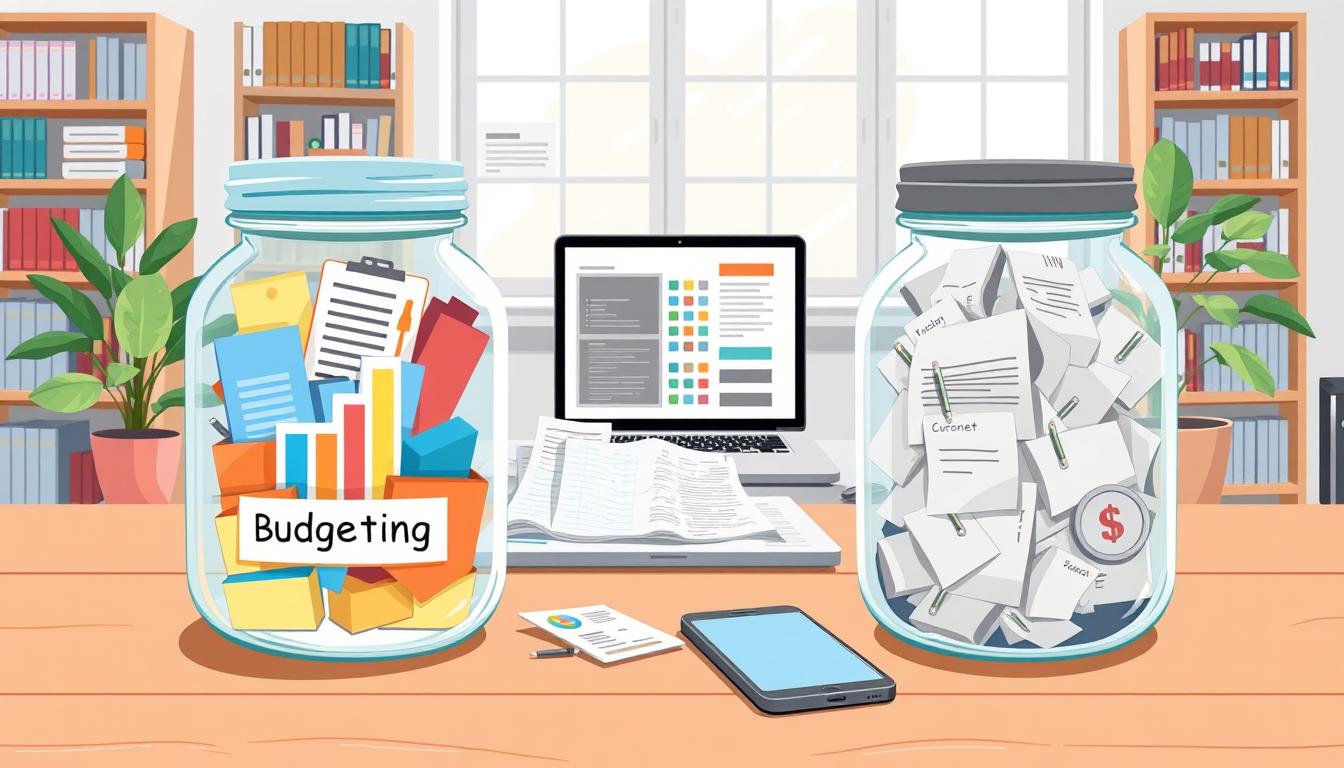
The Difference Between Budgeting vs Tracking Expenses Explained
Many people confuse keeping receipts with guiding their money. You may have earned more income yet still feel out of control because tracking alone only shows what happened after the fact. Budgeting is different: it assigns dollars before the month starts and protects your bills, savings, and goals.
That active approach helps you improve cash flow, cut debt faster, and build savings without guessing where cash went each day. In this guide you'll get a clear
comparison so you can choose the method that changes outcomes, not just records them. You’ll also see why six‑figure earners can feel strapped when they simply record transactions instead of directing money on purpose.
For a deeper look at the coaching perspective and practical steps, see this practical guide that outlines weekly check‑ins and paycheck‑to‑paycheck tactics.
Key Takeaways
- Tracking is a passive record; budgeting assigns cash proactively before you spend.
- Weekly check‑ins and flexible updates produce real progress toward savings and debt payoff.
- A plan that covers bills, daily spending, and savings prevents the monthly “where did my money go?” feeling.
- Even high income won’t help if you only observe transactions without directing income.
- Simple, repeatable habits protect goals and improve cash flow across the month and year.
What You’ll Learn About Budgeting and Tracking Expenses
You’ll learn practical differences that make one approach steer your money while the other simply records where it went.
This short guide highlights lessons popularized by YNAB and Wealth Over Now: tracking expenses is a record of past transactions, while a budget assigns dollars forward for upcoming spending and saving.
Coaches use simple, repeatable steps. Start by using past spending to set realistic category amounts so your plan fits your income and the total amount stays below what you bring in.
- Learn how to tell if you’re budgeting or only tracking expenses by checking when you set category amounts—before the month or after.
- Pick one primary goal, like debt payoff or savings, so your plan stays focused and motivating.
- Adopt a weekly money date to save time and avoid the end‑of‑month scramble.
- Check category balances before you buy so the budget guides daily choices every month.
- Get clarity on tools that help with budgeting tracking and how to reallocate when life changes mid‑month.
By the end of this section you’ll know how to track spending enough to stay aware without wasting time, and you’ll have a checklist of money decisions to make before the month starts.
Budgeting vs Tracking Expenses
When you assign dollars ahead of time, daily choices stop surprising your bank balance.
Quick definition: budgeting is a proactive plan you set before the month starts. Tracking is a reactive record you compile after you spend.
How the difference changes results
A forward plan improves your cash flow by assigning money for bills, daily spending, and savings before they happen. That reduces surprises and mid‑month shortfalls.
Tracking builds awareness of past purchases but rarely changes behavior on its own. Without a plan, you may still overshoot category amounts or let credit card balances grow.
Where people get stuck
Many assume logging transactions equals a plan. Common pitfalls include filling categories after the fact and not checking balances before you spend.
- Set amounts ahead of the month to protect savings and speed up debt payoff.
- Use weekly check‑ins to keep the plan on line and adjust when income or amounts change.
- Quick test: if you check a category balance before a purchase, you’re acting with a plan; if you only record it later, you’re tracking.
What Tracking Expenses Really Means
When you review bank and card records, you build a factual map of last month's spending. This process is about recording what already happened so you can see patterns and spot errors.
Recording past transactions from your bank account or credit card
Tracking expenses means you pull transactions from a bank account or a credit card and assign them categories. You create a log of past purchases. That log makes tax prep and audits easier.
Real-time tracking vs. one-time analysis snapshots
Real-time work means you log each expense as it happens and review reports regularly. One-time analysis means you check statements monthly or yearly to spot trends. Each method has different time costs and benefits.
Why this builds awareness but rarely changes outcomes
- You learn which categories are largest and how spending shifts month to month and year to year.
- Benefits include cleaner records, quick fraud detection when you reconcile with your bank, and easier tax reporting.
- Limits: the process reports the past; it does not assign dollars for future choices. Without a plan, awareness alone rarely alters results.
"Awareness is useful, but data becomes power only when you pair it with a forward plan."
| Method | Frequency | Time Required | Best Use |
| Real‑time tracking | Daily or weekly | 10–30 minutes/week | Spotting trends and catching fraud quickly |
| One‑time snapshot | Monthly or yearly | 30–90 minutes/month | High-level review and tax prep |
| Automated imports | Continuous | 5–15 minutes/week | Efficient categorization and pattern spotting |
To save time, combine automated imports with a quick monthly audit of your key card and account statements. That way you track spending efficiently and keep a clear record to inform a future budget.
What Budgeting Actually Is
When you give each dollar a role before payday, you reduce surprises and protect what matters most.
Assigning every dollar a job before the month starts
You create a written budget that tells every dollar where to go. That means covering bills, funding savings targets, and leaving room for daily spending.
Active money management: weekly check-ins and flexible adjustments
Weekly reviews let you reconcile transactions, reallocate amounts, and spot problems early. A short weekly habit keeps the plan responsive to real life.
Including bills, daily spending, and savings goals in one plan
Combine fixed bills, day-to-day spending, and multiple savings buckets in one coherent budget. This shows why each dollar exists and how it supports your goals.
How budgeting protects your goals (debt payoff, cash flow, savings)
By funding debt and savings first, you reduce the chance that routine spending eats those priorities. The result is smoother cash flow and steady progress toward debt and savings goals.
| Action | Frequency | Benefit |
| Assign every dollar | Pre-month | Clarity on where income goes |
| Weekly check-in | Weekly | Catch overspending early |
| Reallocate amounts | As needed | Keep goals protected |
Side‑by‑Side: Key Differences That Matter to You
This side‑by‑side view helps you spot the practical differences that shape real financial outcomes.
Timing: before you spend vs. after you spend
A forward plan assigns money ahead of time so you protect bills and goals before the month begins.
Recording purchases happens later and only shows where cash went. That explains why one method changes results and the other mostly informs.
Behavior: intentional choices vs. passive observation
When you work a plan you check category balances before you buy. That creates intentional choices and fewer surprises.
By contrast, passive record keeping builds awareness but rarely changes daily habits without a plan to follow.
Results: hitting goals vs. knowing where money went
Action‑oriented planning drives results like faster debt paydown and steady saving.
Tracking answers “where did my money go?” and helps audit past activity. Use that insight to set realistic category amounts, then act on the plan.
- When you want change, choose a plan that assigns dollars before the month.
- Use record keeping to inform that plan, not replace it.
- Spend a little time each week to keep the plan on line and reduce mid‑month surprises.
| Focus | When it happens | Typical weekly time | Main benefit |
| Forward plan | Before month | 15–45 minutes | Protects goals and cash flow |
| Post‑fact record | After purchases | 10–30 minutes | Shows where money went and catches errors |
| Blend | Plan + periodic audit | 20–60 minutes | Best insight with action |
"Data becomes useful only when it guides a choice."
Signs You’re Tracking, Not Budgeting
Small habits reveal whether you’re steering your money or only keeping a record of past purchases.
Check for these practical signals.
You fill “budget” amounts after the month ends
If you write category amounts only when the period closes, those numbers describe history, not direction. That habit is a common sign of tracking expenses rather than setting a forward plan.
You never check category balances before spending
When you make buys without looking at account balances or category totals, you rely on reconciliation later. That reactive workflow lets overspending happen and turns monthly review into damage control.
Your credit card balance grows despite “budgeting” every month
A rising credit card balance while you claim to follow a budget shows you are recording transactions instead of preventing them. If the amount on cards climbs every month, treat this as a red flag.
- You may be tracking if you set the same amounts each month even though you overspend in that category.
- If account balances surprise you at statement time, you didn’t use the plan during the month.
- Explaining overspending instead of preventing it means it’s time to switch from recording to directing your money.
Why Budgeting Delivers Better Results
Giving every dollar a job ahead of time changes how your money works for you each month. A clear budget pulls bills, daily choices, and savings into one view so you always know what’s funded.
Wealth Over Now data shows clients move faster when they allocate funds, schedule extra debt payments, and run weekly reviews. That repeated action turns small wins into steady progress.
- You’ll see how a budget clarifies bills, discretionary spending, and savings goals in one view so you always know what’s funded.
- You’ll gain momentum on debt by assigning specific payment amounts and overpaying on purpose when possible.
- You’ll learn how planned contributions create steady savings growth instead of hoping something is left over every month.
- You’ll reduce decision fatigue because the plan tells your money where to go before temptations appear.
- You’ll adopt a simple weekly check to reallocate quickly, keeping the budget aligned with reality without wasted time.
Bottom line: tracking can inform a better approach, but active budgeting creates structure that leads to consistent results and clearer savings goals over time.
The Psychology Behind Overspending and Control
Small urges during the day can quietly erode your plan if you don’t notice what sparks them. Many people find that social feeds, Target runs, and DoorDash orders create a loop of impulse buys. These triggers act fast and feel normal until the account shows a surprise balance.
Emotions, habits, and common triggers
Emotional nudges—boredom, stress, or a quick dopamine hit—often drive unplanned spending. A late‑night scroll or a weekend errand can
lead to multiple small buys that add up.
You can spot patterns by keeping a brief log. When you track spending for a few days, you notice what prompts a buy and where your money moves.
Awareness without judgment
Reflection matters more than shame. Ask quick questions before you buy: Is this in my plan? Will I want it tomorrow? A short pause changes behavior more than scolding yourself later.
- Recognize triggers like social media, store runs, and food apps that create day‑to‑day impulses.
- Use a micro‑plan for high‑risk times (weekends, late nights) to sidestep default scrolling and spending.
- Keep reminders where you need them—your phone or wallet—so choices align with goals.
- Pick one small habit to change this week and you’ll feel immediate, practical control.
"Gentle awareness beats shame—your plan guides change, and adjustments are normal."
| Trigger | Typical cue | Quick response |
| Social media | Scroll and ad exposure | Pause; check category balance in your app |
| Retail run (Target) | Errand + temptation aisles | Make a list; limit time in store |
| Food delivery (DoorDash) | Hungry or tired evening | Schedule meals or set a delivery budget |
Designing Your Categories So Your Plan Makes Sense
Choose category sizes that make decisions simple, not confusing, when money hits your account. Clear buckets help you act fast and keep the big picture visible.
Aim for meaningful buckets
Make categories large enough to matter: target about 1%–15% of your monthly outlay per line so each amount moves the needle without adding clutter.
Include daily cash flow, non-monthly items, and goals
Cover daily categories like groceries, fuel, and dining. Add non‑monthly items such as insurance or car maintenance so surprise spikes don’t wreck the month.
- Size categories so they’re actionable—about 1%–15% of monthly expenses—so your plan makes sense at a glance.
- Add savings goals for emergency, planned purchases, and year‑end obligations to smooth your income across the year.
- Keep a small buffer/miscellaneous line to protect other accounts from one‑off hits.
- Name categories clearly so checking at checkout is fast and you stick to the budget.
- Use last year’s data to set initial amounts, then refine after a few weeks of real use.
"Categories should guide choices at the moment of spending, not create more work later."
Weekly Money Dates: The Habit That Keeps You On Plan
Set aside a short weekly session to review and steer your money so small surprises never derail a month.
Plan the week, check category balances, and adjust in real time
A weekly money date is a brief, recurring appointment where you reconcile new transactions and verify category balances before you buy. Wealth Over Now uses this habit to keep budgets active and flexible.
Make the meeting short—15–30 minutes—so you keep the habit without dread. Use that time to confirm what cleared from your account and to mark any incoming bills or events for the coming days.
- Confirm recent charges and reconcile one account.
- Check category balances so you know what is safe to spend.
- Reallocate funds if a plan shifts mid‑month to protect savings and debt payments.
- Note upcoming days with special spending to avoid last‑minute overspend.
Coordinate with a partner when needed and keep a simple checklist so nothing gets missed. Finish each session knowing how much you can spend in key categories until the next check‑in.
"A short weekly habit turns awareness into control."
Tools That Support Your Approach
Your toolset should enforce rules that fit your cash flow, income cadence, and privacy needs. Pick tools that match whether you want simple aggregation, envelope rules, or full spreadsheet control.
Expense tracking options include Mint/Empower and Personal Capital for aggregation, or plain spreadsheets when you want full control. For proactive planning, consider YNAB, Goodbudget (envelope method), Mvelopes, or Tiller.
Desktop programs like Quicken, Moneydance, and PocketSmith give tighter local control and privacy. Cloud services offer convenience but rely on bank feeds as your "source of truth."
Set up bank connections and a quick reconciliation routine—check account balances weekly and reconcile transactions so your categories stay accurate. Use account balances and category totals together to avoid overspending across multiple accounts.
- Decide automation level: downloaded feed vs. manual entry to balance speed with oversight.
- Use Tiller or spreadsheets for deep customization and data ownership.
- Adopt YNAB or Goodbudget if you want envelope rules that assign amounts before spending.
- Plan for sync hiccups: keep a backup export and a simple reconciliation checklist.
To compare apps and pick what fits your workflow, see this quick roundup of popular budgeting apps at best budgeting apps. Match the tool to how often you check account balances and how much line‑by‑line detail you need.
A Practical Month: From Paycheck to Paycheck With a Plan
Treat each paycheck as a toolkit: allocate parts to bills, savings, and daily needs so surprises shrink and goals move forward.
Pre-month: give every dollar a job
Before the month begins, set a clear budget and assign every dollar to bills, savings, and daily spending. Fund fixed bills first, then size variable categories to match your income timing and the expected amount for each line.
Mid-month: reconcile, reallocate, and protect savings goals
Halfway through, reconcile transactions and check accounts. Review credit card and bank balances to keep credit in check. Reallocate funds where needed to protect savings goals and debt payments.
End-of-month: review spending, debt payments, and cash flow
At month end, review what you spent and how cash flowed. Confirm extra debt payments cleared and note seasonal items for the year ahead. Use those observations to refine next month's budget so the process gets easier every month.
- Quick check: reconcile one account weekly to reduce surprises.
- Document what worked and adjust amounts where you overspent.
- Keep the routine aligned with your bank timeline so it fits your life.
From Tracking to Budgeting: Your Transition Playbook
Turning past transactions into a practical plan helps you stop reacting and start directing your money each pay period.
Use spending history to set realistic category amounts
Start by mining your recent statements. Look for patterns and set comfortable starting figures for each category based on what actually happened.
YNAB’s approach recommends conservative starting amounts so the plan fits your life, not wishful thinking.
Carve out space for one key goal
Pick a single primary goal — like debt payoff — and fund it first. Trim low-value categories to free cash for that goal immediately.
Keep the rest simple: a handful of core categories so you can sustain the routine for the first few months.
Check category balances before you swipe
Make it a habit to verify a category balance before you spend money. That small pause moves you from recording to choosing.
Set calendar reminders for brief daily or weekly check‑ins and reallocate mid‑month when surprises appear.
- You’ll use tracking expenses history to set realistic starting amounts.
- You’ll anchor your plan around one motivating goal to build momentum.
- You’ll iterate amounts after a couple weeks so the plan reflects real life.
- You’ll time funding to your income schedule so categories are ready when bills hit.
| Action | When | Benefit |
| Set starting amounts from history | Pre‑month | Realistic, sustainable categories |
| Fund one primary goal | At funding | Faster progress and focus |
| Check balances before spending | Day of purchase | Intentional daily choices |
"Small, repeatable checks turn awareness into action."
Credit Cards, Cash, and Accounts: Using Them Without Losing Control
When your accounts work together, you avoid hidden debt and keep money flowing to priorities.
Prevent rising card balances by funding category amounts before you spend. YNAB warns many people call their plan a budget yet let card balances grow because they don’t check category totals first.
Preventing bigger card balances
Fund payments inside your plan so a credit card is a payment tool, not a backup line. Check the category balance before swiping to stop unintended debt growth.
Aligning cycles and dates
Match due dates with your paydays so bills clear without dipping into other accounts. Set alerts for low balances and upcoming payments to avoid fees.
- Decide when to use cash versus cards to curb impulse spending.
- Monitor accounts so available credit isn’t confused with budgeted money.
- Reconcile accounts weekly so transactions match your plan.
- Adopt a short wait rule before large buys to keep spending intentional.
| Item | Action | Benefit |
| Credit card payment | Fund before due date | Prevents hidden debt growth |
| Pay cycle alignment | Match to paycheck | Smoother cash flow each month |
| Cash use | Use for impulse control | Reduces small unchecked buys |
"Check category balances before you buy; small pauses save you from big surprises."
Common Pitfalls and Simple Fixes
Many plans fail because they never bend when life changes—rigidity kills progress. A static approach leaves you vulnerable to surprise bills and seasonal spikes.
This section shows practical fixes coaches use: weekly check‑ins, sinking funds, and fast reallocation rules. Apply these without overcomplicating your routine.
Rigid budgets you never revisit
If you set a plan once and forget it, small shifts in income or timing break the whole thing. Schedule a short weekly review and treat the plan as living, not locked.
Quick fix: 15 minutes each week to move a line or two keeps you on track.
Ignoring non-monthly expenses and “seasons of life”
People often miss annual or quarterly bills until they arrive. Fund sinking accounts year‑round so those costs don’t wreck a month.
Review last year's calendar to anticipate spikes and add a small contingency line for one-off costs.
Letting small daily spending derail big goals
Lots of small buys add up. Limit daily discretionary categories and check them mid‑week so goals stay protected.
Also, automate minimum bill payments and manually manage discretionary lines to reduce friction.
- You’ll fix rigid plans by scheduling weekly reviews so the plan adapts to real life.
- You’ll stop surprise bills by funding non‑monthly items with sinking funds.
- You’ll protect goals by limiting daily spend and reviewing balances mid‑week.
- You’ll avoid paralysis with simple reallocation rules, not complex formulas.
- You’ll match funding to your income timing to smooth cash flow.
"A plan that bends with life lasts longer than one that looks perfect on paper."
| Pitfall | Sign | Simple Fix |
| Rigid plan | Missed adjustments after pay changes | Weekly 15‑minute review and one quick reallocate |
| Ignored non‑monthly bills | Seasonal surprises in the year | Sinking funds funded monthly |
| Daily drift | Small debits grow a lot over time | Limit discretionary line and mid‑week check |
For more on correcting common mistakes and practical fixes, see this common budgeting mistakes.
Which Approach Is Right for You Today
Deciding the right path depends on your goals, income rhythm, and how much time you can commit. Start by deciding whether you need clear awareness or a process that changes behavior.
When simple tracking is enough—and when it’s not
Simple tracking makes sense if your income is stable, your spending is predictable, and you want high‑level clarity for taxes or reporting.
It will show where each expense landed and give you a starting amount for future planning. But choose a forward plan when overspending repeats, goals are urgent, or your income swings month to month.
Choosing a tool and workflow that you’ll actually use
Pick tools that match how much time you have and how you prefer to act. Keep the workflow minimal so people in your household can follow it.
Practical checklist:
- Decide if light tracking gives enough sense today or if you need a proactive plan.
- Use past expense data to set starter amounts and tighten them with short weekly checks.
- Match the tool to your habits—automated imports for low effort, envelopes for hands‑on control.
- Reassess every quarter and factor your income timing so categories are funded before bills hit.
"Choose the approach that gets you moving today, then refine it as needs change."
| Situation | Best fit | Main benefit |
| Steady income, low variance | Light tracking | Low time cost, clear records for taxes |
| Variable income or recurring overspend | Active plan | Faster progress on goals and less surprise shortfalls |
| Limited weekly time | Automated + weekly audit | Keeps control with minimal effort |
Conclusion
You now know the clearest difference: tracking is reactive and informative, while a proactive plan is transformative.
Make sure you assign amounts before the month starts and set a short weekly money date. That habit keeps category balances in view and lets you spend money with intent, not surprise.
Keep it simple: a few core lines, fund debt and top priorities first, and use tools that match your days and income. Check accounts and bank balances weekly so you know cash on hand and credit status.
Small, steady checks beat occasional sprint efforts. Your next step is clear: set your first weekly money date and assign this month’s dollars today to keep control every month.

0 Comments Comments