
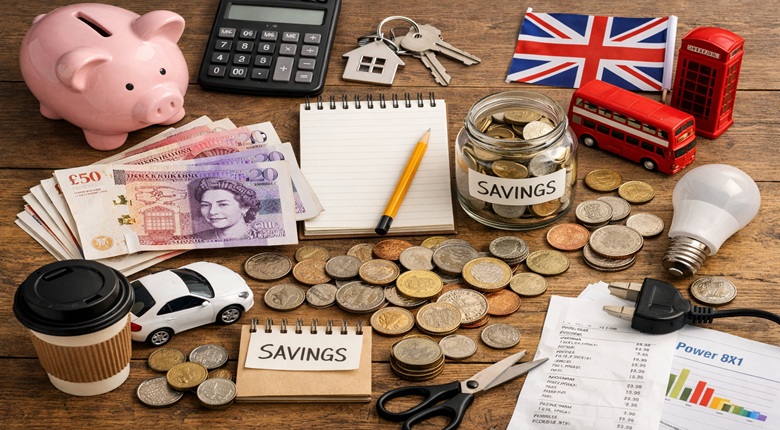
Savings
50 Ways to Save £350 a Month in the UK on Any Income
Table of Contents
- The £350/Month Goal — and Why It’s Reachable
- Part 1: Energy Bills (Tips 1–10) — Save up to £900/year
- Part 2: Groceries and Food (Tips 11–20) — Save up to £100/month
- Part 3: Subscriptions and Bills (Tips 21–30) — Save up to £80/month
- Part 4: Banking, Benefits and Hidden Money (Tips 31–40) — Save up to £100+/month
- Part 5: Transport, Shopping and Daily Habits (Tips 41–50) — Save up to £70/month
- Your £350/Month Savings Tracker
- Conclusion: Small Wins, Big Difference
- Frequently Asked Questions
- External References and Further Reading
The £350/Month Goal — and Why It’s Reachable
£350 a month is £4,200 a year. That is a holiday, a car service and a year’s worth of emergency savings, all from simply spending more deliberately on things you are already buying. It is not an extreme number, and it does not require a dramatic lifestyle change. It is the result of making 50 small, practical decisions across the main areas where British households consistently overpay.The UK cost of living in 2026 remains challenging. The Ofgem energy price cap sits at £1,641 per year for a typical household for the April to June 2026 quarter. Grocery price inflation remains above 5%. Council Tax in England has risen a further 4.9% to an average Band D bill of £2,392. And around £24 billion in benefits goes unclaimed by UK households every year — money that many families are legally entitled to but simply have not applied for.
Against that backdrop, the average UK household wastes hundreds of pounds per month on things they either do not use, could get cheaper with minimal effort, or do not even realise they are paying. This list of 50 strategies covers every major spending category: energy, groceries, subscriptions, banking, benefits, transport and daily habits. You do not need to do all 50. Pick the ones that fit your life and your circumstances, and the £350 target is well within reach.
How to use this guide: Each tip includes an estimated monthly or annual saving for a typical UK household. These are indicative figures based on current UK price data. Your actual saving will vary. Start with the tips in the highest-saving categories, particularly energy and groceries, and build from there.
Part 1: Energy Bills (Tips 1–10) — Save up to £900/year
Energy is the largest controllable household expense for most UK families. Even with Ofgem’s price cap in place, there is significant variation in what households pay, and considerable room to reduce consumption and tariff costs.1. Switch energy tariff or supplier ~£200–£400/year
Use comparison sites including MoneySuperMarket, Uswitch, or MoneySavingExpert’s Cheap Energy Club to find deals below the current price cap. The Ofgem cap is now £1,641 per year, but multiple suppliers offer tariffs below this. Five minutes of comparison can save £200 or more annually.2. Install a smart meter ~£120/year average
Smart meters let you see real-time energy usage, helping you cut waste. Households that use smart meters reduce electricity bills by approximately 3% and gas by 2.2%, according to the Behavioural Insights Team. Request one free from your supplier.3. Lower your thermostat by 1°C ~£80/year
Reducing your thermostat by just one degree cuts annual heating costs by roughly 10%. For a household using 11,500kWh of gas per year at current rates, that is around £80 saved with no change to your lifestyle beyond a single thermostat adjustment.4. Switch to LED bulbs throughout ~£40/year
The Energy Saving Trust estimates switching all bulbs to LED saves approximately £40 per year. LED bulbs also last far longer than halogen equivalents, reducing replacement costs.5. Draught-proof windows, doors and floors ~£20–40/year
Draught-proofing is one of the cheapest home improvements with the fastest payback. Sealing gaps around windows, doors and skirting boards saves approximately £20–40 annually on energy bills, according to the Energy Saving Trust.6. Air-dry your laundry ~£100–£200/year
A tumble dryer costs approximately 50p to £1 per cycle. Air-drying on a rack or washing line eliminates that cost entirely. Households that currently use a dryer for every load can save £100 to £200 annually simply by letting clothes dry naturally.7. Wash clothes at 30°C instead of 40°C ~£10–15/year
Modern detergents work effectively at 30°C. Reducing wash temperature from 40°C cuts energy use for that cycle by approximately 40%. This is an effortless change with no impact on cleaning results.8. Eliminate standby power consumption ~£100/year
Standby power (the ‘phantom load’ from appliances left on or on standby) accounts for approximately 30% of the average energy bill. Turning off the TV, gaming console, laptop and kitchen appliances at the plug rather than leaving them on standby can save around £100 per year.9. Use a water meter (if eligible) ~£100–£200/year
If your household has the same number of bedrooms as people (or more bedrooms than people), switching to a water meter will very likely reduce your water bill. Meters are free to request, and you can switch back within 12 months if it doesn’t save money.10. Apply for the Warm Home Discount ~£150 one-off/year
The Warm Home Discount provides a £150 reduction on energy bills for eligible low-income households. Applications open between October and March each year through your energy supplier. If you receive certain benefits, you may qualify automatically.Part 2: Groceries and Food (Tips 11–20) — Save up to £100/month
A family of four in the UK spends an average of £165 per week on food, including £121 on the weekly shop and £44 on restaurants and takeaways. Grocery spending is one of the most flexible categories in the household budget, and even modest adjustments produce significant savings.11. Switch to Aldi or Lidl for the majority of your shop ~£50–80/month
Independent price comparisons consistently rank Aldi and Lidl as the cheapest UK supermarkets by 15 to 25% compared with Tesco, Sainsbury’s and Asda on a comparable basket. A family currently spending £120/week at a mid-range supermarket could save £80+ monthly by switching most of their shop.12. Choose own-brand products over branded ~£15–30/month
Supermarket own-brand products are consistently 20–40% cheaper than branded equivalents, often with identical or comparable quality. MoneySavingExpert calls this the ‘downshift challenge’. Swapping branded items systematically across one weekly shop typically saves £10–15 immediately.13. Meal plan for the week and stick to a list ~£20–40/month
The average UK family wastes approximately £700 per year in food, equivalent to £58 per month. Meal planning before shopping eliminates impulse buying and dramatically reduces waste. Write the list, follow it, and do not shop hungry.14. Use supermarket loyalty schemes and apps ~£10–25/month
Tesco Clubcard and Nectar Card offer genuine savings, particularly for Clubcard prices (exclusive discounts that can be 30–50% below standard shelf price). Using the apps before shopping to check personalised offers takes minutes and consistently reduces bills.15. Use the Too Good To Go app for reduced food ~£15–25/month
Too Good To Go lets restaurants and food shops sell surplus food at a fraction of the original price. Magic Bags typically cost £3–5 and contain £10–15 worth of food. Even using it two to three times per week creates meaningful savings.16. Cut takeaways to once weekly (or less) ~£40–80/month
The average UK household spends £44 per week on restaurants and takeaways. Reducing to once per week and cooking at home on other days saves £40–80 per month with no reduction in enjoyment — home-cooked meals are almost always cheaper and often better.17. Reduce meat intake twice per week ~£15–30/month
Meat is one of the highest-cost ingredients in the average British diet. Replacing meat with eggs, lentils, tinned fish, or vegetables for two or three meals per week reduces grocery spending meaningfully while often improving nutritional variety.18. Buy in bulk where cost-effective ~£10–20/month
Staples like pasta, rice, tinned goods, cleaning products and toiletries are almost always cheaper per unit when bought in larger quantities. Bulk buying requires checking the per-unit price (not just the shelf price) and having space to store items.19. Compare prices with Trolley.co.uk or MySupermarket before shopping ~£8–15/month
Free price comparison apps like Trolley.co.uk show which supermarket has the cheapest price for specific items at any given time. Checking a few staples before shopping can redirect £10+ of savings per weekly shop.20. Make coffee at home; take lunch to work ~£60–80/month
A daily café coffee at £3.50 costs £70+ per month. A daily meal deal at £4 costs £80+ per month. Replacing these with home-made equivalents is one of the fastest monthly savings available to working adults.Part 3: Subscriptions and Bills (Tips 21–30) — Save up to £80/month
21. Audit all subscriptions and cancel unused ones ~£20–50/month
Subscription creep is pervasive. Check three months of bank statements for recurring payments. Gym memberships, streaming services, apps, magazines, and box subscriptions often continue after the initial enthusiasm fades. Cancelling two or three typically saves £20 to £50 per month immediately.22. Negotiate with your broadband provider or switch ~£10–25/month
Broadband providers reserve their best prices for new customers. If you have been with the same provider for more than 18 months, call their retention team, mention you are considering switching, and ask for their best deal. If they cannot match a competitor’s price, switch. New customer deals typically save £120 to £250 per year.23. Switch to a SIM-only mobile contract ~£10–20/month
If your phone is paid off, moving from a handset plan to a SIM-only contract typically halves the monthly cost. SIM-only plans providing 20GB+ of data are available from £5–10 per month from networks including Smarty, iD Mobile and Voxi.24. Bundle streaming services strategically ~£10–15/month
Having Netflix, Disney+, Apple TV, Spotify and Amazon Prime simultaneously costs £35–45 per month. Rotate subscriptions month by month rather than running them all simultaneously, use family plans where possible, and check whether Amazon Prime or Sky bundles reduce your overall cost.25. Switch car insurance 21 days before renewal ~£15–40/month
Insurance prices are consistently lower when switching 21 days before renewal rather than on renewal day. Compare quotes on Comparethemarket, GoCompare and MoneySuperMarket. Switching providers even if the price difference is modest is usually worth it — loyalty rarely pays in the UK insurance market.26. Review home insurance annually and shop around ~£8–15/month
As with car insurance, home and contents insurance prices drop significantly when you shop around at renewal. Use comparison sites, and consider whether you need contents and buildings insurance separately or if a combined policy is cheaper.27. Check your Council Tax band ~£10–40+/month
MoneySavingExpert estimates hundreds of thousands of UK homes are in the wrong Council Tax band. Checking whether your band is correct takes minutes on the government’s Valuation Office Agency website. If you have grounds to challenge it, a successful appeal can generate a rebate and permanent reduction. Also check whether a single-person discount (25% off) applies.28. Request a social tariff for broadband ~£10–30/month
If you receive Universal Credit, Pension Credit or other qualifying benefits, all major broadband providers are required to offer a social tariff. These are typically £12–15 per month versus £30–40 for standard plans. Many eligible households are not on one simply because they have not asked.29. Pay bills by Direct Debit ~£5–10/month
Most UK energy, insurance and service providers charge a premium for non-Direct Debit payment methods. Switching to Direct Debit removes these surcharges, which typically add £5–10 per month across multiple bills.30. Check whether you are overpaying for TV packages ~£10–25/month
Sky and Virgin Media packages often include channels and services that households never watch. Reviewing your package and removing unused add-ons, or switching to a Freeview aerial plus a single streaming service, frequently saves £10–25 per month.Part 4: Banking, Benefits and Hidden Money (Tips 31–40) — Save up to £100+/month
This is the most consistently overlooked area of household savings in the UK. Billions of pounds in benefits go unclaimed every year, and the banking sector routinely pays switching bonuses and cashback that most households never collect.31. Check what benefits you are entitled to ~£50–£500+/month
Around £24 billion in UK benefits goes unclaimed every year. Use free calculators from Turn2Us or Entitledto to check your entitlements in 10 minutes. Eligible benefits may include Universal Credit, Council Tax Reduction, Child Benefit, Working Tax Credit, Carer’s Allowance, Pension Credit, and many others.32. Switch current accounts for a cash bonus ~£150–£210 one-off
Banks including Lloyds, Halifax, NatWest, and Nationwide regularly offer £150–£210 to switch current accounts using the Current Account Switch Service (CASS). The switch takes seven working days and is fully guaranteed. You can switch multiple times per year to collect multiple bonuses.33. Move savings to a high-interest account or cash ISA ~£20–50+/month
With the Bank of England base rate at 4.5% in 2026, easy-access savings accounts and cash ISAs are paying meaningful interest. Moving £10,000 from a 0.1% easy-access account to a 4.5% account generates £440 extra per year. Use your £20,000 ISA allowance to keep interest tax-free.34. Use a cashback credit card for regular spending ~£15–25/month
Cashback credit cards including American Express Platinum Cashback and the Santander All-in-One card pay 0.5–1% back on all spending. Households that spend £1,500 per month on the card (and clear the balance in full each month) earn £90–£180 per year in cashback.35. Reclaim lost pension, savings and investments Up to £100s one-off
Billions sit in dormant UK savings accounts and forgotten pension pots. Use MyLostAccount.org.uk (free) to trace old bank and building society accounts. Use the government’s pension tracing service for lost pensions. Gretel traces lost investments and insurance policies.36. Claim your full Personal Savings Allowance Tax saving worth £200+/year
Basic-rate UK taxpayers can earn £1,000 in savings interest per year tax-free. Higher-rate taxpayers can earn £500 tax-free. If your savings are spread across multiple accounts, make sure you are tracking total interest so you can claim the allowance in full and move to ISAs if you exceed it.37. Check for council tax reduction (not just standard discount) ~£10–60/month
Council Tax Reduction (previously Council Tax Benefit) is means-tested support that can reduce your bill by up to 100% if you are on a low income. It is entirely separate from the single-person discount and from checking your band. Apply through your local council.38. Use cashback sites for purchases you are already making ~£10–20/month
Cashback sites including TopCashback and Quidco pay cash back on purchases made through their portals with hundreds of UK retailers, insurance providers and utility companies. Using them for purchases you were going to make anyway generates typically £100–£250 per year for an active user.39. Claim tax rebates if working from home or on PAYE ~£100–£300 one-off
HMRC allows employed workers who work from home to claim a working from home tax relief of £6 per week without any receipts (£312 per year, worth £62 in tax relief for a basic-rate taxpayer). You can also claim backdated relief going back four tax years using the government’s P87 form.40. Review your tax code — HMRC makes errors ~£50–£200+ one-off
HMRC tax codes are frequently wrong. Check your payslip and verify your code at gov.uk. An incorrect tax code can mean you are paying too much income tax every month. Contacting HMRC to correct a code error can trigger a rebate and an immediate reduction in monthly tax deductions.Part 5: Transport, Shopping and Daily Habits (Tips 41–50) — Save up to £70/month
41. Compare fuel prices with PetrolPrices.com ~£10–20/month
Petrol prices vary by up to 10p per litre within a few miles. Checking PetrolPrices.com before filling up identifies the cheapest station nearby. Supermarket forecourts (particularly Asda and Sainsbury’s) are consistently among the cheapest.42. Walk or cycle for journeys under 2 miles ~£20–40/month
Short car journeys are among the most fuel-inefficient trips a vehicle makes (a cold engine uses more fuel per mile). Replacing a daily commute or errand under 2 miles with walking or cycling saves fuel, parking costs, and vehicle wear.43. Buy train tickets in advance using SplitSave or Trainline ~£15–30/month
Train fare splitting (buying two tickets for a journey where changing at a middle station without leaving the train is cheaper than a through ticket) can save 20–50% on some routes. Apps including SplitSave and TrainSplit calculate this automatically. Booking advance tickets 12 weeks out also saves significantly.44. Use Airtime Rewards or in-store cashback loyalty ~£5–10/month
Airtime Rewards links your debit or credit card to participating retailers and automatically knocks cashback off your phone bill. Many UK retailers including McDonald’s, Boots and Halfords participate. The saving is small per transaction but accumulates automatically without any extra effort.45. Pause or cancel gym membership and exercise for free ~£20–50/month
Gym memberships average £30–60 per month in the UK. The NHS Couch to 5K app, YouTube workout channels (Joe Wicks, Yoga with Adriene), local park runs, and borough leisure centre pay-as-you-go rates provide effective exercise at a fraction of the cost or free.46. Use a no-spend challenge once per month ~£20–40/month
A no-spend day (or weekend) where you commit to buying only absolute essentials has two benefits: the direct saving from deferred spending, and the habit of examining whether impulse purchases were actually necessary. Even one no-spend weekend per month saves £20 to £40 for most households.47. Shop for clothing and household items second-hand ~£15–30/month
Vinted, Depop, eBay and local charity shops sell clothing, furniture, books, and homeware at 70 to 90% below new retail prices. For children’s clothing in particular (which is outgrown rapidly), buying second-hand is simply the rational choice.48. Use library services for books, DVDs and online courses ~£10–20/month
UK public libraries offer free book borrowing, but also free access to digital services including BorrowBox (ebooks and audiobooks), Kanopy (films), and in many areas free access to online learning platforms. Replacing a book-buying or streaming habit with library services saves £10 to £20 monthly.49. Consolidate trips to reduce mileage and impulse spending ~£10–20/month
Combining multiple errands into a single trip reduces fuel costs and removes the temptation of being near shops more frequently. Planning a weekly ‘errand loop’ rather than making individual trips throughout the week reduces both driving costs and unplanned spending.50. Set up a separate savings account and automate a transfer on payday ~Behavioural saving: variable
The most effective saving technique identified by UK financial research is automation. The moment your salary arrives, automatically transfer a fixed sum to a separate savings account before you have the opportunity to spend it. Even £50 per month automated consistently beats £200 planned but optional.Your £350/Month Savings Tracker
The table below shows how selecting a realistic combination of tips adds up to the £350 target. You do not need all 50 — most households will exceed the target by focusing on the biggest-impact categories.| Category | Tips | Typical Monthly Saving |
| Energy bills | 1–10 | £60–75 |
| Groceries and food | 11–20 | £75–100 |
| Subscriptions and bills | 21–30 | £40–60 |
| Banking, benefits, hidden money | 31–40 | £80–100+ |
| Transport, shopping, habits | 41–50 | £30–50 |
| Combined total (realistic range) | All 50 | £285–385+/month |
The key insight: You do not need to implement all 50 tips to reach £350/month. Most households will hit the target by tackling the three highest-impact areas for their own situation. For a family with unclaimed benefits and an unused gym membership, tips 31 and 45 alone might deliver £100/month. Start with the five tips that take less than 10 minutes each.
Conclusion
The £350-per-month saving in this guide is not based on sacrifice. It is based on paying attention. The average UK household overpays on energy because they have never compared tariffs. They waste food because they do not meal plan. They pay for subscriptions they forgot they had. They miss out on benefits they are entitled to because they assumed they did not qualify. They pay too much tax because their HMRC code has never been checked.None of the 50 strategies in this guide require you to earn more money, go without things you value, or make dramatic changes to how you live. They require about five hours of one-time setup — comparing tariffs, cancelling unused subscriptions, running a benefits check, updating your banking — and a handful of small ongoing habits around food and daily spending.
£4,200 per year is the equivalent of a very good holiday, a year of school fees, a significant start to an emergency fund, or the beginning of a genuine savings habit that compounds over time. It is sitting in the gap between what you currently pay and what you actually need to pay. This guide is the map. The decisions are yours.
Frequently Asked Questions
Is it realistic to save £350 per month in the UK on a modest income?
Yes. For many households, particularly those not currently receiving benefits they are entitled to, £350 per month is conservative. A single successful benefits check can deliver £50–£300 per month in previously unclaimed entitlements. Combined with grocery switching, energy tariff comparison and subscription cancellation, the target is reachable without significant sacrifice.How do I check if I’m in the wrong Council Tax band?
Visit the Valuation Office Agency (VOA) website at gov.uk to find your property’s council tax band. Compare it with neighbouring, similar properties. If comparable homes are in a lower band, you may have grounds to appeal. MoneySavingExpert has a detailed free guide on the process and the potential refunds available.What is the cheapest supermarket in the UK in 2026?
Independent price comparisons consistently rank Aldi and Lidl as the cheapest UK supermarkets, typically 15 to 25% cheaper than Tesco, Sainsbury’s and Asda on a comparable basket. Trolley.co.uk allows you to compare prices on specific items across all major supermarkets in real time.How do I claim unclaimed benefits in the UK?
Use the free online calculators at Turn2Us (turn2us.org.uk) or Entitledto (entitledto.co.uk). These take approximately 10 minutes to complete and tell you what benefits you may be eligible for, including Universal Credit, Council Tax Reduction, Child Benefit, Working Tax Credit, Carer’s Allowance and Pension Credit. Around £24 billion in benefits goes unclaimed in the UK annually.What is the Warm Home Discount and how do I apply?
The Warm Home Discount is a £150 reduction on energy bills for eligible low-income households, offered through energy suppliers. It is funded by the government and typically opens for applications between October and March. Some households receive it automatically; others must apply directly to their supplier. Check eligibility at gov.uk.How much money can I make from bank switching bonuses in the UK?
Major UK banks including Lloyds, Halifax, NatWest, Nationwide, and others have paid £150 to £210 to switch current accounts using the Current Account Switch Service (CASS). The switch is guaranteed and takes seven working days. You can potentially switch multiple times per year to collect multiple bonuses, depending on eligibility criteria for each bank’s offer.What are social tariff broadband deals and who qualifies?
Social tariff broadband deals are discounted internet packages for people on Universal Credit, Pension Credit or certain other qualifying benefits. Providers including BT, Sky, Virgin Media, Vodafone and Hyperoptic offer them at roughly £12–15 per month, compared with £30–40+ for standard plans. Apply directly to your provider if you receive qualifying benefits.Is it worth switching energy suppliers in 2026?
Yes, if you are on your supplier’s standard variable tariff. Multiple suppliers are now offering fixed tariffs below the Ofgem price cap of £1,641 per year. Use MoneySavingExpert’s Cheap Energy Club, Uswitch or MoneySuperMarket to compare. Even a £200 annual saving makes the 10-minute comparison worthwhile.How do I stop wasting money on subscriptions?
Check three months of bank statements for recurring payments. For each one, ask: do I actively use this? Would I miss it? Could I get the same service free or cheaper? Cancelling two or three forgotten subscriptions typically saves £20 to £50 per month immediately. Set a diary reminder every six months to repeat the audit.What is the best free budgeting tool for UK households?
MoneyHelper (moneyhelper.org.uk), run by the Money and Pensions Service, offers a free Budget Planner that is widely regarded as the clearest budgeting tool for UK households. HMRC’s tax calculator and the Turn2Us benefits calculator also serve specific financial planning needs. Many UK banks now offer in-app spending categorisation tools that serve as an effective free budget tracker.External References and Further Reading
MoneyHelper — How to Save Money on Household Bills (UK Government-backed guidance), MoneySavingExpert — Council Tax Discounts Guide (Martin Lewis), MoneySavingExpert — Best Bank Accounts: Switching Bonuses and Cashback, Which? — 26 Expert Ways to Save and Make Money in 2026, Rest Less — How to Save Money in 2026: 21 Best Tips, Kaeltripton.com — 50 Ways to Save Money UK (March 2026), Ofgem / British Brief — 10 Energy-Saving Tips to Slash Household Bills, Sunsave — 19 Clever Ways to Reduce Your Energy Bills UK 2026, MoneyMagpie — Council Tax in 2026: How Much It’s Risen, Help and Discounts, UKCalculator — Cost of Living UK 2026: How to Cut Bills, Turn2Us (free benefits calculator), Entitledto (free benefits calculator)

0 Comments Comments