
Taxes
Do You Pay Tax on Crypto assets? How to Report It UK

HMRC has just published its first official crypto tax statistics: 17,600 UK investors declared £1.38 billion in crypto asset gains in 2024–25. 240 investors each reported over £1 million in gains. From January 2026, exchanges must report your transactions directly to HMRC. The era of crypto operating below the tax radar is over.

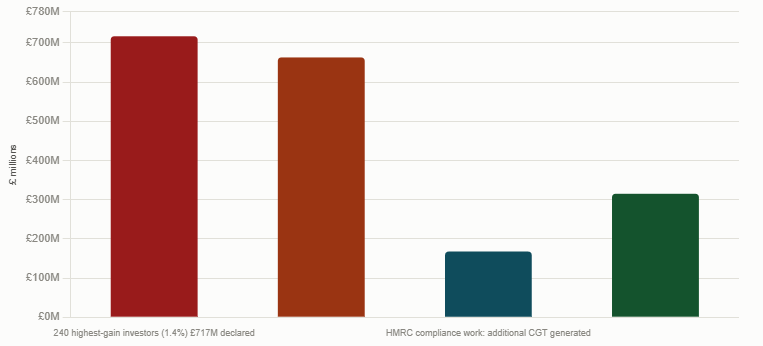
These are the figures that were reported. The publication of the statistics was explicitly framed as a baseline, because the data represents only what taxpayers declared voluntarily through Self Assessment — before the Crypto asset Reporting Framework (CARF) began requiring crypto exchanges to report user transaction data directly to HMRC. From 1 January 2026, UK crypto asset service providers began collecting customer and transaction data under CARF. First reports are due between January and May 2027. From that point, HMRC will have a second data source to compare against taxpayer declarations, covering activity in 52 jurisdictions.
John-Paul Marks, HMRC’s Permanent Secretary and Chief Executive, stated at the publication of the statistics: ‘We want to make it as easy as possible for people to understand and meet their tax obligations when it comes to crypto assets. As new international reporting rules come into force, it’s more important than ever for people to check they are paying any tax owed.’ This guide explains exactly what those obligations are, how they have changed, and what needs to happen before the Self Assessment deadline of 31 January 2027 for the 2025–26 tax year.
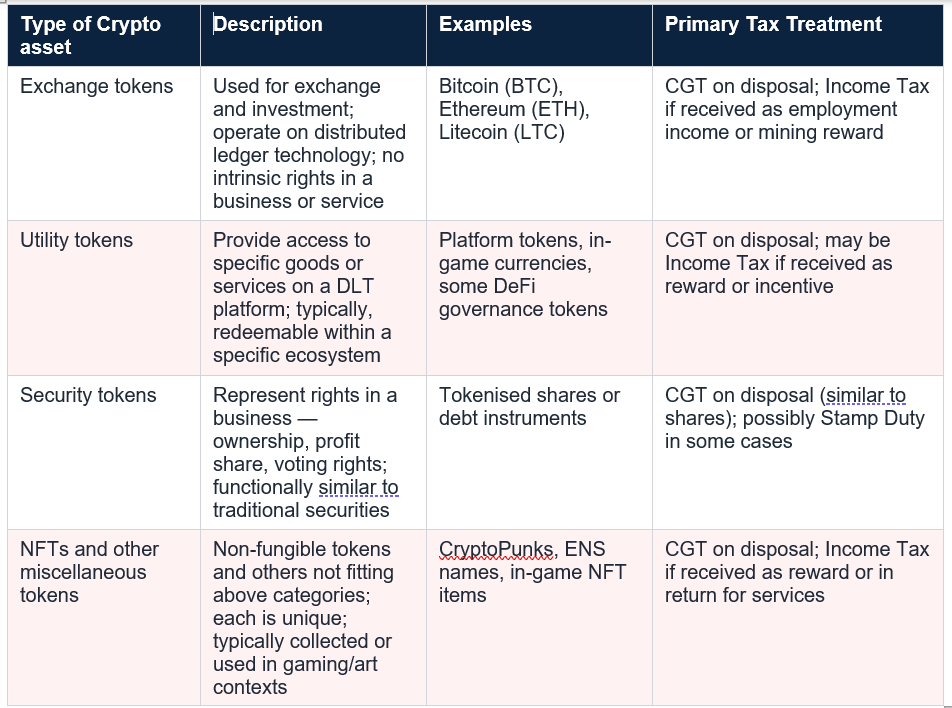
The classification matters because it affects which rules apply at disposal and which tax treatment applies on receipt. Most individual crypto investors hold exchange tokens (Bitcoin, Ethereum and similar) and will primarily face Capital Gains Tax on profitable disposals and Income Tax on rewards, staking income, or mining proceeds. Complex DeFi activity — liquidity pools, wrapped tokens, lending protocols — may trigger additional or different tax events.
CGT rates on crypto assets in 2026/27 (England, Wales, and Northern Ireland):
The CGT Annual Exempt Amount for 2026/27 is £3,000. Gains below this threshold in a single tax year are not subject to CGT — but reporting obligations may still apply depending on the total value of disposals (see Section 7 for reporting thresholds). The Annual Exempt Amount has been significantly reduced in recent years: it was £12,300 in 2022/23, £6,000 in 2023/24, and £3,000 from 2024/25 onwards.
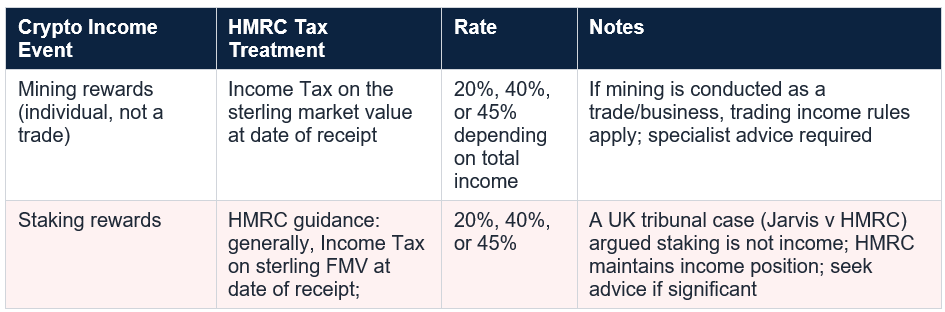
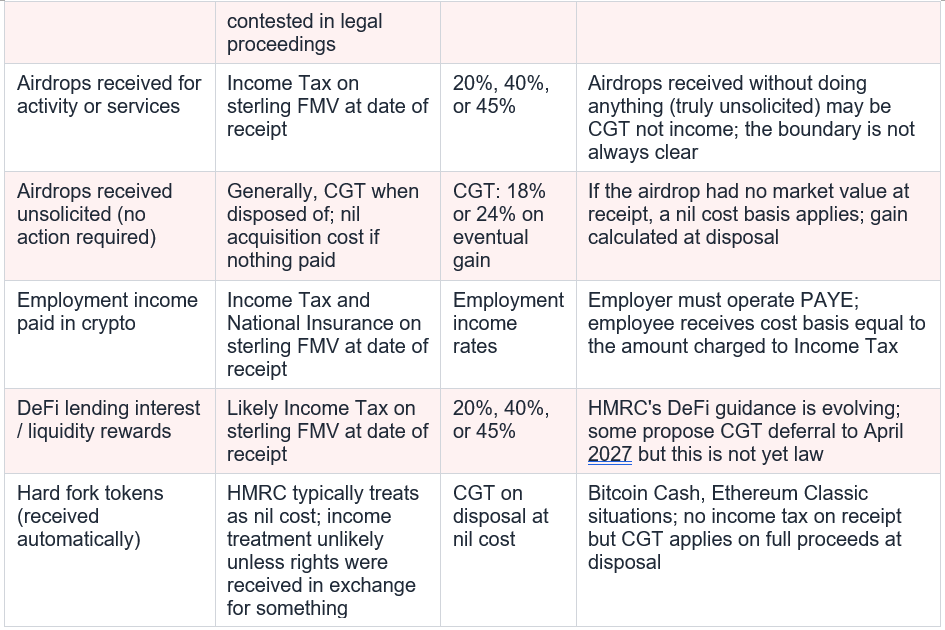
When crypto is received as income, the sterling market value at the date of receipt is the taxable amount for Income Tax purposes and becomes the cost basis for any future CGT calculation when the crypto is eventually disposed of. Keeping accurate records of the GBP value at the time of receipt is essential.
For each matched disposal, the gain or loss calculation is:
Gain = Disposal Proceeds (GBP) − Allowable Cost − Allowable Expenses
Allowable expenses include transaction fees directly attributable to the acquisition or disposal — exchange fees, gas fees on Ethereum transactions, and other direct costs of the transaction. General portfolio management costs, exchange subscription fees, and similar overheads are not deductible.
Reporting thresholds for CGT:
What CARF requires:
The specific forms and boxes:
For the 2024–25 tax year, HMRC’s broader compliance and education work on crypto generated an estimated £168 million in additional CGT. With CARF data flowing to HMRC from 2027, the scale of compliance activity is expected to increase materially.
Records to keep for each transaction:
HMRC’s compliance and education work on crypto generated £168 million in additional CGT during 2024–25 before CARF data was available. The Treasury’s projection is that CARF will add £315 million in additional collections by April 2030. These are not aspirational numbers. They are forecasts based on the gap between what is being declared and what the transaction data is expected to show.
For UK crypto investors, the practical implication is straightforward: any taxable crypto activity — sales, swaps, staking income, mining rewards, DeFi proceeds — must be reported to HMRC through Self Assessment. The 31 January 2027 deadline applies to the 2025–26 tax year. Records must be kept in GBP sterling values at the date of each transaction. Unreported historical gains are best addressed through voluntary disclosure with professional advice, before CARF data enables HMRC to identify discrepancies independently.
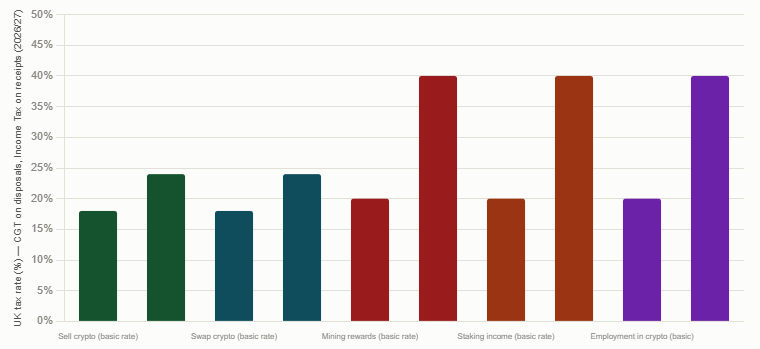
Yes. HMRC has taxed crypto assets since 2018 and treats them as capital assets, not currency. Most UK crypto investors face two potential tax obligations: Capital Gains Tax (CGT) when they dispose of crypto assets at a profit, and Income Tax when they receive crypto assets as income (from mining, staking, airdrops, or employment). CGT rates for crypto assets in 2026/27 are 18% for basic-rate taxpayers and 24% for higher-rate taxpayers. Income Tax rates are 20%, 40%, or 45% depending on total income. The first £3,000 of net capital gains each tax year is exempt from CGT (the Annual Exempt Amount). Crypto activity must be reported through Self Assessment if reporting thresholds are met.
What is a crypto disposal for HMRC purposes?
HMRC treats the following as disposal events that may trigger Capital Gains Tax: selling crypto assets for fiat currency (GBP or any other); exchanging one crypto asset for another (e.g. swapping Bitcoin for Ethereum); using crypto to pay for goods or services; and gifting crypto to anyone other than a spouse or civil partner. Moving crypto between your own wallets is NOT a disposal. Buying crypto with fiat is NOT a disposal — it creates a cost basis. Each disposal must be valued in GBP at the date of the transaction, even where no fiat currency changed hands. This means every crypto-to-crypto swap requires a GBP valuation of both the asset disposed of and the asset acquired.
What is CARF and how does it affect UK crypto investors?
The Crypto asset Reporting Framework (CARF) is an OECD international standard that the UK began implementing from 1 January 2026. Under CARF, UK crypto asset service providers (exchanges, brokers, and other intermediaries) are required to collect customer information (name, address, NI number) and transaction data, and report it to HMRC. First reports covering 2026 activity are due between January and May 2027. HMRC will then exchange information with tax authorities in 52 jurisdictions. This gives HMRC a systematic second data source to compare against what taxpayers declare in Self Assessment. CARF does not create new tax obligations — UK crypto investors were already legally required to report gains and income. What CARF changes is HMRC's ability to detect non-compliance. Non-compliance penalties for service providers are up to £300 per user.
What are the CGT rates on crypto gains in the UK in 2026?
CGT rates on crypto asset gains in 2026/27 (England, Wales, and Northern Ireland) are 18% for basic-rate taxpayers and 24% for higher-rate and additional-rate taxpayers. These rates were changed from 10% and 20% respectively in the Autumn Budget October 2024. Scotland uses the same CGT rates for crypto assets as the rest of the UK (CGT is not devolved). The rate that applies depends on whether your total income including the crypto gain falls within the basic-rate band (up to £50,270) or above it. The first £3,000 of net capital gains are covered by the Annual Exempt Amount and not subject to CGT. Losses can be offset against gains in the same year, or carried forward to future years.
How do I report crypto to HMRC?
Crypto gains and income are reported through Self Assessment. If you have reportable crypto activity and are not already in Self Assessment, you must register at GOV.UK by 5 October following the end of the relevant tax year (5 October 2026 for the 2025/26 tax year). Capital gains go on the SA108 Capital Gains Summary, which from 2024/25 includes a dedicated crypto assets section. Crypto income (mining, staking, employment) goes on Box 17 of the SA100. The deadline for online Self Assessment filing for 2025/26 is 31 January 2027. Most crypto tax software (Koinly, CoinTracking, TaxBit) can produce HMRC-compatible tax reports from exchange APIs. You must report to HMRC if your net gains exceed £3,000, or if your total disposal proceeds for the year exceed £50,000 even if gains are below £3,000.
What happens if I have not reported crypto gains in previous years?
HMRC's penalties for non-disclosure range from 0–30% of unpaid tax for unprompted voluntary disclosure to up to 200% for deliberate concealment. In serious cases, HMRC can assess up to 20 years of historical gains (Crowe UK April 2026). HMRC has been receiving exchange data since approximately 2021 and uses blockchain analytics. From 2027, CARF will provide systematic transaction data. HMRC operates the Crypto asset Disclosure Service (CDS) for voluntary disclosure of previously unreported gains or income. However, seeking professional advice before making any disclosure is strongly recommended — the CDS is not always the most tax-efficient or lowest-penalty route, and the right approach depends on the scale and nature of the unreported activity.
Table of Contents
- HMRC’s First Crypto Tax Statistics — and What They Signal
- How HMRC Classifies Crypto assets for Tax Purposes
- Capital Gains Tax on Crypto: When It Applies and at What Rate
- What Counts as a Crypto Disposal?
- Income Tax on Crypto: Mining, Staking, Airdrops, and Employment
- The CGT Calculation: Section 104 Pooling, the Same Day Rule, and the 30-Day Rule
- The CGT Annual Exempt Amount and Reporting Thresholds
- The Crypto asset Reporting Framework (CARF): What Changed from January 2026
- How HMRC Already Knows About Your Crypto (Before CARF)
- How to Report Crypto Gains and Income: The Self Assessment Process
- DeFi, NFTs, and Edge Cases: Where the Rules Get Complex
- Penalties for Non-Disclosure and How to Correct Past Returns
- Legal Ways to Reduce Your Crypto Tax Bill
- Record-Keeping: What You Must Keep and for How Long
- Conclusion: The Era of Crypto Operating Below the Tax Radar Is Over
- Frequently Asked Questions
HMRC First Crypto Data: Gains Concentration
What Triggers Tax: Disposal vs Incone Event
HMRC’s First Crypto Tax Statistics — and What They Signal
On 27 and 28 August 2026, HM Revenue and Customs published its first-ever dedicated statistics on taxable crypto asset gains. The data covers the 2024 to 2025 tax year. The headline figures: 17,600 individuals reported £13.8 billion in crypto asset disposal proceeds and £1.38 billion in net capital gains. Of those 17,600 individuals, just 240 reported gains above £1 million each, collectively declaring £717 million — more than half of all declared gains from a group that represents 1.4 percent of reporting investors. The average gain reported per individual was approximately £78,000.These are the figures that were reported. The publication of the statistics was explicitly framed as a baseline, because the data represents only what taxpayers declared voluntarily through Self Assessment — before the Crypto asset Reporting Framework (CARF) began requiring crypto exchanges to report user transaction data directly to HMRC. From 1 January 2026, UK crypto asset service providers began collecting customer and transaction data under CARF. First reports are due between January and May 2027. From that point, HMRC will have a second data source to compare against taxpayer declarations, covering activity in 52 jurisdictions.
John-Paul Marks, HMRC’s Permanent Secretary and Chief Executive, stated at the publication of the statistics: ‘We want to make it as easy as possible for people to understand and meet their tax obligations when it comes to crypto assets. As new international reporting rules come into force, it’s more important than ever for people to check they are paying any tax owed.’ This guide explains exactly what those obligations are, how they have changed, and what needs to happen before the Self Assessment deadline of 31 January 2027 for the 2025–26 tax year.
How HMRC Classifies Crypto assets for Tax Purposes
HMRC does not treat crypto assets as currency. It treats them as property — capital assets for most individual investors. This classification, established clearly in HMRC’s Crypto assets Manual and consistently maintained since 2018, determines which taxes apply and how gains and income are calculated. HMRC identifies four main types of crypto assets:The classification matters because it affects which rules apply at disposal and which tax treatment applies on receipt. Most individual crypto investors hold exchange tokens (Bitcoin, Ethereum and similar) and will primarily face Capital Gains Tax on profitable disposals and Income Tax on rewards, staking income, or mining proceeds. Complex DeFi activity — liquidity pools, wrapped tokens, lending protocols — may trigger additional or different tax events.
Capital Gains Tax on Crypto: When It Applies and at What Rate
Capital Gains Tax is the primary tax that applies when a UK individual disposes of crypto assets held as a personal investment and realises a gain. CGT is charged on the gain — the difference between the disposal proceeds and the allowable acquisition cost — not on the full disposal value.CGT rates on crypto assets in 2026/27 (England, Wales, and Northern Ireland):
- Basic-rate taxpayers: 18 percent on gains from crypto assets (this rate was changed from 10 percent to 18 percent in the Autumn Budget October 2024).
- Higher-rate and additional-rate taxpayers: 24 percent on gains from crypto assets (changed from 20 percent in the Autumn Budget October 2024).
The CGT Annual Exempt Amount for 2026/27 is £3,000. Gains below this threshold in a single tax year are not subject to CGT — but reporting obligations may still apply depending on the total value of disposals (see Section 7 for reporting thresholds). The Annual Exempt Amount has been significantly reduced in recent years: it was £12,300 in 2022/23, £6,000 in 2023/24, and £3,000 from 2024/25 onwards.
What Counts as a Crypto Disposal?
HMRC’s definition of a ‘disposal’ for CGT purposes is broader than most investors expect. The following are all treated as disposals that may trigger a CGT calculation:- Selling crypto assets for fiat currency (GBP, USD, EUR, or any other fiat): the most obvious disposal event.
- Exchanging one crypto asset for another: swapping Bitcoin for Ethereum, or any token-for-token exchange, is a disposal of the first asset and an acquisition of the second — even if no fiat currency changes hands. Both sides must be valued in GBP at the time of the exchange.
- Using crypto to pay for goods or services: paying for a purchase with Bitcoin, for example, is a disposal of the Bitcoin at the market value in GBP at the time of the transaction.
- Gifting crypto to anyone other than a spouse or civil partner: a gift is treated as a disposal at the market value in GBP at the time of the gift. Gifts to spouses and civil partners are generally made at no gain, no loss.
- Disposing of NFTs: selling, exchanging, or gifting an NFT follows the same CGT logic as exchange tokens.
- Moving crypto between your own wallets: transferring from one wallet to another that you own does not create a disposal event. However, transaction fees paid on such transfers may be deductible against future gains on that pool.
- Buying crypto with fiat currency: this is an acquisition, not a disposal — it establishes a cost basis.
- Gifting to a spouse or civil partner: not a disposal; the recipient inherits the original cost basis.
Income Tax on Crypto: Mining, Staking, Airdrops, and Employment
While CGT applies to disposals of crypto held as a capital asset, Income Tax applies when crypto is received as income. The distinction is between receiving crypto because you held an asset (CGT on the eventual sale) and receiving crypto because you did something to earn it (Income Tax on receipt).When crypto is received as income, the sterling market value at the date of receipt is the taxable amount for Income Tax purposes and becomes the cost basis for any future CGT calculation when the crypto is eventually disposed of. Keeping accurate records of the GBP value at the time of receipt is essential.
The CGT Calculation: Section 104 Pooling, the Same Day Rule, and the 30-Day Rule
Calculating the gain on a crypto disposal is rarely as simple as ‘what I sold it for minus what I paid for it.’ HMRC requires the use of a specific share-matching methodology, adapted from the share disposal rules, with three layers of matching rules applied in sequence:Section 104 Pool (the main rule)
All acquisitions of the same crypto asset are pooled together into a ‘Section 104 pool,’ and the average cost basis across all acquisitions is used to calculate gains or losses. If you bought 1 BTC at £30,000 and later bought another 1 BTC at £60,000, your pool holds 2 BTC at an average cost of £45,000 each. A disposal of 1 BTC is matched to the pool at the £45,000 average cost, not to a specific lot. Different crypto assets have separate pools (Bitcoin pool, Ethereum pool, and so on).Same Day Rule (applied first)
If you buy and sell the same crypto asset on the same day, the acquisition and disposal are matched against each other first, before the pool is used. This prevents the pool from being used to claim a loss on a day where a matching purchase was made on the same day.30-Day Rule (Bed and Breakfasting, applied second)
If you sell a crypto asset and then buy the same crypto asset again within 30 days, the disposal is matched to the subsequent acquisition at that acquisition’s cost — rather than the pool cost. This prevents the artificial harvesting of a loss by selling and immediately repurchasing. The 30-day rule means that selling Bitcoin to crystallise a loss before year-end, then repurchasing within 30 days, will not generate the loss you intended — the repurchase cost is matched to the sale.For each matched disposal, the gain or loss calculation is:
Gain = Disposal Proceeds (GBP) − Allowable Cost − Allowable Expenses
Allowable expenses include transaction fees directly attributable to the acquisition or disposal — exchange fees, gas fees on Ethereum transactions, and other direct costs of the transaction. General portfolio management costs, exchange subscription fees, and similar overheads are not deductible.
The CGT Annual Exempt Amount and Reporting Thresholds
The CGT Annual Exempt Amount (AEA) for 2026/27 is £3,000. Gains below this level are not subject to CGT. Losses in the same tax year can be set against gains to reduce the taxable amount. Unused losses can be carried forward to future tax years to set against future gains — but they must be reported to HMRC in the tax year in which they arise to be preserved.Reporting thresholds for CGT:
- If your total net gains for the year are below £3,000 AND your total disposal proceeds for the year are below £50,000: no CGT report is required for that year. However, keeping records of all disposals is strongly recommended regardless.
- If your total disposal proceeds exceed £50,000 in the year (even if gains are below £3,000): you must report to HMRC, either through Self Assessment or by contacting HMRC directly.
- If your net gains exceed £3,000: Self Assessment must be filed and CGT paid.
The Crypto asset Reporting Framework (CARF): What Changed from January 2026
The Crypto asset Reporting Framework (CARF) is an international standard developed by the OECD and adopted by the UK from 1 January 2026. It is the most significant structural change to crypto tax enforcement since HMRC first issued guidance on crypto asset taxation in 2018.What CARF requires:
- From 1 January 2026, all UK crypto asset service providers — exchanges, brokers, and other intermediaries — are required to collect customer identification information and transaction data. This includes full name, address, National Insurance number, date of birth, and a record of all qualifying transactions.
- First provider reports, covering the 2026 calendar year’s activity, are due to be submitted to HMRC between January and May 2027 (bitcoin.com news, August 2026; cryptoslate.com August 2026).
- HMRC will then exchange information with tax authorities in 52 jurisdictions by May 2027, with a further 15 jurisdictions expected to join by 2028 (UHY Hacker Young, cited by cryptoslate.com).
- Penalties for service providers that fail to comply: up to £300 per user.
How HMRC Already Knows About Your Crypto (Before CARF)
CARF formalises and expands data collection that was already taking place. Crowe UK’s April 2026 analysis of CARF notes that HMRC has been receiving data from crypto exchanges since around 2021. This includes:- Information notices to major UK exchanges: HMRC has issued formal information notices to Coinbase, Binance, eToro, and other exchanges registered in the UK, requiring them to provide customer and transaction data.
- Coinbase data sharing: Coinbase, the UK’s largest registered digital asset company, already shares data with HMRC about customers with £5,000 worth of crypto assets or more.
- Blockchain analytics: HMRC uses analytics tools from firms including Chainalysis to trace on-chain transactions and link wallet addresses to identifiable individuals through exchange KYC (Know Your Customer) data.
- EOACC’s August 2026 guide notes: ‘HMRC crypto tax rules are already targeting crypto investors. Bitcoin’s value surging from £38,000 in August 2024 to £86,000 in January 2025 gave HMRC a clear incentive to track down and tax those gains.’
How to Report Crypto Gains and Income: The Self Assessment Process
Crypto gains and income in the UK are reported through Self Assessment, regardless of whether you are already in Self Assessment for other reasons. If you have reportable crypto activity and are not already in Self Assessment, you must register before 5 October following the end of the relevant tax year.The specific forms and boxes:
- SA100 (main Self Assessment Tax Return): Box 7 — tick if you have Capital Gains to declare. Box 17 in the additional information section — declare crypto income (mining, staking, employment income in crypto).
- SA108 (Capital Gains Summary): the Capital Gains pages where all disposals are listed. From the 2024–25 tax year, there is a new dedicated crypto assets section within the SA108 capital gains pages, making it impossible to overlook the reporting requirement for crypto.
- Step 1: Compile all disposal events for the tax year (6 April to 5 April). For each disposal: identify the date, the proceeds in GBP, the allowable cost from the Section 104 pool (or same-day/30-day matching), and any allowable expenses. Most crypto tax software (Koinly, CoinTracking, TaxBit, etc.) will produce an HMRC-compatible tax calculation if fed with exchange and wallet data.
- Step 2: Calculate the total gain or loss for each crypto asset, and then the total net gain or loss across all crypto assets for the year.
- Step 3: Identify any income events (mining, staking, airdrops). Calculate the sterling value at the date of receipt for each.
- Step 4: Register for Self Assessment (if not already registered) at gov.uk/register-for-self-assessment.
- Step 5: File the return and pay any tax due by 31 January 2027 for the 2025–26 tax year (31 October 2026 for paper returns).
DeFi, NFTs, and Edge Cases: Where the Rules Get Complex
The standard CGT disposal rules apply straightforwardly to buying and selling exchange tokens on major platforms. In Decentralised Finance (DeFi) and NFT activity, the position is more complex:DeFi: Liquidity Pools, Wrapping, and Lending
Moving tokens into a liquidity pool or lending protocol may or may not be a disposal, depending on whether your beneficial ownership changes and whether you receive a legally different asset in return. Cryptodaily’s July 2026 analysis notes: ‘Moving tokens into a protocol, wrapping, or bridging can sometimes be a disposal if your beneficial ownership changes or you get a legally different asset back.’ Wrapping ETH to WETH, for example, may be treated as exchanging one asset for another (a disposal of ETH and an acquisition of WETH). HMRC’s Crypto assets Manual is the definitive reference for DeFi tax treatment, and specialist advice is strongly recommended for regular DeFi users.NFTs
NFT disposals follow the same CGT logic as exchange tokens: selling, swapping, or gifting an NFT is a disposal at sterling market value. NFTs cannot be pooled — each is a unique asset with its own cost basis. Platform royalties earned as an NFT creator may constitute trading or other income subject to Income Tax.Proposed DeFi Tax Changes (Not Yet in Force)
The UK government has consulted on proposals to exempt certain DeFi disposals (such as depositing into liquidity pools) from immediate CGT and instead defer tax until the crypto is economically disposed of. Koinly’s July 2026 guide notes that neither of two draft proposals was in effect as of August 2026, but if passed, changes would take effect from April 2027. Until legislation is enacted, the current rules apply.Penalties for Non-Disclosure and How to Correct Past Returns
HMRC treats non-disclosure of crypto gains and income as seriously as non-disclosure of any other taxable income. The penalty structure for failure to declare:- Unprompted voluntary disclosure: lowest penalty rate, typically 0 to 30 percent of the unpaid tax.
- Prompted disclosure (HMRC has made contact): higher penalties, typically 15 to 30 percent.
- Deliberate non-disclosure: penalties of 30 to 100 percent of the unpaid tax, and potentially a public naming.
- Deliberate non-disclosure with concealment: penalties up to 200 percent (Crowe UK April 2026).
- In the most serious cases, HMRC can assess up to 20 years of historical gains or income where deliberate omission is found (Crowe UK April 2026).
For the 2024–25 tax year, HMRC’s broader compliance and education work on crypto generated an estimated £168 million in additional CGT. With CARF data flowing to HMRC from 2027, the scale of compliance activity is expected to increase materially.
Legal Ways to Reduce Your Crypto Tax Bill
Several legal strategies can reduce or defer CGT on crypto asset gains:- se the Annual Exempt Amount: the first £3,000 of net gains each tax year is free of CGT. For investors with relatively modest gains, planning disposals to stay within the AEA each year avoids tax entirely. Spouses and civil partners each have their own £3,000 AEA.
- Crystallise losses: realise losses on underperforming positions before year-end to offset gains in the same year. Remember the 30-day rule: you cannot immediately repurchase the same asset and claim the loss.
- Transfer to a spouse or civil partner: transfers between spouses are not disposals and do not trigger CGT at the time of transfer. Transferring crypto to a lower-rate taxpayer spouse before disposal means the eventual gain is taxed at the lower rate (18 percent instead of 24 percent for a higher-rate taxpayer).
- Carry forward losses: losses not used in the current year can be carried forward indefinitely to offset future gains, but they must be reported in the year they arise.
- Timing of disposals across tax years: if gains for the current year are approaching a threshold (the AEA or the basic-to-higher-rate boundary), deferring further disposals to the next tax year provides another full AEA and a fresh income threshold.
14. Record-Keeping: What You Must Keep and for How Long
HMRC requires records to be kept for at least four years from the end of the tax year to which they relate for most taxpayers, and up to six years for partnerships or trusts. Given the potential for 20-year assessments in cases of deliberate non-disclosure, comprehensive records are strongly advisable for crypto investors.Records to keep for each transaction:
- The date of acquisition and date of disposal.
- The number of units of the crypto asset acquired or disposed of.
- The GBP sterling value at the date of acquisition and at the date of disposal.
- The exchange or wallet through which the transaction occurred.
- Transaction fees (gas fees, exchange fees) associated with the acquisition or disposal.
- For income events: the date of receipt and sterling value at the date of receipt.
- Bank statements, exchange statements, and wallet histories confirming the above.
Conclusion
HMRC’s publication of its first dedicated crypto CGT statistics in August 2026 is not just a data release. It is a statement of intent. The figures — 17,600 taxpayers, £1.38 billion in declared gains, 240 investors reporting over £1 million each — provide the baseline against which CARF data will be compared from 2027. The framework gives HMRC systematic transaction-level data from exchanges in 52 jurisdictions. The combination of this data with on-chain analytics, existing exchange data sharing, and the dedicated crypto assets section now in the Self Assessment return creates a comprehensive compliance infrastructure that did not exist even three years ago.HMRC’s compliance and education work on crypto generated £168 million in additional CGT during 2024–25 before CARF data was available. The Treasury’s projection is that CARF will add £315 million in additional collections by April 2030. These are not aspirational numbers. They are forecasts based on the gap between what is being declared and what the transaction data is expected to show.
For UK crypto investors, the practical implication is straightforward: any taxable crypto activity — sales, swaps, staking income, mining rewards, DeFi proceeds — must be reported to HMRC through Self Assessment. The 31 January 2027 deadline applies to the 2025–26 tax year. Records must be kept in GBP sterling values at the date of each transaction. Unreported historical gains are best addressed through voluntary disclosure with professional advice, before CARF data enables HMRC to identify discrepancies independently.
Frequently Asked Questions
Do you pay tax on cryptocurrency in the UK?Yes. HMRC has taxed crypto assets since 2018 and treats them as capital assets, not currency. Most UK crypto investors face two potential tax obligations: Capital Gains Tax (CGT) when they dispose of crypto assets at a profit, and Income Tax when they receive crypto assets as income (from mining, staking, airdrops, or employment). CGT rates for crypto assets in 2026/27 are 18% for basic-rate taxpayers and 24% for higher-rate taxpayers. Income Tax rates are 20%, 40%, or 45% depending on total income. The first £3,000 of net capital gains each tax year is exempt from CGT (the Annual Exempt Amount). Crypto activity must be reported through Self Assessment if reporting thresholds are met.
What is a crypto disposal for HMRC purposes?
HMRC treats the following as disposal events that may trigger Capital Gains Tax: selling crypto assets for fiat currency (GBP or any other); exchanging one crypto asset for another (e.g. swapping Bitcoin for Ethereum); using crypto to pay for goods or services; and gifting crypto to anyone other than a spouse or civil partner. Moving crypto between your own wallets is NOT a disposal. Buying crypto with fiat is NOT a disposal — it creates a cost basis. Each disposal must be valued in GBP at the date of the transaction, even where no fiat currency changed hands. This means every crypto-to-crypto swap requires a GBP valuation of both the asset disposed of and the asset acquired.
What is CARF and how does it affect UK crypto investors?
The Crypto asset Reporting Framework (CARF) is an OECD international standard that the UK began implementing from 1 January 2026. Under CARF, UK crypto asset service providers (exchanges, brokers, and other intermediaries) are required to collect customer information (name, address, NI number) and transaction data, and report it to HMRC. First reports covering 2026 activity are due between January and May 2027. HMRC will then exchange information with tax authorities in 52 jurisdictions. This gives HMRC a systematic second data source to compare against what taxpayers declare in Self Assessment. CARF does not create new tax obligations — UK crypto investors were already legally required to report gains and income. What CARF changes is HMRC's ability to detect non-compliance. Non-compliance penalties for service providers are up to £300 per user.
What are the CGT rates on crypto gains in the UK in 2026?
CGT rates on crypto asset gains in 2026/27 (England, Wales, and Northern Ireland) are 18% for basic-rate taxpayers and 24% for higher-rate and additional-rate taxpayers. These rates were changed from 10% and 20% respectively in the Autumn Budget October 2024. Scotland uses the same CGT rates for crypto assets as the rest of the UK (CGT is not devolved). The rate that applies depends on whether your total income including the crypto gain falls within the basic-rate band (up to £50,270) or above it. The first £3,000 of net capital gains are covered by the Annual Exempt Amount and not subject to CGT. Losses can be offset against gains in the same year, or carried forward to future years.
How do I report crypto to HMRC?
Crypto gains and income are reported through Self Assessment. If you have reportable crypto activity and are not already in Self Assessment, you must register at GOV.UK by 5 October following the end of the relevant tax year (5 October 2026 for the 2025/26 tax year). Capital gains go on the SA108 Capital Gains Summary, which from 2024/25 includes a dedicated crypto assets section. Crypto income (mining, staking, employment) goes on Box 17 of the SA100. The deadline for online Self Assessment filing for 2025/26 is 31 January 2027. Most crypto tax software (Koinly, CoinTracking, TaxBit) can produce HMRC-compatible tax reports from exchange APIs. You must report to HMRC if your net gains exceed £3,000, or if your total disposal proceeds for the year exceed £50,000 even if gains are below £3,000.
What happens if I have not reported crypto gains in previous years?
HMRC's penalties for non-disclosure range from 0–30% of unpaid tax for unprompted voluntary disclosure to up to 200% for deliberate concealment. In serious cases, HMRC can assess up to 20 years of historical gains (Crowe UK April 2026). HMRC has been receiving exchange data since approximately 2021 and uses blockchain analytics. From 2027, CARF will provide systematic transaction data. HMRC operates the Crypto asset Disclosure Service (CDS) for voluntary disclosure of previously unreported gains or income. However, seeking professional advice before making any disclosure is strongly recommended — the CDS is not always the most tax-efficient or lowest-penalty route, and the right approach depends on the scale and nature of the unreported activity.
0 Comments
Be the first to share your thoughts on this article.