

Hustle
How Anyone Can Build Digital Income Streams Using Expertise!

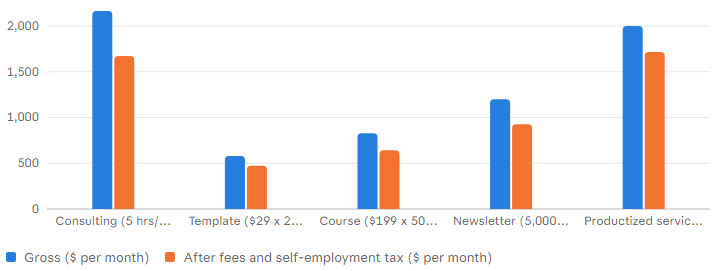
Freelancing (Upwork Future Workforce Index 2026): 39% of US workers freelance (+4 points); 38% of skilled knowledge workers freelance, up from 28%; 58% of full-time employees are considering it; freelancers using AI earn about 34% more per hour; Fiverr active buyers fell 21.9% (secondary source). Side hustles (conflicting secondary sources): participation of 33%, 36%, 39% or 45% depending on the survey; average income $885 to $1,122 a month, but a median of only about $200 in one compilation; about 30% of side hustlers sell goods online. My hypothetical arithmetic (before income tax): consulting 5 hours a week at $100 grosses about $2,165 a month, or about $1,673 after a 10% platform fee and 14.1% self-employment tax; a $29 template at 2% of 1,000 visitors grosses $580; 5,000 newsletter subscribers with 3% paying $8 a month gross $1,200; a $199 course sold to 50 buyers grosses $9,950.
The honest version has two halves. Yes, most people have something valuable. But no, it is not automatic, and the headline figures flatter the reality: one compilation of side-hustle surveys puts the average income at $885 a month but the median at about $200. This guide shows seven ways to turn expertise into income, with realistic numbers, what fees and taxes take and a plan to test an idea cheaply before betting your weekends on it.
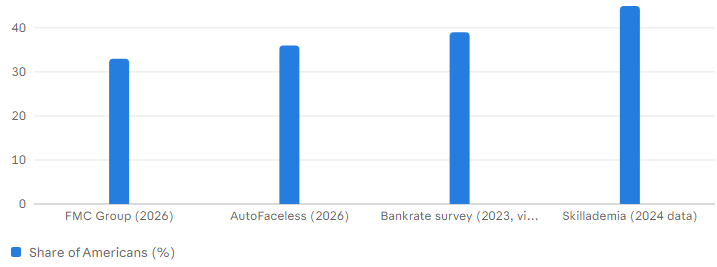
The side-hustle numbers are messier. Participation estimates range from 33% to 45% depending on the survey, average monthly income from $885 to $1,122 and the median in one compilation is only $200. About 30% of side hustlers sell goods online. And the market is shifting: freelancers using AI earn about 34% more per hour on Upwork, but Fiverr’s active buyers fell 21.9% year over year and Upwork announced a second layoff of 25% of its workforce in May. Treat every one of these figures as indicative.
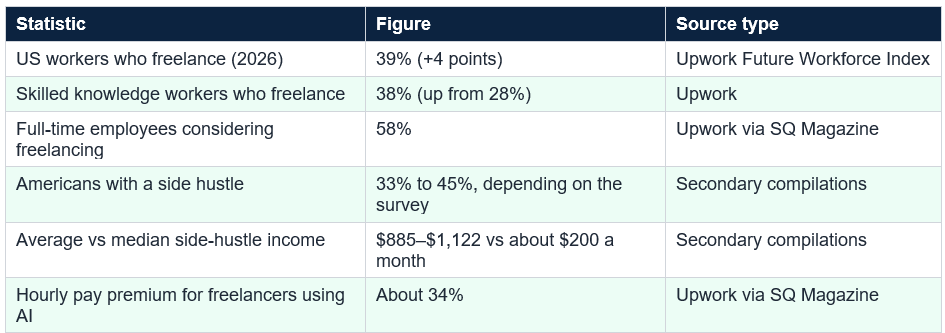
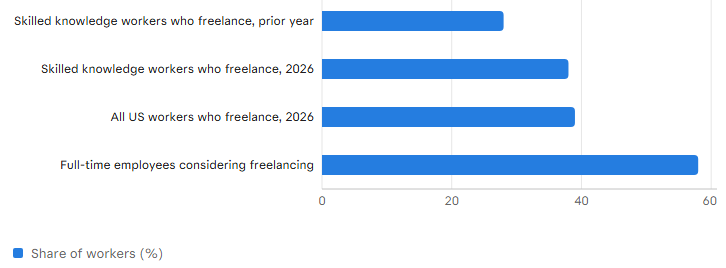
Upwork 2026: 39% of US workers freelance; 38% of skilled knowledge workers (from 28%); 58% of employees considering it. Side hustles: 33%–45% participation; average $885–$1,122 a month, median about $200 (secondary sources). Freelancers using AI earn about 34% more per hour.
Then test before you build. Write a one-paragraph offer, describe it to ten people who fit your target buyer and see whether any say they would pay. Better still, get one paid client or presale. A free test beats weeks of building a course nobody wants. This is the single most useful habit in the whole guide, because the usual failure is not bad execution but building something no one asked for.
Fourth, teach: a course, workshop or cohort. A cohort, where you teach a live group, can command a higher price than a recorded course and gives you feedback. Fifth, run a paid newsletter or membership, where subscribers pay monthly for analysis, community or access. It takes the longest to build but can produce recurring income. Sixth, create content with sponsorship or affiliate income, which usually needs a sizeable audience first. Seventh, license or train: offer your methods as training for companies or white-label materials. Pick one or two to start, not seven.
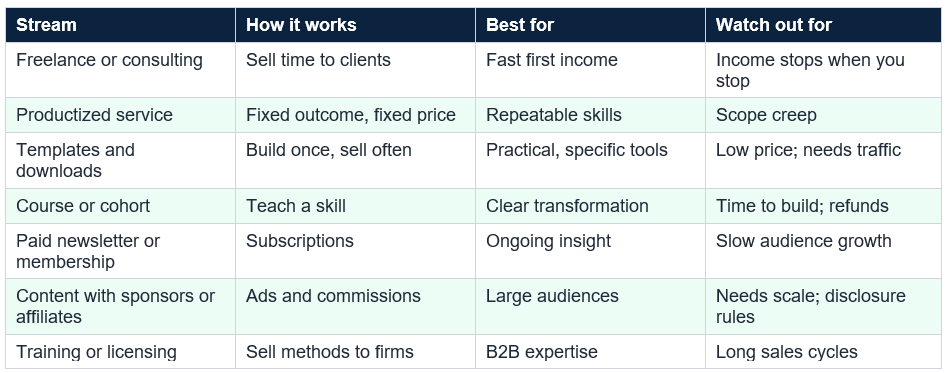
A paid newsletter with 5,000 free subscribers, 3% of whom pay $8 a month, grosses $1,200 a month, about $927 after a 10% platform fee and tax. A productized service selling four $500 projects a month grosses $2,000, about $1,717 after tax. None of these is a typical result: they depend on traffic, conversion and effort, and the audience-based streams take months to build. The pattern is what matters. Time-based income starts fastest, while product and audience income starts slowly and can scale.
Keep a separate bank account, track income and expenses and keep receipts. Check your employment contract for moonlighting or intellectual-property clauses, since some employers restrict outside work or claim what you create. If you sell advice, be careful about claims: avoid promising results and follow disclosure rules on endorsements and earnings claims. For larger income, consider a business structure and professional tax advice. The SBA, IRS and FTC publish free guidance, which I link below.
AI is both a threat and a tool. Commodity tasks, such as basic writing, simple design or routine analysis, face more competition and lower prices. But freelancers using AI earn about 34% more per hour on Upwork, and judgment, trust and specific experience are harder to automate. The practical response is to specialize, add your own experience that a machine lacks and use AI to work faster, not to compete on price. Do not invest your savings in a course or equipment before you have paying customers.
Most people who try to earn online earn modestly. Test an offer with real buyers before building a product, avoid paying for expensive programs that promise income and do not count on any single platform.
Set a monthly target that is modest and a time budget you can keep, such as five hours a week. Track revenue, hours and what you learned. At the end of 90 days, decide: double down on what worked, change what did not or stop without regret. If it works, put the first profits into taxes and an emergency fund, then into retirement accounts: the 2026 limits are $24,500 for a 401(k) and $7,500 for an IRA.
This week, write your offer in one paragraph and describe it to three people who fit your target buyer. If none would pay, change the offer before you build anything.
Start with an expertise audit, test an offer with real buyers and keep the first stage simple. In my hypothetical numbers, five hours a week of consulting could take home about $1,673 a month, while a template or newsletter would need months of audience building to match it. Watch fees and taxes, avoid depending on one platform, use AI as a tool and keep an emergency fund. The first dollar is the hardest. After that, you have evidence instead of hope. This is general education, not personalized advice.
Most people have knowledge someone will pay for, but “anyone” does not mean “easily” or “quickly.” Surveys suggest 33% to 45% of Americans have some kind of side hustle, and one compilation puts the median side-hustle income at about $200 a month, far below the average of $885 to $1,122. Results depend on your skill, your niche, the time you invest and your ability to find buyers. These figures come from secondary sources and vary.
What is the easiest way to start?
Selling your time as a freelancer or consultant is usually the fastest, because you need no audience or product, just a clear offer and someone who needs it. Upwork’s 2026 index found 39% of US workers freelance. The trade-off is that income is capped by your hours, which is why many people later add productized services or digital products.
How much can I earn from digital products like templates or courses?
It depends on price, traffic and conversion. In my illustration, a $29 template sold to 2% of 1,000 monthly visitors earns about $580 a month, and a $199 course sold to 50 buyers earns $9,950. These are hypothetical, not typical results, and building an audience takes time. Many creators earn modestly.
How are digital income and freelance earnings taxed?
Self-employment income is generally subject to income tax plus self-employment tax of 15.3% on 92.35% of net profit, about 14.1% effective, which is general knowledge I did not retrieve from the sources above. You may need to make quarterly estimated payments and can deduct business expenses. Check IRS guidance or ask a tax professional, since rules depend on your situation.
Will AI make this harder?
It is changing the market. Upwork reports freelancers doing AI work earn about 34% more per hour than those not using it, while one source reports Fiverr’s active buyers fell 21.9% year over year. Commodity tasks face more competition, while deep expertise, judgment and trust matter more. Using AI as a tool, not a rival, is a practical response. This is general education, not personal advice.
Table of Contents
- The Honest Version of “Anyone Can”
- The Short Answer: The Income Ladder
- What the Data Says
- Start With an Expertise Audit
- Seven Ways to Earn From What You Know
- The Math: What Each Stream Really Pays
- Fees, Taxes and Legal Basics
- The Risks and Realities
- A 90-Day Plan
- Common Mistakes
- Conclusion
- Frequently Asked Questions
How many Americans have a side hustle? Estimates conflict (%)
% of Americans by Secondary compilations with different definitions and years; treat as a range of about 33%-45%
Five hypothetical income streams: gross vs. take-home before income tax ($ per month)
Dollars per month by Author's hypothetical arithmetic: fees of 0%-10% and about 14.1% self-employment tax; not typical results; audience-based streams take months to build
The freelance shift: Upwork's 2026 Future Workforce Index (%)
Percent by Upwork Future Workforce Index 2026 via Upwork and SQ Magazine (secondary summaries); definitions and samples vary
The Honest Version of “Anyone Can”
Somewhere in your head is knowledge other people would pay for. Maybe you can read a balance sheet, fix a leaky workflow, train a puppy, teach calculus, write a clean contract, edit video or explain pensions to nervous retirees. The internet has made it possible to sell that knowledge to people you will never meet, at hours that suit you. That is the promise behind “anyone can build digital income streams,” and it is partly true.The honest version has two halves. Yes, most people have something valuable. But no, it is not automatic, and the headline figures flatter the reality: one compilation of side-hustle surveys puts the average income at $885 a month but the median at about $200. This guide shows seven ways to turn expertise into income, with realistic numbers, what fees and taxes take and a plan to test an idea cheaply before betting your weekends on it.
The Short Answer: The Income Ladder
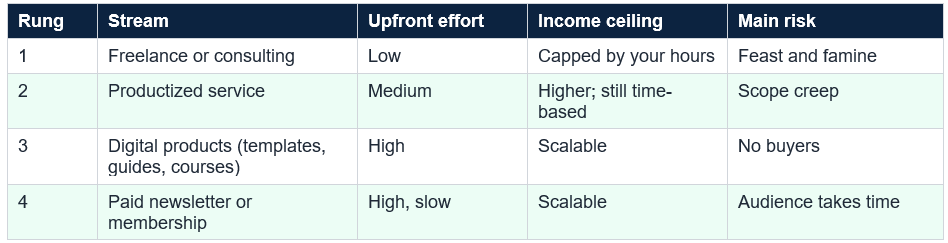
Think of a ladder with four rungs. At the bottom, you sell your time: freelancing or consulting. One rung up, you package your expertise into a fixed-price service that is faster to deliver. Next, you turn it into a digital product, such as a template, guide or course, that you build once and sell many times. At the top, you build an audience through a newsletter, membership or content, which makes everything below easier to sell. Most people start at the bottom, earn their first dollars and climb as they learn what buyers want.
What the Data Says
The freelance market is large and growing. Upwork’s 2026 Future Workforce Index found that 39% of US workers freelanced, up four points from 2025, and that 38% of skilled knowledge workers freelance, up from 28% a year earlier. It also found 58% of full-time employees considering freelancing, and that skilled freelancers earned about $101,000 in 2025, against $109,000 for skilled full-time employees, though the bottom quarter of freelancers earned $80,000 versus $65,000 for employees. MBO Partners counted roughly 72.9 million independent workers in 2025.The side-hustle numbers are messier. Participation estimates range from 33% to 45% depending on the survey, average monthly income from $885 to $1,122 and the median in one compilation is only $200. About 30% of side hustlers sell goods online. And the market is shifting: freelancers using AI earn about 34% more per hour on Upwork, but Fiverr’s active buyers fell 21.9% year over year and Upwork announced a second layoff of 25% of its workforce in May. Treat every one of these figures as indicative.
Upwork 2026: 39% of US workers freelance; 38% of skilled knowledge workers (from 28%); 58% of employees considering it. Side hustles: 33%–45% participation; average $885–$1,122 a month, median about $200 (secondary sources). Freelancers using AI earn about 34% more per hour.
Start With an Expertise Audit
Before you pick a stream, answer three questions. First, what do people already ask you for? The questions friends, colleagues and clients bring to you are clues to what is valuable. Second, what problem would someone pay to skip, rather than learn? Buyers pay for speed, certainty and relief. Third, who is the buyer, specifically? “Small business owners” is vague; “dentists opening a second practice” is a business. The narrower the audience and the sharper the problem, the easier it is to explain your offer and charge for it.Then test before you build. Write a one-paragraph offer, describe it to ten people who fit your target buyer and see whether any say they would pay. Better still, get one paid client or presale. A free test beats weeks of building a course nobody wants. This is the single most useful habit in the whole guide, because the usual failure is not bad execution but building something no one asked for.
Seven Ways to Earn From What You Know
First, freelance or consult. Sell your time on a marketplace or direct to clients. It is the fastest start, needs no audience and teaches you what buyers want. Upwork’s fee is variable, typically around 10% according to one source, and income stops when you stop. Second, productize a service: instead of hourly work, sell a fixed outcome at a fixed price, such as a $500 audit or a $1,500 setup, which is easier to sell and to deliver. Third, sell templates and downloads, such as spreadsheets, checklists, prompts or swipe files, which cost little to make and can sell repeatedly.Fourth, teach: a course, workshop or cohort. A cohort, where you teach a live group, can command a higher price than a recorded course and gives you feedback. Fifth, run a paid newsletter or membership, where subscribers pay monthly for analysis, community or access. It takes the longest to build but can produce recurring income. Sixth, create content with sponsorship or affiliate income, which usually needs a sizeable audience first. Seventh, license or train: offer your methods as training for companies or white-label materials. Pick one or two to start, not seven.
The Math: What Each Stream Really Pays
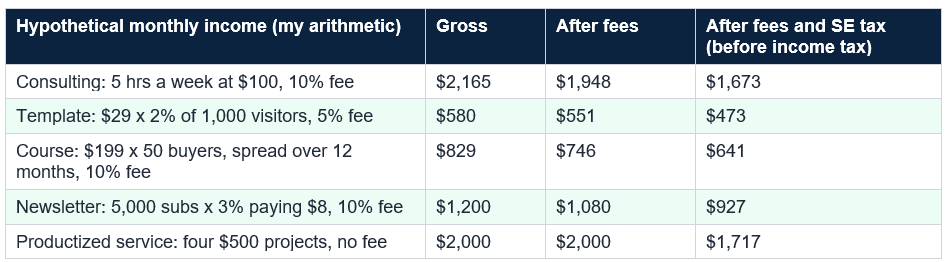
Here are hypothetical numbers, all mine, to show how the economics differ. Consulting five hours a week at $100 an hour grosses about $2,165 a month. After a 10% marketplace fee and about 14.1% self-employment tax, take-home before income tax is about $1,673, or about $77 for each of roughly 22 hours worked. A $29 template sold to 2% of 1,000 monthly visitors grosses $580, and about $473 after an assumed 5% fee and the same tax. A $199 course sold to 50 buyers in a launch grosses $9,950, or about $829 a month spread over a year, and roughly $641 a month after fees and tax.A paid newsletter with 5,000 free subscribers, 3% of whom pay $8 a month, grosses $1,200 a month, about $927 after a 10% platform fee and tax. A productized service selling four $500 projects a month grosses $2,000, about $1,717 after tax. None of these is a typical result: they depend on traffic, conversion and effort, and the audience-based streams take months to build. The pattern is what matters. Time-based income starts fastest, while product and audience income starts slowly and can scale.
Fees, Taxes and Legal Basics
Treat your digital income as a small business from day one. Marketplace and payment fees come off the top: Upwork charges a variable 0% to 15% per contract, typically around 10%, according to one source, and payment processors, course platforms and newsletter platforms take their own cuts. Self-employment income is generally subject to self-employment tax of 15.3% on 92.35% of net profit, about 14.1% effective, in addition to income tax, and you may need to make quarterly estimated payments. That is general knowledge I did not retrieve from the sources above. Set aside roughly a quarter to a third of profit for taxes until you know your rate.Keep a separate bank account, track income and expenses and keep receipts. Check your employment contract for moonlighting or intellectual-property clauses, since some employers restrict outside work or claim what you create. If you sell advice, be careful about claims: avoid promising results and follow disclosure rules on endorsements and earnings claims. For larger income, consider a business structure and professional tax advice. The SBA, IRS and FTC publish free guidance, which I link below.
The Risks and Realities
The risks deserve plain words. Income is uneven: a good month can be followed by a quiet one, so keep an emergency fund, since Bankrate found only 46% of Americans could cover three months of expenses. Platforms change: Fiverr’s active buyers fell 21.9% and Upwork announced layoffs in May, so do not depend on one marketplace. Audience building is slow and uncertain. And time is finite: a day job plus a side business can lead to burnout, so start with a small, defined number of hours.AI is both a threat and a tool. Commodity tasks, such as basic writing, simple design or routine analysis, face more competition and lower prices. But freelancers using AI earn about 34% more per hour on Upwork, and judgment, trust and specific experience are harder to automate. The practical response is to specialize, add your own experience that a machine lacks and use AI to work faster, not to compete on price. Do not invest your savings in a course or equipment before you have paying customers.
Most people who try to earn online earn modestly. Test an offer with real buyers before building a product, avoid paying for expensive programs that promise income and do not count on any single platform.
A 90-Day Plan
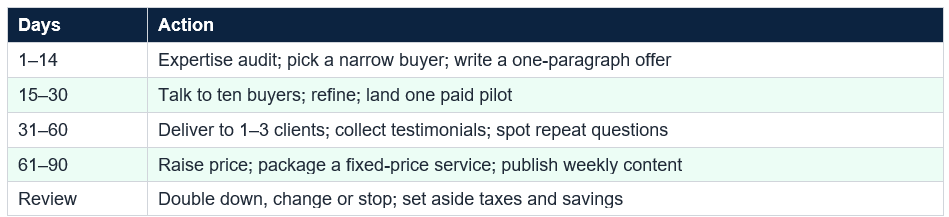
In days 1 to 14, do your expertise audit, choose a narrow buyer and write a one-paragraph offer. In days 15 to 30, talk to ten potential buyers, refine the offer and try to land one paid pilot at a discount. In days 31 to 60, deliver for your first one to three clients, collect testimonials and note which questions come up repeatedly: those are your future template, guide or course. In days 61 to 90, raise your price, package a fixed-price service and publish one piece of content a week aimed at your buyer, so an audience starts to form.Set a monthly target that is modest and a time budget you can keep, such as five hours a week. Track revenue, hours and what you learned. At the end of 90 days, decide: double down on what worked, change what did not or stop without regret. If it works, put the first profits into taxes and an emergency fund, then into retirement accounts: the 2026 limits are $24,500 for a 401(k) and $7,500 for an IRA.
This week, write your offer in one paragraph and describe it to three people who fit your target buyer. If none would pay, change the offer before you build anything.
Common Mistakes
Common mistakes include building a product before finding a buyer, targeting everyone, pricing too low, depending on one platform, ignoring taxes until April, paying for expensive coaching that promises income, copying what is trending instead of what you know and quitting a stable job too soon. Another is expecting passive income to be passive: digital products still need marketing, support and updates. The fix is to start small, test with real buyers and treat it as a business.Conclusion
Anyone with real expertise can build digital income, but not effortlessly. Upwork found that 39% of US workers now freelance and 38% of skilled knowledge workers do, while side-hustle surveys suggest 33% to 45% of Americans have some side income, with a median of only about $200 a month in one compilation. The income ladder runs from freelancing to productized services to digital products to audience-based income, and each rung trades faster cash for greater scale.Start with an expertise audit, test an offer with real buyers and keep the first stage simple. In my hypothetical numbers, five hours a week of consulting could take home about $1,673 a month, while a template or newsletter would need months of audience building to match it. Watch fees and taxes, avoid depending on one platform, use AI as a tool and keep an emergency fund. The first dollar is the hardest. After that, you have evidence instead of hope. This is general education, not personalized advice.
Frequently Asked Questions
Can anyone really build digital income from their expertise?Most people have knowledge someone will pay for, but “anyone” does not mean “easily” or “quickly.” Surveys suggest 33% to 45% of Americans have some kind of side hustle, and one compilation puts the median side-hustle income at about $200 a month, far below the average of $885 to $1,122. Results depend on your skill, your niche, the time you invest and your ability to find buyers. These figures come from secondary sources and vary.
What is the easiest way to start?
Selling your time as a freelancer or consultant is usually the fastest, because you need no audience or product, just a clear offer and someone who needs it. Upwork’s 2026 index found 39% of US workers freelance. The trade-off is that income is capped by your hours, which is why many people later add productized services or digital products.
How much can I earn from digital products like templates or courses?
It depends on price, traffic and conversion. In my illustration, a $29 template sold to 2% of 1,000 monthly visitors earns about $580 a month, and a $199 course sold to 50 buyers earns $9,950. These are hypothetical, not typical results, and building an audience takes time. Many creators earn modestly.
How are digital income and freelance earnings taxed?
Self-employment income is generally subject to income tax plus self-employment tax of 15.3% on 92.35% of net profit, about 14.1% effective, which is general knowledge I did not retrieve from the sources above. You may need to make quarterly estimated payments and can deduct business expenses. Check IRS guidance or ask a tax professional, since rules depend on your situation.
Will AI make this harder?
It is changing the market. Upwork reports freelancers doing AI work earn about 34% more per hour than those not using it, while one source reports Fiverr’s active buyers fell 21.9% year over year. Commodity tasks face more competition, while deep expertise, judgment and trust matter more. Using AI as a tool, not a rival, is a practical response. This is general education, not personal advice.
0 Comments
Be the first to share your thoughts on this article.