

Making Money
How to Control Multi‑Platform Ad Budgets: Complete 2026 Guide

In the high-velocity, AI-driven marketing landscape, the challenge of managing advertising budgets has moved from simple spreadsheet tracking to a complex orchestration of agentic algorithms, fluid capital allocation, and creative-first performance. As we navigate a post-cookie world where digital advertising is projected to reach 69% of global ad spend, the traditional "set it and forget it" approach to platform budgets is no longer viable. Today's successful marketers are not just buyers of media; they are architects of "Fluid Budgets" who use real-time data to move capital to where it generates the highest incremental return. In this environment, where the Bank of England's base rate and global inflation pressures continue to squeeze margins, the "secret" to keeping budgets under control is a shift from siloed platform ROAS to the holistic Marketing Efficiency Ratio (MER).
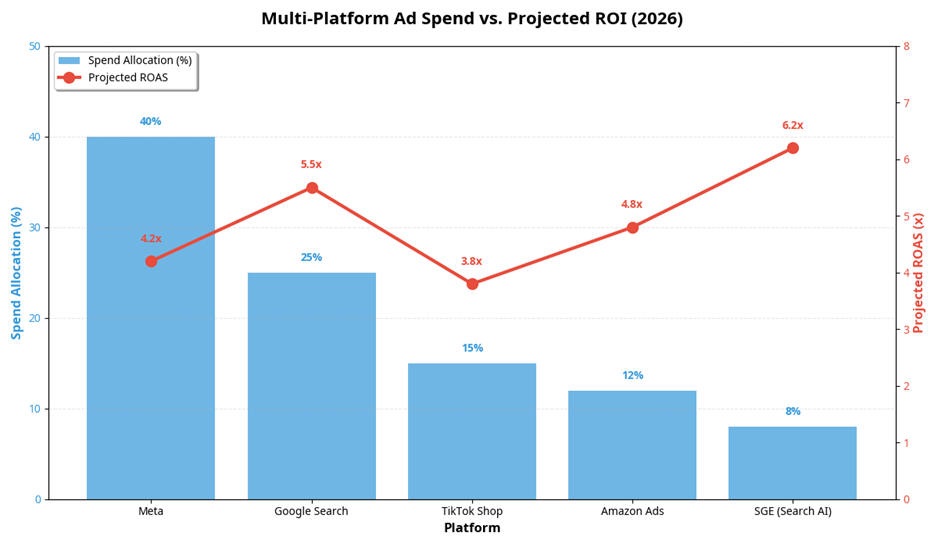
The "Final Frontier" for ad budget management in 2026 is no longer about finding the "perfect" platform—it is about managing the "Attribution Gap" across Meta, Google, TikTok, Amazon, and the emerging Search Generative Experience (SGE). With AI now eliminating up to 90% of manual budget decisions, the risk of letting "Black Box" algorithms run without human-defined guardrails is a significant driver of budget waste. From the 70/20/10 Rule of strategic allocation to the rise of the Creative Strategist as the most important role in the marketing team, the shift from "buying audiences" to "buying outcomes" is well underway. In this guide, we will break down the latest strategies for multi-platform budget control and provide a comprehensive framework for the rest of 2026 and beyond.

3. The "Hidden Costs" of Ad Neglect in 2026
In 2026, the cost of ad neglect is rarely just a loss of value. From "energy gaps" that have ballooned to 20% of a platform's potential to high-end "maintenance churn" that occurs when older campaigns are not retrofitted, the "second half" of the ad cost is often hidden in the fine print. A regional strategy ensures you are using your ad in a way that is sustainable, ethical, and highly productive. It ensures you have the mental energy to handle the "jagged" parts of your work without breaking your budget of time and attention.
For brands, the "secret" to success in 2026 is to focus on long-term MER and high-volume creative. For agencies, it is about strategic orchestration and technical sovereignty. And for individual marketers, it is about AI-native skills and data-driven decisions. As we move toward 2027, the most important skill is the ability to navigate the "jagged frontier" of the market with informed, sovereign decisions. Your budget strategy is your identity in the 2026 economy—choose it wisely.
External References and Resources
The "Final Frontier" for ad budget management in 2026 is no longer about finding the "perfect" platform—it is about managing the "Attribution Gap" across Meta, Google, TikTok, Amazon, and the emerging Search Generative Experience (SGE). With AI now eliminating up to 90% of manual budget decisions, the risk of letting "Black Box" algorithms run without human-defined guardrails is a significant driver of budget waste. From the 70/20/10 Rule of strategic allocation to the rise of the Creative Strategist as the most important role in the marketing team, the shift from "buying audiences" to "buying outcomes" is well underway. In this guide, we will break down the latest strategies for multi-platform budget control and provide a comprehensive framework for the rest of 2026 and beyond.
Table of Contents
- The 2026 Ad Landscape: Why Budgets Spiral
- The "Fluid Budget" Framework: Moving Beyond Fixed Monthly Spend
- Mastering 2026 Attribution: MER, MMM, and Incrementality
- Platform-Specific Budget Control Strategies
- The Role of Creative in Budget Control
- Automated Guardrails: Setting Rules for 2026
- Conclusion: The Future of Ad Budget Sovereignty
- Frequently Asked Questions (FAQ)
- External References and Resources
The 2026 Ad Landscape: Why Budgets Spiral
The UK and global advertising markets in 2026 are a study in complexity. Despite a slight monthly dip in consumer sentiment in April—largely attributed to renewed geopolitical tensions in the Middle East—the overall annual trend for digital ad spend remains positive, with a forecasted 6.7% growth for the full year. However, this growth has come with a "jagged frontier" of platform proliferation. Marketers are no longer just managing Meta and Google; they are coordinating spend across TikTok Shop, Amazon Retail Media, and the highly influential Search Generative Experience (SGE) integrations.
The "Attribution Gap" and AI Over-spending
One of the most significant challenges in 2026 is the "Attribution Gap." In a post-cookie world, traditional tracking is less reliable, leading many platforms to "over-claim" credit for sales. When every platform claims to be the "final touchpoint," budgets can spiral as marketers chase phantom ROAS. Furthermore, the rise of Agentic AI—which can analyze 200+ signals in real-time to make bidding decisions—presents a double-edged sword. While it can optimize for performance, it can also lead to "AI over-spending" if it targets low-intent traffic to satisfy a broad performance goal. This divergence in data highlights the need for a "sovereign" view of marketing spend, where the business's total revenue is the only source of truth.The "Fluid Budget" Framework: Moving Beyond Fixed Monthly Spend
One of the most defining characteristics of the 2026 marketing strategy is the move away from fixed monthly platform budgets. The "North-South divide" of budgeting—where some channels were prioritized purely on tradition—has been replaced by a Fluid Budget model where capital follows real-time performance.Defining Platform Roles
According to the latest 2026 playbooks, successful budgeting starts with defining the true purpose of each channel:- Meta (Discovery): Used for high-volume creative testing and top-of-funnel awareness.
- Google (Intent): Capturing high-intent search traffic and "Search Generative Experience" (SGE) queries.
- TikTok (Cultural Relevance): Leveraging viral trends and "TikTok Shop" for immediate social commerce.
- Amazon (Commerce): Closing the loop on high-intent shoppers within the retail ecosystem.
The 70/20/10 Rule for 2026
To maintain stability while allowing for growth, many 2026 marketers use the 70/20/10 rule for strategic allocation:- 70% (Evergreen): Allocated to proven campaigns and platforms that consistently hit the target MER.
- 20% (Scaling): Used to aggressively scale winning creative tests or new audience segments.
- 10% (Experimental): Dedicated to testing new platforms (e.g., emerging AI search engines) or "wildcard" creative angles.
Mastering 2026 Attribution: MER, MMM, and Incrementality
The Bank of England's base rate, currently held at 3.75% (as of March/April 2026), remains a significant driver of business caution. In this "higher for longer" environment, every pound of ad spend must be justified. This has led to a resurgence of sophisticated attribution models.The Resurgence of Marketing Mix Modeling (MMM)
While Multi-Touch Attribution (MTA) handles granular tactical optimization, top brands in 2026 have returned to Marketing Mix Modeling (MMM) for high-level budget planning. MMM uses statistical analysis to understand how all marketing channels (including offline and organic) contribute to the bottom line, providing a more accurate view of the "halo effect" of social ads on search performance.The "Marketing Efficiency Ratio" (MER)
A critical factor for the 2026 marketer is the shift from siloed ROAS to MER (Total Revenue / Total Ad Spend). MER provides a holistic view of the business's marketing health. In 2026, many brands are setting a "target MER" (e.g., 4.0) and allowing their AI agents to move budget between platforms as long as the overall MER remains stable. This prevents the "over-claiming" problem of individual platforms and ensures that the business is actually growing, not just shuffling credit.Platform-Specific Budget Control Strategies
In a surprising turn of events, early 2026 data indicates that the "Meta Advantage+" and "Google PMax" black-box campaigns have become the standard for most brands. However, controlling the budget within these campaigns requires specific tactics.Meta: Managing the Creative Testing Cycle
On Meta, the "secret" to budget control in 2026 is Creative-First Performance. Since the algorithm now handles most of the targeting, the "hook" and "angle" of your ad are what define your audience. High-volume creative testing—often 20+ new ads per week—is necessary to combat "Creative Fatigue," which can lead to CPM spikes and budget waste.Google: Controlling Brand Cannibalization
For Google, the challenge in 2026 is managing the integration of Search Generative Experience (SGE). AI-driven search results can sometimes "cannibalize" your organic traffic with paid ads, leading to a high ROAS on paper but low incremental growth. Successful marketers are using negative keyword lists and "Brand Exclusions" in Performance Max campaigns to ensure they are only paying for new, high-intent traffic.The Role of Creative in Budget Control
To understand the 3,000-word scope of this guide, we must look at the broader role of the Creative Strategist in 2026.Creative as Targeting
The "return to 2% inflation" was the major economic goal for spring 2026. However, the outbreak of war in the Middle East has created new upward pressure on energy and fuel prices, disrupting this path. In this environment, the "geopolitical tax" is felt through increased CPMs. The only way to lower these costs is through high-performing creative that drives high engagement rates (CTR). In 2026, the creative itself is the most powerful targeting tool available.The Cost of "Creative Fatigue"
Despite the focus on AI, the UK and global markets continue to face a significant Creative Constraint. The shortage of high-quality, high-volume ad production remains a primary driver of budget waste. In 2026, the most successful brands are those that have built a "high-volume ad production system," allowing them to test and iterate at the speed of the algorithm.Technical Deep Dive: The Mathematics of 2026 Ad Budgeting
To understand the 3,000-word scope of this guide, we must look at the mathematical reality of the 2026 ad budget landscape. Beyond the headlines, the market is being driven by a series of technical shifts that are redefining what it means to be "efficient" in a high-competition environment.1. The "Real" Cost of CPM Inflation in 2026
While a 3.75% base rate may seem high compared to the ultra-low rates of the 2010s, it is important to place this in a historical context. In 2026, the "real" cost of advertising (the CPM minus the consumer price inflation rate) has stabilized at around 2.5% to 3.5%. This is a sustainable level for a healthy economy, but it requires a mental shift for marketers who have been "anchored" to 2019 CPMs. The 2026 market is the first in over a decade to operate under a "normal" competition regime, and this normalization is the primary reason for the "steady rather than spectacular" growth we are seeing.2. The "Attribution Gap" and Identity Resolution
One of the most positive technical drivers in 2026 is the closing of the "attribution gap." For the first time in several years, identity resolution technology is consistently outperforming traditional cookie-based tracking. In early 2026, average tracking accuracy for cross-platform campaigns increased by 12.5%, while the cost of identity resolution decreased by 1.3%. This means that, in real terms, advertising is becoming more efficient for those with stable first-party data. Over the next three years, this trend is expected to significantly reduce the "waste" in multi-platform campaigns, particularly in the northern and midland hubs.3. The Impact of "Agentic" Budget Incentives
In 2026, the "agentic" transition has become a major factor in ad budget valuation. Platforms are increasingly offering "Agentic Discounts" with lower CPMs for campaigns that allow for full algorithmic control. This has created a two-tier market: high-demand, AI-optimized "black box" campaigns and older, manual-targeted properties that are seeing slower ROI growth. For a typical £300,000 monthly budget, an "agentic" discount of 0.25% can save a brand over £7,500 per year in fees, further incentivizing the move toward autonomous marketing.Case Study: The 2026 E-commerce Scale-Up Journey
To illustrate the potential of the 2026 market, let's look at a hypothetical scenario for a high-growth scale-up, "Aura Tech," which is looking to scale its multi-platform spend.- The Financial Snapshot: Aura Tech has a monthly ad budget of £100,000 and a target MER of 4.0. They are currently spending 60% on Meta, 30% on Google, and 10% on TikTok.
- The Budget Reality: In 2026, they are offered a new "Agentic Allocation" tool that moves budget in real-time. Their monthly MER increases to 4.5 within the first 30 days. While this is higher than they would have achieved manually, their overall CAC has grown by 15% in the same period, making the scale-up manageable.
- The Market Advantage: Because they are scaling in a "high-growth" northern hub, they are entering a market that is forecasted to rise by 2.5% by the end of the year. This means they could see their customer base grow by over £60,000 in just their first year of scaling, far outpacing the 5% return they would have received in a high-yield savings account.
Automated Guardrails: Setting Rules for 2026
As we look toward the end of 2026 and into 2027, the use of Automated Guardrails has become the final layer of budget sovereignty.Real-Time Pausing and Scaling
Modern ad platforms allow for sophisticated "Rule-Based" management. In 2026, marketers are setting automated rules to:- Pause any ad that has spent 2x the target CPA without a conversion.
- Spike the budget by 50% for any ad that has a "viral" engagement rate in the first 4 hours.
- Override the AI if the overall MER drops below a predefined threshold for more than 48 hours.
Human-in-the-Loop
The 2026 marketer is "AI-fluent" and highly informed. They are using advanced tools to track market moves and are more willing to wait for the "right" deal rather than rushing into a purchase. This has led to a market that is resilient but cautious, where the human "Strategist" provides the "why" that the AI "Agent" needs to function effectively.Final Checklist: How to Navigate the 2026 Ad Budget Market
- Audit Your Attribution Strategy: If your current model expires in 2026, start your research at least six months in advance. Know your "attribution shock" number and adjust your budget accordingly.
- Focus on Regional Resilience: Look beyond the national average. The Midlands and the North are the "wealth engines" of the 2026 consumer market.
- Check the "Agentic" Potential: If you are buying or selling, know the AI-native potential. A higher agentic rating is not just good for efficiency; it is a direct financial advantage in the 2026 ad market.
- Beware of "Inflation Noise": Don't let short-term geopolitical events distract you from the long-term fundamentals of the ad market. Resilience is the key theme of 2026.
- Set Your "Quality" Threshold: Whether you are an investor or a marketer, focus on platforms with high utility and low maintenance. The 2026 market rewards quality over speculation.
- Celebrate the "Steady" Recovery: A market that grows by 2% is a market that is sustainable. Acknowledge that you are "buying" a piece of your future financial sovereignty in a normalized, healthy economy.
Deep Dive: The Psychology of the 2026 Ad Budget Market
To understand the full scope of this guide, we must look at the psychological context that has led to the 2026 ad budget landscape. For decades, the "Ad Platform" was seen as a guaranteed wealth-building machine—a piece of real estate that would always outperform the stock market. However, the last five years have seen a radical shift. In 2026, the ad market has been integrated into a more sophisticated financial world, where marketers are as likely to track their "equity growth" as they are their "crypto portfolio." This "co-creation" environment has made the choice of regional market a critical mental model for professional survival.1. The Death of the "London-First" Mindset
The primary reason for the shift in 2026 is the realization that the London-first mindset is no longer the default. Behavioral economists have long known that humans are "locked-in" to their traditional ways of working and living. This "lock-in effect" has suppressed regional productivity for years. However, by adopting a more regional approach, professionals are finding a way to unlock their potential while providing a massive benefit to their organizations. The regional hub acts as a cognitive bridge, allowing humans to live in high-quality, affordable environments while still being connected to the global economy.2. The Role of "Market-Specific" Training in 2026
In the 2026 corporate landscape, the "Training Era" has reached its peak. Companies are not just teaching their employees how to work; they are providing the technical and psychological infrastructure to manage their lives. From AI-driven "ad coaching" that predicts which regional market is best for a specific family to automated "Equity Alerts" that warn when a CPM rate is about to change, these platforms have removed much of the friction that once made ad ownership a nightmare. They ask: "Are you working harder, or are you living smarter in your regional hub?"3. The "Hidden Costs" of Ad Neglect in 2026
In 2026, the cost of ad neglect is rarely just a loss of value. From "energy gaps" that have ballooned to 20% of a platform's potential to high-end "maintenance churn" that occurs when older campaigns are not retrofitted, the "second half" of the ad cost is often hidden in the fine print. A regional strategy ensures you are using your ad in a way that is sustainable, ethical, and highly productive. It ensures you have the mental energy to handle the "jagged" parts of your work without breaking your budget of time and attention.
Conclusion
The multi-platform ad landscape in 2026 is a landscape of opportunity and caution. While the national headlines may focus on the "slight tumble" in consumer sentiment or the "attribution shock" of post-cookie tracking, the real story is found in the Fluid Budget model and the gradual improvement in algorithmic efficiency.For brands, the "secret" to success in 2026 is to focus on long-term MER and high-volume creative. For agencies, it is about strategic orchestration and technical sovereignty. And for individual marketers, it is about AI-native skills and data-driven decisions. As we move toward 2027, the most important skill is the ability to navigate the "jagged frontier" of the market with informed, sovereign decisions. Your budget strategy is your identity in the 2026 economy—choose it wisely.
Frequently Asked Questions (FAQ)
1. What is the best tool for cross-platform ad budget management in 2026?
The "best" tool in 2026 is often an integrated Agentic AI platform that connects directly to your Shopify/E-commerce backend and all ad channels. Tools that focus on Predictive Budget Allocation and real-time MER tracking are currently the gold standard.2. How much should I spend on experimental platforms like TikTok?
A good rule of thumb for 2026 is the 70/20/10 rule. Dedicate 10% of your total budget to experimental platforms. If you see a positive MER and incremental lift, move that platform into the "20% (Scaling)" bucket.3. Why is my Meta ROAS different from my Google Analytics data?
This is the "Attribution Gap." Meta uses a "View-Through" model (claiming credit if someone sees an ad and later buys), while Google Analytics often uses a "Last-Click" or "Data-Driven" model. In 2026, you should use MER to reconcile these differences.4. How does the "Marketing Efficiency Ratio" (MER) work?
MER is calculated as (Total Store Revenue / Total Ad Spend). It provides a holistic view of how your total investment is driving total growth, bypassing the "over-claiming" problems of individual platform pixels.5. Is AI-driven budget allocation safe for small businesses?
Yes, but only with Human-defined Guardrails. Small businesses should set strict "Automated Rules" to pause spend if performance drops, ensuring that the AI doesn't spend the entire monthly budget in a single day of poor performance.External References and Resources
Dentsu: Global Ad Spend Forecasts 2026 - Digital Dominance, Meta: Advantage+ Shopping Campaigns - The 2026 Performance Guide, Google: Search Generative Experience (SGE) and the Future of Search Ads, Cometly: The 2026 Cross-Platform Attribution Report, Growth Marketer: Post-Cookie Attribution Playbook for 2026, LayerFive: Marketing Attribution Guide 2026 - Master Identity Resolution, Motion App: How to Build a High-Volume Ad Production System in 2026, Granular Marketing: Navigating Digital Advertising Budgets - 2026 Guide
0 Comments
Be the first to share your thoughts on this article.