

Investing
If a 2027 Recession Hits, Why BND Is the 1 ETF I Want to Own

I cannot predict whether there will be a recession in 2027, but I want protection. Here is the case for BND, and the honest caveats.BND expense ratio 0.03%; yield about 4.17%; about 15,119 holdings; NY Fed recession odds 12.4% 10-year yield 5.14%.
Nobody knows whether a recession is coming in 2027, and anyone who says otherwise is guessing. But you do not need to predict a recession to prepare for one. You just need a portfolio that does not fall apart if one arrives. The mindset matters too. A recession plan is not about dodging every loss. It is about making sure you are never forced to sell stocks at the bottom to pay bills, and that a bad year does not wreck a goal that is still years away (my reasoning). Bonds, cash and a steady job are the three legs of that stool, and this post focuses on the bond leg.
That is the argument for the Vanguard Total Bond Market ETF, ticker BND. It holds thousands of investment-grade US bonds, charges 0.03% a year, and pays a monthly dividend of roughly 4.2% at recent prices. Historically, bonds have held up better than stocks in recessions. The honest caveat is that 2026 has not been kind to bonds. Yields surged, bond prices fell, and the 10-year Treasury hit 5.30% in October. So BND is a reasonable piece of recession insurance, not a guarantee, and not a one-fund solution. This post explains both sides.
Key takeaway: BND is cheap, diversified and has historically cushioned stock losses in recessions. But inflation and rising rates can hurt it, so it works best as one part of a mix.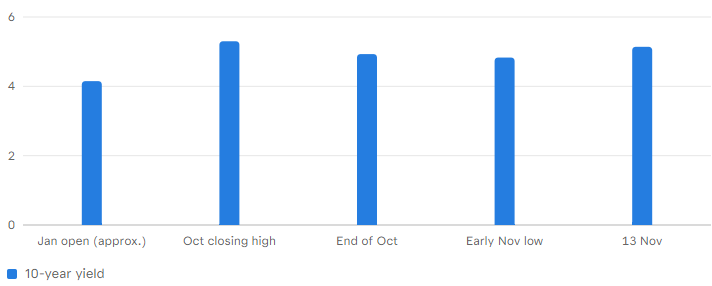
Others are more worried. Moody's Mark Zandi said recession odds over the next two years are about even. David Rosenberg has said a very significant recession is possible in 2027 because business spending could face a vacuum. A Yahoo Finance report cited Kalshi traders pricing a 41% chance of a 2027 recession, though that was reported earlier in the year.
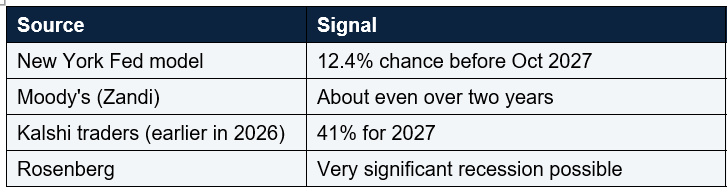
These measure different things and different horizons, so they cannot be averaged. Sources as listed. Oxford Economics adds a twist: its forecast for 2027 is optimistic, but it warns the next recession could be deeper and longer-lasting because of vulnerabilities built up during the boom. That is the kind of risk that makes diversification attractive even when the near-term data looks fine (my reasoning).
One practical point is how the income works. BND distributes monthly, so you can take the payouts as cash or reinvest them. The distribution moves with the interest earned by the underlying bonds, and the share price moves with yields, so the total return you actually experience combines both (my explanation of how bond funds generally work). Cost is a big selling point. The expense ratio is 0.03%, against an average of 0.56% for similar funds. On $10,000 that is $3 a year, versus about $56 for the average fund (my calculation).
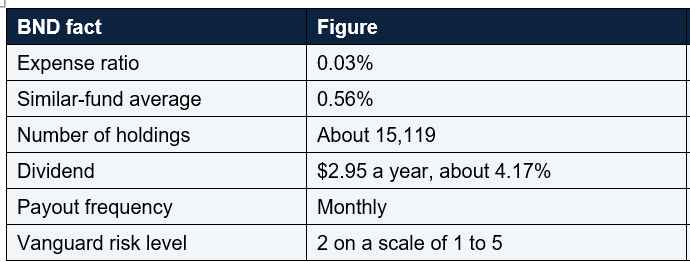
The risk level and expense ratio are from Vanguard's profile page, which showed older dates in the data I saw; check current figures. Yield changes with price.
I did not find BND's current average duration, which is the key measure of how sensitive it is to interest rates, so I will not quote one. Check Vanguard's fund page for the latest.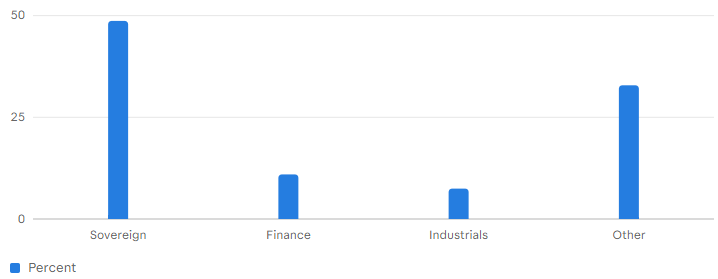
It helps to be precise about what "positive" means. The sources show bonds usually held their value or gained when stocks fell, not that they produced huge returns. Their job is to be the steadier part of the portfolio, giving you something to rebalance from or spend from while stocks recover (my reasoning).
More recent episodes agree. BNY notes bonds delivered positive returns in the global financial crisis and the 2020 pandemic selloff, when equities were negative. MFS found government bonds have also provided positive returns during recessions, with milder drawdowns and quicker recoveries than stocks.
The mechanism is simple. In a recession, growth slows, central banks tend to cut rates, and investors rush into safer assets. Falling yields push bond prices up (my reasoning, consistent with the sources above). BND, with about 48.7% in sovereign debt, is positioned for that. A 60/40 stock and bond portfolio has historically had a smaller average drawdown, about 20%, in bear markets, recovering in around 2.5 years. That figure comes from one analysis of post-war bear markets, so treat it as indicative, not a promise.
Why? The two-year yield climbed more than 1.2 points to over 4.7% from about 3.5% at the start of the year. The Fed raised rates 25 basis points on 16 September, to a range of 3.75% to 4.00%. Hotter inflation data in the week ending 13 November pushed the 10-year back to 5.14%.
BND's own numbers show it. The price was $70.72 on 21 October, versus a 52-week high of $75.23. That is about 6% below the high (my calculation, though the two numbers come from different dates). The fund is still paying a yield of about 4.17%, but price losses have eaten into that. The lesson is that duration risk is real. A bond fund's price falls when yields rise, and the longer the average maturity, the bigger the fall. That is why the 20+ year Treasury ETF dropped more than a short-term one on a bad day. BND sits in the middle as an intermediate-term fund, so it feels rate moves less than long bonds but more than short ones (my explanation). Also notice the 2022 comparison. International Finance argues 2026's bond selloff is not another 2022. I did not verify that comparison, so I leave it as one writer's view.
There is a hopeful flip side. When the AI and tech selloff hit, the 10-year yield fell by about 55 basis points at one point as investors moved into safety. WisdomTree called this a flight-to-quality bid. That is exactly the behavior a recession hedge needs, though it faded quickly as yields rebounded.
Higher yields also mean higher income going forward. At about 4.17%, $10,000 in BND would generate about $417 a year, or around $35 a month (my calculation, and yields change).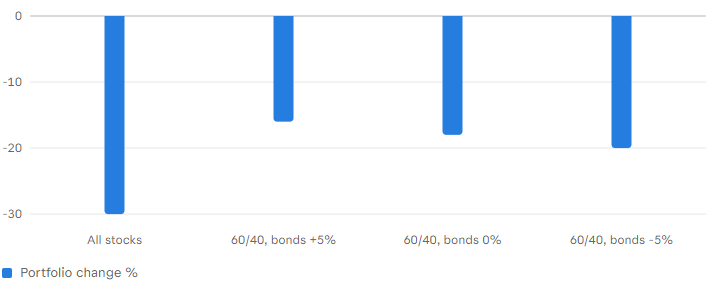
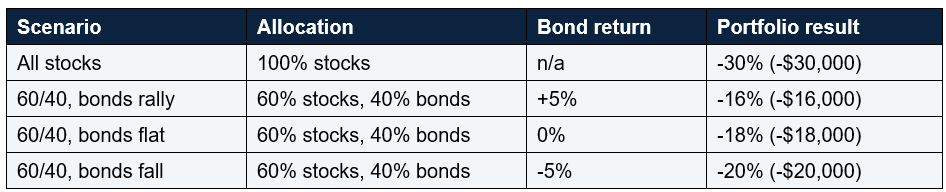
Hypothetical illustration; my calculation. Ignores dividends, rebalancing and fees. Even in the worst bond scenario, the mixed portfolio loses less than all stocks, because bonds are less volatile. And if bonds rally as they often have in recessions, the cushion is larger. The point is not the exact numbers. It is that bonds shrink the size of the hit.
How much to hold in bonds depends on your age, goals and nerves. Someone saving for retirement in thirty years might hold few bonds, while someone needing money in three years might hold many. There is no number that fits everyone, and I am not suggesting one here (general principle, not advice).
Also consider the rest of your plan. An emergency fund in cash matters more in a recession than any ETF, because you may need money during a job loss without selling at a low (my suggestion).
Treating bonds as risk-free is the classic error. BND carries a Vanguard risk level of 2 out of 5, not zero. Another is timing. Trying to guess the top in yields is hard. WisdomTree's motto is "why try to time the top in yield?". Spreading purchases over time can reduce regret (my suggestion). A third is going all-in on one fund. BND covers investment-grade US bonds, but it is not a substitute for a diversified plan, emergency savings and insurance. Finally, do not sell stocks in a panic just because you own bonds. The point of the mix is to let you stay invested when markets fall, since stocks have often recovered after downturns (general market history, which I have not sourced here).
It has historically helped, since bonds gained in all eight recessions since 1929 in one Morningstar analysis. But 2026 shows bonds can fall when yields surge.
What is BND's expense ratio and yield?
The expense ratio is 0.03%, and the dividend is about $2.95 a year, a yield near 4.17%.
Why have bond ETFs fallen in 2026?
Yields rose sharply, with the 10-year hitting 5.30% in October and the Fed hiking in September. Rising yields mean falling bond prices.
What are the odds of a 2027 recession?
The New York Fed model says 12.4% before October 2027, while Moody's Zandi sees about even odds over two years.
What does BND hold?
About 15,119 investment-grade US bonds, with sovereign bonds near 48.7%.
Table of Contents
- The recession question: what the forecasts say
- What BND actually is
- Why bonds have helped in past recessions
- The catch: bonds have had a rough 2026
- What rising yields and a Fed hike mean for BND
- A hypothetical recession, in numbers
- Alternatives and complements to consider
- Mistakes to avoid
- Conclusion
- FAQ
Nobody knows whether a recession is coming in 2027, and anyone who says otherwise is guessing. But you do not need to predict a recession to prepare for one. You just need a portfolio that does not fall apart if one arrives. The mindset matters too. A recession plan is not about dodging every loss. It is about making sure you are never forced to sell stocks at the bottom to pay bills, and that a bad year does not wreck a goal that is still years away (my reasoning). Bonds, cash and a steady job are the three legs of that stool, and this post focuses on the bond leg.
That is the argument for the Vanguard Total Bond Market ETF, ticker BND. It holds thousands of investment-grade US bonds, charges 0.03% a year, and pays a monthly dividend of roughly 4.2% at recent prices. Historically, bonds have held up better than stocks in recessions. The honest caveat is that 2026 has not been kind to bonds. Yields surged, bond prices fell, and the 10-year Treasury hit 5.30% in October. So BND is a reasonable piece of recession insurance, not a guarantee, and not a one-fund solution. This post explains both sides.
Key takeaway: BND is cheap, diversified and has historically cushioned stock losses in recessions. But inflation and rising rates can hurt it, so it works best as one part of a mix.
US 10-year Treasury yield in 2026 (%)
The recession question: what the forecasts say
Forecasts vary widely, which is exactly why preparation beats prediction. The New York Fed's Treasury-spread model puts the chance of a recession before October 2027 at 12.4%, and the Sahm Rule indicator read zero in both September and October. Goldman Sachs forecasts 2.7% GDP growth in 2027, ahead of the 2.2% consensus.Others are more worried. Moody's Mark Zandi said recession odds over the next two years are about even. David Rosenberg has said a very significant recession is possible in 2027 because business spending could face a vacuum. A Yahoo Finance report cited Kalshi traders pricing a 41% chance of a 2027 recession, though that was reported earlier in the year.
These measure different things and different horizons, so they cannot be averaged. Sources as listed. Oxford Economics adds a twist: its forecast for 2027 is optimistic, but it warns the next recession could be deeper and longer-lasting because of vulnerabilities built up during the boom. That is the kind of risk that makes diversification attractive even when the near-term data looks fine (my reasoning).
What BND actually is
BND is an index fund that tracks the Bloomberg US Aggregate Float Adjusted Index. It covers the taxable, investment-grade, US dollar bond market, excluding inflation-protected and tax-exempt bonds. It pays dividends monthly. It is big and diversified. It holds about 15,119 bonds, and its top 15 holdings are only 5.7% of the fund. Sovereign bonds, mainly US Treasuries, make up about 48.7%, finance about 11%, and industrials about 7.5%. Assets were about $165 billion, and investors added $26.55 billion in the year to 29 October.One practical point is how the income works. BND distributes monthly, so you can take the payouts as cash or reinvest them. The distribution moves with the interest earned by the underlying bonds, and the share price moves with yields, so the total return you actually experience combines both (my explanation of how bond funds generally work). Cost is a big selling point. The expense ratio is 0.03%, against an average of 0.56% for similar funds. On $10,000 that is $3 a year, versus about $56 for the average fund (my calculation).
The risk level and expense ratio are from Vanguard's profile page, which showed older dates in the data I saw; check current figures. Yield changes with price.
I did not find BND's current average duration, which is the key measure of how sensitive it is to interest rates, so I will not quote one. Check Vanguard's fund page for the latest.
BND sector mix (% of fund)
Why bonds have helped in past recessions
The recession case for bonds rests on history. Morningstar's analysis of eight US recessions found stocks lost value in five of them, and a related exhibit noted bonds made positive gains in all eight recessionary periods since 1929. PIMCO found bonds provided diversification against equity risk in six of the past seven recessions.It helps to be precise about what "positive" means. The sources show bonds usually held their value or gained when stocks fell, not that they produced huge returns. Their job is to be the steadier part of the portfolio, giving you something to rebalance from or spend from while stocks recover (my reasoning).
More recent episodes agree. BNY notes bonds delivered positive returns in the global financial crisis and the 2020 pandemic selloff, when equities were negative. MFS found government bonds have also provided positive returns during recessions, with milder drawdowns and quicker recoveries than stocks.
The mechanism is simple. In a recession, growth slows, central banks tend to cut rates, and investors rush into safer assets. Falling yields push bond prices up (my reasoning, consistent with the sources above). BND, with about 48.7% in sovereign debt, is positioned for that. A 60/40 stock and bond portfolio has historically had a smaller average drawdown, about 20%, in bear markets, recovering in around 2.5 years. That figure comes from one analysis of post-war bear markets, so treat it as indicative, not a promise.
The catch: bonds have had a rough 2026
Now the uncomfortable part. Bonds have not been a safe haven this year. The 10-year Treasury yield opened 2026 at about 4.15%, and an early October auction cleared at 5.30%, the highest since 2000. Morningstar notes bond investors were walloped by rising yields in the first nine months of the year.Why? The two-year yield climbed more than 1.2 points to over 4.7% from about 3.5% at the start of the year. The Fed raised rates 25 basis points on 16 September, to a range of 3.75% to 4.00%. Hotter inflation data in the week ending 13 November pushed the 10-year back to 5.14%.
BND's own numbers show it. The price was $70.72 on 21 October, versus a 52-week high of $75.23. That is about 6% below the high (my calculation, though the two numbers come from different dates). The fund is still paying a yield of about 4.17%, but price losses have eaten into that. The lesson is that duration risk is real. A bond fund's price falls when yields rise, and the longer the average maturity, the bigger the fall. That is why the 20+ year Treasury ETF dropped more than a short-term one on a bad day. BND sits in the middle as an intermediate-term fund, so it feels rate moves less than long bonds but more than short ones (my explanation). Also notice the 2022 comparison. International Finance argues 2026's bond selloff is not another 2022. I did not verify that comparison, so I leave it as one writer's view.
What rising yields and a Fed hike mean for BND
Here is the key issue for a recession plan. If a recession comes with falling inflation and Fed cuts, BND should benefit. If a downturn comes with stubborn inflation and more hikes, bonds could struggle alongside stocks (my reasoning). Markets are pricing in around four more Fed hikes through the end of 2027, according to BNY, which pushed 10-year real yields to 2.90%, the highest since 2008. BNY also notes that in past tightening cycles, the 10-year yield rose 43 basis points on average in the six months after the first hike. The Fed meets on 8 and 9 December.There is a hopeful flip side. When the AI and tech selloff hit, the 10-year yield fell by about 55 basis points at one point as investors moved into safety. WisdomTree called this a flight-to-quality bid. That is exactly the behavior a recession hedge needs, though it faded quickly as yields rebounded.
Higher yields also mean higher income going forward. At about 4.17%, $10,000 in BND would generate about $417 a year, or around $35 a month (my calculation, and yields change).
Hypothetical $100,000 portfolio in a 30% stock drop (% change)
A hypothetical recession, in numbers
Let's put numbers on a hypothetical recession. These are made-up scenarios to show the logic, not forecasts. Take a $100,000 portfolio and assume stocks fall 30%.Hypothetical illustration; my calculation. Ignores dividends, rebalancing and fees. Even in the worst bond scenario, the mixed portfolio loses less than all stocks, because bonds are less volatile. And if bonds rally as they often have in recessions, the cushion is larger. The point is not the exact numbers. It is that bonds shrink the size of the hit.
Alternatives and complements to consider
BND is broad, but it is not the only option. Short-term Treasury ETFs move less when yields change. On 10 November, for example, a 1-3 year Treasury ETF fell 0.33% while a 20+ year Treasury ETF fell 1.32%. That shows how much more sensitive longer bonds are (those are different funds from BND, and one day is a tiny sample). The trade-off is that shorter bonds usually offer less cushion if yields fall in a recession, because their prices rise less (my reasoning). Some investors also hold cash or inflation-protected bonds, which BND excludes. I am not recommending any of these. The point is to match the tool to the risk you worry about most: recession, inflation or both.How much to hold in bonds depends on your age, goals and nerves. Someone saving for retirement in thirty years might hold few bonds, while someone needing money in three years might hold many. There is no number that fits everyone, and I am not suggesting one here (general principle, not advice).
Also consider the rest of your plan. An emergency fund in cash matters more in a recession than any ETF, because you may need money during a job loss without selling at a low (my suggestion).
Treating bonds as risk-free is the classic error. BND carries a Vanguard risk level of 2 out of 5, not zero. Another is timing. Trying to guess the top in yields is hard. WisdomTree's motto is "why try to time the top in yield?". Spreading purchases over time can reduce regret (my suggestion). A third is going all-in on one fund. BND covers investment-grade US bonds, but it is not a substitute for a diversified plan, emergency savings and insurance. Finally, do not sell stocks in a panic just because you own bonds. The point of the mix is to let you stay invested when markets fall, since stocks have often recovered after downturns (general market history, which I have not sourced here).
Conclusion
I cannot tell you whether 2027 brings a recession. Forecasts range from a 12.4% chance to roughly even odds. What I can say is that a low-cost, broad bond fund like BND has a long track record of cushioning stock losses in downturns. It also has real risks in an inflationary, rate-hiking year like 2026. Think of BND as one tool for protection, sized to your needs, not a magic shield. This is general education, not advice, and I am not a financial adviser. Check live prices, yields and Vanguard's documents before you decide.FAQ
Is BND a good ETF for a recession?It has historically helped, since bonds gained in all eight recessions since 1929 in one Morningstar analysis. But 2026 shows bonds can fall when yields surge.
What is BND's expense ratio and yield?
The expense ratio is 0.03%, and the dividend is about $2.95 a year, a yield near 4.17%.
Why have bond ETFs fallen in 2026?
Yields rose sharply, with the 10-year hitting 5.30% in October and the Fed hiking in September. Rising yields mean falling bond prices.
What are the odds of a 2027 recession?
The New York Fed model says 12.4% before October 2027, while Moody's Zandi sees about even odds over two years.
What does BND hold?
About 15,119 investment-grade US bonds, with sovereign bonds near 48.7%.
0 Comments
Be the first to share your thoughts on this article.