

Investing
The One Costly Mistake That Cost Theranos Investors Billions

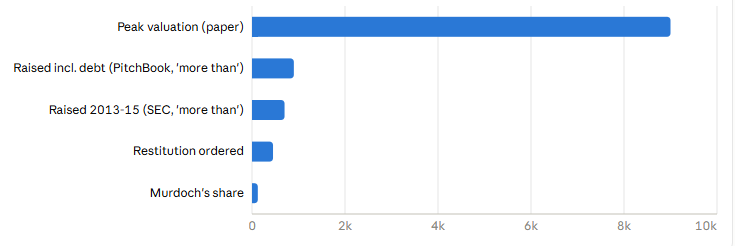
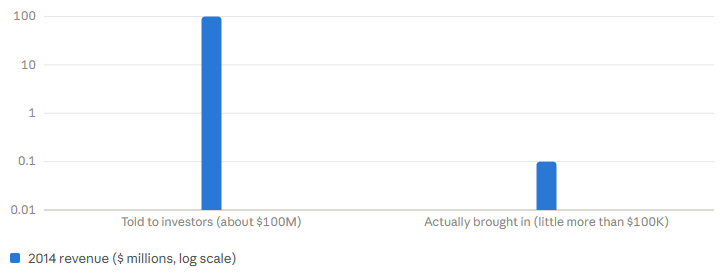
Peak valuation: $9 billion. Raised: more than $700 million from late 2013 to 2015 (SEC complaint); more than $900 million including $100 million of debt (PitchBook, via WRAL); nearly $1 billion (AP). Restitution ordered: $452 million; Rupert Murdoch’s share $125 million. Prosecutors had sought about $800 million. 2014: investors were told revenue would reach about $100 million; the company brought in little more than $100,000 (Axios). Sentences: Holmes 11¼ years (release date Dec. 30, 2031); Balwani nearly 13 years. Holmes was ordered to pay up to $250 a month. Forbes estimated Holmes’s net worth at $4.5 billion in 2015. SEC settlement: $500,000 penalty and a 10-year bar from serving as an officer or director of a public company.
Then the whole thing fell apart. Holmes was convicted of defrauding investors, and the company is gone. People like to say that Theranos cost investors billions, and in a headline sense that is right: a $9 billion valuation evaporated. But the real story is more precise, and more useful. The money that actually disappeared was hundreds of millions, and the mistake that let it happen was surprisingly ordinary.
In the criminal case, a judge ordered Holmes and Balwani to pay $452 million in restitution. Prosecutors had pushed for about $800 million. Rupert Murdoch, the largest investor named in the order, was awarded $125 million, roughly 28% of the total. On appeal, the court upheld the figure and concluded that the victims’ actual losses equaled the full amount of their investments. And here is a sobering detail: Holmes was ordered to pay up to $250 a month. At that rate, $452 million would take roughly 150,000 years, a calculation that is mine, not the court’s, but it shows how little of the money will likely come back.
The numbers: Peak valuation $9 billion (paper). Raised: more than $700 million (SEC); more than $900 million including debt (PitchBook); nearly $1 billion (AP). Restitution: $452 million, with $125 million to Murdoch. At $250 a month, $452 million would take about 150,000 years (my arithmetic).
It is a perfect investor story. It had a clear villain, which was the needle. It had a huge market, a young genius and a mission that made people feel good about writing a check. Those are the ingredients of a pitch that sells itself, and that is exactly why it needed the most scrutiny.
A famous name tells you someone is well known. It does not tell you they can evaluate a laboratory device. When you see impressive people attached to a deal, ask what each one actually knows about the technology, and whether they have tested it. Prestige is an effective way to feel safe. It is a poor substitute for verification.
The cure is dull but powerful: ask for audited financial statements, and check the claimed customers and contracts independently. A law firm roundtable on the case noted that some investors asked for such items from Theranos but did not receive them, and still invested. If a company will not show you verified numbers, that refusal is the most important number you will get.
Keep in mind: Theranos raised its money through private placements to selected investors, not registered public offerings. Private deals involve far less required disclosure than public companies, so the burden of checking falls on you.
Lawyers who studied the case suggest investors could have hired healthcare and technology experts to examine the product and even looked into the supply chain. One uncomfortable finding from the same discussion: even investors who did some diligence were still defrauded, because the diligence they did was not the kind that uncovered the problem. Checking the wrong things can feel like checking.
The lesson is to slow down at exactly the moment the pressure rises. A legitimate opportunity will survive a few weeks of questions. If an offer cannot, that tells you something.
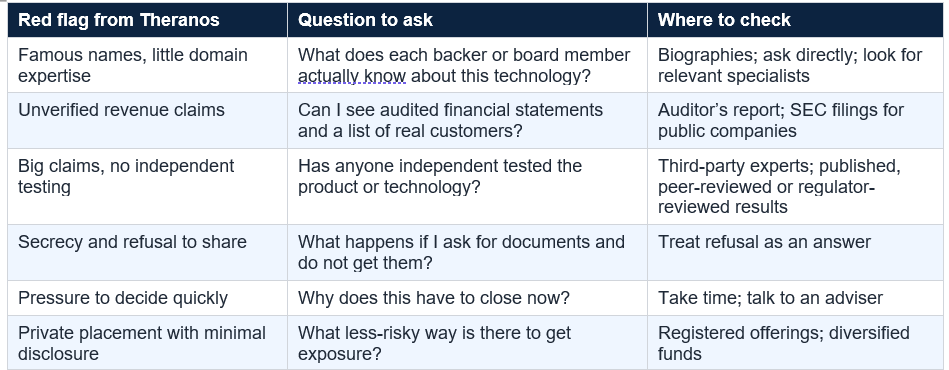
A broader point for 2026: unverified earnings claims have not gone away. The FTC has pursued schemes selling "passive income" from AI-powered businesses, a different industry with a familiar pattern. Whatever the sector, the questions stay the same. And never put in more than you can afford to lose, because even careful checks can miss a determined deception.
The next time a pitch feels dazzling, slow down. Ask who actually knows the technology, ask for verified numbers, look for independent testing, and notice any pressure to hurry. Those four habits would not have made anyone immune to a determined fraud, but they are the difference between trusting a story and checking it. This is general information, not investment advice.
Theranos was valued at $9 billion at its peak, but that was a paper figure. The SEC said the company raised more than $700 million from late 2013 to 2015, and other reporting puts total funding at nearly $1 billion, including debt. A court ordered Elizabeth Holmes and Sunny Balwani to pay $452 million in restitution, and an appeals panel said victims’ losses equaled their investments.
Was the mistake the investors’, or was it fraud?
It was fraud. A jury convicted Holmes of defrauding investors, and Balwani was convicted too. The investors were victims. The lesson is not blame but protection: the same facts show which checks could have exposed the problem sooner.
What is due diligence, in plain English?
It is checking claims yourself before you put money in. That can mean asking for audited financial statements, getting independent experts to test the product, verifying customers and contracts, and understanding who sits on the board and what they know.
Could this happen to ordinary investors?
The scale was unusual, but the pattern is common: a persuasive founder, big names attached, scarce data and a fear of missing out. It shows up in private deals, crowdfunding, hot sectors and schemes that promise easy returns. Public companies must file audited reports with the SEC, which gives ordinary investors more to check.
Where does Elizabeth Holmes stand now?
She is at a minimum-security federal prison camp in Bryan, Texas, with a release date of December 30, 2031, according to January 2026 reporting. Her commutation request was listed as pending then.
Theranos: paper value vs. money raised vs. restitution ($ millions)
$ millions by Measure
2014 revenue: what investors were told vs. what came in
$ millions (log scale) by Claim vs reality
Table of Contents
- $9 Billion on Paper
- The Short Answer
- How Much Was Really Lost?
- The Promise That Sold the Company
- Mistake One: Mistaking Prestige for Expertise
- Mistake Two: Accepting Numbers Nobody Verified
- Mistake Three: Skipping Independent Testing
- Mistake Four: Letting Fear of Missing Out Do the Thinking
- How It Unraveled
- Where Things Stand in October 2026
- A Due Diligence Checklist You Can Use
- Conclusion
- Frequently Asked Questions
$9 Billion on Paper
At its peak, Theranos was valued at $9 billion. Its founder, Elizabeth Holmes, appeared on magazine covers, and Forbes estimated her net worth at $4.5 billion in 2015. The company said it could run a wide range of blood tests from a single finger prick, a claim that would have transformed medicine if it had been true. Billionaires and household names put money in. A board full of statesmen lent it gravitas.Then the whole thing fell apart. Holmes was convicted of defrauding investors, and the company is gone. People like to say that Theranos cost investors billions, and in a headline sense that is right: a $9 billion valuation evaporated. But the real story is more precise, and more useful. The money that actually disappeared was hundreds of millions, and the mistake that let it happen was surprisingly ordinary.
The Short Answer
The costly mistake was treating a story and a set of famous names as if they were evidence. Many investors bought into a vision, a charismatic founder and an impressive board, without independently verifying the technology, the finances or the claims. That is not the same as saying the victims were at fault. Holmes and her former second-in-command, Ramesh "Sunny" Balwani, were convicted, and juries found they deceived investors. But the case shows exactly which checks were missing, and every one of them is something an ordinary investor can learn to ask for.How Much Was Really Lost?
Let me separate the numbers, because they get blurred. The $9 billion was a valuation, which is what the company was said to be worth based on the price of its latest share sales. It was never cash in the bank. According to the SEC’s complaint, Holmes and Balwani raised more than $700 million from late 2013 to 2015. PitchBook data cited by WRAL put total funding above $900 million, including $100 million of debt financing in December 2017. The Associated Press described it as nearly $1 billion.In the criminal case, a judge ordered Holmes and Balwani to pay $452 million in restitution. Prosecutors had pushed for about $800 million. Rupert Murdoch, the largest investor named in the order, was awarded $125 million, roughly 28% of the total. On appeal, the court upheld the figure and concluded that the victims’ actual losses equaled the full amount of their investments. And here is a sobering detail: Holmes was ordered to pay up to $250 a month. At that rate, $452 million would take roughly 150,000 years, a calculation that is mine, not the court’s, but it shows how little of the money will likely come back.
The numbers: Peak valuation $9 billion (paper). Raised: more than $700 million (SEC); more than $900 million including debt (PitchBook); nearly $1 billion (AP). Restitution: $452 million, with $125 million to Murdoch. At $250 a month, $452 million would take about 150,000 years (my arithmetic).
The Promise That Sold the Company
Holmes founded Theranos in 2003 at age 19, according to PitchBook data cited by WRAL. Prosecutors said she lied to investors from 2010 to 2015 about the company’s technology, claiming it could run many tests from one drop of blood. The SEC’s 2018 complaint said she and Balwani raised more than $700 million while making it appear that Theranos had developed a commercially ready portable blood analyzer capable of a full range of laboratory tests.It is a perfect investor story. It had a clear villain, which was the needle. It had a huge market, a young genius and a mission that made people feel good about writing a check. Those are the ingredients of a pitch that sells itself, and that is exactly why it needed the most scrutiny.
Mistake One: Mistaking Prestige for Expertise
Theranos assembled a board that read like a Washington directory, including Henry Kissinger, Jim Mattis and George Shultz, according to Axios. Critics noted that it leaned heavily toward military and intelligence figures rather than people from the medical industry or biotech venture capital, as WRAL reported. Axios noted that the company had just a couple of experienced venture investors and only two board members with medical experience, and not in blood testing.A famous name tells you someone is well known. It does not tell you they can evaluate a laboratory device. When you see impressive people attached to a deal, ask what each one actually knows about the technology, and whether they have tested it. Prestige is an effective way to feel safe. It is a poor substitute for verification.
Mistake Two: Accepting Numbers Nobody Verified
Axios reported that in 2014 the company told prospective investors it was on track to break even and generate $100 million in revenue. It brought in little more than $100,000 for that period. That is a gap of roughly one thousand to one. Prosecutors alleged that investors were given inaccurate revenue information and that contracts were conjured. One commentary noted that you cannot record revenue of the kind Theranos claimed without the matching customer balances appearing on a balance sheet.The cure is dull but powerful: ask for audited financial statements, and check the claimed customers and contracts independently. A law firm roundtable on the case noted that some investors asked for such items from Theranos but did not receive them, and still invested. If a company will not show you verified numbers, that refusal is the most important number you will get.
Keep in mind: Theranos raised its money through private placements to selected investors, not registered public offerings. Private deals involve far less required disclosure than public companies, so the burden of checking falls on you.
Mistake Three: Skipping Independent Testing
The product was a medical device, and the cheapest way to test a medical device is to use it. Axios reported that Google Ventures founder Bill Maris said GV passed after a team member took a Theranos test at Walgreens, though Holmes has disputed that account. Whatever the exact story, the principle holds: where a product can be tried or inspected by an independent expert, do it before you invest, not after.Lawyers who studied the case suggest investors could have hired healthcare and technology experts to examine the product and even looked into the supply chain. One uncomfortable finding from the same discussion: even investors who did some diligence were still defrauded, because the diligence they did was not the kind that uncovered the problem. Checking the wrong things can feel like checking.
Mistake Four: Letting Fear of Missing Out Do the Thinking
The deepest mistake may be psychological. When famous investors are in, the story is exciting and the round is closing, every doubt feels like a reason to be left behind. Each investor can take comfort in assuming the others did the homework. Add a charismatic founder and the result is a crowd that checks less precisely because it is crowded.The lesson is to slow down at exactly the moment the pressure rises. A legitimate opportunity will survive a few weeks of questions. If an offer cannot, that tells you something.
How It Unraveled
A Wall Street Journal investigation and regulatory reviews exposed serious flaws in Theranos’ technology, according to the Associated Press. In March 2018 the SEC announced charges of a "massive fraud." Holmes settled without admitting or denying the allegations, paying a $500,000 penalty and accepting a 10-year ban from serving as an officer or director of a public company. Balwani fought the case. The criminal trials followed: Balwani was convicted on 12 counts of fraud and conspiracy and began a nearly 13-year sentence in April 2023, and Holmes was convicted in 2022 on four counts of wire fraud and conspiracy.Where Things Stand in October 2026
Holmes reported to Federal Prison Camp Bryan in Texas on May 30, 2023, to serve an 11¼-year sentence. Her release date has since moved up and is Dec. 30, 2031, according to ABC News in January 2026. A federal appeals court upheld the convictions, sentences and restitution. In early 2026, Reuters and CNN reported that she had asked President Trump to commute her sentence, a request listed as pending with the Justice Department’s pardon office. The White House does not comment on clemency requests. Reuters noted that a commutation would still leave restitution owed, while a pardon would not. I could not find a decision after January, so treat the status as unconfirmed.A Due Diligence Checklist You Can Use
Here is a practical translation of the Theranos lessons into questions. None of these guarantees safety, and they apply to private deals, crowdfunding and any pitch that sounds too good, but each closes a gap that mattered here.A broader point for 2026: unverified earnings claims have not gone away. The FTC has pursued schemes selling "passive income" from AI-powered businesses, a different industry with a familiar pattern. Whatever the sector, the questions stay the same. And never put in more than you can afford to lose, because even careful checks can miss a determined deception.
Conclusion
What cost Theranos investors hundreds of millions of real dollars, and billions of paper value, was not a shortage of intelligence or wealth. It was a shortage of independent verification. Famous names stood in for expertise, projections stood in for audited numbers, and a compelling story stood in for a tested product. Holmes and Balwani were convicted, and the investors were the victims. But the case is also a free lesson in what to check.The next time a pitch feels dazzling, slow down. Ask who actually knows the technology, ask for verified numbers, look for independent testing, and notice any pressure to hurry. Those four habits would not have made anyone immune to a determined fraud, but they are the difference between trusting a story and checking it. This is general information, not investment advice.
Frequently Asked Questions
How much did Theranos investors actually lose?Theranos was valued at $9 billion at its peak, but that was a paper figure. The SEC said the company raised more than $700 million from late 2013 to 2015, and other reporting puts total funding at nearly $1 billion, including debt. A court ordered Elizabeth Holmes and Sunny Balwani to pay $452 million in restitution, and an appeals panel said victims’ losses equaled their investments.
Was the mistake the investors’, or was it fraud?
It was fraud. A jury convicted Holmes of defrauding investors, and Balwani was convicted too. The investors were victims. The lesson is not blame but protection: the same facts show which checks could have exposed the problem sooner.
What is due diligence, in plain English?
It is checking claims yourself before you put money in. That can mean asking for audited financial statements, getting independent experts to test the product, verifying customers and contracts, and understanding who sits on the board and what they know.
Could this happen to ordinary investors?
The scale was unusual, but the pattern is common: a persuasive founder, big names attached, scarce data and a fear of missing out. It shows up in private deals, crowdfunding, hot sectors and schemes that promise easy returns. Public companies must file audited reports with the SEC, which gives ordinary investors more to check.
Where does Elizabeth Holmes stand now?
She is at a minimum-security federal prison camp in Bryan, Texas, with a release date of December 30, 2031, according to January 2026 reporting. Her commutation request was listed as pending then.
0 Comments
Be the first to share your thoughts on this article.