
Real Estate
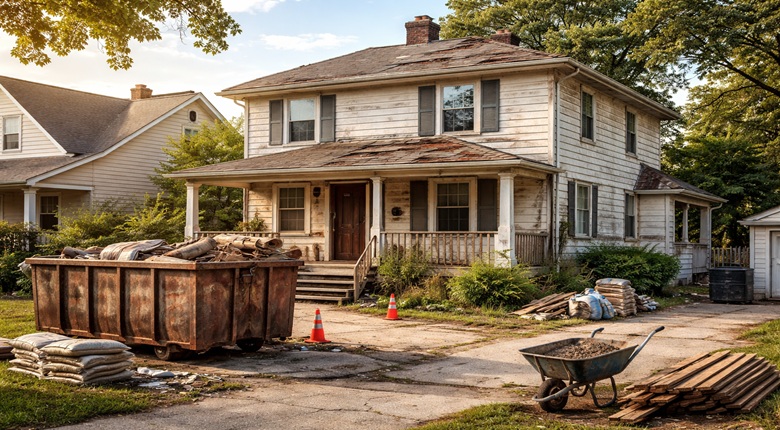
The U.S. Home Is 44 Years Old and Needs Major Work

Table of Contents
- America’s Housing Stock Is Getting Old
- The Numbers Behind the 44-Year Average
- Where the Oldest and Youngest Homes Are
- What Age Does to a Home: The Systems That Fail
- The Hazardous Materials Problem
- The Real Cost of Maintaining an Older Home
- Why Didn’t We Build More Homes? The Underbuilding Crisis
- The Silver Linings of Buying an Older Home
- What Homeowners and Buyers Should Do Now
- Conclusion: The Repair Bill Is Coming — Plan for It
- Frequently Asked Questions
- External References and Further Reading
America’s Housing Stock Is Getting Old
When you buy a house in America today, there is a reasonable chance you are buying a piece of 1981 — because that is when the median American home was built. The Wall Street Journal reported in April 2026 that the typical US home is now 44 years old, and the age of the national housing stock is climbing every year. This Old House’s analysis of Census Bureau data confirmed the same figure: the median US home was built in 1981, making a typical American home 44 years old.That number has real consequences. A 44-year-old home means a roof that may have been replaced once or twice but is probably due again. It means plumbing systems installed when polybutylene pipe was still common, or worse, when galvanized steel was standard. It means electrical panels that were designed for the appliance loads of the early 1980s, not a home with electric vehicles, heat pumps, and multiple high-draw kitchen appliances running simultaneously. It means insulation that predates modern energy-efficiency standards, windows that have never been replaced, and HVAC systems that have been pushed past their design lifespans.
And it means, increasingly, that the financial burden of maintaining the existing US housing stock is becoming one of the most significant and underappreciated challenges in American personal finance. This blog post examines why the stock has aged, what that age actually means for the physical systems inside a home, what it costs, and what you should do about it whether you own or are planning to buy.
The Numbers Behind the 44-Year Average
The aging of America’s housing stock is not a recent development — but it has accelerated significantly. According to the National Association of Home Builders (NAHB)’s analysis of American Community Survey data, the median age of owner-occupied homes was 31 years in 2005. By 2023 it had climbed to 41 years, and the most recent data places it at 42 to 44 years depending on the source and methodology. The trend line is clear and consistent.Eye on Housing, the NAHB’s research publication, reported in March 2026 that the median age of owner-occupied homes had reached 42 years based on the 2024 American Community Survey. Approximately 48% of the owner-occupied housing stock was built before 1980. Around 35% was built before 1970.
The share of newer homes has fallen sharply. In 2013, homes built within the previous 13 years accounted for 18% of the owner-occupied stock. By 2023, that share had fallen to just 12%. New construction from 2020 to 2023 added nearly 2.6 million owner-occupied homes — but that represents only 3% of total owner-occupied housing stock. The pace of replacement has simply not kept up with the aging of the existing inventory.
Data snapshot: The median US home was built in 1981. Over the past two decades, the median age of US homes has increased by more than 10 years, from 30 years in 2000 to 44 in 2025. Homes built before 1940 are 8.7% likely to be in inadequate condition — versus just 0.3% of homes built since 2022.
Where the Oldest and Youngest Homes Are
The national 44-year average conceals enormous regional variation. The Northeast consistently has the oldest housing stock in the country. New York has the oldest owner-occupied homes with a median age of 64 years, followed by Massachusetts at 59 years and Rhode Island at 59 years. The median home in the District of Columbia was built more than 80 years ago. In the Buffalo, New York metropolitan area — the oldest major metro in the country — the median home age is 68 years, with a median build year of 1957.The South has the youngest housing stock, with a median home age of just 36 years. The Austin, Texas and Myrtle Beach, South Carolina metro areas have the youngest housing in the country, with a median age of just 22 years and a median build year of 2003. Nevada, which saw massive suburban expansion through the 1990s and 2000s, has some of the newest owner-occupied housing stock in the nation.
This regional divide is not just a matter of aesthetics or historical character. A homeowner in Buffalo contending with a 68-year-old house faces fundamentally different maintenance challenges than a homeowner in Austin dealing with a 22-year-old house. The former is likely living with original plumbing, original wiring, original windows, and a roof that has been replaced but is approaching the end of its cycle again. The latter’s primary concerns are probably cosmetic updates and the first HVAC replacement. The financial implications over a 10-year ownership horizon are dramatically different.
| Regional Metric | Data |
| Oldest housing stock state: New York | Median age 64 years |
| Oldest metro: Buffalo, NY | Median age 68 years (built 1957) |
| Youngest metro: Austin, TX / Myrtle Beach, SC | Median age 22 years (built 2003) |
| Northeast regional median | 60 years |
| South regional median | 36 years |
| National median (2025) | 44 years (built 1981) |
| Homes built before 1980 | ~48% of owner-occupied stock |
What Age Does to a Home: The Systems That Fail
A 44-year-old home is, in building science terms, a structure that has outlived the designed lifespan of most of its critical systems. The major mechanical, electrical, and plumbing components of a residential building are not designed to last indefinitely, and a house built in 1981 has components that are long overdue for attention.Plumbing
Homes built before the mid-1980s often have galvanized steel water pipes, which corrode from the inside out over 40 to 70 years. Polybutylene pipe, which was installed in millions of homes from the mid-1970s through the mid-1990s, is notorious for premature failure. Replacing plumbing in a 2,000-square-foot home, including fixtures and labour, typically costs between $10,000 and $12,000. Sewer line replacement can run $3,000 to $6,000, and lead service line replacement from the water main can reach $15,000 or more depending on length and location.Pre-1980 homes are also six times more likely to report basement leakage issues than newer homes (4.6% versus 0.8%), according to the US Census Bureau American Housing Survey. Older homes are nearly twice as likely to report roof leakage (5.5% versus 3.5%).
Electrical
Electrical panels from the 1960s through early 1980s were designed for load demands that bear little resemblance to the modern home. Faulty wiring is one of the leading causes of house fires, and wiring from the 1960s and 1970s can be out of current code even if it was installed to code at the time. Upgrading an electrical panel to modern standards costs $1,500 to $4,000, and full rewiring of a house can run $8,000 to $20,000 or more.HVAC
Properly maintained HVAC systems typically last between 12 and 15 years. A home built in 1981 that has had regular HVAC service has likely been through two or three full system cycles. The current system may be approaching the end of its life, and many older homes were built without central air conditioning at all, requiring both new equipment and ductwork installation. A new HVAC system averages around $7,500, with a range of $5,000 to $12,500. Adding ductwork to a home that did not previously have it can add significantly to that cost.Roof
Standard asphalt shingle roofs last 20 to 25 years. A home built in 1981 has likely had at least one full roof replacement, with the current roof potentially approaching or past the end of its design life. Roof replacement costs average $8,000 to $20,000 depending on size, pitch, and materials. Roof leakage in older homes is a major driver of secondary damage: water intrusion into the structure causes mold, rot, and insulation deterioration that compound the cost of the initial leak.The Hazardous Materials Problem
For homes built before 1978 — which describes nearly half of all owner-occupied US homes — two specific hazardous materials create additional complexity and cost that newer homes do not face: lead paint and asbestos.Lead Paint
Lead was used in residential paint in the United States until it was banned for consumer use in 1978. Any home built before that year may contain lead-based paint on interior or exterior surfaces. Approximately 38 million housing units in the US are estimated to contain lead-based paint, with 24 million presenting significant hazards. Lead is particularly dangerous for young children, with no safe level of exposure. Professional lead paint removal costs $500 to $2,000 per room. For homes with significant lead paint contamination, total remediation can cost tens of thousands of dollars.Lead exposure risk is not limited to paint. Pre-World War II plumbing systems frequently contain lead pipes, and pipes installed before the mid-1980s may contain lead solder joints. Water filtration systems — either whole-house ($1,000 to $3,000) or point-of-use kitchen systems (starting around $300) — can mitigate the risk while infrastructure upgrades are planned.
Asbestos
Asbestos was used extensively in home construction from approximately 1940 to 1980, appearing in insulation, roofing materials, floor tiles, HVAC duct insulation, and some exterior siding. The EPA banned most asbestos applications by the late 1980s but never required removal of existing asbestos-containing materials. Millions of older homes contain asbestos that is currently stable but poses a risk if disturbed during renovation.Asbestos removal costs range from $1,000 to $3,000 for small areas, with typical costs around $5 to $20 per square foot. Full asbestos abatement in an average home can reach $15,000 or more. The challenge is that discovery of asbestos during a renovation project can halt work unexpectedly and add substantial unplanned cost.
The Real Cost of Maintaining an Older Home
The financial reality of owning a 44-year-old home is increasingly painful. The traditional guideline of setting aside 1% of a home’s value per year for maintenance is now widely considered inadequate. Financial advisers are increasingly recommending a budget of 2% to 3% annually for older properties requiring ongoing maintenance.For the typical owner-occupied home — valued at roughly $400,000 in the current market — that means setting aside $8,000 to $12,000 per year just for maintenance and repairs. Many homeowners are not doing this, and the gap between what should be spent and what is spent accumulates as deferred maintenance.
The Wall Street Journal profiled a couple in an 88-year-old home who expected to spend approximately $25,000 in a single year on upkeep, with past maintenance costs fluctuating widely and sometimes exceeding six figures. This is an extreme case, but it illustrates the trajectory of costs as homes age past 40 to 50 years.
Annual maintenance costs correlate directly with age. Census Bureau data shows that homes built before 1940 carry average annual maintenance costs of $1,615, compared to just $164 for homes built after 2022 — a difference of nearly ten times. Alongside these repair costs, homeowners face rising insurance premiums for older properties, with insurers increasingly raising rates or declining to renew coverage when maintenance issues are unresolved.
Budget reality: The traditional 1% annual maintenance rule is no longer adequate for older homes. Advisers now recommend 2%–3% per year for homes over 30 years old. At current median home values (~$400,000), that means $8,000–$12,000 per year set aside specifically for maintenance and repair.
Why Didn’t We Build More Homes? The Underbuilding Crisis
The aging of America’s housing stock is not an accident. It is the direct consequence of decades of insufficient new construction, with the Great Recession of 2008–2010 as the single most damaging event in the history of modern US homebuilding.During the recession, many residential construction firms downsized sharply, went out of business, or shifted their skilled workforce to other industries. The pipeline of trained carpenters, plumbers, electricians, and other trades workers was disrupted. Land entitlement processes and zoning restrictions created additional headwinds. When demand recovered, supply could not keep pace. Estimates of the national housing shortfall now range between 1.5 and 7.3 million units relative to current population needs.
The result is a market where buyers compete for a shrinking supply of homes, most of which are old. From 2020 to 2023, new construction added only 3% to the total owner-occupied housing stock. The share of homes built within the past 13 years fell from 18% of the owner-occupied stock in 2013 to just 12% by 2023. The median age of the housing stock has increased by more than 10 years over the past two decades and continues to climb.
The NAHB forecasted residential remodeling activity to post a 5% gain in 2025 and a 3% nominal gain in 2026 — driven almost entirely by the aging stock, as homeowners facing high purchase prices and elevated mortgage rates choose to stay in their current homes and invest in upgrades rather than move. This “lock-in effect” has made the remodeling market more active than it might otherwise be, but it does not solve the fundamental supply problem.
The Silver Linings of Buying an Older Home
An honest account of America’s aging housing stock requires acknowledging that older homes are not without genuine advantages — and that many of the concerns described in this article can be managed with good information and appropriate planning.Older homes are typically less expensive to purchase, particularly relative to new construction. The premium for new construction in competitive markets can be 20% to 40% over equivalent existing homes. For buyers with a tolerance for renovation and a budget for maintenance, an older home in a desirable location can represent a better long-term value proposition than a new home in a less desirable one.
Many older homes were built with materials and techniques that are no longer standard and that have proven to be remarkably durable. Old-growth lumber, used extensively in pre-1950s construction, is denser and more rot-resistant than modern dimensional lumber. Brick construction from the early and mid-20th century has, when properly maintained, proven to last centuries. The character and craftsmanship of older homes — the crown mouldings, hardwood floors, plaster walls, and architectural details — is often genuinely difficult to replicate in new construction.
Additionally, older homes have often been through multiple renovation cycles. A home built in 1970 that has had its roof, plumbing, electrical, and HVAC updated within the past decade is in a very different position than a home of the same age where all those systems are original. Age alone is not a reliable proxy for condition. The home inspection remains the essential tool for understanding what you are actually buying.
What Homeowners and Buyers Should Do Now
The data on America’s aging housing stock has concrete implications for both existing homeowners and prospective buyers. The following actions are consistently recommended by contractors, financial planners, and real estate professionals:For existing homeowners
- Revise your maintenance budget upward. The 1% rule is insufficient for homes over 30 years old. Plan for 2% to 3% of home value annually, and treat this as a non-negotiable line in your household budget.
- Conduct a systems audit. If you have owned your home for more than five years without a professional review of your plumbing, electrical, HVAC, and roof, schedule one. Identifying deferred maintenance proactively is far less expensive than responding to failures.
- Prioritise lead and asbestos testing if your home was built before 1978. If you are planning any renovation project that involves disturbing walls, floors, or ceilings, professional testing before work begins is essential.
- Build a dedicated repair reserve, separate from your emergency fund. Home repairs are not emergencies — they are predictable features of homeownership. Treat the repair reserve as a separate, specifically purposed account.
For prospective buyers
- Hire a qualified, independent home inspector — not one referred by the selling agent. For older homes, a specialist with experience in pre-1980 construction is worth the premium.
- Request a sewer line scope inspection in addition to the standard home inspection. Sewer line failure is one of the most expensive and disruptive repairs in older homes, and it is not covered by a standard inspection.
- Check insurance availability and cost before completing purchase. Insurers in some states are declining to renew coverage on older homes with unresolved maintenance issues. Confirming insurance availability is now a practical due-diligence step.
- Factor true maintenance costs into your affordability calculation. The monthly payment is not the full cost of homeownership. A $400,000 home requires $8,000 to $12,000 per year in maintenance reserves on top of the mortgage, taxes, and insurance.
Conclusion
The median American home is 44 years old. That number reflects two decades of insufficient new construction, a housing market that has forced buyers to compete for aging inventory, and a homeownership culture that has historically underestimated the true long-term cost of maintaining a home that was built in a different era.The consequences are not theoretical. Annual maintenance costs for older homes are approaching 10 times those of new construction. Homes built before 1940 face an 8.7% likelihood of being in inadequate condition, compared to 0.3% for homes built after 2022. Lead paint, asbestos, aging plumbing, outdated wiring, and end-of-life HVAC systems are present in tens of millions of occupied homes. The financial burden on homeowners — already under pressure from high purchase prices, elevated mortgage rates, and rising insurance costs — is significant and growing.
None of this is a reason to avoid buying an older home. Millions of older homes are well-maintained, beautifully cared for, and genuinely excellent places to live. What it is a reason to do is plan honestly and budget realistically. The repair bill is not a surprise for homeowners who see it coming. For the many who do not — who buy a 44-year-old house without accounting for the full cost of what age has done to it — the financial shock can be significant.
America’s housing stock is not getting younger. The question is whether the people who own and occupy those homes are planning accordingly.
Frequently Asked Questions
Why is the average US home 44 years old?
The median age of US homes has increased sharply because new construction has not kept pace with population growth or the aging of existing inventory. The Great Recession (2008–2010) caused widespread contraction in the residential construction industry, resulting in a decade of underbuilding that created a structural shortage of 1.5 to 7.3 million homes. With fewer new homes available, buyers compete for older stock, pushing the median age upward every year.What percentage of US homes were built before 1980?
Approximately 48% of owner-occupied US homes were built before 1980, according to NAHB analysis of 2024 American Community Survey data. Around 35% were built before 1970. Less than 12% of the owner-occupied stock consists of homes built within the past 13 years.Which states have the oldest housing stock?
The Northeast has the oldest housing stock in the country. New York has the oldest homes at a median age of 64 years, followed by Massachusetts and Rhode Island at 59 years each. The Buffalo, New York metropolitan area has the oldest housing stock among major metros, with a median age of 68 years.Which cities have the youngest housing stock?
The Austin, Texas and Myrtle Beach, South Carolina metro areas have the youngest housing stock, with a median home age of just 22 years and a median build year of 2003. The South as a whole has the youngest regional housing stock at a median age of 36 years.How much does it cost to maintain a 44-year-old home annually?
Annual maintenance costs for homes built before 1940 average $1,615 per Census Bureau data, versus $164 for homes built after 2022. Financial advisers now recommend budgeting 2% to 3% of home value per year for older properties — meaning $8,000 to $12,000 annually for a $400,000 home. The traditional 1% guideline is widely considered inadequate for homes over 30 years old.What are the biggest repair risks in a home built in the 1980s?
A 1981-vintage home’s most significant risk areas include: aging plumbing (polybutylene pipe or galvanized steel); electrical systems inadequate for modern load demands; HVAC systems past or approaching end of design life (12–15 years); roofing due for replacement; single-pane windows with poor thermal performance; and possible asbestos in insulation, flooring, and HVAC ductwork.
Do I have to disclose lead paint when selling an older home?
Yes. Federal law requires sellers of homes built before 1978 to disclose known lead-based paint hazards and provide buyers with a federally approved information pamphlet. Buyers must be given a 10-day opportunity to conduct a lead paint inspection. Sellers are not required to test for or remove lead paint, but known hazards must be disclosed.Is asbestos dangerous in an older home?
Asbestos is primarily dangerous when disturbed and its fibres become airborne. Asbestos in good condition that is not being disturbed poses minimal direct risk. However, any renovation or demolition work in a pre-1980 home that may contact asbestos-containing materials should be preceded by professional testing. Disturbing undiscovered asbestos during a renovation can halt work and require costly professional abatement.What is the 1% home maintenance rule, and is it still valid?
The 1% rule suggests homeowners set aside 1% of their home’s purchase price annually for maintenance and repairs. For older homes, most financial professionals now consider this insufficient. A 2% to 3% annual reserve is increasingly recommended, particularly for homes over 30 years old with systems approaching end of life. At median home values, this represents $8,000 to $12,000 per year.Should I buy an older home given all these issues?
Older homes can still be excellent purchases — often at a meaningful price discount versus new construction, with character and craftsmanship difficult to replicate in modern builds. The key is going in with eyes open: hire a thorough independent inspector, budget realistically for maintenance, check insurance availability in advance, and factor the true cost of ownership into your affordability calculation. Age alone does not determine condition; a well-maintained 1960s home can be in better shape than a poorly maintained 2000s home.External References and Further Reading
This Old House — U.S. Home Age Trends by City and Region (Census Bureau Data), Eye on Housing (NAHB) — Age of Housing Stock by State, 2024 ACS, NAHB / Floor Daily — Median Age of US Homes Is 41 Years, Making Them Ripe for Remodel (May 2025), Construction Coverage — American Cities With the Oldest Homes (2026 Edition), Seeking Alpha / Wall Street Journal — Aging US Homes Drive Surge in Repair Costs (April 2026), Defiant Capital / Advisor Perspectives — Aging US Housing Stock Analysis, American Planning Association — Aging U.S. Housing Stock, AFC Home Club — Common Issues Homeowners Face When Buying Older Homes, This Old House — What You Should Know Before Buying an Older Home, Money Crashers — Buying an Old House: Common Problems, Hidden Costs and Benefits,
Breaking AC — Rising Home Repair Costs Leave Many Homeowners Searching for Protection (February 2026)
0 Comments
Be the first to share your thoughts on this article.