
Real Estate
What Is the 28/36 Rule? A Simple Guide to Home Affordability

A plain-English guide to the classic home budgeting guideline, how lenders really use it, and what it means with mortgage rates above 7%. 28% housing cap; 36% total debt cap; Fannie Mae allows up to 50% DTI via automated underwriting; 30-year rate 7.11% (12 Nov 2026) vs 6.24% a year ago; median existing-home price $416,700.
The 28/36 rule is a simple guideline for how much home you can afford. It says no more than 28% of your gross monthly income should go on housing costs, and no more than 36% should go on all your debt payments combined, housing included. The first number is called the front-end ratio and the second is the back-end ratio, which is your debt-to-income (DTI) ratio. Lenders have used versions of this idea for decades, and it still shapes how many people plan a purchase.
The honest caveat is that it is a guide, not a law. Today's lenders often approve borrowers above these limits. Fannie Mae's automated underwriting, for example, can allow a DTI as high as 50% . And with the 30-year fixed rate at 7.11% in mid-November, sticking to 28% is harder than it used to be. Key takeaway: Think of 28/36 as a comfort zone, not a finish line. It shows what a cautious budget looks like, even though lenders may let you borrow more.
A quick example from Rocket Mortgage uses an income of $6,000 a month, or $72,000 a year. Thirty-six percent of $6,000 is $2,160 in total monthly debt payments, including housing. Cross Country Mortgage works the same income through the front-end number: 28% gives a maximum housing payment of $1,680. In other words, both tests have to pass. You need a housing payment that is no more than 28% of income and total debts that are no more than 36%. When you have a lot of other debt, the 36% limit usually bites first. When you have little other debt, the 28% limit does.
The front-end ratio does not include utilities or cable, according to Fox Business. So a $1,400 housing payment needs gross income of at least $5,000 a month to meet the 28% test.
For the back-end ratio, add everything else. Money.com says all debts should be included, such as student debt, credit cards and car loans. The Motley Fool also lists child support, alimony and HOA fees. Cross Country Mortgage adds personal loans and credit card minimum payments. One quirk: The Motley Fool's Ascent notes that, in its description of the rule, any debt scheduled to be paid off in less than 10 months is excluded from the back-end calculation. Lenders' own policies vary, so ask yours before assuming that a nearly paid-off loan will be ignored. Note also that it uses gross income, not take-home pay. That makes the rule look more generous than it feels, because taxes and retirement contributions come out before you see the money.
If the household has only a 10% down payment, the figure falls to roughly $319,000 on these assumptions, and that ignores mortgage insurance, which would lower it further. Remember too that if the household also has $900 a month in car and student loan payments, the 36% limit leaves only $2,100 for housing, which is lower than the 28% figure of $2,333. Then the back-end test is the one that sets the limit. Compare this with the national median. NAR data reported by Rate.com puts the median existing-home price at $416,700 in October. On the same assumptions, the monthly payment would be about $2,760, so the income needed to meet 28% is about $118,000 (my calculation), against about $110,000 at last year's rate.
Think about what that means in practice. If you spend 28% of gross income on housing, then after taxes a large part of your take-home pay may already be committed. A household that goes well beyond that has less room to absorb a job loss, an unexpected repair or a rate reset on a variable-rate loan. It is also simple. Two numbers and a calculator are all you need, which is why the rule has survived. But simplicity comes with trade-offs, covered in a later section.
Borrowers above 50% are not necessarily shut out. Opendoor says non-qualified mortgages can accept DTIs of 50% to 55% or higher, though they typically need larger down payments and better credit, and carry rates one to three points above conventional. The takeaway is that lenders may approve you for more than 28/36 suggests. That does not make it the right amount for you. Being approved for a loan and being comfortable with the payment are different things.
VA and USDA: ConsumerAffairs says VA loans have no set limit with 41% recommended for the back end, while USDA recommends 29% front-end and 41% back-end, with up to 44% possible. Lower.com makes the broader point that DTI limits depend on the mortgage program and how the loan is underwritten. The CFPB recommends a DTI of 36% or less, though some lenders accept up to 43%, according to ConsumerAffairs. If you are comparing, ask the lender which ratio they use and how they calculate it. Definitions of income and debt can differ.
The market has felt it. Existing-home sales hit a seasonally adjusted annual rate of 3.75 million in October, the slowest since August 2010, compared with about 5 million for a healthy pace. RISMedia's report quotes NAR's chief economist saying 2026 could end with fewer than 4 million existing-home sales. Prices have not fallen to compensate. NAR's median existing-home price was $416,700 in October, the 40th consecutive month of increases. Bankrate asks the obvious question, whether it is realistic to limit housing spending to 28% of income given record-setting prices and high rates. For many buyers the honest answer is that it is hard, especially in expensive areas. That is one reason lenders and buyers stretch beyond 28/36. The challenge is to stretch deliberately, with a plan for the extra risk.
Then add a margin for ownership costs not in the ratio. Utilities are not part of the front-end figure, and maintenance, furnishing and repairs are not in the formula either, but they are real costs. Many buyers set aside a monthly amount for them. Finally, compare the result with what a lender says you can borrow. If the lender's figure is much higher, you can decide how far to go. If it is lower, the lender is telling you something about your credit, income or debts that is worth understanding.
You can also shop for a better rate. Rates vary by lender, and a better credit score may lower the rate you are offered. A small cut in the rate, such as the 0.07-point weekly drop reported in mid-November, has little effect on its own, but shopping around across lenders can matter more. Ask for quotes from several lenders on the same day. Be cautious about shortcuts. Opening new credit just before applying, or taking on a car loan, can push the ratio the wrong way. And if you are not sure where you stand, a HUD-approved housing counsellor can review your budget, often for free or at low cost.
The second is forgetting taxes, insurance and HOA fees. The front-end ratio covers all of them, and leaving them out makes a home look cheaper than it is. The third is ignoring other debts. The back-end ratio includes student loans, car loans and credit card minimums.
The fourth is treating the lender's approval as a recommendation. A lender may approve a DTI of up to 50% in some programs, but that is a ceiling on risk for the lender, not a statement about your comfort. The fifth is assuming the rule is fixed. It is a guideline that you can adjust for your own situation, as long as you do so with open eyes.
No more than 28% of gross monthly income on housing and no more than 36% on total debt payments, including housing.
Is the 28/36 rule a requirement?
No. It is a guideline. Fannie Mae allows DTIs up to 50% through automated underwriting, and FHA loans can go higher.
What counts toward the 28%?
Your mortgage payment plus property taxes, homeowners insurance and HOA fees, and PMI where applicable. Utilities are generally not included.
Is the rule realistic in 2026?
It is harder: the 30-year rate was 7.11% on 12 November against 6.24% a year earlier, and the median existing-home price was $416,700.
What is a good DTI for a mortgage?
The CFPB recommends 36% or less, according to ConsumerAffairs, though some lenders accept up to 43% and the St. Louis Fed found denial rates only spike at about 50%.
Table of Contents
- The two numbers explained
- What counts as housing cost and what counts as debt
- A worked example with real mortgage rates
- Why the rule exists
- What lenders actually allow
- How 28/36 differs by loan type
- Why it feels harder in 2026
- The rule's blind spots
- How to use the rule well
- How to improve your ratios
- Common mistakes to avoid
- Conclusion
- FAQ
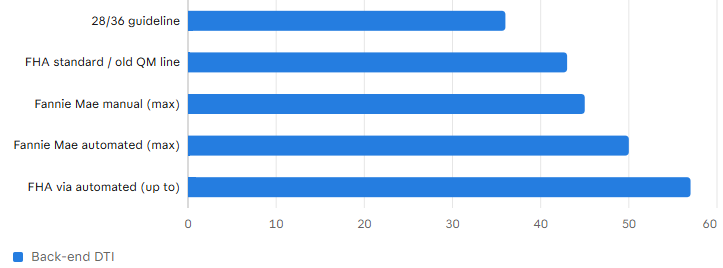
Back-end DTI levels: guideline vs lender ceilings (%)
% by Source: Fannie Mae Selling Guide, SoFi, St. Louis Fed
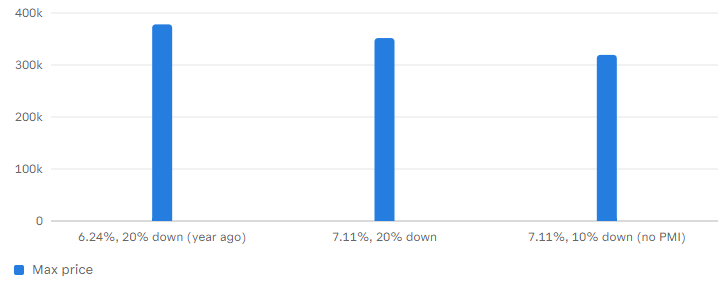
Home price that fits 28% on $100,000 income ($)
$ by My calculation: 1.5%/yr tax and insurance assumed; rates from Freddie Mac
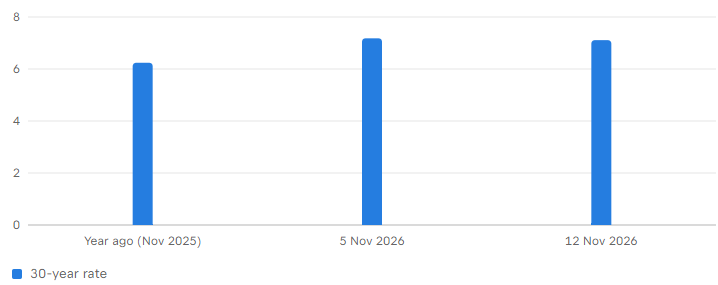
Freddie Mac 30-year fixed mortgage rate (%)
% by Source: Freddie Mac PMMS via APThe 28/36 rule is a simple guideline for how much home you can afford. It says no more than 28% of your gross monthly income should go on housing costs, and no more than 36% should go on all your debt payments combined, housing included. The first number is called the front-end ratio and the second is the back-end ratio, which is your debt-to-income (DTI) ratio. Lenders have used versions of this idea for decades, and it still shapes how many people plan a purchase.
The honest caveat is that it is a guide, not a law. Today's lenders often approve borrowers above these limits. Fannie Mae's automated underwriting, for example, can allow a DTI as high as 50% . And with the 30-year fixed rate at 7.11% in mid-November, sticking to 28% is harder than it used to be. Key takeaway: Think of 28/36 as a comfort zone, not a finish line. It shows what a cautious budget looks like, even though lenders may let you borrow more.
The two numbers explained
Let us take the two numbers one at a time. The front-end ratio, the "28", is the share of your gross monthly income, before tax, that goes on housing. Rocket Mortgage calls it the housing expense ratio, and says you should not spend more than 28% of gross monthly income on housing costs. The back-end ratio, the "36", adds all your other monthly debt payments to the housing cost. It is your monthly debt payments divided by your monthly gross income. This is the figure most people mean by DTI.A quick example from Rocket Mortgage uses an income of $6,000 a month, or $72,000 a year. Thirty-six percent of $6,000 is $2,160 in total monthly debt payments, including housing. Cross Country Mortgage works the same income through the front-end number: 28% gives a maximum housing payment of $1,680. In other words, both tests have to pass. You need a housing payment that is no more than 28% of income and total debts that are no more than 36%. When you have a lot of other debt, the 36% limit usually bites first. When you have little other debt, the 28% limit does.
What counts as housing cost and what counts as debt
The details matter, because "housing costs" is wider than the mortgage payment. Money.com says the front-end ratio should include not only your mortgage or rent payment but also homeowners insurance, HOA fees and property taxes. The Motley Fool lists the mortgage payment including taxes, homeowners insurance and private mortgage insurance .The front-end ratio does not include utilities or cable, according to Fox Business. So a $1,400 housing payment needs gross income of at least $5,000 a month to meet the 28% test.
For the back-end ratio, add everything else. Money.com says all debts should be included, such as student debt, credit cards and car loans. The Motley Fool also lists child support, alimony and HOA fees. Cross Country Mortgage adds personal loans and credit card minimum payments. One quirk: The Motley Fool's Ascent notes that, in its description of the rule, any debt scheduled to be paid off in less than 10 months is excluded from the back-end calculation. Lenders' own policies vary, so ask yours before assuming that a nearly paid-off loan will be ignored. Note also that it uses gross income, not take-home pay. That makes the rule look more generous than it feels, because taxes and retirement contributions come out before you see the money.
A worked example with real mortgage rates
Here is an illustration. This is my calculation, and it rests on assumptions you should change for your own case. Suppose a household earns $100,000 a year, or about $8,333 a month. At 28%, the housing budget is $2,333 a month, and at 36% the total debt budget is $3,000 a month. Now add the mortgage. Using Freddie Mac's 30-year average of 7.11% on 12 November, assume a 20% down payment and property tax plus insurance equal to 1.5% of the price a year (my assumption, which varies widely by place). On those numbers the home price that fits the 28% limit is roughly $352,000. The same household a year ago, when the average rate was 6.24%, could have afforded roughly $378,000 on the same assumptions. In other words, the move in rates alone has trimmed about $26,000 off the price that fits the rule (my calculation).If the household has only a 10% down payment, the figure falls to roughly $319,000 on these assumptions, and that ignores mortgage insurance, which would lower it further. Remember too that if the household also has $900 a month in car and student loan payments, the 36% limit leaves only $2,100 for housing, which is lower than the 28% figure of $2,333. Then the back-end test is the one that sets the limit. Compare this with the national median. NAR data reported by Rate.com puts the median existing-home price at $416,700 in October. On the same assumptions, the monthly payment would be about $2,760, so the income needed to meet 28% is about $118,000 (my calculation), against about $110,000 at last year's rate.
Why the rule exists
Why 28 and 36? The numbers come from long-standing lending practice, not from a law of nature. The idea is to keep housing from squeezing everything else. The Motley Fool says that, ideally, sticking to the rule leaves enough money for debt repayment and to build savings that can get you through tough times. Money.com says following it aims to keep borrowers from overextending themselves.Think about what that means in practice. If you spend 28% of gross income on housing, then after taxes a large part of your take-home pay may already be committed. A household that goes well beyond that has less room to absorb a job loss, an unexpected repair or a rate reset on a variable-rate loan. It is also simple. Two numbers and a calculator are all you need, which is why the rule has survived. But simplicity comes with trade-offs, covered in a later section.
What lenders actually allow
In real mortgage underwriting, the limits are looser than 28/36. Fannie Mae's maximum total DTI is 36% for manually underwritten loans, which can rise to 45% if the borrower meets credit score and reserve requirements, and the maximum allowable DTI is 50% for loans run through its Desktop Underwriter system. The Qualified Mortgage rule once treated 43% as the key line. The St. Louis Fed notes that when Congress passed Dodd-Frank in 2010, it established a DTI of 43% as the threshold for qualified mortgage status, but that 43% is no longer a hard limit. Looking at 30 million applications, the Fed researchers found denial rates were essentially flat across the 20% to 50% range, hovering between 8% and 10%, with no visible jump at 43%, and the real cliff sat at 50%.Borrowers above 50% are not necessarily shut out. Opendoor says non-qualified mortgages can accept DTIs of 50% to 55% or higher, though they typically need larger down payments and better credit, and carry rates one to three points above conventional. The takeaway is that lenders may approve you for more than 28/36 suggests. That does not make it the right amount for you. Being approved for a loan and being comfortable with the payment are different things.
How 28/36 differs by loan type
The 28/36 pairing is the classic conventional-loan benchmark, and the Motley Fool's Millionacres says it applies to conventional loans, with FHA at 31/43 and VA at a 41% back-end ratio. Other loan programs have their own standards. FHA loans: the maximum ratios are 31% front-end and 43% back-end, but SoFi says it is possible to qualify with a DTI up to 57% if approved through an automated underwriting system or with strong compensating factors. That same page also mentions a 50% maximum for compensating factors, so sources differ on the exact ceiling.VA and USDA: ConsumerAffairs says VA loans have no set limit with 41% recommended for the back end, while USDA recommends 29% front-end and 41% back-end, with up to 44% possible. Lower.com makes the broader point that DTI limits depend on the mortgage program and how the loan is underwritten. The CFPB recommends a DTI of 36% or less, though some lenders accept up to 43%, according to ConsumerAffairs. If you are comparing, ask the lender which ratio they use and how they calculate it. Definitions of income and debt can differ.
Why it feels harder in 2026
Mortgage costs have risen sharply. Freddie Mac's 30-year fixed average was 7.11% on 12 November, down from 7.18% the week before, against 6.24% a year earlier. The 15-year average was 6.45%. A different survey shows even higher numbers. Fortune's daily rate table put the 30-year conventional rate at 7.355% on 18 November, up 25 basis points on the week. Differences in survey method explain gaps like these, so quoted rates are best treated as a range.The market has felt it. Existing-home sales hit a seasonally adjusted annual rate of 3.75 million in October, the slowest since August 2010, compared with about 5 million for a healthy pace. RISMedia's report quotes NAR's chief economist saying 2026 could end with fewer than 4 million existing-home sales. Prices have not fallen to compensate. NAR's median existing-home price was $416,700 in October, the 40th consecutive month of increases. Bankrate asks the obvious question, whether it is realistic to limit housing spending to 28% of income given record-setting prices and high rates. For many buyers the honest answer is that it is hard, especially in expensive areas. That is one reason lenders and buyers stretch beyond 28/36. The challenge is to stretch deliberately, with a plan for the extra risk.
The rule's blind spots
The rule is useful, but it has blind spots. Bankrate points out that it does not account for your credit score. Two borrowers with identical ratios can get different rates and have very different monthly payments. It also ignores your actual lifestyle costs. The ratio is based on gross income, so it does not show how much is left after taxes, childcare, health costs, commuting or savings goals. Someone with high childcare costs may find 28% too much, while someone with a low-cost lifestyle may be comfortable with more. It does not account for where you live. Property taxes and insurance vary widely between places, which changes the size of the "housing" figure even at the same price. It does not account for future income either, such as a likely raise or a job at risk. Finally, it does not see your savings. A buyer with a large emergency fund can handle a higher ratio more safely than one with nothing. That is why I would treat 28/36 as the starting point of a conversation about your budget, and not the whole answer.How to use the rule well
Here is a practical way to use the rule. Start with your gross monthly income. Multiply by 0.28 to get a front-end ceiling and by 0.36 to get a back-end ceiling. Subtract your existing monthly debt payments from the back-end figure. The smaller of the two results is your cautious housing budget. Next, work backwards to a price. Use a mortgage calculator with a realistic rate, taxes, insurance, HOA fees and any mortgage insurance. Test several scenarios, such as a 10% down payment or a 20% down payment, and compare. Remember that the payment includes more than principal and interest.Then add a margin for ownership costs not in the ratio. Utilities are not part of the front-end figure, and maintenance, furnishing and repairs are not in the formula either, but they are real costs. Many buyers set aside a monthly amount for them. Finally, compare the result with what a lender says you can borrow. If the lender's figure is much higher, you can decide how far to go. If it is lower, the lender is telling you something about your credit, income or debts that is worth understanding.
How to improve your ratios
If your ratios are too high, there are several general levers. You can reduce your debts, since paying off a car loan or a credit card lowers the back-end ratio directly. Even a modest cut in monthly payments can help. You can raise your income, whether through a raise, a second earner or, where it is verifiable, additional income. A bigger down payment lowers the loan and the monthly payment, which helps the front-end ratio. Choosing a lower-priced home or a different area changes the numbers too.You can also shop for a better rate. Rates vary by lender, and a better credit score may lower the rate you are offered. A small cut in the rate, such as the 0.07-point weekly drop reported in mid-November, has little effect on its own, but shopping around across lenders can matter more. Ask for quotes from several lenders on the same day. Be cautious about shortcuts. Opening new credit just before applying, or taking on a car loan, can push the ratio the wrong way. And if you are not sure where you stand, a HUD-approved housing counsellor can review your budget, often for free or at low cost.
Common mistakes to avoid
A few mistakes come up repeatedly. The first is using take-home pay in place of gross pay, or the reverse. The rule uses gross income, so mixing them up gives wrong answers.The second is forgetting taxes, insurance and HOA fees. The front-end ratio covers all of them, and leaving them out makes a home look cheaper than it is. The third is ignoring other debts. The back-end ratio includes student loans, car loans and credit card minimums.
The fourth is treating the lender's approval as a recommendation. A lender may approve a DTI of up to 50% in some programs, but that is a ceiling on risk for the lender, not a statement about your comfort. The fifth is assuming the rule is fixed. It is a guideline that you can adjust for your own situation, as long as you do so with open eyes.
Conclusion
The 28/36 rule is a simple, durable guide: no more than 28% of gross income on housing and no more than 36% on total debt. It helps keep homeownership from crowding out the rest of your life. Real lending is more flexible. Fannie Mae allows up to 50% through its automated system, and FHA can go higher still in some cases [9]. With mortgage rates at 7.11% and median prices at $416,700, many buyers will find the rule hard to meet. So use it as a starting point. Work out your own numbers, test them against realistic rates, and decide how far above 28/36 you are willing to go, if at all. A rule of thumb cannot know your job security, your savings or your priorities, but you can.FAQ
What does the 28/36 rule mean?No more than 28% of gross monthly income on housing and no more than 36% on total debt payments, including housing.
Is the 28/36 rule a requirement?
No. It is a guideline. Fannie Mae allows DTIs up to 50% through automated underwriting, and FHA loans can go higher.
What counts toward the 28%?
Your mortgage payment plus property taxes, homeowners insurance and HOA fees, and PMI where applicable. Utilities are generally not included.
Is the rule realistic in 2026?
It is harder: the 30-year rate was 7.11% on 12 November against 6.24% a year earlier, and the median existing-home price was $416,700.
What is a good DTI for a mortgage?
The CFPB recommends 36% or less, according to ConsumerAffairs, though some lenders accept up to 43% and the St. Louis Fed found denial rates only spike at about 50%.
0 Comments
Be the first to share your thoughts on this article.