

Savings
Why Cooking at Home Saves Thousands: Accountants' Guide

Eating out costs 285% more than the equivalent home-cooked meal. Restaurants charge an average 300% markup on the food they serve. A delivery app order carries a premium of 35% to 100%+ above the already-marked-up restaurant price. The average American spends $3,693 per year dining out and could save over $13,000 by switching to home cooking. This is not a small difference. It is one of the largest single spending categories in most household budgets — and one of the most controllable.

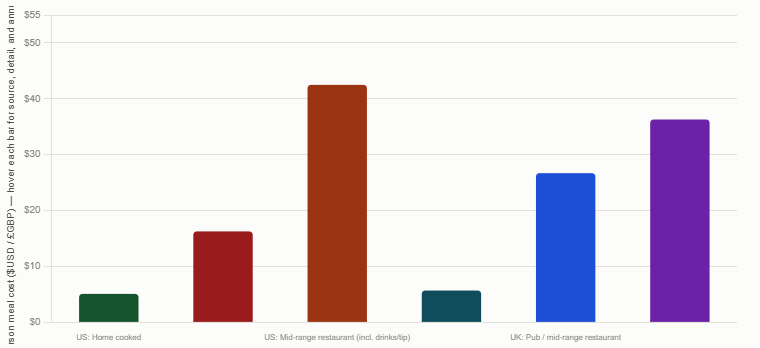
Eating out costs approximately 285% more than the equivalent meal cooked at home, according to Top Nutrition Coaching’s July 2026 national analysis. The average inexpensive restaurant meal in the US costs $16.28 per person; the equivalent home-cooked meal costs $4.23. That $12 difference, across multiple meals per week for an entire year, produces a gap that is larger than many Americans’ monthly rent payments. If you eat out just three times per week at average prices and switch entirely to home cooking, the annual saving exceeds $1,800. If the comparison is more comprehensive — all meals, including work lunches, coffee stops, and delivery orders — the figure climbs above $13,000.
This guide examines the full economics of home cooking vs eating out: the markup structure of restaurants, the true cost of delivery apps, the compounding value of food savings invested over time, the health benefits that have direct financial value, and the practical strategies for making home cooking a sustainable default rather than an occasional aspiration.
The Numbers: US: home-cooked meal average $4.23–$6 per person vs $16.28 at an inexpensive restaurant — 285% more expensive to eat out (Top Nutrition Coaching, July 2026). Annual gap: $13,000+ more to eat out consistently vs cook at home. UK: average weekly grocery spend £31/person covers 14–21 meals; average mid-range restaurant meal £30/person (ProCalculator.co.uk, January 2026).
These figures do not include tips (typically 15 to 20% in the US and 10 to 12.5% in UK sit-down restaurants), drinks (which carry extremely high markups at restaurants — soft drinks are typically marked up 300 to 500%, and alcohol far more), or parking and transport to the restaurant. Top Nutrition Coaching’s state-by-state analysis notes that its estimates ‘don’t factor in additional costs, such as parking, tips, drinks, or appetisers, so restaurant meals may cost substantially more.’
Restaurants are businesses that need to recover their fixed costs (rent, staff, energy) before making any profit. That recovery is built into the price of every dish. When you cook at home, you pay only for the ingredients. Your kitchen rent is sunk into your housing costs regardless of whether you cook. Your own time is the only genuine additional cost, and — for most meals — that time is much shorter than most people assume: a home-cooked dinner for a family of four takes 20 to 40 minutes for most weekday meals.
Replacing one restaurant dinner per week for two people (saving approximately $60/$45 per occasion): ~$3,120/$2,340 per year. Replacing the bought work lunch with a packed lunch (5 days/week, 48 weeks, saving $8/£5 per day): ~$1,920/£1,200 per year. Combined: ~$5,000/$3,500+ per year from two habit changes.
UK households that use food delivery as a major food source spend £400 to £700 per month on delivery alone, according to MorningFold.co.uk. The equivalent grocery cost for home-cooked meals in similar volume is approximately £120 to £200 per month for a single adult or couple. The difference — £200 to £500 per month — is not spent on better food. It is spent on the delivery infrastructure, the platform commission, and the convenience premium.
Delivery app premium: 35% to 100%+ above the equivalent restaurant meal price (MorningFold.co.uk, April 2026). UK heavy delivery users: £400–£700/month vs £120–£200/month for equivalent home-cooked meals. UK food delivery market reached £3.8 billion in 2024 with 15.2% CAGR projected (Zego, 2026). US: $500/month food savings invested = ~$734,000 over 30 years (Wealthvieu, April 2026).
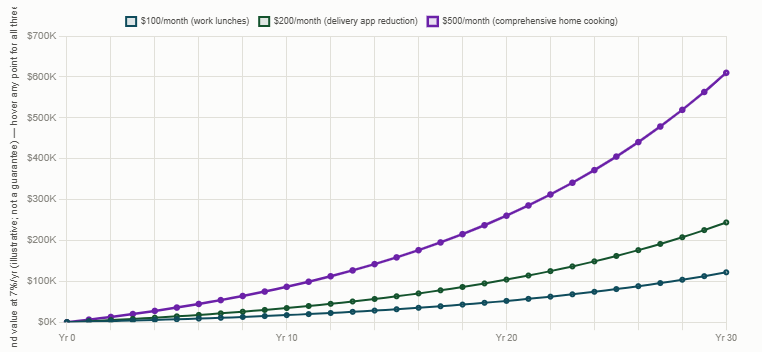
Wealthvieu’s April 2026 analysis models the most striking version: $500 per month in food savings — a conservative figure for a household switching from habitual eating out to consistent home cooking — invested over 30 years at a 7 percent annual return produces approximately $734,000. The household that saves and invests its food budget difference arrives at retirement age with three quarters of a million dollars more than the household that spent the same money on restaurant meals and delivery orders.
Even more modest savings compound significantly:
The $734,000 figure is not investment advice — it is an illustration of what compound growth does to consistent, modest savings. The point is not that everyone who cooks at home becomes a millionaire. It is that the gap between eating out and cooking at home, accumulated and invested over a career, produces a retirement wealth difference that dwarfs most other everyday financial decisions.
People who cook at home regularly eat better nutritionally. Multiple studies show that home-cooked meals contain fewer calories, less saturated fat, less added sugar, and fewer ultra-processed ingredients than restaurant meals of the same apparent type. A home-cooked burger and chips contains significantly fewer calories than the restaurant equivalent. A home-cooked pasta dish is made with the quantities of oil, cream, and salt that you chose; the restaurant version is made with the quantities that make it taste best, which are consistently higher.
The financial value of better health:
The economics of meal prepping are compelling:
The UK-specific data on home cooking savings is compelling: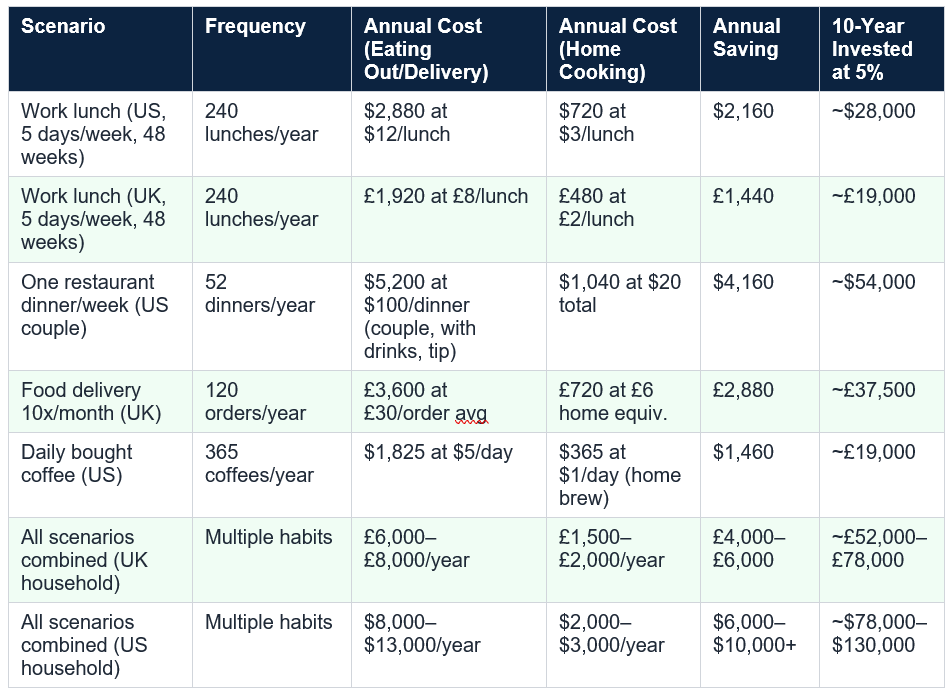
The economics are clear and consistent across multiple independent analyses, both in the UK and the US. Eating out costs between 285% and 300% more than the equivalent meal at home. Delivery apps layer a further 35% to 100% premium on top of an already-marked-up restaurant price. The annual aggregate saving from making home cooking the default ranges from $2,000 for a single person making modest changes to over $13,000 for a household making comprehensive ones. Invested over 30 years at typical market returns, those savings produce six-figure or seven-figure compounding advantages at retirement.
The stove is not a domestic appliance. It is a financial instrument that, used regularly, generates one of the most reliable returns available to any household — with no investment risk, no specialist knowledge, and the side effect of better nutrition. The habit is the strategy. Building it is the task.
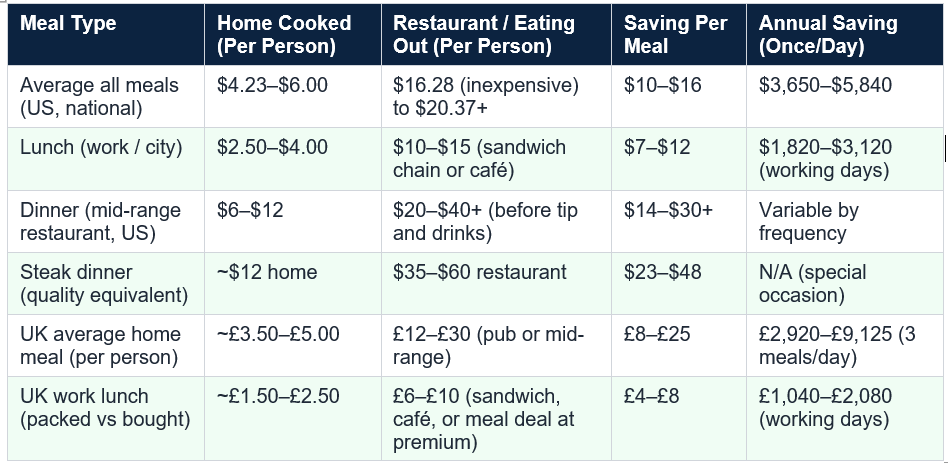
The average home-cooked meal in the US costs $4.23 to $6 per person (Top Nutrition Coaching, July 2026; Journey Foods). The average meal at an inexpensive US restaurant costs $16.28 per person, according to Top Nutrition Coaching's July 2026 national cost analysis. This means eating out at an inexpensive restaurant costs approximately 285% more than cooking at home. For mid-range or sit-down restaurants, with drinks and tip, the per-person cost rises to $25 to $50+ — making the gap significantly larger. In the UK, a home-cooked meal costs approximately £3.50 to £5 per person, while a meal at a pub or mid-range restaurant typically costs £12 to £30 per person excluding drinks and service charge.
How much can a family realistically save by cooking at home?
The saving depends on how often the family currently eats out. Top Nutrition Coaching's national analysis calculates that it costs over $13,000 more per year to eat out consistently than to prepare equivalent meals at home. For a family of four making moderate changes — switching from eating out five times per week to twice per week — the annual saving is typically $5,000 to $8,000. ProCalculator.co.uk estimates that UK home cooking and meal prepping saves £4,680 per year vs regular eating out for a single adult. For a UK couple eliminating habitual delivery app orders, replacing bought lunches with packed lunches, and reducing restaurant meals to once per week, the combined annual saving is typically £3,500 to £6,000.
Is cooking at home really healthier than eating out?
Consistently, yes. Multiple studies show that regular home cooking is associated with higher nutrient intake, lower calorie consumption, less saturated fat, less added sugar, and fewer ultra-processed ingredients compared with equivalent meals eaten out. Restaurant meals are designed to taste maximally good, which typically means more butter, oil, cream, salt, and sugar than a home cook would use. Portion sizes at restaurants are frequently larger than necessary. People who cook at home regularly have lower rates of obesity, type 2 diabetes, and cardiovascular disease than those who eat out frequently, though these associations are influenced by income, education, and other lifestyle factors as well.
Does it actually save money to buy a coffee machine instead of buying coffee daily?
Yes, substantially. A daily purchased coffee at £4 to £5 (UK) or $5 to $6 (US) costs £1,460 to £1,825 / $1,825 to $2,190 per year. A home-brewed equivalent using quality ground coffee costs approximately £200 to £400 / $200 to $400 per year including the cost of a decent coffee machine amortised over 5 years. The annual saving is £1,060 to £1,625 / $1,425 to $1,790. A French press or Aeropress costs £15 to £35 and produces café-quality results for approximately £0.20 to £0.50 per cup. The machine pays for itself within days. For the $5/day coffee habit specifically: the annual habit cost is $1,825; the 30-year compound investment value of the saving (at 7%/year) is approximately $182,000.
What are the cheapest meals to cook at home?
Pulses (lentils, chickpeas, black beans), eggs, rice, oats, and seasonal vegetables are consistently the most cost-effective ingredients for home cooking. A large pot of lentil soup costs approximately £1.50 to £2.50 (UK) or $2 to $3 (US) and produces 4 to 6 servings — under £0.50/$0.60 per serving. A batch of scrambled eggs on toast for two costs approximately £1 to £1.50 / $1.50 to $2.50. Rice and beans (a nutritionally complete protein combination) costs approximately £0.30 to £0.70 / $0.40 to $0.80 per serving when cooked in batches. Batch-cooked pasta dishes, soups, stews, and grain bowls all produce servings under £2 / $3 per person when planned and shopped deliberately. These are not meals that compromise on nutrition — pulses, eggs, and whole grains are among the most nutritionally dense foods available.
How do I start cooking at home more if I have no habit of it?
Start with one meal per day, not all of them. The anchor meal approach — committing to cooking dinner at home every day for one month — builds the habit without requiring a complete lifestyle change. During this month: stock the pantry with the basics (pasta, rice, tinned tomatoes, olive oil, garlic, eggs, dried pulses); plan the week's dinners on Sunday (taking 10 minutes); buy everything you need in one weekly shop; and batch cook on Sunday afternoon to reduce Monday-to-Friday cooking time to 15 to 20 minutes per meal. After one month, the habit is established and the savings are visible in the bank account. At that point, extending the habit to lunches (the second-highest-saving change) follows naturally.
Table of Contents
- The Single Biggest Food Decision in Your Budget
- The Core Numbers: What a Meal Actually Costs at Home vs Out
- The 300% Restaurant Markup: What You’re Really Paying For
- The Hidden Costs of Eating Out That Never Appear on the Menu
- The Delivery App Premium: Convenience at a Price
- The Annual Maths: What Switching Saves Over a Year
- The Compound Case: What Home Cooking Savings Are Worth Over Time
- Health Is a Financial Asset: The Non-Money Benefits That Have Money Value
- Meal Prepping: The Multiplier That Makes Home Cooking Truly Efficient
- Building a Home Cooking Habit: Practical Starting Strategies
- How to Eat Out Smarter When You Do Eat Out
- The UK Picture: What British Households Are Spending
- The Full Savings Comparison: Scenario Table
- Conclusion: The Stove Is a Financial Instrument
- Frequently Asked Questions
Pre Mael Cost: Home vs Restuarants vs Delivery App
Annual Savings Invested: 30 years Compounding Value
The Single Biggest Food Decision in Your Budget
Food is the third-largest household expenditure for most families, after housing and transport. Unlike housing and transport, it is also one of the most structurally controllable — and one of the areas where the gap between the minimum cost and the actual cost paid by most households is largest. That gap is almost entirely explained by a single variable: whether the food is cooked at home or purchased outside it.Eating out costs approximately 285% more than the equivalent meal cooked at home, according to Top Nutrition Coaching’s July 2026 national analysis. The average inexpensive restaurant meal in the US costs $16.28 per person; the equivalent home-cooked meal costs $4.23. That $12 difference, across multiple meals per week for an entire year, produces a gap that is larger than many Americans’ monthly rent payments. If you eat out just three times per week at average prices and switch entirely to home cooking, the annual saving exceeds $1,800. If the comparison is more comprehensive — all meals, including work lunches, coffee stops, and delivery orders — the figure climbs above $13,000.
This guide examines the full economics of home cooking vs eating out: the markup structure of restaurants, the true cost of delivery apps, the compounding value of food savings invested over time, the health benefits that have direct financial value, and the practical strategies for making home cooking a sustainable default rather than an occasional aspiration.
The Numbers: US: home-cooked meal average $4.23–$6 per person vs $16.28 at an inexpensive restaurant — 285% more expensive to eat out (Top Nutrition Coaching, July 2026). Annual gap: $13,000+ more to eat out consistently vs cook at home. UK: average weekly grocery spend £31/person covers 14–21 meals; average mid-range restaurant meal £30/person (ProCalculator.co.uk, January 2026).
The Core Numbers: What a Meal Actually Costs at Home vs Out
The cost comparison between home cooking and eating out is more consistent across different analyses than many people expect. Multiple independent sources converge on a per-meal cost of $4.23 to $6 for a home-cooked meal and $15 to $20+ for a restaurant meal, with the restaurant figure rising significantly when tips, drinks, and starters are added.These figures do not include tips (typically 15 to 20% in the US and 10 to 12.5% in UK sit-down restaurants), drinks (which carry extremely high markups at restaurants — soft drinks are typically marked up 300 to 500%, and alcohol far more), or parking and transport to the restaurant. Top Nutrition Coaching’s state-by-state analysis notes that its estimates ‘don’t factor in additional costs, such as parking, tips, drinks, or appetisers, so restaurant meals may cost substantially more.’
The 300% Restaurant Markup: What You’re Really Paying For
To make a profit, restaurants charge approximately a 300% markup on the food ingredients they serve. A burger, pizza, or pasta dish — among the highest-margin items in any restaurant — can cost the restaurant $2 to $5 in raw ingredients and appear on the menu for $15 to $25. You are not paying for the food. You are paying for:- Rent and premises costs: commercial kitchen and dining room space in most city locations is expensive, and this is directly passed through in menu prices.
- Labour: chefs, waiting staff, kitchen porters, and management. Labour typically accounts for 30 to 35% of a restaurant’s revenue in a well-run establishment.
- Energy costs: commercial kitchens use large quantities of gas and electricity. Energy costs tripled for many UK commercial kitchens after 2022 and remain elevated.
- Waste: restaurants build in the cost of food waste, over-ordering, and spoilage. When you pay for a restaurant meal, you are paying for a proportion of the food that was thrown away in the kitchen.
- Profit margin: a typical restaurant operates on a net profit margin of 3 to 9%, meaning the costs described above consume 91 to 97 cents of every dollar spent. This slim margin is why restaurant prices are so sensitive to input cost increases — a 10% rise in ingredients or wages produces a rapid menu price increase.
Restaurants are businesses that need to recover their fixed costs (rent, staff, energy) before making any profit. That recovery is built into the price of every dish. When you cook at home, you pay only for the ingredients. Your kitchen rent is sunk into your housing costs regardless of whether you cook. Your own time is the only genuine additional cost, and — for most meals — that time is much shorter than most people assume: a home-cooked dinner for a family of four takes 20 to 40 minutes for most weekday meals.
The Hidden Costs of Eating Out That Never Appear on the Menu
The menu price is only the starting point. The true cost of a restaurant meal includes a series of additional charges that most diners add automatically without calculating:- Tips: in the US, 15 to 20% is now effectively a default, adding $3 to $6 per person on a mid-range meal. In the UK, a 10 to 12.5% discretionary service charge is added to most sit-down restaurant bills (though it can be removed).
- Drinks: tap water is the only genuinely free option at most restaurants. A soft drink is typically $2 to $4 in the US or £3 to £5 in the UK; a glass of house wine is $8 to $14 / £7 to £12. The markup on drinks at restaurants is typically 300 to 500% above retail price.
- Starters and desserts: the impulse to add a starter or dessert when dining out — driven partly by the occasion and partly by menu design — adds $8 to $15 per person to the average bill.
- Transport and parking: in urban areas, the cost of getting to and from a restaurant (taxi, Uber, parking) adds $5 to $20 per person to the real cost of the meal.
- Occasion creep: dining out produces spending that would not exist at home. A quick after-work drinks stop becomes a spontaneous dinner; a dinner becomes a dessert; a coffee stop becomes a snack. The boundaries of the spend are more permeable outside the home.
Replacing one restaurant dinner per week for two people (saving approximately $60/$45 per occasion): ~$3,120/$2,340 per year. Replacing the bought work lunch with a packed lunch (5 days/week, 48 weeks, saving $8/£5 per day): ~$1,920/£1,200 per year. Combined: ~$5,000/$3,500+ per year from two habit changes.
The Delivery App Premium: Convenience at a Price
Food delivery apps — Uber Eats, Deliveroo, DoorDash, Just Eat — have become the dominant form of ‘eating out’ for millions of households. They are also one of the most expensive ways to eat outside the home. The economics of delivery apps layer multiple markups on top of the restaurant’s already-marked-up menu price:- Restaurant markup: the restaurant’s menu price already includes the 300% food markup described in the previous section.
- App platform fee: many restaurants charge higher prices on delivery platforms than in-store, sometimes 10 to 20% above their standard menu, to recover the commission they pay to the platform (typically 15 to 35% of the order value).
- Delivery fee: £1 to £5 per order typically, or included in a platform subscription.
- Service fee: a percentage-based fee charged by the platform to the customer, typically 5 to 15% of the order subtotal.
- Minimum order requirements: forcing the order above a threshold to qualify for free delivery, producing spend on items not needed.
UK households that use food delivery as a major food source spend £400 to £700 per month on delivery alone, according to MorningFold.co.uk. The equivalent grocery cost for home-cooked meals in similar volume is approximately £120 to £200 per month for a single adult or couple. The difference — £200 to £500 per month — is not spent on better food. It is spent on the delivery infrastructure, the platform commission, and the convenience premium.
Delivery app premium: 35% to 100%+ above the equivalent restaurant meal price (MorningFold.co.uk, April 2026). UK heavy delivery users: £400–£700/month vs £120–£200/month for equivalent home-cooked meals. UK food delivery market reached £3.8 billion in 2024 with 15.2% CAGR projected (Zego, 2026). US: $500/month food savings invested = ~$734,000 over 30 years (Wealthvieu, April 2026).
The Annual Maths: What Switching Saves Over a Year
The individual meal saving is meaningful. The annual aggregate is transformative. Three scenarios illustrate the annual mathematics of home cooking:- Scenario A — Replace one restaurant dinner per week (US): skipping one $40 restaurant dinner per person per week (two people, $80 total) and replacing with a $12 home-cooked equivalent saves $68 per week, $3,536 per year. Money Under 30 calculates the saving from skipping just one restaurant meal per week at approximately $500 per year (using conservative figures); the actual saving with a couple at a proper sit-down restaurant is significantly higher.
- Scenario B — Replace bought work lunches with packed lunch (UK, 5 days/week): the average bought lunch in a UK city (meal deal or café sandwich) costs £6 to £10. A packed lunch costs £1.50 to £2.50 to prepare. Over 48 working weeks, replacing five bought lunches per week with packed lunches saves approximately £1,200 to £1,800 per year per person. A couple doing this saves £2,400 to £3,600 per year from a single habit change.
- Scenario C — Eliminate habitual food delivery orders (UK): moving from 10 delivery orders per month at £25 average (including all fees) to 2 delivery orders per month saves £200 per month, £2,400 per year. The food cost of equivalent home-cooked meals: approximately £60 per month. The net saving: £1,560 per year from delivery app reduction alone.
The Compound Case: What Home Cooking Savings Are Worth Over Time
The most compelling financial argument for home cooking is not the annual saving but the compound value of that saving invested over time. Personal finance calculations consistently show that money saved on food and invested in a diversified portfolio produces enormous long-term wealth differences.Wealthvieu’s April 2026 analysis models the most striking version: $500 per month in food savings — a conservative figure for a household switching from habitual eating out to consistent home cooking — invested over 30 years at a 7 percent annual return produces approximately $734,000. The household that saves and invests its food budget difference arrives at retirement age with three quarters of a million dollars more than the household that spent the same money on restaurant meals and delivery orders.
Even more modest savings compound significantly:
- $100/month saved from replacing bought lunches: at 7%/year for 30 years = approximately $122,000.
- $200/month saved from eliminating delivery apps: at 7%/year for 30 years = approximately $244,000.
- $500/month total food savings: at 7%/year for 30 years = approximately $734,000.
The $734,000 figure is not investment advice — it is an illustration of what compound growth does to consistent, modest savings. The point is not that everyone who cooks at home becomes a millionaire. It is that the gap between eating out and cooking at home, accumulated and invested over a career, produces a retirement wealth difference that dwarfs most other everyday financial decisions.
Health Is a Financial Asset: The Non-Money Benefits That Have Money Value
The financial case for home cooking is strong without any reference to health. The health case makes it stronger still, because health outcomes have direct and measurable financial consequences.People who cook at home regularly eat better nutritionally. Multiple studies show that home-cooked meals contain fewer calories, less saturated fat, less added sugar, and fewer ultra-processed ingredients than restaurant meals of the same apparent type. A home-cooked burger and chips contains significantly fewer calories than the restaurant equivalent. A home-cooked pasta dish is made with the quantities of oil, cream, and salt that you chose; the restaurant version is made with the quantities that make it taste best, which are consistently higher.
The financial value of better health:
- Lower healthcare costs: diet-related conditions — type 2 diabetes, obesity, cardiovascular disease, hypertension — carry significant lifetime healthcare costs. The American Diabetes Association estimates the average lifetime healthcare cost of type 2 diabetes at over $85,000; the American Heart Association estimates lifetime costs of cardiovascular disease at over $200,000 for many patients. Diet quality is one of the most modifiable risk factors for both.
- Lower medication costs: better diet quality reduces the likelihood of requiring long-term prescription medications for conditions with strong dietary links.
- More productive working years: better nutritional status is associated with higher energy, better concentration, fewer sick days, and longer productive working capacity.
Meal Prepping: The Multiplier That Makes Home Cooking Truly Efficient
The most common objection to cooking at home as a daily default is time. Cooking three meals per day from scratch for a household is time-consuming, and time has real value. Meal prepping — the practice of preparing food in batches, typically once or twice per week, for use throughout the week — is the solution that collapses the time cost of home cooking to a fraction of its apparent level.The economics of meal prepping are compelling:
- Batch cooking reduces active kitchen time dramatically: a two-hour Sunday meal prep session can produce five to seven days of lunches and dinners, reducing the per-meal time investment to approximately 15 to 20 minutes of active preparation (the rest being oven or slow cooker time).
- Bulk purchasing reduces ingredient cost: buying in bulk and using the same core ingredients across multiple dishes (e.g. a large bag of chicken thighs, rice, and vegetables used in three different meals) reduces the per-meal ingredient cost further, often below the $4 average cited in individual meal comparisons.
- Food waste is reduced: meal prepping almost eliminates the food waste that occurs when individual ingredients are bought for single meals and the remainder is not used. The ONS reports that UK households waste approximately 10 to 15% of groceries on average; ProCalculator.co.uk notes that meal prepping specifically reduces this waste to near zero.
- Decision fatigue is removed: the daily decision of what to eat — and the associated risk of defaulting to takeaway or delivery when tired or pressed for time — is eliminated when the week’s food is already prepared.
Building a Home Cooking Habit: Practical Starting Strategies
The data on home cooking vs eating out is not new. Most people who eat out regularly know it costs more. The challenge is not knowledge; it is habit. The following strategies are specifically designed to make home cooking the path of least resistance rather than the path of most effort:- The anchor meal strategy: pick one meal per day and commit to cooking it at home, every day, for one month. The anchor meal is typically dinner, as it produces the largest saving. After one month, the habit is established and expanding to other meals becomes natural rather than effortful.
- Keep a stocked pantry: the single biggest barrier to cooking at home when tired is the feeling that there is nothing to cook. A well-stocked pantry (canned tomatoes, dried pasta or rice, olive oil, garlic, onions, dried pulses, stock, basic spices) enables a meal to be made from almost nothing in 20 to 30 minutes. Stocking the pantry once removes this barrier permanently.
- Batch cook on low-effort days: the worst time to commit to cooking from scratch is when you are tired after a long day. The best time is a weekend morning or afternoon when you have bandwidth. Batch cooking on Sunday means the barrier on Wednesday evening is reheating, not cooking.
- Lower the quality bar for weeknight meals: the mental model of home cooking as something that needs to produce restaurant-quality results is the enemy of home cooking as a daily habit. A simple omelette, a bowl of pasta with garlic and olive oil, scrambled eggs on toast, or a can of good soup and some bread are all home-cooked meals that cost £1 to £3 / $1.50 to $4 per person and take under 15 minutes. The comparison is not between home cooking and a restaurant. It is between home cooking and a delivery app. The delivery app is not producing better food.
- Use leftovers as a lunch system: every dinner should produce at least one planned leftover portion as the next day’s lunch. This is one of the highest-value habits in the home cooking toolkit: it converts a cooking session that was happening anyway into a second meal at near-zero marginal cost.
How to Eat Out Smarter When You Do Eat Out
Home cooking as a default does not mean never eating out. The goal is for eating out to be a conscious, deliberately chosen pleasure rather than a default convenience. When you do eat out, the following strategies reduce the cost without reducing the enjoyment:- Lunch instead of dinner: most restaurants offer smaller portions at lower prices for lunch service. The same restaurant that costs $40 to $60 per person for dinner typically costs $15 to $25 per person for lunch, with similar kitchen quality.
- Skip the drinks: the markup on restaurant drinks — particularly wine and cocktails — is enormous. Drinking water and ordering dessert instead of cocktails can reduce a restaurant bill by 25 to 40%.
- Order direct rather than through delivery apps: most restaurants that accept delivery app orders also accept direct orders by phone or through their own website. Ordering direct eliminates the platform surcharge (which the restaurant often passes on through higher app prices) and is frequently 15 to 25% cheaper for the same food.
- Use weekday specials and early-bird offers: most restaurants have lower-traffic weekday and early-week periods where promotional pricing and set menus offer significantly better value than Saturday evening prime-time pricing.
- Choose the experience, not the habit: eat out when you have a specific reason to — a celebration, a social occasion, a cuisine you genuinely want, a place you have researched. Eating out because it is Tuesday and cooking feels like effort produces the highest cost-per-enjoyment ratio of any food decision. The same money spent on a planned occasion at the same restaurant produces a genuinely different experience.
The UK Picture: What British Households Are Spending
UK households face a food cost environment that is structurally similar to the US but with some specific characteristics worth noting. The Office for National Statistics reported that average weekly household food spending was £47.19 per person in the financial year ending 2024, with £32.30 going to groceries and approximately £14.89 to eating out (ONS, cited Moving to the UK, May 2026). This represents a significant proportion of typical disposable incomes, particularly for younger households.The UK-specific data on home cooking savings is compelling:
- ProCalculator.co.uk (January 2026) calculates that meal prepping and home cooking saves £4,680 per year vs regular eating out in the UK, based on a weekly grocery spend of £31 per person (covering 14 to 21 meals) vs £30 average per person for a mid-range restaurant meal.
- Brits order an average of 34 takeaways per year at £10 to £15 each, amounting to approximately £451 per year in delivered food alone. Adding sit-down restaurants brings most households to over £1,200 per year on eating out.
- The gap between a disciplined Aldi-and-own-label-cooking household and a Waitrose-and-Deliveroo household can reach £3,000 to £5,000 per year for a couple — with the difference attributable not to the underlying food quality but to the retailer premium and the delivery infrastructure cost (Moving to the UK, May 2026).
The Full Savings Comparison: Scenario Table
Conclusion
The case for cooking at home is not primarily about deprivation or sacrifice. It is about the ratio of cost to value. Restaurants and delivery apps are expensive because of what they provide beyond the food: the service, the convenience, the occasion, the ambiance. Those things have value. The question is whether you are choosing them deliberately and getting that value, or paying for them habitually without noticing.The economics are clear and consistent across multiple independent analyses, both in the UK and the US. Eating out costs between 285% and 300% more than the equivalent meal at home. Delivery apps layer a further 35% to 100% premium on top of an already-marked-up restaurant price. The annual aggregate saving from making home cooking the default ranges from $2,000 for a single person making modest changes to over $13,000 for a household making comprehensive ones. Invested over 30 years at typical market returns, those savings produce six-figure or seven-figure compounding advantages at retirement.
The stove is not a domestic appliance. It is a financial instrument that, used regularly, generates one of the most reliable returns available to any household — with no investment risk, no specialist knowledge, and the side effect of better nutrition. The habit is the strategy. Building it is the task.
Frequently Asked Questions
How much does the average home-cooked meal cost vs eating out?The average home-cooked meal in the US costs $4.23 to $6 per person (Top Nutrition Coaching, July 2026; Journey Foods). The average meal at an inexpensive US restaurant costs $16.28 per person, according to Top Nutrition Coaching's July 2026 national cost analysis. This means eating out at an inexpensive restaurant costs approximately 285% more than cooking at home. For mid-range or sit-down restaurants, with drinks and tip, the per-person cost rises to $25 to $50+ — making the gap significantly larger. In the UK, a home-cooked meal costs approximately £3.50 to £5 per person, while a meal at a pub or mid-range restaurant typically costs £12 to £30 per person excluding drinks and service charge.
How much can a family realistically save by cooking at home?
The saving depends on how often the family currently eats out. Top Nutrition Coaching's national analysis calculates that it costs over $13,000 more per year to eat out consistently than to prepare equivalent meals at home. For a family of four making moderate changes — switching from eating out five times per week to twice per week — the annual saving is typically $5,000 to $8,000. ProCalculator.co.uk estimates that UK home cooking and meal prepping saves £4,680 per year vs regular eating out for a single adult. For a UK couple eliminating habitual delivery app orders, replacing bought lunches with packed lunches, and reducing restaurant meals to once per week, the combined annual saving is typically £3,500 to £6,000.
Is cooking at home really healthier than eating out?
Consistently, yes. Multiple studies show that regular home cooking is associated with higher nutrient intake, lower calorie consumption, less saturated fat, less added sugar, and fewer ultra-processed ingredients compared with equivalent meals eaten out. Restaurant meals are designed to taste maximally good, which typically means more butter, oil, cream, salt, and sugar than a home cook would use. Portion sizes at restaurants are frequently larger than necessary. People who cook at home regularly have lower rates of obesity, type 2 diabetes, and cardiovascular disease than those who eat out frequently, though these associations are influenced by income, education, and other lifestyle factors as well.
Does it actually save money to buy a coffee machine instead of buying coffee daily?
Yes, substantially. A daily purchased coffee at £4 to £5 (UK) or $5 to $6 (US) costs £1,460 to £1,825 / $1,825 to $2,190 per year. A home-brewed equivalent using quality ground coffee costs approximately £200 to £400 / $200 to $400 per year including the cost of a decent coffee machine amortised over 5 years. The annual saving is £1,060 to £1,625 / $1,425 to $1,790. A French press or Aeropress costs £15 to £35 and produces café-quality results for approximately £0.20 to £0.50 per cup. The machine pays for itself within days. For the $5/day coffee habit specifically: the annual habit cost is $1,825; the 30-year compound investment value of the saving (at 7%/year) is approximately $182,000.
What are the cheapest meals to cook at home?
Pulses (lentils, chickpeas, black beans), eggs, rice, oats, and seasonal vegetables are consistently the most cost-effective ingredients for home cooking. A large pot of lentil soup costs approximately £1.50 to £2.50 (UK) or $2 to $3 (US) and produces 4 to 6 servings — under £0.50/$0.60 per serving. A batch of scrambled eggs on toast for two costs approximately £1 to £1.50 / $1.50 to $2.50. Rice and beans (a nutritionally complete protein combination) costs approximately £0.30 to £0.70 / $0.40 to $0.80 per serving when cooked in batches. Batch-cooked pasta dishes, soups, stews, and grain bowls all produce servings under £2 / $3 per person when planned and shopped deliberately. These are not meals that compromise on nutrition — pulses, eggs, and whole grains are among the most nutritionally dense foods available.
How do I start cooking at home more if I have no habit of it?
Start with one meal per day, not all of them. The anchor meal approach — committing to cooking dinner at home every day for one month — builds the habit without requiring a complete lifestyle change. During this month: stock the pantry with the basics (pasta, rice, tinned tomatoes, olive oil, garlic, eggs, dried pulses); plan the week's dinners on Sunday (taking 10 minutes); buy everything you need in one weekly shop; and batch cook on Sunday afternoon to reduce Monday-to-Friday cooking time to 15 to 20 minutes per meal. After one month, the habit is established and the savings are visible in the bank account. At that point, extending the habit to lunches (the second-highest-saving change) follows naturally.
0 Comments
Be the first to share your thoughts on this article.