

Real Estate
Mortgage Rates Are Rising in the UK: What That Means for You

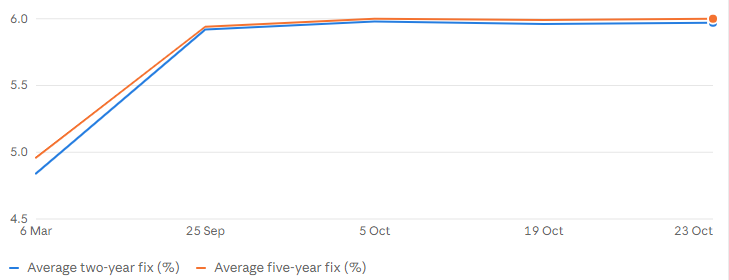
Two-year fix 5.98% and five-year fix 6.00% on 5 October 2026 (highest in about three years); 5.96% and 5.99% on 19 October; 4.84% and 4.96% on 6 March. Sub-5% deals fell from 1,494 (start of September) to nine (5 October). Average SVR 7.13% (September). Bank Rate 3.75% since December 2025; UK CPI 3.5% in September (3.1% in August; core 2.8%); markets price about 96% odds of a 25bp hike on 5 November; Budget on 28 October. Payments: on £250,000 over 25 years, £1,605 a month at 5.96% vs £1,440 at 4.85% (+£165, about £1,980 a year). A £200,000 remortgage over 20 years moving from 2.0% to 5.97%: about £1,012 to £1,429 (+£418 a month). Landlords (UK Finance, Q2 2026): buy-to-let lending £10.7bn (+25%); remortgages £7.5bn (about 75% of loans); average new BTL rate 4.82%; average gross yield 7.27%; Renters’ Rights Act in force from 1 May 2026.
If you are buying a home, coming to the end of a cheap fixed deal or running a buy-to-let portfolio, that number lands differently. This guide explains why rates are rising, what it means in pounds for each type of borrower and what practical steps are worth taking now. It cannot predict the next move, and nobody can, but it can help you plan.
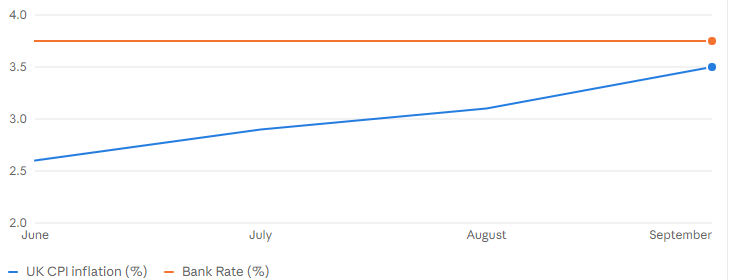
Why did expectations change? Energy prices climbed amid the conflict in the Middle East, and UK inflation followed. CPI rose to 3.5% in September from 3.1% in August, the highest since October 2025, driven mainly by motor fuels, with petrol up 8.2p a litre in a month to 169.5p. Core inflation was 2.8%. It is two years since inflation was last at or below the Bank of England’s 2% target, and the Bank has warned that in a worst case it could reach 4.5% by mid-2027.
Lenders responded. Barclays raised selected fixed rates four times in September, and HSBC, Lloyds, Nationwide, NatWest, Santander and TSB each made three rounds of increases, according to Moneyfacts. About 1,500 deals priced below 5% disappeared: 1,494 at the start of September and just nine on 5 October. Since then the picture has steadied. HSBC cut rates on 14 October, Santander and Yorkshire Building Society trimmed some fixes, and the averages stayed close to 6%, at 5.97% (two-year) and 6.00% (five-year) on 23 October.
Average two-year fix: 4.84% (6 March) to 5.98% (5 October), 5.97% (23 October). Average five-year fix: 4.96% to 6.00%. Sub-5% deals: 1,494 to nine. UK CPI: 3.5% in September. Bank Rate: 3.75%.
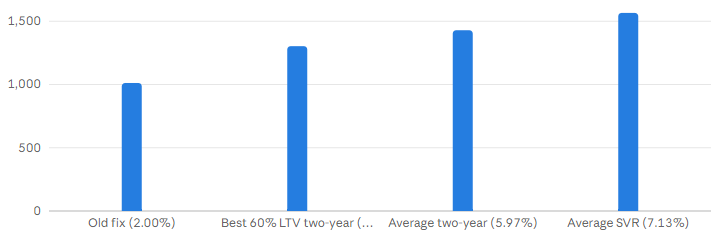
The impact is sharper for people coming off very cheap deals. Imagine a homeowner with £200,000 left to pay over 20 years who fixed at 2.0%: about £1,012 a month. At the average two-year fix of 5.97%, it would be about £1,429, up roughly £418 a month, or about £5,000 a year. Even the best 60% loan-to-value deal, around 4.85% at Halifax with a £1,099 fee, would mean about £1,303, up £292. These are illustrations, not quotes.
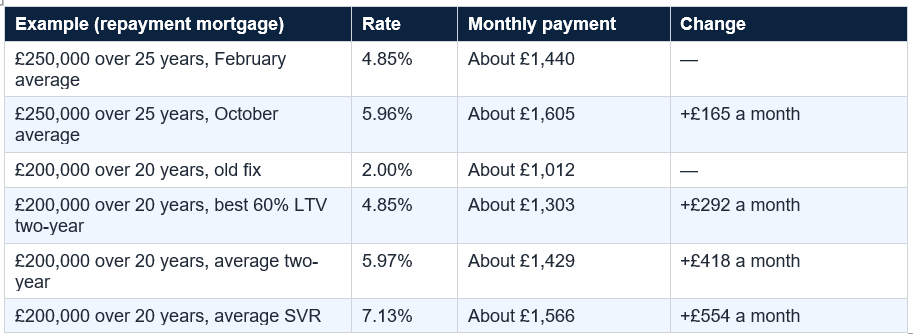
Loan-to-value matters. The best two-year rate at 60% LTV was about 4.85%, but the market average was near 5.96%, because the average covers all loan-to-value bands. Your own rate depends on your deposit or equity, credit profile and fees.
A few practical points. Set a budget that still works if rates are a little higher when you fix. A mortgage offer typically lasts about six months, so once you have found a property, securing a deal can protect you from further rises. Look at fees as well as rates: a lower rate with a £1,099 arrangement fee is not always cheaper, depending on the loan size. A broker can compare the whole market. And negotiate the price: when borrowing costs rise, sellers may need to be more realistic.
What to do: Work out the highest monthly payment you could comfortably afford, then ask a broker to show you what that supports at today’s rates and at a rate one point higher. Leave room for energy bills, insurance and repairs.
Do not let your fix lapse. The average standard variable rate was 7.13% in September, which on £200,000 over 20 years would cost about £137 a month more than the average two-year fix, by my calculation. Check your loan-to-value, because a lower figure unlocks better rates. Extending the term lowers payments but costs more interest overall: stretching £200,000 at 5.97% from 20 to 25 years cuts the payment by about £144 a month.
On two years versus five, the averages are almost identical, at 5.98% and 6.00% on 5 October. A five-year fix gives certainty if rates keep rising, while a two-year keeps options open if they fall. Early repayment charges typically apply either way, so choose a term that matches your plans.
And yet the market has proved resilient. UK Finance reported buy-to-let lending of £10.7 billion in the second quarter, up 25% from a year earlier, across 58,051 new loans. Remortgages made up £7.5 billion, about three-quarters of the total, and the average rate on new loans was 4.82%, up 12 basis points on the quarter. The average gross rental yield was 7.27%, and possessions fell 20.3%. Many landlords are staying put and remortgaging rather than selling.
To see what rate changes mean, take a £150,000 interest-only buy-to-let loan. At 4.82% the interest is about £603 a month, at 5.63% about £704 and at 6.00% £750: up to £147 a month, or about £1,770 a year, before tax. Lenders also test whether rent covers interest by a margin, and higher rates make that harder to pass. Check rent against stressed payments, plan for compliance costs and speak to a specialist broker well before a fix ends.
UK Finance, Q2 2026: BTL lending £10.7bn (+25%); remortgages £7.5bn; 58,051 loans; average new BTL rate 4.82%; yield 7.27%; possessions down 20.3%. A £150,000 interest-only loan costs about £603 a month at 4.82% and £750 at 6.00%.
This is why nobody should confidently predict mortgage rates. In July, mortgage rates had been falling and then jumped within a week, as AJ Bell noted. The sensible response is to plan for several outcomes: secure a deal you can afford, keep the option of switching and avoid stretching your budget to the limit.
The best response is practical: know your numbers, act early, compare the whole market, protect your budget with a margin and get qualified advice. You cannot control the Bank of England, but you can control how prepared you are. Your home may be repossessed if you do not keep up repayments on your mortgage.
Fixed rates are priced off swap rates, which reflect where markets expect interest rates to go, not where Bank Rate is today. Bank Rate has been 3.75% since December 2025, but swap rates rose as energy prices and inflation climbed.
Will the Bank of England raise rates in November?
Markets think so. After UK inflation rose to 3.5% in September, traders priced roughly a 96% chance of a 25 basis point rise at the 5 November meeting, and some economists called it close to certain. It is not guaranteed, and the Budget on 28 October could change the outlook.
Should I fix for two years or five years?
The averages were almost identical on 5 October: 5.98% and 6.00%. A five-year fix gives certainty for longer, while a two-year keeps flexibility if rates fall. Early repayment charges usually apply if you leave early, so choose based on your budget and plans, ideally with advice.
I am coming off a cheap fixed rate. What should I do?
Start looking about six months before your deal ends. Mortgage offers typically last six months, so you can secure a rate now and switch if something better appears. Do not drift onto your lender’s standard variable rate, which averaged 7.13% in September.
How are landlords affected by higher mortgage rates?
Interest costs rise, interest-cover tests get harder to pass and compliance costs are growing under the Renters’ Rights Act, in force since 1 May 2026. Even so, UK Finance reported buy-to-let lending up 25% by value in the second quarter.
Table of Contents
- Six Per Cent Is Back
- The Short Answer, by Type of Borrower
- Why Rates Are Rising When Bank Rate Has Not
- What Higher Rates Mean in Pounds
- If You Are Buying a Home
- If You Are Remortgaging
- If You Are on a Tracker or Variable Rate
- If You Are a Buy-to-Let Landlord
- What Could Happen Next
- A Practical Checklist
- Mistakes to Avoid
- Conclusion
- Frequently Asked Questions
UK average fixed mortgage rates, March to October 2026 (%)
Average rate (%) by Source: Moneyfacts, via Forbes Advisor UK, Mortgage Strategy and others
Remortgage shock: £200,000 over 20 years at different rates (£ a month)
Monthly repayment (£) by Author's repayment-formula illustrations using Moneyfacts and Halifax rates; not quotes
Why a Bank Rate rise is expected: UK inflation vs. Bank Rate (%, 2026)
Per cent by Sources: ONS via MPA, Money to the Masses, Trustnet; Bank Rate held at 3.75%; next decision 5 Nov
Six Per Cent Is Back
For months, the story in the UK mortgage market was one of cautious relief. In early March, the average two-year fix was 4.84% and the five-year 4.96%, according to Moneyfacts. Then autumn arrived. On 5 October, the average five-year fixed rate hit 6.00% for the first time in about three years, and the average two-year reached 5.98%, its highest since mid-December 2023.If you are buying a home, coming to the end of a cheap fixed deal or running a buy-to-let portfolio, that number lands differently. This guide explains why rates are rising, what it means in pounds for each type of borrower and what practical steps are worth taking now. It cannot predict the next move, and nobody can, but it can help you plan.
The Short Answer, by Type of Borrower
If you are buying, expect higher payments and tougher affordability, and build in a safety margin. If you are remortgaging, act early: offers can be secured about six months ahead and you can usually switch if rates fall. If you are on a tracker, a Bank Rate rise will pass through quickly. If you are a landlord, higher interest costs and new regulation both squeeze margins, though lending has proved resilient. In every case, know your numbers and talk to a qualified adviser.Why Rates Are Rising When Bank Rate Has Not
Here is the puzzle: Bank Rate has stayed at 3.75% since December 2025, yet fixed rates have climbed by roughly a percentage point since March. The answer is swap rates. Lenders price fixed deals off what it costs to borrow on wholesale markets for a fixed term, which reflects where markets expect rates to go. Over the month to 13 October, the two-year swap rate rose from 4.545% to 4.641% and the five-year from 4.619% to 4.723%.Why did expectations change? Energy prices climbed amid the conflict in the Middle East, and UK inflation followed. CPI rose to 3.5% in September from 3.1% in August, the highest since October 2025, driven mainly by motor fuels, with petrol up 8.2p a litre in a month to 169.5p. Core inflation was 2.8%. It is two years since inflation was last at or below the Bank of England’s 2% target, and the Bank has warned that in a worst case it could reach 4.5% by mid-2027.
Lenders responded. Barclays raised selected fixed rates four times in September, and HSBC, Lloyds, Nationwide, NatWest, Santander and TSB each made three rounds of increases, according to Moneyfacts. About 1,500 deals priced below 5% disappeared: 1,494 at the start of September and just nine on 5 October. Since then the picture has steadied. HSBC cut rates on 14 October, Santander and Yorkshire Building Society trimmed some fixes, and the averages stayed close to 6%, at 5.97% (two-year) and 6.00% (five-year) on 23 October.
Average two-year fix: 4.84% (6 March) to 5.98% (5 October), 5.97% (23 October). Average five-year fix: 4.96% to 6.00%. Sub-5% deals: 1,494 to nine. UK CPI: 3.5% in September. Bank Rate: 3.75%.
What Higher Rates Mean in Pounds
Percentages are abstract; monthly payments are not. Moneyfacts calculated that a borrower taking out a £250,000 mortgage over 25 years on the average two-year fix of 5.96% would pay about £1,605 a month, which is £165 more than at the 4.85% average at the start of February. My own calculation agrees: about £1,440 a month at 4.85% and £1,605 at 5.96%, a difference of roughly £1,980 a year.The impact is sharper for people coming off very cheap deals. Imagine a homeowner with £200,000 left to pay over 20 years who fixed at 2.0%: about £1,012 a month. At the average two-year fix of 5.97%, it would be about £1,429, up roughly £418 a month, or about £5,000 a year. Even the best 60% loan-to-value deal, around 4.85% at Halifax with a £1,099 fee, would mean about £1,303, up £292. These are illustrations, not quotes.
Loan-to-value matters. The best two-year rate at 60% LTV was about 4.85%, but the market average was near 5.96%, because the average covers all loan-to-value bands. Your own rate depends on your deposit or equity, credit profile and fees.
If You Are Buying a Home
For buyers, higher rates raise your monthly payment and can reduce how much lenders will let you borrow, because affordability tests are based on income and outgoings. Halifax noted in May that higher inflation expectations had kept borrowing costs above the level at the start of the year, stretching affordability and tempering demand.A few practical points. Set a budget that still works if rates are a little higher when you fix. A mortgage offer typically lasts about six months, so once you have found a property, securing a deal can protect you from further rises. Look at fees as well as rates: a lower rate with a £1,099 arrangement fee is not always cheaper, depending on the loan size. A broker can compare the whole market. And negotiate the price: when borrowing costs rise, sellers may need to be more realistic.
What to do: Work out the highest monthly payment you could comfortably afford, then ask a broker to show you what that supports at today’s rates and at a rate one point higher. Leave room for energy bills, insurance and repairs.
If You Are Remortgaging
Remortgaging is the story of 2026. UK Finance has estimated that around 1.8 million homeowners are due to remortgage this year, many coming off low five-year fixes and facing potential payment shock. The key rule is to start early: you can generally secure a deal up to six months before your current one ends, at no cost, and if a better deal appears before you complete, you may be able to switch.Do not let your fix lapse. The average standard variable rate was 7.13% in September, which on £200,000 over 20 years would cost about £137 a month more than the average two-year fix, by my calculation. Check your loan-to-value, because a lower figure unlocks better rates. Extending the term lowers payments but costs more interest overall: stretching £200,000 at 5.97% from 20 to 25 years cuts the payment by about £144 a month.
On two years versus five, the averages are almost identical, at 5.98% and 6.00% on 5 October. A five-year fix gives certainty if rates keep rising, while a two-year keeps options open if they fall. Early repayment charges typically apply either way, so choose a term that matches your plans.
If You Are on a Tracker or Variable Rate
If your mortgage follows Bank Rate, your payments can change quickly. Markets priced about a 96% chance of a 25 basis point rise on Thursday 5 November, and economists called the move close to certain after September’s inflation figure. On a £200,000 tracker over 20 years at 5.0%, a quarter-point rise would add about £28 a month, and a half-point about £56, by my calculation. Those sums are manageable for many households, but not all. If a further rise would stretch your budget, consider whether fixing makes sense, and check whether your tracker has an early repayment charge.If You Are a Buy-to-Let Landlord
Landlords face a double squeeze. First, borrowing costs: at the end of March, Moneyfacts reported average buy-to-let fixed rates of 5.29% (two-year) and 5.63% (five-year), with product choice down by about 1,300 deals in a month. Those figures are from March, but they show the direction. Second, regulation: the Renters’ Rights Act came into force on 1 May 2026, ending no-fault evictions and replacing fixed-term tenancies with rolling ones, and landlords are expected to spend up to £10,000, depending on the property, to reach an EPC rating of C by October 2030.And yet the market has proved resilient. UK Finance reported buy-to-let lending of £10.7 billion in the second quarter, up 25% from a year earlier, across 58,051 new loans. Remortgages made up £7.5 billion, about three-quarters of the total, and the average rate on new loans was 4.82%, up 12 basis points on the quarter. The average gross rental yield was 7.27%, and possessions fell 20.3%. Many landlords are staying put and remortgaging rather than selling.
To see what rate changes mean, take a £150,000 interest-only buy-to-let loan. At 4.82% the interest is about £603 a month, at 5.63% about £704 and at 6.00% £750: up to £147 a month, or about £1,770 a year, before tax. Lenders also test whether rent covers interest by a margin, and higher rates make that harder to pass. Check rent against stressed payments, plan for compliance costs and speak to a specialist broker well before a fix ends.
UK Finance, Q2 2026: BTL lending £10.7bn (+25%); remortgages £7.5bn; 58,051 loans; average new BTL rate 4.82%; yield 7.27%; possessions down 20.3%. A £150,000 interest-only loan costs about £603 a month at 4.82% and £750 at 6.00%.
What Could Happen Next
Three things to watch. First, the Budget on 28 October from Chancellor John Healey, which could affect inflation and the Bank’s thinking. Second, the Bank of England’s decision on 5 November: a hike is widely expected, so a surprise would matter more than the rise itself. Third, swap rates and energy prices, which drive lender pricing. If the Middle East situation eases, rates could drift lower; if inflation proves persistent, they could rise further.This is why nobody should confidently predict mortgage rates. In July, mortgage rates had been falling and then jumped within a week, as AJ Bell noted. The sensible response is to plan for several outcomes: secure a deal you can afford, keep the option of switching and avoid stretching your budget to the limit.
First, know your numbers: balance, term, rate, end date and any early repayment charges. Second, check your loan-to-value. Third, get advice from a qualified broker who can compare the whole market and explain fees. Fourth, secure a deal early and keep checking in case a better one appears. Fifth, stress-test your budget at a rate a point higher. Sixth, build a cushion. Seventh, if you are struggling, speak to your lender early and consider free, impartial guidance from MoneyHelper.
Avoid waiting for a perfect moment, because no one can time rates. Avoid drifting onto the standard variable rate. Avoid choosing a deal on the headline rate alone, ignoring fees and early repayment charges. Avoid borrowing the maximum a lender will offer. And avoid panic: higher rates are a cost to manage, especially if you plan early.
Conclusion
Mortgage rates are rising because markets expect the Bank of England to raise rates to fight inflation, which hit 3.5% in September. The average five-year fix reached 6.00% on 5 October, the highest in about three years. On a £250,000 mortgage, that is about £165 more a month than in February; for someone coming off a 2.0% fix, the shock could be around £400 a month. For landlords, rising interest costs come on top of new regulation.The best response is practical: know your numbers, act early, compare the whole market, protect your budget with a margin and get qualified advice. You cannot control the Bank of England, but you can control how prepared you are. Your home may be repossessed if you do not keep up repayments on your mortgage.
Frequently Asked Questions
Why are mortgage rates rising when the Bank of England has not raised interest rates?Fixed rates are priced off swap rates, which reflect where markets expect interest rates to go, not where Bank Rate is today. Bank Rate has been 3.75% since December 2025, but swap rates rose as energy prices and inflation climbed.
Will the Bank of England raise rates in November?
Markets think so. After UK inflation rose to 3.5% in September, traders priced roughly a 96% chance of a 25 basis point rise at the 5 November meeting, and some economists called it close to certain. It is not guaranteed, and the Budget on 28 October could change the outlook.
Should I fix for two years or five years?
The averages were almost identical on 5 October: 5.98% and 6.00%. A five-year fix gives certainty for longer, while a two-year keeps flexibility if rates fall. Early repayment charges usually apply if you leave early, so choose based on your budget and plans, ideally with advice.
I am coming off a cheap fixed rate. What should I do?
Start looking about six months before your deal ends. Mortgage offers typically last six months, so you can secure a rate now and switch if something better appears. Do not drift onto your lender’s standard variable rate, which averaged 7.13% in September.
How are landlords affected by higher mortgage rates?
Interest costs rise, interest-cover tests get harder to pass and compliance costs are growing under the Renters’ Rights Act, in force since 1 May 2026. Even so, UK Finance reported buy-to-let lending up 25% by value in the second quarter.
0 Comments
Be the first to share your thoughts on this article.