
Credits
Your Credit Card Debt Just Became a 'Time Bomb': Why 2026 Is the Year It Explodes (And The 5 Steps to Defuse It NOW)

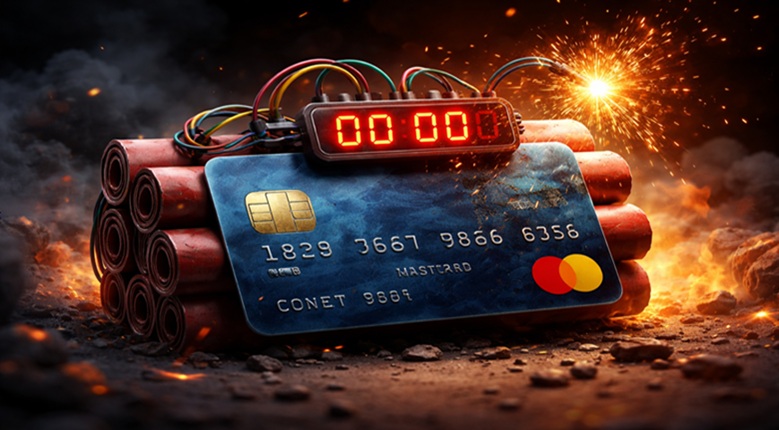
In March 2026, your credit card debt has become a "Time Bomb" ticking down to detonation. While national debts make headlines [1] [2], a more insidious threat is escalating in households across the US and UK: consumer credit card debt.
Average credit card debt in America has hit a record high of $6,580 per individual [3], and in the UK, outstanding balances have surged by nearly 9% [4]. The true danger lies in punishingly high interest rates, with average APRs hovering near record highs (21-25%) in both regions [5] [6]. This isn't just expensive; it's a financial trap designed to keep you paying for years.
"The average credit card interest rate is 25.32%, according to Forbes Advisor's weekly credit card rates report." — Forbes Advisor, March 16, 2026 [6]
This article is a critical warning and guide for anyone with credit card debt in 2026. We expose why this year is the tipping point, detail the anatomy of this financial time bomb, and provide 5 concrete steps to defuse it NOW before it devastates your future. On erneroy.com, we advocate proactive financial immunity, and the time to act is now.
2 The US Context: A Nation on the Brink of a Credit Crisis
3 The UK Context: Surging Balances and Falling Payment Rates
4 Why 2026 Is the Tipping Point: The Compounding Catastrophe
5 The "Minimum Payment" Illusion: A Debt Trap by Design
6 The 5 Steps to Defuse the Bomb NOW: Your Financial Survival Guide
7 Step 1: The "Financial Triage" (Stop the Bleeding)
8 Step 2: The 0% Balance Transfer Arbitrage
9 Step 3: The "Avalanche" vs. "Snowball" Protocol
10 Step 4: The "Income Shock" Strategy
11 Step 5: The "Hardship" Negotiation
12 Conclusion: The Clock Is Ticking. Defuse the Bomb Today.
13 Frequently Asked Questions (FAQ)
14 Appendix: Global SEO & AI Search Engine Keywords
Your credit card debt is a "Time Bomb" due to record-high balances and punishingly high Annual Percentage Rates (APRs). This creates a vicious cycle where minimum payments barely cover interest, leaving principal untouched.
• Inflation Stickiness: Elevated inflation erodes purchasing power, forcing more credit reliance.
• Job Market Softening: Potential economic slowdowns in the US and UK could lead to job losses, hindering debt repayment [10].
• Rising Cost of Living: Housing, energy, and food costs strain budgets, leaving less for debt reduction.
This confluence of factors—high balances, punishing APRs, compounding interest, and economic uncertainty—transforms credit card debt into a ticking "Time Bomb" that threatens to explode in 2026. Proactive intervention is essential.
This disparity has forced millions to rely on credit cards not for discretionary spending, but for basic necessities. What began as a short-term survival mechanism—using credit to cover a higher energy bill or a more expensive grocery shop—has quickly transformed into long-term, high-interest debt. The credit card, once a convenience, became a necessity, and now, for many, it's a burden that feels impossible to escape.
This is why the 2026 credit card debt crisis is not merely a story of irresponsible spending; it's a reflection of broader economic pressures. The "Time Bomb" was fueled by the very inflation that central banks are now trying to tame, creating a cruel irony for consumers caught in the middle.
• Digital Disconnect: Remove credit card details from online shopping sites and payment apps.
• Cash-Only Diet: For one month, use only cash for non-essential purchases to reset spending habits.
• Emergency Only: Designate one card for absolute emergencies, stored securely away from daily access.
• Promotional Period: Note the end date; rates revert to high APRs afterward.
• No New Spending: Avoid new purchases on the balance transfer card.
Debt Avalanche (Mathematical Advantage): Pay minimums on all debts except the highest interest rate one. Attack the highest-interest debt first, then roll payments to the next highest. Saves the most interest over time.
Debt Snowball (Psychological Advantage): Pay minimums on all debts except the smallest balance. Attack the smallest debt first, then roll payments to the next smallest. Provides quick wins and builds momentum.
Choose the method that suits your motivation. Consistency is key.
• Side Hustle Blitz: Dedicate all income from temporary side hustles to debt.
• Asset Liquidation: Sell non-essential assets for a lump-sum debt payment.
• Negotiate a Raise/Bonus: Commit any net increase to debt repayment.
• Temporary Frugality: Implement extreme budget cuts for a short period to free up cash flow.
View this extra income as a weapon to destroy debt.
• Lower Interest Rate (APR): Many issuers will temporarily lower your APR.
• Payment Plan: Request a structured plan with reduced monthly payments.
• Fee Waivers: Ask for late payment or over-limit fees to be waived.
How to Approach It: Be honest, prepared with details, and persistent. Issuers prefer working with you than a default. This step empowers you to negotiate favorable terms and prevent further damage to your credit.
• Asset Liquidation (Strategic Decluttering): Look around your home. Do you have unused electronics, designer clothes, collectibles, or even a second vehicle that could be sold? Platforms like eBay, Facebook Marketplace, or local consignment shops can turn dormant assets into immediate debt-busting cash. This isn't about selling essentials, but about ruthlessly eliminating items that don't add significant value to your life, especially if they're depreciating while your debt compounds.
• Negotiate a Raise/Bonus (The Direct Approach): If you're employed, schedule a meeting with your manager. Present a clear case for a raise based on your contributions and market value. If a raise isn't immediately possible, inquire about performance bonuses or project-based incentives. Crucially, commit mentally (and ideally, publicly to a trusted accountability partner) that any net increase from this negotiation will be solely for debt repayment. This turns a potential income boost into a guaranteed debt reduction.
• Temporary Frugality (The Extreme Budget Reset): This is the most challenging but often most impactful "Income Shock" tactic. For a defined period (e.g., 30, 60, or 90 days), implement an extreme budget. This means:
◦ No Eating Out: Prepare all meals at home.
◦ No Entertainment Spending: Cancel streaming services, avoid movies, concerts, or paid events.
◦ Minimal Transportation: Walk, cycle, or use public transport instead of driving or ride-sharing.
◦ Delay Non-Essentials:Postpone any non-critical purchases like new clothes, gadgets, or home decor.
The goal is to free up every possible dollar or pound from your regular expenses. While unsustainable long-term, this intense period can create a massive surge of cash flow, allowing you to make significant dents in your debt and build powerful new financial habits.
• Document Everything: Before you call, gather all relevant financial documents: recent pay stubs, bank statements, a list of all your debts, and a clear explanation of your hardship (e.g., job loss, medical emergency, reduced hours). During the call, note the date, time, representative's name, and what was discussed and agreed upon. Follow up with a written confirmation if possible.
But the good news, is that this bomb can be defused. It requires immediate, decisive action, but the tools are available. By implementing the 5 Steps to Defuse the Bomb NOW—Financial Triage, 0% Balance Transfer Arbitrage, the Avalanche/Snowball Protocol, the Income Shock Strategy, and Hardship Negotiation—you can reclaim control of your finances and dismantle this threat before it explodes.
The clock is ticking. Every day you delay is another day that high-interest debt compounds against you, eroding your wealth and stealing your future. Take action today. Visit erneroy.com for more in-depth guides, debt calculators, and personalized strategies to achieve financial immunity in the face of the 2026 credit card debt crisis. Your financial future depends on it.
In March 2026, with average APRs ranging from 21-25% in the US and UK, anything below 18% would be considered good. Ideally, you should aim for 0% APR promotional periods for balance transfers or new purchases if you need to carry a balance, but always plan to pay it off before the promotional period ends.
2. Should I use my savings to pay off credit card debt?
Generally, yes, if your credit card APR is significantly higher than the interest you are earning on your savings. For example, if your credit card charges 25% and your savings account earns 5%, paying off the debt is a guaranteed 20% return on your money. However, always ensure you retain an emergency fund (3-6 months of living expenses) before depleting all your savings.
3. Will credit card debt be forgiven in 2026?
While there are occasional debt relief programs or government initiatives, widespread credit card debt forgiveness is highly unlikely. Relying on such an event is a risky strategy. Focus on proactive repayment strategies and, if necessary, explore options like debt management plans or bankruptcy as a last resort, but always with professional advice.
4. What is the difference between the debt avalanche and debt snowball methods?
• Debt Avalanche: Prioritizes paying off debts with the highest interest rates first. This method saves you the most money on interest over time.
• Debt Snowball: Prioritizes paying off debts with the smallest balances first. This method provides psychological wins and momentum, which can be highly motivating for some individuals.
5. How can I avoid credit card debt in the future?
• Budgeting: Create and stick to a realistic budget that prioritizes needs over wants.
• Emergency Fund: Build a robust emergency fund to cover unexpected expenses without relying on credit cards.
• Live Below Your Means: Spend less than you earn, consistently.
• Pay in Full: Always pay your credit card balance in full each month to avoid interest charges.
• Financial Literacy: Continuously educate yourself on personal finance principles.
6. Where can I find more resources on this?
Visit erneroy.com for in-depth guides on debt management, budgeting tools, credit card comparisons, and personalized financial strategies to help you achieve financial freedom.
Average credit card debt in America has hit a record high of $6,580 per individual [3], and in the UK, outstanding balances have surged by nearly 9% [4]. The true danger lies in punishingly high interest rates, with average APRs hovering near record highs (21-25%) in both regions [5] [6]. This isn't just expensive; it's a financial trap designed to keep you paying for years.
"The average credit card interest rate is 25.32%, according to Forbes Advisor's weekly credit card rates report." — Forbes Advisor, March 16, 2026 [6]
This article is a critical warning and guide for anyone with credit card debt in 2026. We expose why this year is the tipping point, detail the anatomy of this financial time bomb, and provide 5 concrete steps to defuse it NOW before it devastates your future. On erneroy.com, we advocate proactive financial immunity, and the time to act is now.
Table of Contents
1 The Anatomy of the 2026 Time Bomb: Record Debt, Punishing APRs2 The US Context: A Nation on the Brink of a Credit Crisis
3 The UK Context: Surging Balances and Falling Payment Rates
4 Why 2026 Is the Tipping Point: The Compounding Catastrophe
5 The "Minimum Payment" Illusion: A Debt Trap by Design
6 The 5 Steps to Defuse the Bomb NOW: Your Financial Survival Guide
7 Step 1: The "Financial Triage" (Stop the Bleeding)
8 Step 2: The 0% Balance Transfer Arbitrage
9 Step 3: The "Avalanche" vs. "Snowball" Protocol
10 Step 4: The "Income Shock" Strategy
11 Step 5: The "Hardship" Negotiation
12 Conclusion: The Clock Is Ticking. Defuse the Bomb Today.
13 Frequently Asked Questions (FAQ)
14 Appendix: Global SEO & AI Search Engine Keywords
The Anatomy of the 2026 Time Bomb: Record Debt, Punishing APRs
Your credit card debt is a "Time Bomb" due to record-high balances and punishingly high Annual Percentage Rates (APRs). This creates a vicious cycle where minimum payments barely cover interest, leaving principal untouched.
The APR Crisis: The Math of 25% Interest
Carrying a balance of $6,580 (US average) at 25% APR means minimum payments (1-3% of balance) can lead to paying for decades, with total interest exceeding original principal [5] [6]. For example, a $6,580 debt at 25% APR means your minimum payment of ~$131.60 won't even cover the ~$137.08 interest in the first month, causing your debt to grow.The US Context: A Nation on the Brink of a Credit Crisis
US credit card debt hit a record $6,580 per individual in 2026 [3]. This surge is due to persistent inflation and the Federal Reserve's aggressive interest rate hikes, which caused variable credit card APRs to soar [5]. Millions now carry larger balances at higher costs, disproportionately affecting lower and middle-income households forced to use credit for essentials. The "Cost of Living" trap has turned short-term survival into long-term, high-interest debt.The UK Context: Surging Balances and Falling Payment Rates
The UK faces a similar challenge. Credit card balances grew 8.9% over the past year, with average balances reaching new highs [4] [7]. Alarmingly, 47.6% of outstanding balances incurred interest [7], meaning many aren't paying off cards in full. The median APR on UK credit cards also hit an all-time high [8]. This combination creates fertile ground for the credit card "Time Bomb" to explode.Why 2026 Is the Tipping Point: The Compounding Catastrophe
2026 is a critical tipping point due to converging factors that amplify the "Time Bomb" effect:The Compounding Effect: A Debt Multiplier
Compounding interest at 20%+ over years is a debt multiplier. Interest is calculated on original purchases and accumulated interest, causing debt to grow exponentially. A $5,000 debt at 25% APR can generate $1,250 in interest in Year 1, $1,562.50 in Year 2, and $1,953.13 in Year 3, quickly spiraling out of control.The "Minimum Payment" Illusion: A Debt Trap by Design
Credit card companies structure minimum payments to be deceptively low, creating the "Minimum Payment" Illusion [9]. In 2026, with record-high APRs, making only minimum payments guarantees extended debt, ensuring steady interest income for lenders.The Economic Headwinds: A Perfect Storm
Beyond interest mechanics, 2026's economic landscape makes credit card debt perilous:• Inflation Stickiness: Elevated inflation erodes purchasing power, forcing more credit reliance.
• Job Market Softening: Potential economic slowdowns in the US and UK could lead to job losses, hindering debt repayment [10].
• Rising Cost of Living: Housing, energy, and food costs strain budgets, leaving less for debt reduction.
This confluence of factors—high balances, punishing APRs, compounding interest, and economic uncertainty—transforms credit card debt into a ticking "Time Bomb" that threatens to explode in 2026. Proactive intervention is essential.
The "Cost of Living" Trap: How Inflation Fueled the Fire
One of the most significant drivers of the 2026 credit card debt surge is the "Cost of Living" trap. Persistent inflation, particularly in essential goods and services like groceries, energy, and housing, has eroded the purchasing power of average households in both the US and UK. Wages, for many, have simply not kept pace with the escalating cost of daily life.This disparity has forced millions to rely on credit cards not for discretionary spending, but for basic necessities. What began as a short-term survival mechanism—using credit to cover a higher energy bill or a more expensive grocery shop—has quickly transformed into long-term, high-interest debt. The credit card, once a convenience, became a necessity, and now, for many, it's a burden that feels impossible to escape.
This is why the 2026 credit card debt crisis is not merely a story of irresponsible spending; it's a reflection of broader economic pressures. The "Time Bomb" was fueled by the very inflation that central banks are now trying to tame, creating a cruel irony for consumers caught in the middle.
The 5 Steps to Defuse the Bomb NOW: Your Financial Survival Guide
The credit card debt "Time Bomb" is not inevitable. You have the power to defuse it with immediate, decisive action. On erneroy.com, we identify 5 critical steps to dismantle this financial threat and reclaim your future.Step 1: The "Financial Triage" (Stop the Bleeding)
Immediately halt all new credit card spending. Cut up your cards, remove them from digital payment apps, and embrace a "cash diet" for discretionary expenses. This creates a physical and psychological barrier to further spending, preventing new, high-interest debt accumulation.Actionable Triage Checklist:
• Physical Removal: Take all credit cards out of your wallet.• Digital Disconnect: Remove credit card details from online shopping sites and payment apps.
• Cash-Only Diet: For one month, use only cash for non-essential purchases to reset spending habits.
• Emergency Only: Designate one card for absolute emergencies, stored securely away from daily access.
Step 2: The 0% Balance Transfer Arbitrage
Pause the interest clock with a 0% Balance Transfer Arbitrage. Transfer high-interest balances to a new card with a 0% APR promotional period (12-24 months). During this time, aggressively pay down the principal. This can save hundreds or thousands annually (e.g., Experian data suggests UK savers save £289.20/year [11]).Important Considerations:
• Transfer Fees: Ensure interest savings outweigh the 3-5% transfer fee.• Promotional Period: Note the end date; rates revert to high APRs afterward.
• No New Spending: Avoid new purchases on the balance transfer card.
Step 3: The "Avalanche" vs. "Snowball" Protocol
Implement a strategic debt repayment plan:Debt Avalanche (Mathematical Advantage): Pay minimums on all debts except the highest interest rate one. Attack the highest-interest debt first, then roll payments to the next highest. Saves the most interest over time.
Debt Snowball (Psychological Advantage): Pay minimums on all debts except the smallest balance. Attack the smallest debt first, then roll payments to the next smallest. Provides quick wins and builds momentum.
Choose the method that suits your motivation. Consistency is key.
Step 4: The "Income Shock" Strategy
Create an "Income Shock"—a sudden, significant increase in funds dedicated to debt destruction. This involves short-term, high-impact actions:• Side Hustle Blitz: Dedicate all income from temporary side hustles to debt.
• Asset Liquidation: Sell non-essential assets for a lump-sum debt payment.
• Negotiate a Raise/Bonus: Commit any net increase to debt repayment.
• Temporary Frugality: Implement extreme budget cuts for a short period to free up cash flow.
View this extra income as a weapon to destroy debt.
Step 5: The "Hardship" Negotiation
If struggling, proactively engage in a "Hardship" Negotiation with your credit card issuer before defaulting. Ask for:• Lower Interest Rate (APR): Many issuers will temporarily lower your APR.
• Payment Plan: Request a structured plan with reduced monthly payments.
• Fee Waivers: Ask for late payment or over-limit fees to be waived.
How to Approach It: Be honest, prepared with details, and persistent. Issuers prefer working with you than a default. This step empowers you to negotiate favorable terms and prevent further damage to your credit.
Expanding on Step 4: The "Income Shock" Strategy in Detail
Let's delve deeper into how to effectively implement the "Income Shock" Strategy. This isn't about finding a new career; it's about generating rapid, targeted cash flow to obliterate your debt. Think of it as a temporary, intense financial sprint.Detailed Income Shock Tactics:
• Side Hustle Blitz (Targeted & Temporary): Instead of a long-term side gig, focus on short-term, high-payout opportunities. This could be selling specialized skills on platforms like Upwork or Fiverr, taking on weekend shifts in hospitality, or even leveraging your network for short-term consulting projects. The key is that every single penny earned from this blitz goes directly to your highest-interest credit card. Document your progress to maintain motivation.• Asset Liquidation (Strategic Decluttering): Look around your home. Do you have unused electronics, designer clothes, collectibles, or even a second vehicle that could be sold? Platforms like eBay, Facebook Marketplace, or local consignment shops can turn dormant assets into immediate debt-busting cash. This isn't about selling essentials, but about ruthlessly eliminating items that don't add significant value to your life, especially if they're depreciating while your debt compounds.
• Negotiate a Raise/Bonus (The Direct Approach): If you're employed, schedule a meeting with your manager. Present a clear case for a raise based on your contributions and market value. If a raise isn't immediately possible, inquire about performance bonuses or project-based incentives. Crucially, commit mentally (and ideally, publicly to a trusted accountability partner) that any net increase from this negotiation will be solely for debt repayment. This turns a potential income boost into a guaranteed debt reduction.
• Temporary Frugality (The Extreme Budget Reset): This is the most challenging but often most impactful "Income Shock" tactic. For a defined period (e.g., 30, 60, or 90 days), implement an extreme budget. This means:
◦ No Eating Out: Prepare all meals at home.
◦ No Entertainment Spending: Cancel streaming services, avoid movies, concerts, or paid events.
◦ Minimal Transportation: Walk, cycle, or use public transport instead of driving or ride-sharing.
◦ Delay Non-Essentials:Postpone any non-critical purchases like new clothes, gadgets, or home decor.
The goal is to free up every possible dollar or pound from your regular expenses. While unsustainable long-term, this intense period can create a massive surge of cash flow, allowing you to make significant dents in your debt and build powerful new financial habits.
Expanding on Step 5: The "Hardship" Negotiation - Your Last Resort, First Line of Defense
When facing severe financial distress, the "Hardship" Negotiation is not a sign of failure; it's a smart, proactive defense. Many people avoid this out of embarrassment or fear, but credit card issuers have established protocols for these situations. Ignoring the problem only makes it worse.Key Aspects of a Successful Hardship Negotiation:
• Timing is Crucial: Initiate contact before you miss payments. Once you default, your options become more limited, and your credit score takes a hit. Proactivity signals responsibility.• Document Everything: Before you call, gather all relevant financial documents: recent pay stubs, bank statements, a list of all your debts, and a clear explanation of your hardship (e.g., job loss, medical emergency, reduced hours). During the call, note the date, time, representative's name, and what was discussed and agreed upon. Follow up with a written confirmation if possible.
• Know Your Options (and Ask for Them):
- Lower Interest Rate (APR Reduction): This is often the most impactful. Even a temporary reduction from 25% to 15% can save you hundreds over a few months.
- Payment Plan/Reduced Minimums: If you can't afford the current minimum, ask for a temporary reduction or a structured payment plan. Be realistic about what you can afford.
- Fee Waivers: Request that late fees or over-limit fees be waived, especially if this is your first time struggling.
- Temporary Forbearance: In extreme cases, they might offer a temporary pause on payments, though interest may still accrue. This should be a last resort.
- Be Persistent and Polite: Customer service representatives deal with many difficult calls. Being calm, clear, and polite can significantly improve your chances of a positive outcome. If the first person can't help, ask to speak to a supervisor or the hardship department.
- Understand the Implications: Be aware that some hardship programs might be reported to credit bureaus, potentially impacting your credit score. Weigh this against the damage of defaulting entirely. Often, a managed hardship plan is less damaging than unaddressed missed payments.
Conclusion: The Clock Is Ticking. Defuse the Bomb Today.
In 2026, your credit card debt is no longer a passive financial burden; it is a "Time Bomb" with the potential to detonate and devastate your financial future. The confluence of record-high balances, punishing APRs, and a challenging economic landscape has created a perilous environment where inaction is no longer an option. The "Minimum Payment" illusion, the compounding catastrophe, and the silent erosion of your purchasing power are all working against you.But the good news, is that this bomb can be defused. It requires immediate, decisive action, but the tools are available. By implementing the 5 Steps to Defuse the Bomb NOW—Financial Triage, 0% Balance Transfer Arbitrage, the Avalanche/Snowball Protocol, the Income Shock Strategy, and Hardship Negotiation—you can reclaim control of your finances and dismantle this threat before it explodes.
The clock is ticking. Every day you delay is another day that high-interest debt compounds against you, eroding your wealth and stealing your future. Take action today. Visit erneroy.com for more in-depth guides, debt calculators, and personalized strategies to achieve financial immunity in the face of the 2026 credit card debt crisis. Your financial future depends on it.
Frequently Asked Questions (FAQ)
1. What is a good credit card APR in 2026?In March 2026, with average APRs ranging from 21-25% in the US and UK, anything below 18% would be considered good. Ideally, you should aim for 0% APR promotional periods for balance transfers or new purchases if you need to carry a balance, but always plan to pay it off before the promotional period ends.
2. Should I use my savings to pay off credit card debt?
Generally, yes, if your credit card APR is significantly higher than the interest you are earning on your savings. For example, if your credit card charges 25% and your savings account earns 5%, paying off the debt is a guaranteed 20% return on your money. However, always ensure you retain an emergency fund (3-6 months of living expenses) before depleting all your savings.
3. Will credit card debt be forgiven in 2026?
While there are occasional debt relief programs or government initiatives, widespread credit card debt forgiveness is highly unlikely. Relying on such an event is a risky strategy. Focus on proactive repayment strategies and, if necessary, explore options like debt management plans or bankruptcy as a last resort, but always with professional advice.
4. What is the difference between the debt avalanche and debt snowball methods?
• Debt Avalanche: Prioritizes paying off debts with the highest interest rates first. This method saves you the most money on interest over time.
• Debt Snowball: Prioritizes paying off debts with the smallest balances first. This method provides psychological wins and momentum, which can be highly motivating for some individuals.
5. How can I avoid credit card debt in the future?
• Budgeting: Create and stick to a realistic budget that prioritizes needs over wants.
• Emergency Fund: Build a robust emergency fund to cover unexpected expenses without relying on credit cards.
• Live Below Your Means: Spend less than you earn, consistently.
• Pay in Full: Always pay your credit card balance in full each month to avoid interest charges.
• Financial Literacy: Continuously educate yourself on personal finance principles.
6. Where can I find more resources on this?
Visit erneroy.com for in-depth guides on debt management, budgeting tools, credit card comparisons, and personalized financial strategies to help you achieve financial freedom.
0 Comments
Be the first to share your thoughts on this article.