

Business
4 Lessons We Can All Learn From Financially Solo Adults

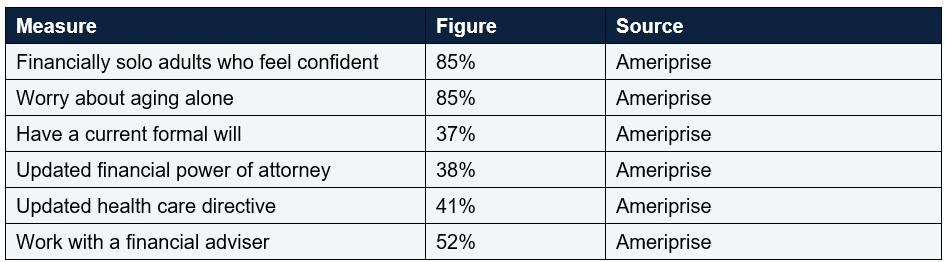
Whatever your relationship status, what financially solo adults have learned about independence, preparation and planning can help you navigate what is ahead. 85% of solo adults feel confident managing money, and 85% worry about aging alone; only 37% have a current formal will; 52% work with an adviser; study of 3,003 adults, January 2026.
% of respondents by Source: Ameriprise Flying Solo study, 3,003 adults, Jan 2026
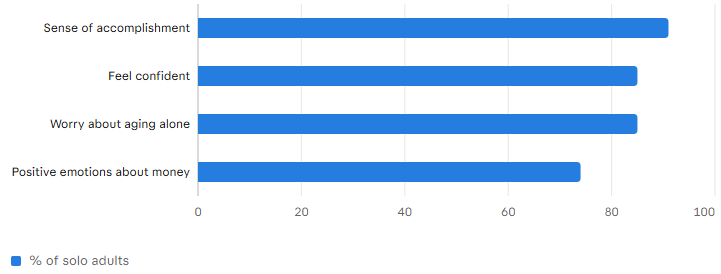
Most of us picture money management as a team sport: two people, two incomes, someone to catch what the other misses. But a large share of adults do it alone, and a new study suggests they are doing it with more pride than the stereotypes allow. Ameriprise Financial found that 85% of financially solo adults feel confident managing their money, and 91% feel a sense of accomplishment .
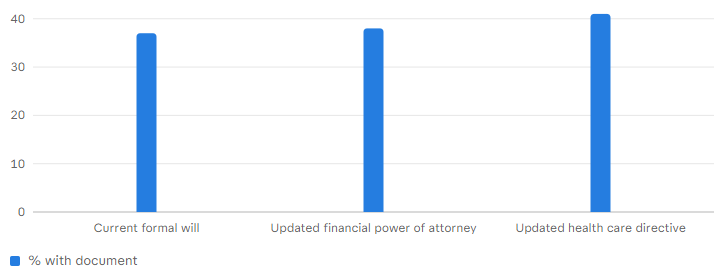
The same study found something less comfortable. The same 85% worry about aging alone and the long-term decisions that come with it. And only 37% have a current formal will
Out of this, Ameriprise's Deana Healy draws four lessons that apply whether you are single, partnered, divorced or widowed: understand your finances before a life change forces you to, remember that confidence is not a plan, document your wishes, and accept that independence does not mean going it alone. I take each in turn, add evidence from other sources, and flag where the data is thin. Key takeaway: Feeling in control of your money and being prepared for the unexpected are different things. The solo adults in this study are strong at the first and often behind on the second, and so are many couples.
The headline findings are positive: 85% feel confident, 91% feel a sense of accomplishment, and 74% have positive emotions about managing money alone. Saving for retirement is a source of pride for 37%, who name it as one of their top two achievements, and 49% list it as a top priority. The gaps are in the legal paperwork. Only 37% have a current formal will, 38% have updated a financial power of attorney and 41% have updated a health care directive. That means, by my calculation, that about 63% do not have a current formal will, and about 62% and 59% have not updated the other two.
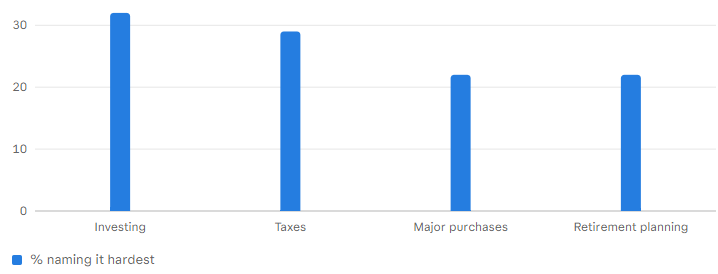
On advice, 52% of respondents work with a financial adviser, rising to 62% of widowed respondents. Among those who do, more than 80% say the guidance boosts their confidence about the future. The hardest decisions to make alone were investing (32%), taxes (29%), major purchases (22%) and retirement planning (22%).
Here is the important caveat. The survey's respondents had average investable assets above $700,000. That is far above what most US households hold. So these adults may be more confident, and more likely to have advisers, than solo adults in general. The study was also commissioned by a firm that sells advice, so readers should weigh the advice-related findings accordingly.
A practical version is a one-page "where everything is" summary: accounts and where they are held, regular bills and how they are paid, insurance policies, and who to call. Ameriprise's own sample is skewed wealthy, but the habit works at any income.
The budget side matters too. Single-person households carry costs that two people share. One source reports a US single-person household spends about $55,692 to $56,592 a year, against roughly $88,000 to $101,455 for a couple without children. By my calculation, that means the single household spends about 56% to 64% of what a couple does, for one person instead of two.
The numbers on the cost of retirement are sobering. An Investopedia analysis says the average single retiree needs a nest egg of about $898,000, because Social Security covers only about $24,000 of annual expenses, against nearly $60,000 of spending for a person aged 65 or over living alone. The gap of about $36,000 divided by the 4% withdrawal rule gives roughly $898,000 (my calculation). That is an estimate that depends on assumptions, and the 4% rule itself is debated. The AOL article notes that standard rules of thumb, such as replacing 70% to 80% of pre-retirement income, may not apply to solo agers, whose budgets must account for paying professionals for tasks that spouses or children often do for free, such as transport, groceries and repairs.
The takeaway: confidence is a good starting point, and a plan turns it into security.
The medical side is where solo agers face a specific danger. A gerontology abstract warns that some are at risk of becoming "unbefriended", meaning there is no one to act as a health-care proxy if they cannot decide for themselves. A directive, and a named person, closes that gap. One consumer guide lists the usual documents for single people: a will, a revocable living trust where appropriate, a durable power of attorney, and advance medical directives such as a living will. Which ones you need, and how they work, depends on where you live, so speak to a qualified solicitor or attorney.
It is worth being honest that this is not glamorous. But a few hours of paperwork may save a great deal of stress for whoever has to step in. If you are in a couple, it applies to you too, since the people who would have to act for you may not be who you assume.
Advice need not mean paying a professional. Thrivent's guidance on aging solo stresses building a support system you can rely on, and putting legal and financial safeguards in place before you need them. Rehmann notes that social isolation is a risk for single people in retirement and that a strong support network is part of the plan. The practical idea is to have at least two people who know where your information is and who could help in a crisis. For many, that could be a friend, a sibling or a professional.
The evidence has limits, and I want to be clear about them. The main study was commissioned by a firm that sells financial advice, and its respondents had average investable assets above $700,000, so the results may not describe solo adults with modest savings. The fieldwork date and sample details are clear, but self-reported confidence is not the same as being well prepared. Counts of solo agers vary by definition. The $898,000 figure rests on assumptions. And I used secondary summaries of the Ameriprise research, since I could only read parts of the full report.
Common mistakes: assuming confidence means you are ready; leaving wills and powers of attorney undone; keeping all the knowledge in your head; relying on rules of thumb designed for couples; underestimating the cost of paying for help you once got free; and thinking that asking for help means losing independence.
The bull case for the solo approach: strong confidence and pride, engagement with money, and the habit of knowing your own finances. The bear case: costs are shared among fewer people, emergency funds can be harder to build, legal documents are often missing, and there may be no obvious person to step in. Both are true. The lessons turn the first into protection against the second.
The data suggests solo adults are proud of how they manage money, but many are less ready for the long-term decisions than their confidence suggests. If you are in a couple, you can learn from both sides. Start with the one-page summary and the documents. This post is general education, and for advice on your own situation, speak to a regulated professional.
In the Ameriprise study, a single, never-married, divorced, separated or widowed adult who manages finances on their own.
Are solo adults better or worse with money?
The study found 85% feel confident and 91% feel a sense of accomplishment, but its sample had average investable assets above $700,000, so it may not represent everyone.
What documents does a single person need?
Commonly a will, a durable power of attorney and advance medical directives, and sometimes a trust. Rules vary by place, so speak to a qualified professional.
Do I need a financial adviser if I am single?
Not necessarily. 52% of the study's respondents work with one, but support can also come from trusted friends or family. Choose what suits your circumstances.
What can couples learn from solo adults?
To know where everything is, to plan and document wishes, and to have a support network beyond one person.
Table of Contents
- Who are "financially solo adults"?
- What the Ameriprise study found
- Lesson 1: Know your finances before life forces you to
- Lesson 2: Confidence is not a plan
- Lesson 3: Put your wishes on paper
- Lesson 4: Independent does not mean alone
- What aging solo can cost
- Why these lessons matter if you are in a couple
- A practical checklist
- Limits of the evidence
- Conclusion
- FAQ
Confidence vs worry among financially solo adults (%)
% of respondents by Source: Ameriprise Flying Solo study, 3,003 adults, Jan 2026
Solo adults with current legal documents (%)
% of respondents by Source: Ameriprise Flying Solo study (sample averaged $700,000+ investable assets)
Hardest financial decisions to make alone (%)
% of respondents by Source: Ameriprise Flying Solo studyMost of us picture money management as a team sport: two people, two incomes, someone to catch what the other misses. But a large share of adults do it alone, and a new study suggests they are doing it with more pride than the stereotypes allow. Ameriprise Financial found that 85% of financially solo adults feel confident managing their money, and 91% feel a sense of accomplishment .
The same study found something less comfortable. The same 85% worry about aging alone and the long-term decisions that come with it. And only 37% have a current formal will
Out of this, Ameriprise's Deana Healy draws four lessons that apply whether you are single, partnered, divorced or widowed: understand your finances before a life change forces you to, remember that confidence is not a plan, document your wishes, and accept that independence does not mean going it alone. I take each in turn, add evidence from other sources, and flag where the data is thin. Key takeaway: Feeling in control of your money and being prepared for the unexpected are different things. The solo adults in this study are strong at the first and often behind on the second, and so are many couples.
Who are "financially solo adults"?
The term comes from Ameriprise's research and covers single, never-married, divorced, separated and widowed adults who manage money on their own. It is not a small group. The article that inspired this post notes that nearly half of US adults, 46%, are single, citing the US Census Bureau. It is also related to, but not the same as, the "solo ager", a term used by researchers. The Society of Actuaries generally defines solo agers as older adults who are single, live alone and lack traditional family support, such as a spouse or nearby adult children. One article puts the number of older Americans in that position above 22 million, and another source says roughly 26% to 28% live alone. A gerontology abstract cites almost 14 million older adults living alone, based on 2018 data. The counts differ because the definitions differ. The point is that being financially solo can be a choice, a stage of life, or a result of loss. The lessons apply either way.What the Ameriprise study found
The Flying Solo study surveyed 3,003 financially solo US adults aged 25 to 75, online, between 2 and 29 January 2026. It was run by Artemis Strategy Group for Ameriprise.The headline findings are positive: 85% feel confident, 91% feel a sense of accomplishment, and 74% have positive emotions about managing money alone. Saving for retirement is a source of pride for 37%, who name it as one of their top two achievements, and 49% list it as a top priority. The gaps are in the legal paperwork. Only 37% have a current formal will, 38% have updated a financial power of attorney and 41% have updated a health care directive. That means, by my calculation, that about 63% do not have a current formal will, and about 62% and 59% have not updated the other two.
On advice, 52% of respondents work with a financial adviser, rising to 62% of widowed respondents. Among those who do, more than 80% say the guidance boosts their confidence about the future. The hardest decisions to make alone were investing (32%), taxes (29%), major purchases (22%) and retirement planning (22%).
Here is the important caveat. The survey's respondents had average investable assets above $700,000. That is far above what most US households hold. So these adults may be more confident, and more likely to have advisers, than solo adults in general. The study was also commissioned by a firm that sells advice, so readers should weigh the advice-related findings accordingly.
Lesson 1: Know your finances before life forces you to
Healy's first lesson is not to wait for a life change to understand your finances. Know where your accounts are held, how bills are paid, what insurance exists and how key decisions are made [1]. She adds that couples should understand the full household picture too. This is the lesson where solo adults have an edge. When you are the only one handling the money, you have to know where everything is. If you are in a couple and one person handles it all, the other may have no idea what is out there until a death, divorce or illness forces the issue.A practical version is a one-page "where everything is" summary: accounts and where they are held, regular bills and how they are paid, insurance policies, and who to call. Ameriprise's own sample is skewed wealthy, but the habit works at any income.
The budget side matters too. Single-person households carry costs that two people share. One source reports a US single-person household spends about $55,692 to $56,592 a year, against roughly $88,000 to $101,455 for a couple without children. By my calculation, that means the single household spends about 56% to 64% of what a couple does, for one person instead of two.
Lesson 2: Confidence is not a plan
The second lesson is the most useful for anyone. Feeling good about your finances is a reason to plan more, not less. The study makes the point sharply. 85% feel confident, and 85% worry about aging alone [4]. Top concerns include running out of savings, affording long-term care, and becoming a burden to loved ones. Confidence in the day-to-day does not translate automatically into readiness for the long-term. Other research echoes it. InvestmentNews reports a survey of 507 solo agers finding most lack confidence in their plans [6]. That is a different, smaller sample, but it points the same way.The numbers on the cost of retirement are sobering. An Investopedia analysis says the average single retiree needs a nest egg of about $898,000, because Social Security covers only about $24,000 of annual expenses, against nearly $60,000 of spending for a person aged 65 or over living alone. The gap of about $36,000 divided by the 4% withdrawal rule gives roughly $898,000 (my calculation). That is an estimate that depends on assumptions, and the 4% rule itself is debated. The AOL article notes that standard rules of thumb, such as replacing 70% to 80% of pre-retirement income, may not apply to solo agers, whose budgets must account for paying professionals for tasks that spouses or children often do for free, such as transport, groceries and repairs.
The takeaway: confidence is a good starting point, and a plan turns it into security.
Lesson 3: Put your wishes on paper
The third lesson is also the most practical. Many survey respondents have not completed wills, health care directives or financial powers of attorney. The numbers above say it clearly: 37% with a current formal will. Healy suggests four questions: who would make financial decisions for you, who would speak for you medically, have you documented your wishes, and could loved ones find the important information.The medical side is where solo agers face a specific danger. A gerontology abstract warns that some are at risk of becoming "unbefriended", meaning there is no one to act as a health-care proxy if they cannot decide for themselves. A directive, and a named person, closes that gap. One consumer guide lists the usual documents for single people: a will, a revocable living trust where appropriate, a durable power of attorney, and advance medical directives such as a living will. Which ones you need, and how they work, depends on where you live, so speak to a qualified solicitor or attorney.
It is worth being honest that this is not glamorous. But a few hours of paperwork may save a great deal of stress for whoever has to step in. If you are in a couple, it applies to you too, since the people who would have to act for you may not be who you assume.
Lesson 4: Independent does not mean alone
The fourth lesson is that financial independence does not mean going it alone. Many solo adults lean on a trusted sounding board, such as family, friends or an adviser, and seeking guidance supports independence rather than undermining it. The study points the same way. 52% work with an adviser, and among them more than 80% say it boosts confidence about the future, while 60% say ongoing conversations help them prepare for uncertainty. These are self-reported views from an adviser's customers, and Ameriprise sells advice, so I would read them with that in mind.Advice need not mean paying a professional. Thrivent's guidance on aging solo stresses building a support system you can rely on, and putting legal and financial safeguards in place before you need them. Rehmann notes that social isolation is a risk for single people in retirement and that a strong support network is part of the plan. The practical idea is to have at least two people who know where your information is and who could help in a crisis. For many, that could be a friend, a sibling or a professional.
What aging solo can cost
Being solo has a price tag. Rehmann says it can be harder to build an emergency fund on a single income, and a Morningstar discussion makes the point that a sole earner should have a larger emergency cushion, since there is no second income if you lose your job. The "solo penalty" applies in the UK too, where Which? reports that living alone is often much more expensive relative to sharing, because housing, bills and services cost the same whoever lives there. It cites ONS figures of around 8.6 million people living alone in the UK in 2025, with half of them aged 65 or over. In retirement, one article adds that single retirees generally receive smaller Social Security benefits than two-income couples.
Why these lessons matter if you are in a couple
It would be a mistake to treat these lessons as only for singles. Healy's point is that they matter whatever your relationship status. Couples can learn from the solo habit of knowing where everything is. They can ask the same four questions about decision-makers and documents, because a partner may not always be there to act. And they can benefit from outside support, since one person handling all the money is a risk in any household. The reverse is also true. Solo adults can learn from couples about sharing the load, for example by agreeing a trusted contact to review key decisions with, just as a partner might. The theme is that no one should hold the whole picture in their head alone.A practical checklist
Here is a checklist you can work through, offered as education and not advice.- Write a one-page summary of your accounts, bills, insurance and contacts, and tell someone where it is.
- Check your emergency fund. If you are a sole earner, consider a larger one than a couple might need.
- Review your retirement saving against a realistic estimate of your own spending, not a rule of thumb.
- Make or update your will.
- Name someone for financial powers of attorney, and a health care proxy, and write down your wishes.
- Choose at least one trusted person, or an adviser, to talk big decisions through with.
- Plan where and how you want to live as you age, including costs of help at home.
- Set a yearly date to review all of the above.
- short note: in the UK, similar tools exist but rules and names differ, so seek local advice.
The evidence has limits, and I want to be clear about them. The main study was commissioned by a firm that sells financial advice, and its respondents had average investable assets above $700,000, so the results may not describe solo adults with modest savings. The fieldwork date and sample details are clear, but self-reported confidence is not the same as being well prepared. Counts of solo agers vary by definition. The $898,000 figure rests on assumptions. And I used secondary summaries of the Ameriprise research, since I could only read parts of the full report.
Common mistakes: assuming confidence means you are ready; leaving wills and powers of attorney undone; keeping all the knowledge in your head; relying on rules of thumb designed for couples; underestimating the cost of paying for help you once got free; and thinking that asking for help means losing independence.
The bull case for the solo approach: strong confidence and pride, engagement with money, and the habit of knowing your own finances. The bear case: costs are shared among fewer people, emergency funds can be harder to build, legal documents are often missing, and there may be no obvious person to step in. Both are true. The lessons turn the first into protection against the second.
Conclusion
The four lessons are simple. Know your finances before life forces you to. Do not mistake confidence for a plan. Put your wishes on paper. And build support, because independence is not the same as isolation.The data suggests solo adults are proud of how they manage money, but many are less ready for the long-term decisions than their confidence suggests. If you are in a couple, you can learn from both sides. Start with the one-page summary and the documents. This post is general education, and for advice on your own situation, speak to a regulated professional.
FAQ
What is a financially solo adult?In the Ameriprise study, a single, never-married, divorced, separated or widowed adult who manages finances on their own.
Are solo adults better or worse with money?
The study found 85% feel confident and 91% feel a sense of accomplishment, but its sample had average investable assets above $700,000, so it may not represent everyone.
What documents does a single person need?
Commonly a will, a durable power of attorney and advance medical directives, and sometimes a trust. Rules vary by place, so speak to a qualified professional.
Do I need a financial adviser if I am single?
Not necessarily. 52% of the study's respondents work with one, but support can also come from trusted friends or family. Choose what suits your circumstances.
What can couples learn from solo adults?
To know where everything is, to plan and document wishes, and to have a support network beyond one person.
0 Comments
Be the first to share your thoughts on this article.