

Financial Literacy
5 Simple Everyday Money Habits You Can Reset Before New Year

59.9% have at least one unused paid subscription, wasting about $26.79 a month (about $321 a year); 70% have forgotten to cancel a free trial (Self Financial, March 2026, 1,272 adults); itemized spending of about $219 a month vs a $86 guess (C+R Research, older survey). Saving and cash: US saving rate 4.6% in 2025; automatic enrollment lifts participation to 94% from 64%; only 46% could cover three months of expenses; top savings 4.34%–4.50% vs 0.38% average (about $396–$412 a year more on $10,000). Cards and deadlines: average card APR about 20.9% on $1.263 trillion of balances; $3,000 at $100 a month costs about $1,281 in interest vs $508 at $200; health FSA limit $3,400 with $680 carryover; HSA $4,400 / $8,750; 401(k) limit $24,500 (2026).
November and December are an unusually good time to look at them. You have a natural deadline in the calendar, benefits elections and health accounts have year-end cutoffs and the holidays are about to test your spending. A reset now means you start 2027 with systems already running. This guide covers five everyday habits, what the 2026 data say about each, and a 60-day plan to fix them without overhauling your life.
Counting matters. An older C+R Research survey of 1,000 consumers asked people to itemize every recurring charge and found about $219 a month against an average guess of $86, and West Monroe found 89% of consumers underestimated their spending. The two surveys count different things, so do not treat either number as yours. The point is that guesses are unreliable, and 72% of people in the C+R survey had set subscriptions to autopay, which removes the reminder.
The habit reset is a 30-minute audit. Open your last two months of bank and card statements, highlight every recurring charge and sort them into keep, cancel and downgrade. Set a calendar reminder for each free trial the day you start it. In my illustration, cancelling $26.79 a month of unused services saves about $321 a year, and if you invested that for 30 years at a constant 7%, it would grow to about $30,400.
Self Financial, March 2026: 59.9% have at least one unused subscription; average waste about $26.79 a month (about $321 a year); 70% forgot to cancel a free trial. Investing $321 a year for 30 years at a constant 7% would grow to about $30,400 (my illustration).
Copy that for yourself. Open a separate savings account and set an automatic transfer for the day your paycheck lands, so the money moves before you see it. Start small. In my illustration, $50 every other week is $1,300 a year, which at a 4.34% savings rate would reach about $15,900 in ten years, and about $122,800 in 30 years at a constant 7% if invested instead. Then raise the amount by $10 or 1% whenever you get a raise. Bankrate found only 46% of Americans could cover three months of expenses, so even a modest cushion puts you ahead.

The reset: This week, set one automatic transfer, even $25, from checking to a separate savings account on payday. Name the account for a goal, such as Emergency or Trip, because named money is harder to raid.
The reset has three parts. First, set autopay to the full statement balance, or at least well above the minimum, so you never miss a payment. Second, if you carry a balance, pay the highest-rate card first. In my illustration, a $3,000 balance at 20.9% paid at $100 a month takes about 43 months and costs about $1,281 in interest, while $200 a month clears it in about 18 months for about $508. Third, set a holiday spending limit now and pay with a debit card or cash for gifts if you cannot pay the card in full in January.

The cash sitting in your checking or a legacy savings account may be earning almost nothing. The FDIC average savings rate was about 0.38% in June, according to Experian, while top savings accounts paid about 4.34% to 4.50% in October, according to MyMoneyBlog, and a 52-week Treasury bill about 4.46%. On $10,000, that is about $38 a year versus about $434 to $450, a difference of roughly $396 to $412. On $25,000 it is roughly $990 to $1,030.
Inflation was 3.7% in September, so even the best accounts only keep pace, which is why this habit is about not losing ground. Keep enough in checking for the month ahead, move the rest of your emergency fund into an insured high-yield account and, if you will not need some money for a year or more, consider a CD or Treasury bill. Be sure the account is FDIC-insured and watch for promotional rates that expire.

Also review your open enrollment elections for 2027 and your health savings account, if you have one. HSAs have no year-end deadline, and the 2026 limits are $4,400 for self-only and $8,750 for family coverage. Then check your retirement contribution. The 2026 401(k) limit is $24,500, about $942 per biweekly paycheck if you want to max it, though few people need to. The practical reset is to capture your full employer match and raise your rate by one point starting January. In my illustration, one extra point of a $50,000 salary is $500 a year, about $47,000 over 30 years at a constant 7%.

Deadlines depend on your plan. Check your plan documents for the exact FSA end date, any grace period or carryover and enrollment cutoffs. The IRS had not announced the 2027 retirement limits when I wrote this; they usually come in the fall.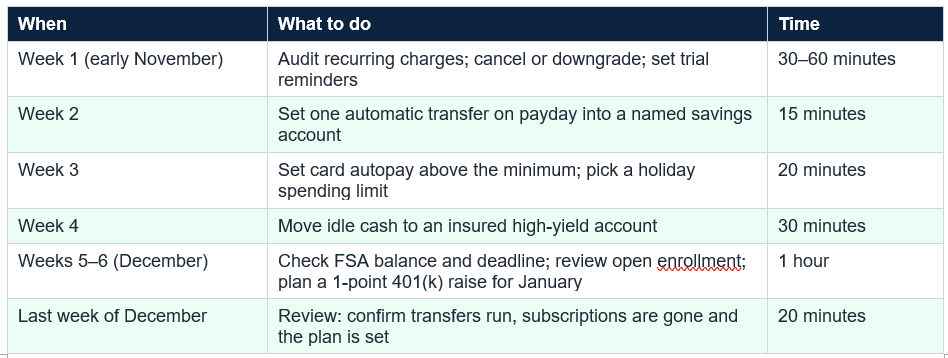
It also helps to pair new habits with existing ones. Do the subscription audit the same day you pay your monthly bills. Review your savings transfer when you review your pay stub. Put the year-end benefits check on the calendar next to your open enrollment date. Habits stick when they attach to something you already do.
You do not need a big income, a spreadsheet or a New Year’s resolution. You need two months and one habit a week. Start with the subscription audit this weekend, set up one automatic transfer and let the rest follow. By January 1, you will not be making resolutions. You will be continuing a plan that is already running. This is general education, not personalized advice.
Because some deadlines fall before the year ends. Most calendar-year health FSAs expire on December 31, 2026, with a possible $680 carryover or a grace period of up to 2.5 months if your plan allows. Starting in November also gives you two months to test new habits, so the January 1 restart is a continuation, not a leap.
How many subscriptions does the average person have?
It depends on how you count. Self Financial’s March 2026 survey of 1,272 adults found an average of 3.4 paid subscriptions costing about $35 a month, while an earlier C+R Research survey, which asked people to itemize every recurring charge, found about $219 a month. About 60% in the 2026 survey had at least one unused subscription, wasting an average of $26.79 a month.
What is the easiest way to start saving automatically?
Set up a recurring transfer on payday into a separate high-yield savings account, even $25 or $50 a paycheck. Vanguard’s data show automatic enrollment lifts retirement-plan participation to 94% from 64%, which illustrates how much automation helps. Top savings accounts paid about 4.34% to 4.50% in October 2026.
Should I pay off credit cards in full every month?
Yes, if you can. The average card rate was about 20.9% in the second quarter of 2026, so carrying a balance is expensive. If you cannot pay in full, pay more than the minimum, target the highest rate first and avoid adding new balances over the holidays. Automatic payments help you avoid late fees, but set them above the minimum.
What year-end deadlines should I check?
Check whether your health FSA runs on the calendar year (the 2026 limit is $3,400, with a $680 maximum carryover if your plan allows it), your open enrollment election for 2027 and your retirement contribution rate. HSAs have no year-end deadline, and the 2026 HSA limits are $4,400 for self-only and $8,750 for family coverage. The IRS had not announced 2027 retirement limits when I wrote this.
Table of Contents
- Why Reset Now?
- The Short Answer: Five Habits
- Habit 1: Audit Your Recurring Charges
- Habit 2: Automate Your Saving
- Habit 3: Reset Your Credit Card Routine
- Habit 4: Put Idle Cash to Work
- Habit 5: Run a Year-End Benefits and Retirement Check
- A 60-Day Reset Calendar
- Common Pitfalls
- Conclusion
- Frequently Asked Questions
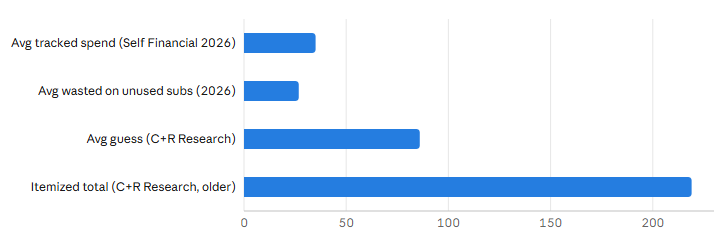
Habit 1: subscription spending depends on how you count ($ per month)
Dollars per month by Different surveys count different things; Self Financial March 2026 (1,272 adults); C+R Research and West Monroe via GCN
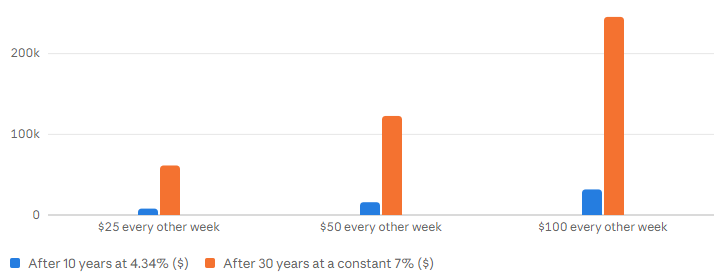
Habit 2: what small automatic transfers grow to ($)
Balance ($) by Author's illustration: 26 transfers a year; 4.34% savings rate vs a constant 7% investment return; not a forecast
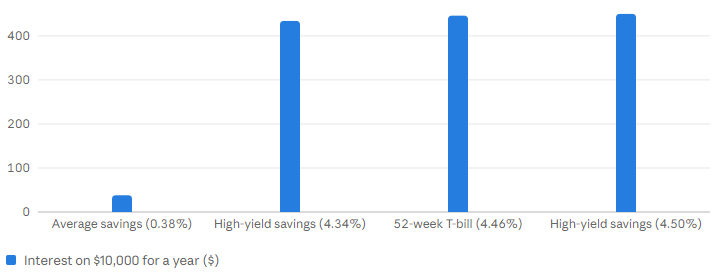
Habit 4: where $10,000 sits matters, interest earned in a year ($)
Interest per year ($) by Experian (June 2026) and MyMoneyBlog (October 12, 2026); about $396-$412 a year more than the average account
Why Reset Now?
Most of our money habits are not decisions. They are routines that formed years ago and now run without us: the streaming service we keep paying for, the card we pay down a little less than we could, the savings account that quietly earns almost nothing. Because they are automatic, they are invisible, and because they are invisible, they cost real money year after year.November and December are an unusually good time to look at them. You have a natural deadline in the calendar, benefits elections and health accounts have year-end cutoffs and the holidays are about to test your spending. A reset now means you start 2027 with systems already running. This guide covers five everyday habits, what the 2026 data say about each, and a 60-day plan to fix them without overhauling your life.
The Short Answer: Five Habits
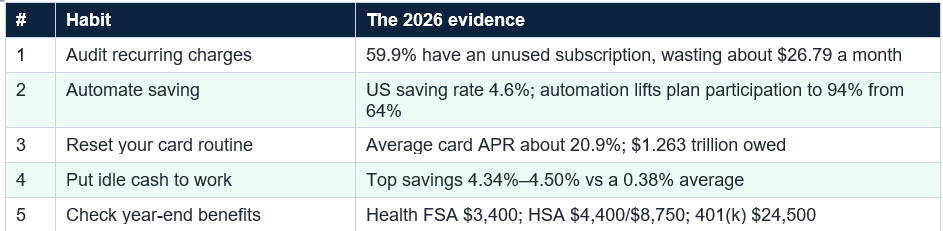
The five habits are auditing recurring charges, automating saving, resetting your credit card routine, moving idle cash into an account that pays something and checking your year-end benefits and retirement contributions. None takes more than an hour or two. Together, in my illustrations, they can be worth hundreds of dollars a year in found money, thousands in avoided interest and tens of thousands over a working lifetime.
Habit 1: Audit Your Recurring Charges
Subscriptions are the classic autopilot expense. Self Financial’s March 2026 survey of 1,272 adults found that 59.9% had at least one paid subscription going unused, averaging 2.6 idle services and about $26.79 a month, or roughly $321 a year, in wasted value. About 70% said they had stayed on a subscription because they forgot to cancel, often after a free trial. The same survey found people have an average of 3.4 paid subscriptions costing about $35 a month, down from $52.97 in 2023, a sign that many are trimming.Counting matters. An older C+R Research survey of 1,000 consumers asked people to itemize every recurring charge and found about $219 a month against an average guess of $86, and West Monroe found 89% of consumers underestimated their spending. The two surveys count different things, so do not treat either number as yours. The point is that guesses are unreliable, and 72% of people in the C+R survey had set subscriptions to autopay, which removes the reminder.
The habit reset is a 30-minute audit. Open your last two months of bank and card statements, highlight every recurring charge and sort them into keep, cancel and downgrade. Set a calendar reminder for each free trial the day you start it. In my illustration, cancelling $26.79 a month of unused services saves about $321 a year, and if you invested that for 30 years at a constant 7%, it would grow to about $30,400.
Self Financial, March 2026: 59.9% have at least one unused subscription; average waste about $26.79 a month (about $321 a year); 70% forgot to cancel a free trial. Investing $321 a year for 30 years at a constant 7% would grow to about $30,400 (my illustration).
Habit 2: Automate Your Saving
Saving what is left over rarely works, because very little is left over. The national personal saving rate was 4.6% in 2025, according to the Bureau of Economic Analysis, well below the 12.1% average total savings rate in retirement plans that Vanguard reports. The difference is automation. Vanguard found that automatic enrollment lifts plan participation to 94% from 64%, which shows how powerfully defaults shape behavior.Copy that for yourself. Open a separate savings account and set an automatic transfer for the day your paycheck lands, so the money moves before you see it. Start small. In my illustration, $50 every other week is $1,300 a year, which at a 4.34% savings rate would reach about $15,900 in ten years, and about $122,800 in 30 years at a constant 7% if invested instead. Then raise the amount by $10 or 1% whenever you get a raise. Bankrate found only 46% of Americans could cover three months of expenses, so even a modest cushion puts you ahead.
The reset: This week, set one automatic transfer, even $25, from checking to a separate savings account on payday. Name the account for a goal, such as Emergency or Trip, because named money is harder to raid.
Habit 3: Reset Your Credit Card Routine
Credit cards punish casual habits. Americans owed $1.263 trillion on cards in the second quarter, and the average rate was about 20.9%, according to the New York Fed and a secondary source citing Federal Reserve data. At that rate, a $3,000 balance costs about $627 a year in interest if you do not pay it down. The holiday season is when new balances are most likely to appear.The reset has three parts. First, set autopay to the full statement balance, or at least well above the minimum, so you never miss a payment. Second, if you carry a balance, pay the highest-rate card first. In my illustration, a $3,000 balance at 20.9% paid at $100 a month takes about 43 months and costs about $1,281 in interest, while $200 a month clears it in about 18 months for about $508. Third, set a holiday spending limit now and pay with a debit card or cash for gifts if you cannot pay the card in full in January.
Habit 4: Put Idle Cash to Work
The cash sitting in your checking or a legacy savings account may be earning almost nothing. The FDIC average savings rate was about 0.38% in June, according to Experian, while top savings accounts paid about 4.34% to 4.50% in October, according to MyMoneyBlog, and a 52-week Treasury bill about 4.46%. On $10,000, that is about $38 a year versus about $434 to $450, a difference of roughly $396 to $412. On $25,000 it is roughly $990 to $1,030.Inflation was 3.7% in September, so even the best accounts only keep pace, which is why this habit is about not losing ground. Keep enough in checking for the month ahead, move the rest of your emergency fund into an insured high-yield account and, if you will not need some money for a year or more, consider a CD or Treasury bill. Be sure the account is FDIC-insured and watch for promotional rates that expire.
Habit 5: Run a Year-End Benefits and Retirement Check
This habit has real deadlines. A health FSA is use-it-or-lose-it: money left at the end of the plan year is forfeited unless your plan offers a grace period of up to 2.5 months or a carryover of up to $680. The 2026 limit is $3,400, and most calendar-year plans expire on December 31, 2026, though yours may differ. At a 22% federal rate, which is an assumption, $3,400 of FSA money saves about $748 in tax, so wasting it is expensive. Check your balance and spend it on eligible items, such as prescriptions, dental, vision and copays.Also review your open enrollment elections for 2027 and your health savings account, if you have one. HSAs have no year-end deadline, and the 2026 limits are $4,400 for self-only and $8,750 for family coverage. Then check your retirement contribution. The 2026 401(k) limit is $24,500, about $942 per biweekly paycheck if you want to max it, though few people need to. The practical reset is to capture your full employer match and raise your rate by one point starting January. In my illustration, one extra point of a $50,000 salary is $500 a year, about $47,000 over 30 years at a constant 7%.
Deadlines depend on your plan. Check your plan documents for the exact FSA end date, any grace period or carryover and enrollment cutoffs. The IRS had not announced the 2027 retirement limits when I wrote this; they usually come in the fall.
A 60-Day Reset Calendar
Common Pitfalls
A few traps are worth avoiding. Trying to change everything at once usually means changing nothing, so do one habit a week. Cancelling a subscription you actually use creates friction that makes you abandon the whole project, so keep what you value. Moving money into a high-yield account and then forgetting to check for rate changes can leave you with a lower yield later. And do not let a perfect plan stop you from starting with a simple one: a $25 transfer you actually set up beats a budget you never finish.It also helps to pair new habits with existing ones. Do the subscription audit the same day you pay your monthly bills. Review your savings transfer when you review your pay stub. Put the year-end benefits check on the calendar next to your open enrollment date. Habits stick when they attach to something you already do.
Conclusion
The best money resets are small and boring. Audit your recurring charges, since 59.9% of people have an unused subscription costing about $26.79 a month. Automate saving, because defaults beat willpower. Reset your credit card routine, with rates near 20.9%. Move idle cash from a 0.38% average to 4.34% to 4.50% and check your year-end benefits before the FSA deadline. Each habit takes an hour or less, and together they can be worth hundreds of dollars a year now and far more over time.You do not need a big income, a spreadsheet or a New Year’s resolution. You need two months and one habit a week. Start with the subscription audit this weekend, set up one automatic transfer and let the rest follow. By January 1, you will not be making resolutions. You will be continuing a plan that is already running. This is general education, not personalized advice.
Frequently Asked Questions
Why reset money habits before January instead of on New Year’s Day?Because some deadlines fall before the year ends. Most calendar-year health FSAs expire on December 31, 2026, with a possible $680 carryover or a grace period of up to 2.5 months if your plan allows. Starting in November also gives you two months to test new habits, so the January 1 restart is a continuation, not a leap.
How many subscriptions does the average person have?
It depends on how you count. Self Financial’s March 2026 survey of 1,272 adults found an average of 3.4 paid subscriptions costing about $35 a month, while an earlier C+R Research survey, which asked people to itemize every recurring charge, found about $219 a month. About 60% in the 2026 survey had at least one unused subscription, wasting an average of $26.79 a month.
What is the easiest way to start saving automatically?
Set up a recurring transfer on payday into a separate high-yield savings account, even $25 or $50 a paycheck. Vanguard’s data show automatic enrollment lifts retirement-plan participation to 94% from 64%, which illustrates how much automation helps. Top savings accounts paid about 4.34% to 4.50% in October 2026.
Should I pay off credit cards in full every month?
Yes, if you can. The average card rate was about 20.9% in the second quarter of 2026, so carrying a balance is expensive. If you cannot pay in full, pay more than the minimum, target the highest rate first and avoid adding new balances over the holidays. Automatic payments help you avoid late fees, but set them above the minimum.
What year-end deadlines should I check?
Check whether your health FSA runs on the calendar year (the 2026 limit is $3,400, with a $680 maximum carryover if your plan allows it), your open enrollment election for 2027 and your retirement contribution rate. HSAs have no year-end deadline, and the 2026 HSA limits are $4,400 for self-only and $8,750 for family coverage. The IRS had not announced 2027 retirement limits when I wrote this.
0 Comments
Be the first to share your thoughts on this article.