
Budgeting
Autumn Budget 2026: What It Means for You and Your Money Now

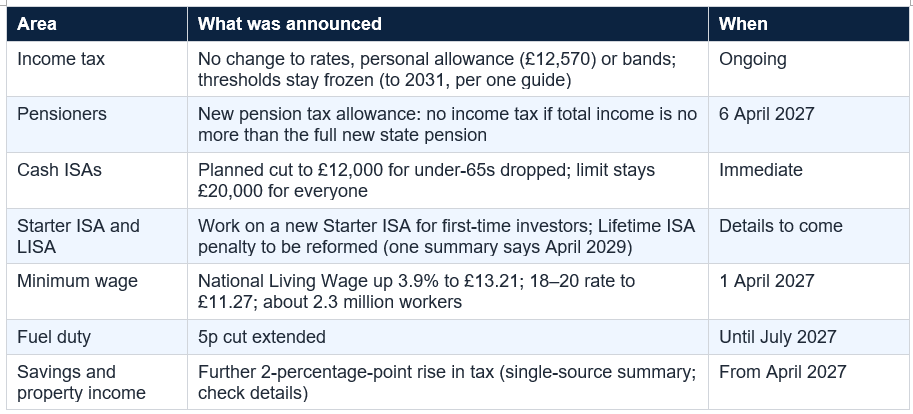
Net tax rises of about £6.5 billion by 2031, against an economy of about £3 trillion (about 0.2% of GDP); most measures raise or cost under £1 billion; 10-year gilt yield about 5.3% at the start and end of the speech; pound edged lower (Budget-day analysis). Measures: no change to income tax rates or bands (personal allowance £12,570; 40% above £50,270; 45% above £125,140); new pension tax allowance from 6 April 2027; cash ISA limit stays £20,000; National Living Wage up 3.9% to £13.21 (18–20: £11.27) from 1 April 2027; 5p fuel duty cut extended to July 2027. • My arithmetic: a worker on £24,000 getting a 3.9% rise gains £936 before tax and about £674 after 20% income tax and 8% National Insurance (assumed rates), keeping about 72p of each extra pound; the NLW rise is about 50p an hour, or £910–£1,040 a year for 35–40 hours.
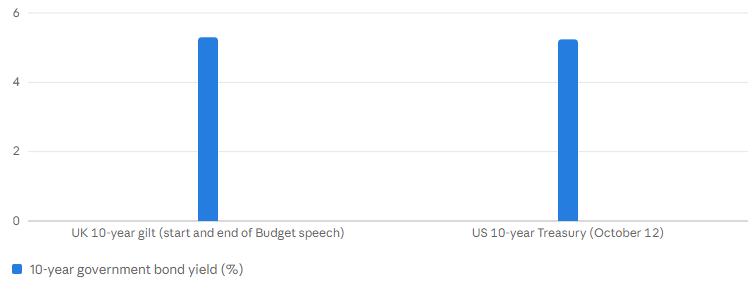
The audience that mattered: 10-year UK gilt yield vs. US Treasury yield (%)
Yield (%) by Gilt yield from Budget-day analysis; US yield from MyMoneyBlog. Different dates; UK 'no longer such an outlier'
That does not mean nothing happened. There were real changes for savers, pensioners, low-paid workers and drivers, and a few important non-events, such as the planned cut to the cash ISA allowance being scrapped. This guide walks through what was announced, what it means for your money and what was left for later, with a note on what is confirmed and what is still being clarified.
The choice looks deliberate. A Budget that takes little and gives little avoids new fights, and the hard decisions have been pushed to next year’s Spending Review and the 10-year plan. That may disappoint people hoping for bold changes, but it fits the logic: the Chancellor’s most important audience on Budget day is the bond market, which was looking for caution.
The numbers: Net tax rises of about £6.5bn by 2031 equal roughly 0.2% of an economy of about £3 trillion. The October 2024 Budget was estimated to raise about £25bn a year by 2029/30 (Deloitte). Most 2026 measures raise or cost under £1bn.
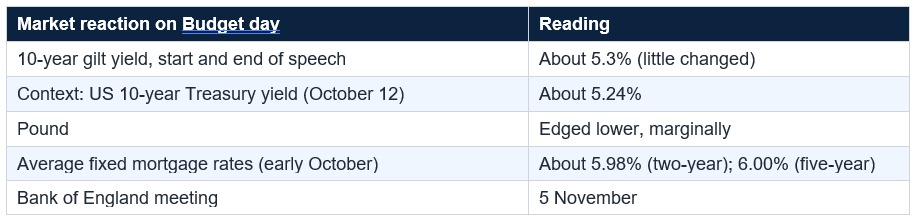
Why does this matter to you? Gilt yields influence swap rates, which drive fixed mortgage rates, and the average two-year and five-year fixes were close to 6% in October, according to Moneyfacts. A calm market does not lower those rates, but it removes one source of upward pressure. The bigger influence is the Bank of England, which meets on 5 November with markets pricing a high chance of a rise after UK inflation reached 3.5% in September.
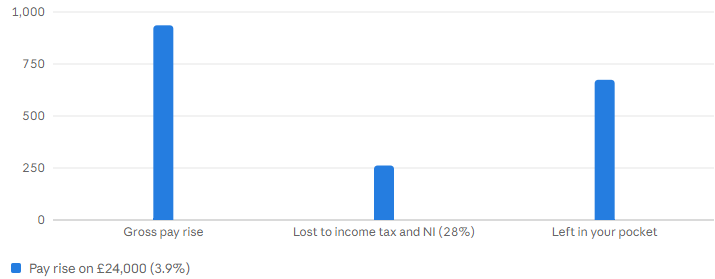
But there is a catch: frozen thresholds. As Quilter’s Rachael Griffin put it, they mean the increase will not translate pound-for-pound into disposable income. In a simple illustration, assume 20% income tax and 8% employee National Insurance above £12,570. A worker on £24,000 who gets a 3.9% rise gains £936 before tax, but about £262 goes in tax and NI, leaving about £674, roughly 72p of each extra pound. A worker on £50,000 getting the same rise would cross the £50,270 higher-rate threshold, paying 40% rather than 20% on the slice above it.
Keep in mind: Frozen thresholds, sometimes called fiscal drag, do not raise tax rates. They raise your tax bill quietly as your income rises. The personal allowance of £12,570 has been frozen since 2021, and one Budget guide says the freeze runs until 2031.
The Chancellor also announced work on a new Starter ISA to reward first-time investors and a reform of the Lifetime ISA penalty, with one summary citing an April 2029 change; details were thin on the day. One summary also lists a further 2-point rise in tax on savings and property income, so check how it applies to you. And dividend tax rose in April 2026 following the 2025 Budget, which makes tax-free wrappers more valuable.
Worth doing: If you can, use this year’s £20,000 ISA allowance before 5 April. Money inside an ISA is sheltered from tax on interest, dividends and gains, whatever the Budget does to the rates outside it.
Pensioners with other income, such as a workplace pension, will still pay tax on income above their allowance, so the measure helps those at the lower end most. If you are approaching state pension age, check your expected total income against the full new state pension.
Without the extension, duty would have risen: a pre-Budget guide noted a 3p rise due in January 2027 and a further 2p in March. The cut is temporary, so the question returns in July.
Landlords should note the reported further 2-point rise in tax on property income from April 2027, which would add to higher interest costs and the Renters’ Rights Act compliance burden in force since 1 May 2026. Check the detail in the Red Book and speak to an accountant.
For households, the practical meaning is uncertainty. The safest approach is to use the allowances you have, keep an eye on the dates below and avoid large financial decisions based on rumours about future budgets.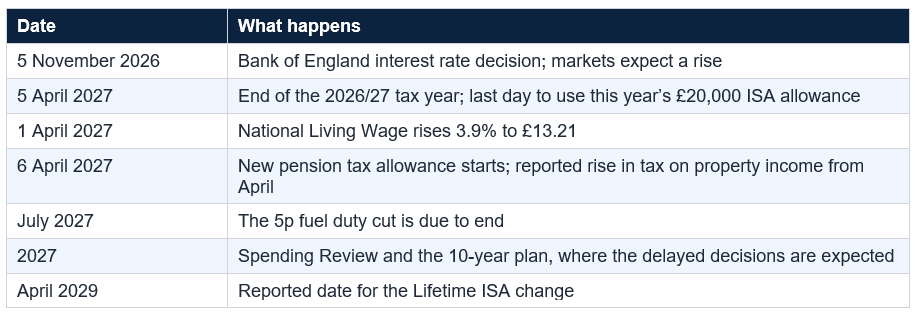
Fifth, if you pay higher-rate tax or are close to it, consider pension contributions that reduce your taxable income. Sixth, if you are a landlord, ask an adviser how the reported property income tax change affects you. And seventh, keep an emergency fund, because a calm Budget does not remove the risk of later changes.
Worth doing: Bookmark the Treasury’s Budget page and the OBR forecasts for the detail, and check the date and rate of any measure before you rely on it. Budget-day summaries are quick but not always complete.
The bond market’s shrug, with the 10-year gilt yield around 5.3% before and after the speech, was probably the point. For you, the message is to use your allowances, watch the frozen thresholds and keep an eye on the Bank of England and next year’s Spending Review, where the hard choices have been parked. Details are still emerging, so check the sources below. This is general information, not regulated advice, and a qualified adviser can help you apply it.
No. Budget-day reports say there was no rise in the headline rates and no change to the personal allowance (£12,570) or the bands: 20% basic rate, 40% above £50,270 and 45% above £125,140. The thresholds remain frozen, which one guide says will continue until 2031, so rising pay can still pull more of your income into higher tax bands.
Is the cash ISA limit still £20,000?
Yes. The Chancellor said he would not go ahead with the planned cut to the tax-free cash ISA allowance, which would have capped under-65s at £12,000 from April 2027. The limit stays at £20,000 a year for everyone. He also announced work on a new Starter ISA for first-time investors and a reform to the Lifetime ISA penalty.
What is the new pension tax allowance?
From 6 April 2027, people at state pension age whose total income is no more than the full new state pension will not pay income tax, according to Royal London’s comments. The full new state pension is £241.30 a week, about £12,548 a year, in 2026/27. The allowance is aimed at stopping pensioners with only a state pension being pulled into tax as the pension rises.
How much is the minimum wage going up?
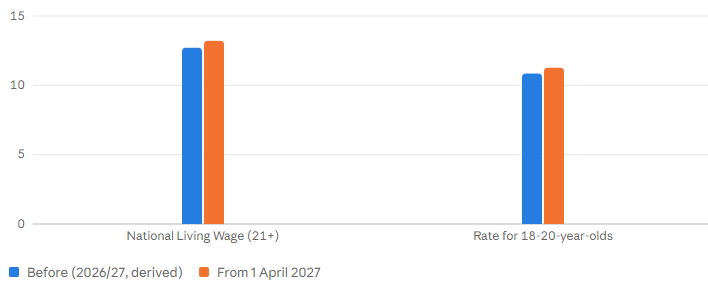
The National Living Wage rises 3.9% from 1 April 2027 to £13.21 an hour, and the rate for 18 to 20-year-olds to £11.27, benefiting about 2.3 million workers. By my arithmetic that is a rise of about 50p an hour, or roughly £910 to £1,040 a year for someone working 35 to 40 hours a week.
Does the Budget change mortgage rates?
Not directly. Markets reacted calmly: the 10-year gilt yield was around 5.3% at the start and end of the speech, according to the analysis behind this article. Fixed mortgage rates follow swap rates, which move with expectations for interest rates. The Bank of England’s next decision on 5 November, with markets expecting a rise, matters more for your mortgage than the Budget itself.
Table of Contents
- A Budget for the Government’s Breathing Space
- The Headline Measures at a Glance
- The Real Story: A Budget Built Not to Rock the Boat
- Why the Bond Market Shrugged
- What It Means If You Are an Employee
- What It Means for Savers and Investors
- What It Means for Pensioners
- What It Means for Drivers
- What It Means for Homeowners and Landlords
- What Has Been Pushed Down the Line
- Key Dates to Put in Your Diary
- A Practical Checklist
- Conclusion
- Frequently Asked Questions
Minimum wage rises 3.9%: hourly rates before and after (\u00a3)
£ per hour by Budget-day reports; 'before' rates are my derivation (new rate divided by 1.039); about 2.3 million workers benefit
Frozen thresholds in action: where a 3.9% pay rise on \u00a324,000 goes (\u00a3 a year)
£ per year by Author's illustration: assumes 20% income tax and 8% employee NI above £12,570; you keep about 72p of each extra poundThe audience that mattered: 10-year UK gilt yield vs. US Treasury yield (%)
Yield (%) by Gilt yield from Budget-day analysis; US yield from MyMoneyBlog. Different dates; UK 'no longer such an outlier'
A Budget for the Government’s Breathing Space
John Healey used the phrase “breathing space” more than once in his first Budget speech, promising it to households and businesses. But the sharpest reading of the day, in the Budget-day analysis behind this article, is that the breathing space was mostly for the Government. This was a fiddly, forgettable Budget in which most measures raise or cost less than £1 billion, which is little more than a rounding error in an economy of about £3 trillion.That does not mean nothing happened. There were real changes for savers, pensioners, low-paid workers and drivers, and a few important non-events, such as the planned cut to the cash ISA allowance being scrapped. This guide walks through what was announced, what it means for your money and what was left for later, with a note on what is confirmed and what is still being clarified.
The Headline Measures at a Glance
Same-day reports agree on the main points: no rise in the headline rates of income tax and no change to the personal allowance or bands; a new pension tax allowance; the planned cut to the cash ISA limit dropped; a 3.9% minimum wage rise; and the 5p fuel duty cut extended into the summer. One summary also lists a further 2-percentage-point increase in tax on savings and property income, which I flag as single-sourced and worth checking in the Red Book.
The Real Story: A Budget Built Not to Rock the Boat
The most telling number in the Budget documents is not a headline measure but the line showing the net effect of all policy decisions over the next five years. According to the analysis behind this piece, by 2031 the Budget adds up to net tax rises of about £6.5 billion, about 0.2% of an economy of roughly £3 trillion. For comparison, Deloitte estimated that the October 2024 Budget would raise about £25 billion a year by 2029/30. By that measure, this Budget was tinkering at the edges.The choice looks deliberate. A Budget that takes little and gives little avoids new fights, and the hard decisions have been pushed to next year’s Spending Review and the 10-year plan. That may disappoint people hoping for bold changes, but it fits the logic: the Chancellor’s most important audience on Budget day is the bond market, which was looking for caution.
The numbers: Net tax rises of about £6.5bn by 2031 equal roughly 0.2% of an economy of about £3 trillion. The October 2024 Budget was estimated to raise about £25bn a year by 2029/30 (Deloitte). Most 2026 measures raise or cost under £1bn.
Why the Bond Market Shrugged
Gilt yields barely moved while the Chancellor was on his feet. The 10-year gilt yielded around 5.3% at the start and end of the speech. That is still much higher than at the start of the year, but the UK is no longer such an outlier in global terms: the US 10-year Treasury yield was around 5.2% in mid-October. The pound edged lower, only slightly. The Chancellor will see that as a good result.Why does this matter to you? Gilt yields influence swap rates, which drive fixed mortgage rates, and the average two-year and five-year fixes were close to 6% in October, according to Moneyfacts. A calm market does not lower those rates, but it removes one source of upward pressure. The bigger influence is the Bank of England, which meets on 5 November with markets pricing a high chance of a rise after UK inflation reached 3.5% in September.
What It Means If You Are an Employee
The headline for workers is the minimum wage. The National Living Wage rises 3.9% from 1 April 2027 to £13.21 an hour, and the rate for 18 to 20-year-olds to £11.27, benefiting about 2.3 million workers. By my arithmetic that is about 50p an hour, or £910 to £1,040 a year for someone working 35 to 40 hours a week. Employers with many low-paid staff will face higher wage bills.But there is a catch: frozen thresholds. As Quilter’s Rachael Griffin put it, they mean the increase will not translate pound-for-pound into disposable income. In a simple illustration, assume 20% income tax and 8% employee National Insurance above £12,570. A worker on £24,000 who gets a 3.9% rise gains £936 before tax, but about £262 goes in tax and NI, leaving about £674, roughly 72p of each extra pound. A worker on £50,000 getting the same rise would cross the £50,270 higher-rate threshold, paying 40% rather than 20% on the slice above it.
Keep in mind: Frozen thresholds, sometimes called fiscal drag, do not raise tax rates. They raise your tax bill quietly as your income rises. The personal allowance of £12,570 has been frozen since 2021, and one Budget guide says the freeze runs until 2031.
What It Means for Savers and Investors
The best news for savers is a non-event. The Chancellor said he would not go ahead with the planned cut to the tax-free cash ISA allowance, which would have capped under-65s at £12,000 from April 2027. The limit stays at £20,000 a year for everyone, to use for cash, stocks and shares or a mix, with the use-it-or-lose-it deadline of 5 April each year.The Chancellor also announced work on a new Starter ISA to reward first-time investors and a reform of the Lifetime ISA penalty, with one summary citing an April 2029 change; details were thin on the day. One summary also lists a further 2-point rise in tax on savings and property income, so check how it applies to you. And dividend tax rose in April 2026 following the 2025 Budget, which makes tax-free wrappers more valuable.
Worth doing: If you can, use this year’s £20,000 ISA allowance before 5 April. Money inside an ISA is sheltered from tax on interest, dividends and gains, whatever the Budget does to the rates outside it.
What It Means for Pensioners
A new pension tax allowance will apply from 6 April 2027. According to Royal London’s Clare Moffatt, anyone at state pension age whose total income is no more than the full new state pension will not pay income tax. The full new state pension is £241.30 a week, about £12,548 a year, in 2026/27, just below the £12,570 personal allowance. My reading is that it stops pensioners with only a state pension being dragged into tax as the pension rises while the personal allowance stays frozen.Pensioners with other income, such as a workplace pension, will still pay tax on income above their allowance, so the measure helps those at the lower end most. If you are approaching state pension age, check your expected total income against the full new state pension.
What It Means for Drivers
The 5p cut to fuel duty has been extended to July 2027, with the Chancellor citing the war in the Middle East still driving high fuel prices. Petrol rose about 8p a litre in a month to around 169.5p in September, according to the figures behind UK inflation. A 5p cut is worth about £2.50 on a 50-litre tank, by my arithmetic, so it helps, but it is far from a fix.Without the extension, duty would have risen: a pre-Budget guide noted a 3p rise due in January 2027 and a further 2p in March. The cut is temporary, so the question returns in July.
What It Means for Homeowners and Landlords
There was little in the reports I could find on stamp duty or housing taxes, so I will not claim more than I can confirm. For mortgage holders, the more important event is the Bank of England’s decision on 5 November, with markets pricing a high chance of a rise. If you are remortgaging, start early and compare the whole market. With average fixed rates near 6%, the calm market reaction is welcome but not a rate cut.Landlords should note the reported further 2-point rise in tax on property income from April 2027, which would add to higher interest costs and the Renters’ Rights Act compliance burden in force since 1 May 2026. Check the detail in the Red Book and speak to an accountant.
What Has Been Pushed Down the Line
Perhaps the most important thing about this Budget is what it did not do. The big decisions on tax and spending have been pushed to next year’s Spending Review and the 10-year plan. Fiscal drag will keep quietly raising the tax take, but the Government has not had to defend bold new measures. That buys time and keeps the bond market calm, but it leaves the hard choices for 2027.For households, the practical meaning is uncertainty. The safest approach is to use the allowances you have, keep an eye on the dates below and avoid large financial decisions based on rumours about future budgets.
Key Dates to Put in Your Diary
A Practical Checklist
First, use your ISA allowance: with the £20,000 limit preserved, decide how to split it and aim to use it before 5 April. Second, check your tax code and income against the thresholds, especially after a pay rise. Third, if you are near state pension age, review your expected income against the full new state pension. Fourth, if a mortgage is due to be refixed, watch the Bank of England on 5 November and start looking early.Fifth, if you pay higher-rate tax or are close to it, consider pension contributions that reduce your taxable income. Sixth, if you are a landlord, ask an adviser how the reported property income tax change affects you. And seventh, keep an emergency fund, because a calm Budget does not remove the risk of later changes.
Worth doing: Bookmark the Treasury’s Budget page and the OBR forecasts for the detail, and check the date and rate of any measure before you rely on it. Budget-day summaries are quick but not always complete.
Conclusion
The Autumn Budget 2026 was a Budget built not to rock the boat. There were no changes to income tax rates, the personal allowance or the bands, with thresholds frozen on a path that one guide says runs to 2031. The planned cut to the cash ISA limit was scrapped, a new pension tax allowance was announced for 2027, the National Living Wage rises 3.9% to £13.21 and the 5p fuel duty cut was extended to July 2027. The net tax rises of about £6.5 billion by 2031 are small beside an economy of about £3 trillion.The bond market’s shrug, with the 10-year gilt yield around 5.3% before and after the speech, was probably the point. For you, the message is to use your allowances, watch the frozen thresholds and keep an eye on the Bank of England and next year’s Spending Review, where the hard choices have been parked. Details are still emerging, so check the sources below. This is general information, not regulated advice, and a qualified adviser can help you apply it.
Frequently Asked Questions
Did the Budget change income tax rates?No. Budget-day reports say there was no rise in the headline rates and no change to the personal allowance (£12,570) or the bands: 20% basic rate, 40% above £50,270 and 45% above £125,140. The thresholds remain frozen, which one guide says will continue until 2031, so rising pay can still pull more of your income into higher tax bands.
Is the cash ISA limit still £20,000?
Yes. The Chancellor said he would not go ahead with the planned cut to the tax-free cash ISA allowance, which would have capped under-65s at £12,000 from April 2027. The limit stays at £20,000 a year for everyone. He also announced work on a new Starter ISA for first-time investors and a reform to the Lifetime ISA penalty.
What is the new pension tax allowance?
From 6 April 2027, people at state pension age whose total income is no more than the full new state pension will not pay income tax, according to Royal London’s comments. The full new state pension is £241.30 a week, about £12,548 a year, in 2026/27. The allowance is aimed at stopping pensioners with only a state pension being pulled into tax as the pension rises.
How much is the minimum wage going up?
The National Living Wage rises 3.9% from 1 April 2027 to £13.21 an hour, and the rate for 18 to 20-year-olds to £11.27, benefiting about 2.3 million workers. By my arithmetic that is a rise of about 50p an hour, or roughly £910 to £1,040 a year for someone working 35 to 40 hours a week.
Does the Budget change mortgage rates?
Not directly. Markets reacted calmly: the 10-year gilt yield was around 5.3% at the start and end of the speech, according to the analysis behind this article. Fixed mortgage rates follow swap rates, which move with expectations for interest rates. The Bank of England’s next decision on 5 November, with markets expecting a rise, matters more for your mortgage than the Budget itself.
0 Comments
Be the first to share your thoughts on this article.